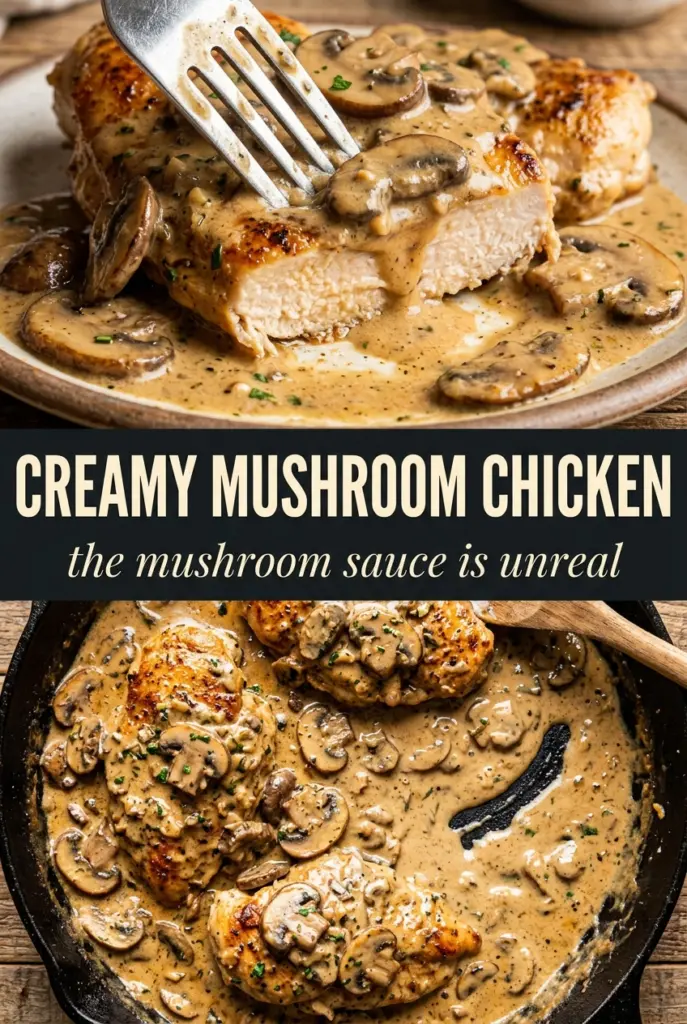
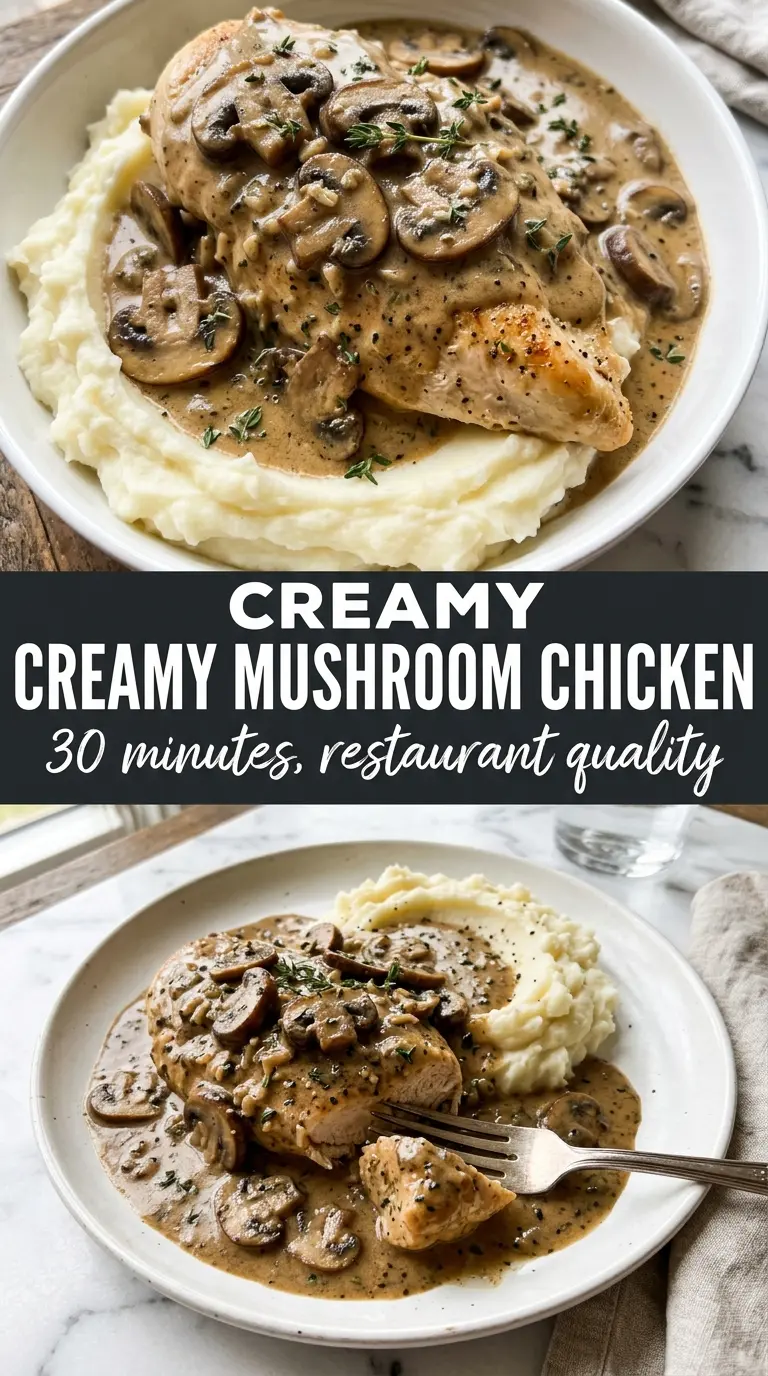
Golden seared chicken breasts tucked into a mushroom cream sauce never last long at my table. The chicken stays juicy, the mushrooms turn deep and savory, and the sauce clings to every slice instead of running thin across the skillet. It feels like the kind of dinner that took more effort than it did, which is exactly why it earns a repeat spot.
The trick is building the sauce in the same pan after the chicken comes out. Those browned bits on the bottom are where the best flavor lives, and the mushrooms need enough time to give up their moisture and actually brown before the cream goes in. That’s what keeps the sauce from tasting flat or watery.
Below, I’m walking through the small choices that matter here: how to get a proper sear, when the sauce is thick enough, and what to do if you want to swap the chicken or lighten the richness a bit without losing the character of the dish.
The sauce thickened up beautifully and the mushrooms actually browned instead of steaming. I sliced the chicken and spooned the sauce over rice, and my husband asked if we could have it again the next night.
Save this creamy mushroom chicken for a skillet dinner with golden chicken and a silky Parmesan sauce that clings to every bite.
The Trick to Keeping the Sauce Thick Instead of Watery
Most creamy mushroom chicken goes sideways in the same place: the mushrooms release liquid, the pan gets crowded, and the cream gets added before the moisture has a chance to cook off. Then the sauce tastes thin even when it looks rich. The fix is to brown the chicken first, then give the mushrooms enough open pan time to color deeply before anything liquid goes in.
The other piece is heat control. Once the broth and cream go in, you want a steady simmer, not a hard boil. Boiling cream can make it separate or feel greasy, while a gentle simmer gives the sauce time to reduce and thicken around the Parmesan.
- Chicken breasts — Boneless, skinless breasts are lean enough to sear well, but they dry out if you overcook them. If yours are thick on one end, pound them to an even thickness so they finish at the same time.
- Cremini mushrooms — They bring more depth than white button mushrooms and hold up better in the sauce. Slice them fairly evenly so they brown at the same rate instead of steaming in mixed sizes.
- Heavy cream — This is what gives the sauce body and that velvety finish. Half-and-half will work in a pinch, but the sauce will be thinner and a little more fragile.
- Parmesan cheese — Freshly grated Parmesan melts into the sauce more smoothly than the shelf-stable kind. Pre-grated cheese can stay grainy because of the anti-caking agents.
What Each Ingredient Is Actually Doing in This Chicken Dish
- Chicken (bone-in or boneless, skin-on or skinless) — Each cut has different cooking times and flavor profiles. Let thighs reach 165°F; breasts dry out if overcooked past that.
- Sauce or braising liquid (the moisture keeper) — This prevents the chicken from drying out and adds flavor. Don’t skip it even if the recipe seems moist.
- Aromatics (garlic, onion, herbs) — These add depth and complexity. Cook them with fat so they soften and sweeten instead of staying sharp.
- Cream or butter (optional richness) — These make the dish luxurious. Add to the sauce off the boil so it stays smooth instead of breaking.
- Cheese (if using) — This adds umami and richness. Mix into the sauce or sprinkle on top; either works depending on the dish.
- Acid (lemon, vinegar, wine, or tomato) — This prevents heavy sauces from tasting flat. Add at the end so the brightness doesn’t cook off.
- Proper temperature (165°F is perfect) — Use a thermometer to avoid guessing. Pull slightly early if the chicken will rest or finish in residual heat.
- Resting time (at least 5 minutes) — This lets juices redistribute so the meat stays moist when you cut into it instead of running dry.
Building the Skillet in the Right Order
Searing the Chicken First
Season the chicken generously, then sear it in hot oil until the outside is a deep golden color and it releases easily from the pan. If it sticks, it needs another minute. Don’t rush the first side; that crust gives you flavor and also keeps the chicken from tasting boiled once it goes back into the sauce. Pull it at 165°F, then let it rest on a plate while you work on the mushrooms.
Getting Real Color on the Mushrooms
Add the butter to the same skillet and let the mushrooms cook without crowding them. At first they’ll look dry, then they’ll throw off moisture, and only after that moisture cooks away will they start to brown. That browning is the point. If the pan looks crowded or the heat is too low, they’ll stay pale and the finished sauce will taste one-note.
Deglazing and Finishing the Sauce
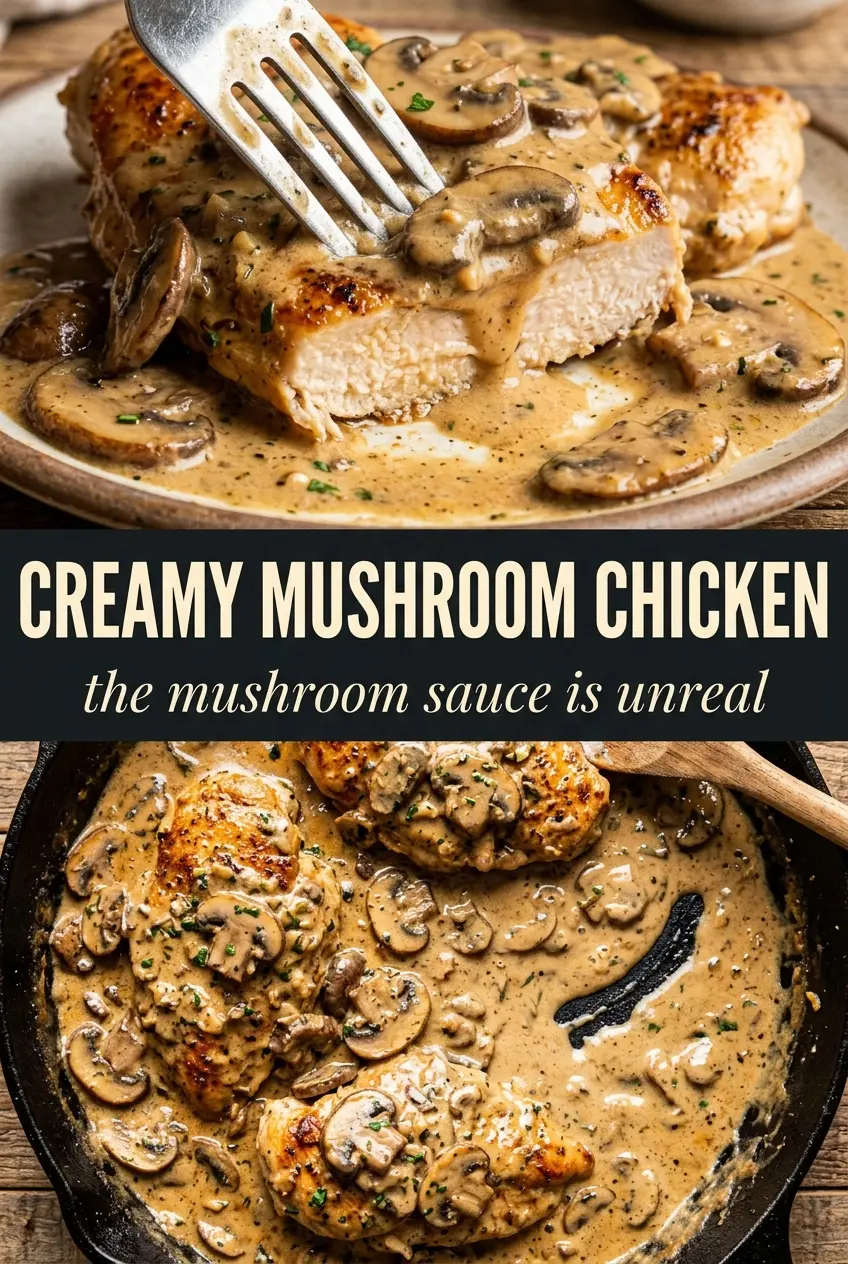
Once the garlic is fragrant, pour in the broth and scrape up every browned bit from the bottom of the pan. That’s the base of the sauce. Stir in the cream, Parmesan, thyme, and Italian seasoning, then keep the heat at a gentle simmer until the sauce coats a spoon and falls back in a slow ribbon. Return the chicken at the end and spoon the sauce over the top so it reheats without overcooking.
How to Make This Skillet Work for Different Tables
Use chicken thighs for a richer, juicier result
Boneless thighs work well here if you want more forgiveness and a deeper chicken flavor. They may take a few minutes longer to cook, but they stay tender even if the timing runs a little long.
Make it gluten-free without changing the method
This recipe is naturally gluten-free as written, as long as your broth and Parmesan are certified gluten-free. The sauce thickens from reduction and cheese, not flour, so nothing needs to be replaced.
Lighten it with half-and-half
Half-and-half will give you a lighter sauce, but it won’t cling as thickly and it’s easier to overheat. Keep the pan on low once it goes in and expect a looser finish.
Storage and Reheating
- Refrigerator: Store in an airtight container for up to 3 days. The sauce will thicken as it chills.
- Freezer: It will freeze, but the cream sauce can separate a little when thawed. If you do freeze it, cool completely first and reheat gently.
- Reheating: Warm it slowly in a covered skillet over low heat with a splash of broth or cream. High heat is the mistake that turns the sauce greasy and dries out the chicken.
Questions I Get Asked About This Recipe
Creamy Mushroom Chicken
Ingredients
Equipment
Method
- Season chicken breasts generously on both sides with salt, pepper, garlic powder, and onion powder.
- Heat olive oil in a large skillet over medium-high heat; sear chicken for 5-6 minutes per side until golden and internal temperature reaches 165°F, then remove.
- Melt butter in the same skillet and cook mushrooms for 4-5 minutes until deeply golden.
- Add minced garlic and cook for 1 minute, stirring until fragrant.
- Pour in chicken broth and deglaze the pan, scraping up the browned bits.
- Stir in heavy cream, Parmesan cheese, dried thyme, and Italian seasoning, then simmer for 4-5 minutes until the sauce thickens.
- Return chicken to the skillet and spoon the mushroom cream sauce over each breast.
- Garnish with fresh thyme and parsley before serving.