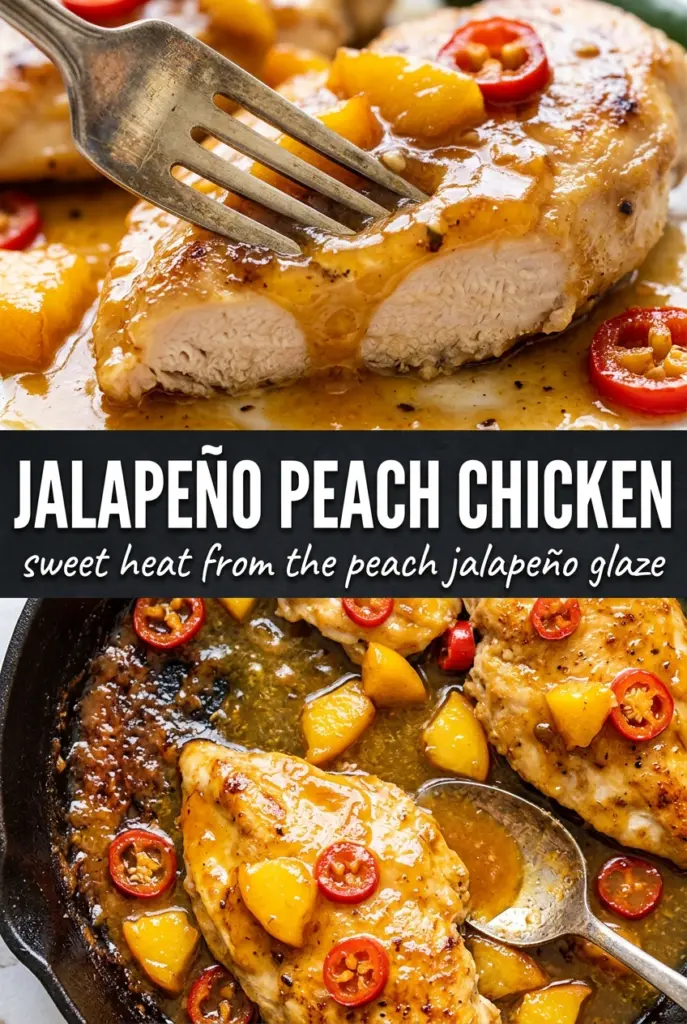
Golden chicken breasts in a glossy jalapeño peach glaze hit that sweet-heat balance that keeps you coming back for one more bite. The peaches soften into the sauce just enough to give it body, while the jalapeños bring a clean, bright heat that cuts through the honey and keeps the dish from leaning sticky or one-note.
What makes this version work is the way the sauce is built in the same skillet as the chicken. Those browned bits left behind after searing give the glaze depth, and the vinegar keeps the peaches from tasting flat. Fresh peaches bring the best aroma and texture, but frozen peaches still work well because they break down quickly and help the sauce thicken without needing extra starch.
Below, I’ve laid out the small details that matter most: how hard to sear the chicken, when the glaze is actually ready, and how to adjust the heat if you want this sweeter or spicier.
The glaze thickened up perfectly in the skillet and clung to the chicken instead of running all over the plate. I kept the jalapeño seeds in and the sweet heat was spot on with the peaches.
Pin this jalapeño peach chicken for a skillet dinner with glossy peach glaze and just enough heat to keep it interesting.
The Step Most People Rush in Sweet-and-Spicy Chicken
The sear matters more here than in a lot of skillet chicken recipes. You want a deep golden crust before the glaze goes in, because once the peaches, honey, and broth hit the pan, the sauce starts moving fast and there isn’t much time to build color later. If the chicken goes in pale, the finished dish tastes flatter and the glaze has less savory backbone.
Keep the heat at medium-high for the first side, then let the chicken release naturally before turning it. If it sticks hard, it isn’t ready yet. That crust should come away cleanly when it’s ready, and the pan should smell nutty, not burnt.
What the Peaches, Honey, and Soy Sauce Are Doing in the Pan
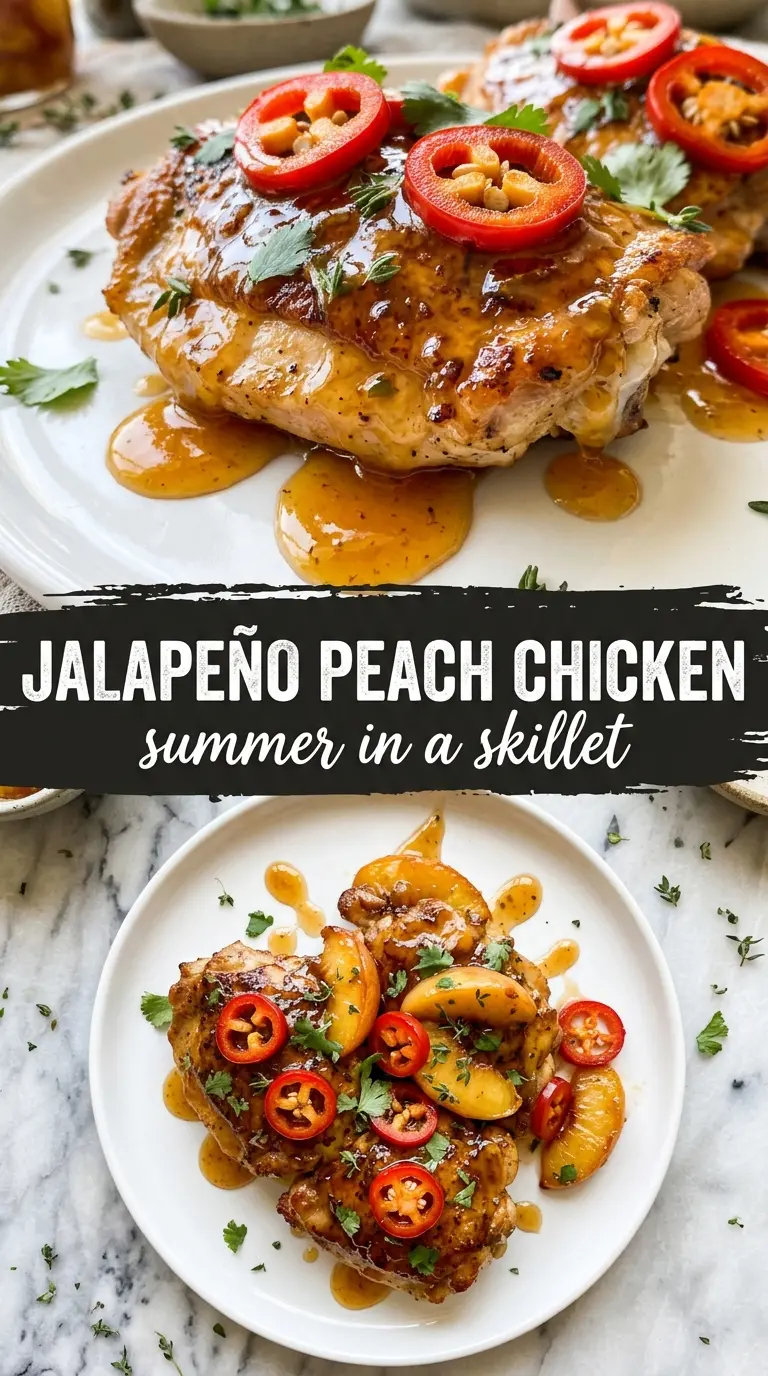
- Peaches — Fresh peaches give you the cleanest fruit flavor and the nicest slices in the finished sauce. Frozen peaches are the best backup because they soften quickly and turn into glaze without needing extra work. If you use canned peaches, drain them well or the sauce can turn too sweet and thin.
- Jalapeños — Thin slices let the pepper flavor infuse the sauce without taking over. Leave the seeds in for a sharper heat, or remove them if you want more warmth than bite. Slice them evenly so they cook at the same rate as the peaches.
- Honey — This gives the glaze shine and helps it cling to the chicken. Maple syrup can replace it, but the flavor will read deeper and less bright. Don’t add extra honey unless the peaches are under-ripe, or the sauce can skew sticky.
- Soy sauce — A small amount keeps the glaze from tasting like fruit syrup. Tamari works well if you need a gluten-free option. Coconut aminos can stand in too, though the sauce will be a little sweeter and less savory.
- Apple cider vinegar — This is the piece that keeps the sauce lively. It sharpens the peaches and cuts through the honey. Lemon juice can work in a pinch, but vinegar holds up better during simmering.
Building the Glaze So It Clings Instead of Running Off
Start with the aromatics in the chicken drippings
After the chicken comes out, keep the same skillet on the heat and add the garlic and jalapeños. One minute is enough to take the raw edge off the garlic without letting it brown. If the garlic burns, the glaze turns bitter fast, so move straight into the fruit and liquids once you smell it bloom.
Let the peaches break down before you worry about thickness
Add the peaches, honey, soy sauce, vinegar, and broth, then let the pan simmer steadily. The peaches should soften and start to slump, and the liquid will look glossy before it looks thick. That’s normal. The sauce tightens as the water cooks off, so don’t crank the heat just to force it faster.
Return the chicken only when the sauce lightly coats a spoon
Slide the chicken back into the skillet and spoon the glaze over the top for the last couple of minutes. The goal is to finish cooking the chicken gently while letting the glaze lacquer the surface. If the sauce starts to look too tight before the chicken is done, add a splash of broth and loosen it right away.
Finish with thyme for freshness
Fresh thyme brings a herbal note that keeps the dish from tasting too sweet. Sprinkle it over the top right at the end so the leaves stay fragrant. Dried thyme can work, but use less; it comes across stronger and a little woodier.
How to Adapt This for Different Kitchens and Different Heat Levels
Milder Sweet-Heat Chicken
Remove the jalapeño seeds and use one pepper instead of two if you want the glaze to stay gentle. You’ll still get the pepper flavor, but the heat will sit in the background instead of building with each bite. This is the best version for kids or anyone who prefers a softer finish.
Gluten-Free Version
Swap the soy sauce for tamari or certified gluten-free coconut aminos. Tamari keeps the same savory depth, while coconut aminos make the glaze a little sweeter, so you may want an extra splash of vinegar to balance it.
Dairy-Free and Naturally Weeknight-Friendly
This recipe is already dairy-free as written, which makes it an easy fit for a lot of tables. Serve it with rice, potatoes, or a crisp salad and it feels complete without needing any cream or butter to carry the sauce.
Using Chicken Thighs Instead of Breasts
Boneless thighs work well if you want juicier meat and a little more forgiveness on the stovetop. They usually need a few extra minutes to cook through, and they give the sauce a richer finish because of the extra fat in the pan.
Storage and Reheating
- Refrigerator: Store leftovers in an airtight container for up to 3 days. The peaches will soften more as they sit, and the sauce will thicken in the fridge.
- Freezer: It freezes, but the peaches lose some of their fresh texture. Freeze the chicken and sauce together for up to 2 months, then thaw overnight in the refrigerator.
- Reheating: Reheat gently in a covered skillet over low heat with a splash of broth or water. High heat can dry out the chicken and push the glaze from glossy to jammy.
Answers to the Questions Worth Asking
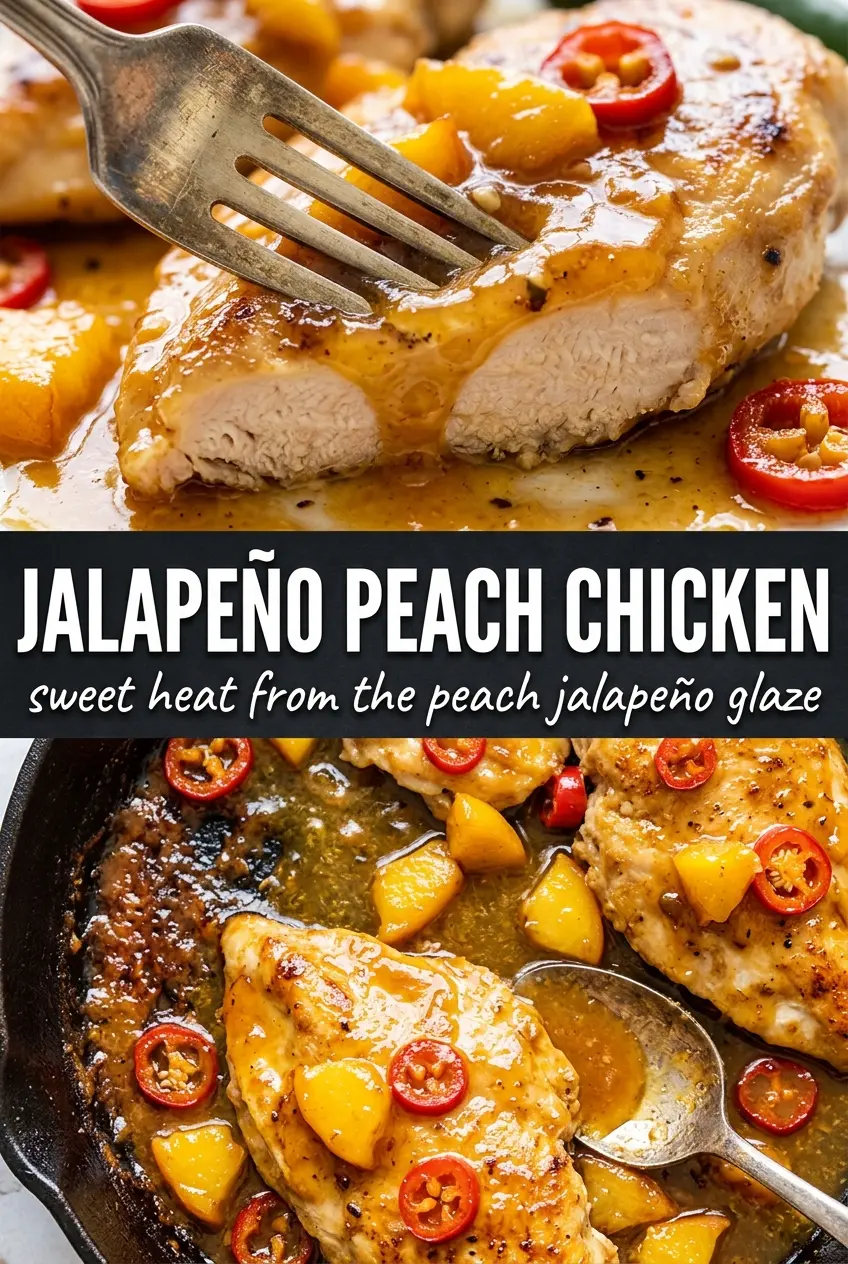
Jalapeño Peach Chicken
Ingredients
Equipment
Method
- Season the chicken breasts with salt and black pepper, then sear them in olive oil in a cast iron skillet over medium-high heat for 5–6 minutes per side until golden. Set the chicken aside once browned.
- In the same skillet, add the minced garlic and the thinly sliced jalapeños and cook for 1 minute. Stir just until fragrant.
- Add the sliced peaches, honey, soy sauce, apple cider vinegar, and chicken broth to the skillet. Bring the mixture to a simmer.
- Simmer the glaze for 5–6 minutes, stirring occasionally, until the peaches soften and the sauce thickens. Keep it at a steady simmer so it coats.
- Return the chicken to the skillet and spoon the jalapeño peach glaze over the top. Cook for 2 more minutes to coat the chicken.
- Sprinkle with fresh thyme and serve with the pan sauce spooned over the top. Make sure each slice gets a glossy layer of glaze.