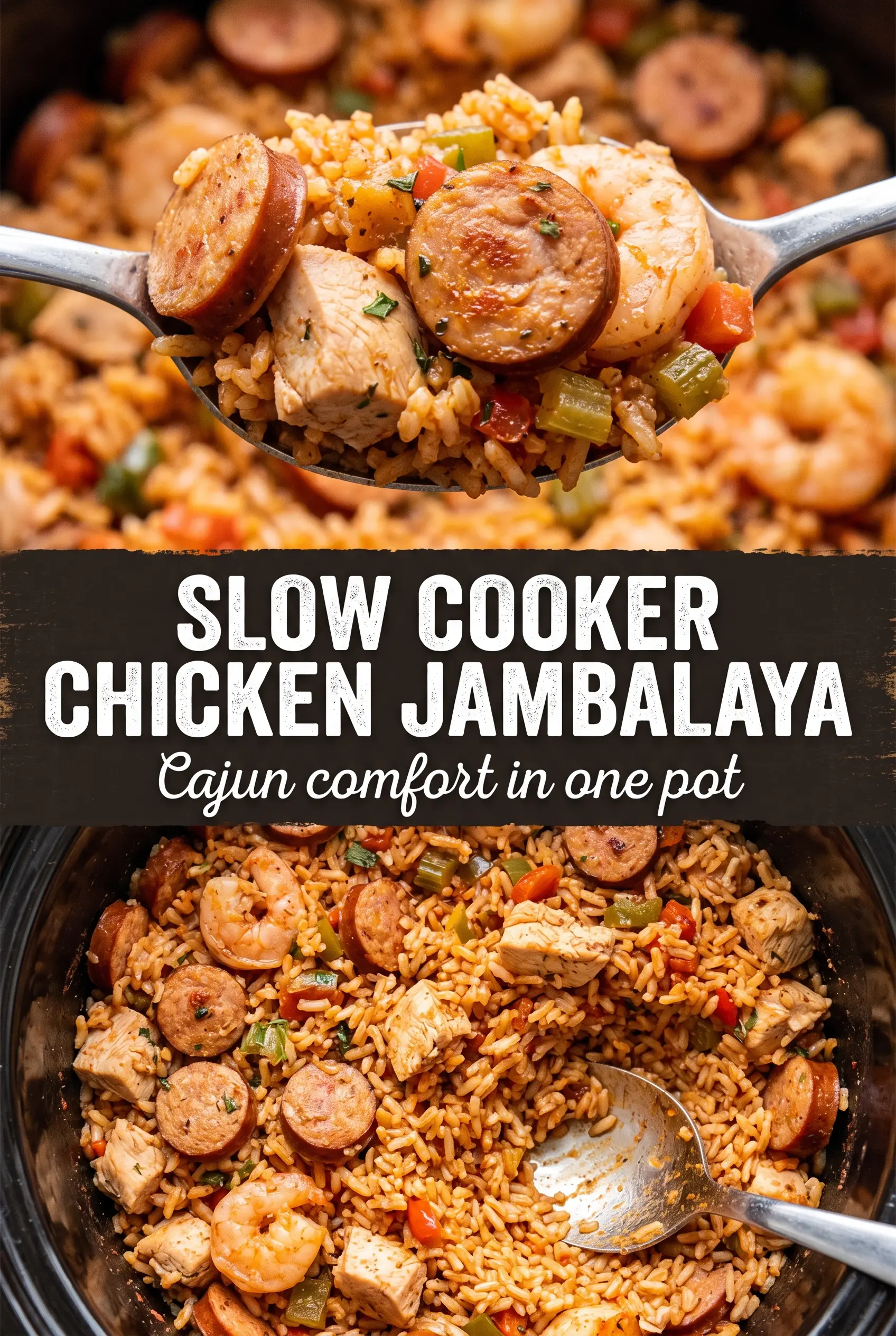
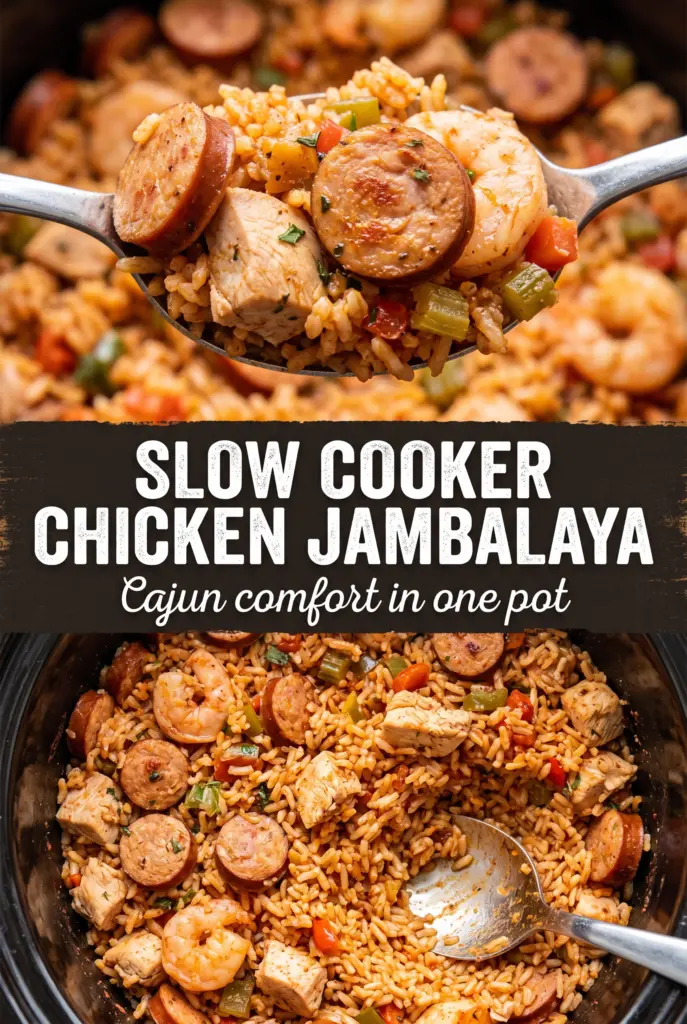
Slow cooker chicken jambalaya comes out hearty, smoky, and spoonable, with tender chicken, slices of andouille, and rice that picks up every bit of Cajun seasoning in the pot. The best part is that the flavor builds while the slow cooker does the work, so you still get that deep, layered taste without standing over the stove.
What makes this version work is the timing. The chicken, sausage, vegetables, and seasoning cook down first, which gives the broth time to taste like more than just broth. The rice goes in near the end, when the liquid is already well seasoned, so it absorbs flavor instead of turning bland or mushy.
Below, I’ll show you the one step that keeps the rice from overcooking and a few easy swaps if you need to stretch the ingredients or adjust the heat. If jambalaya has ever turned soft, salty, or one-note for you, this method fixes the usual trouble spots.
The rice stayed fluffy instead of turning to mush, and the sausage gave the whole pot such a good smoky finish. I cooked it on low and added the rice at the end exactly like suggested, and it came out perfect.
Save this slow cooker chicken jambalaya for the night you want smoky Cajun rice, tender chicken, and almost no hands-on time.
The Step That Keeps the Rice From Turning Mushy
The biggest mistake in slow cooker jambalaya is adding the rice too early. Long grain rice needs just enough liquid and just enough time to finish tender, and if it sits in the pot for six hours, it breaks down and turns soft before the rest of the dish is even done. Cooking the base first gives the chicken, sausage, and vegetables time to season the broth, which is what makes the final bowl taste complete.
The second thing that matters is heat control at the end. Once the rice goes in, the slow cooker needs to stay covered and stay on high just long enough for the grains to absorb the liquid. If the lid comes off too often, steam escapes and the rice cooks unevenly. If the mixture looks a little loose at first, that’s normal; the rice tightens as it rests.
What Each Ingredient Is Actually Doing in This Pot

- Chicken thighs — Thighs stay juicy through a long cook and hold up better than chicken breast. Breast will work in a pinch, but it can dry out before the rice is ready. Cut the chicken into chunks so it cooks evenly and so every spoonful gets a little of everything.
- Andouille sausage — This is where the smoky backbone comes from. If you use a milder smoked sausage, the jambalaya will still work, but it loses some of that Cajun-Creole depth. Slice it into rounds so the fat and seasoning can flavor the whole pot.
- Bell peppers, onion, celery, and garlic — This is the classic base that gives the dish its savory, rounded flavor. Dice the vegetables small enough that they soften fully in the slow cooker. Bigger chunks stay too crisp and make the final texture uneven.
- Cajun seasoning, thyme, smoked paprika, and cayenne — Cajun seasoning carries the salt and most of the spice, while thyme and paprika build the background flavor. If your Cajun blend is already salty, taste carefully before adding anything extra later. The cayenne is there for heat, but it’s easy to scale back if you want a milder pot.
- Long grain white rice — This is the right rice for a slow cooker jambalaya because the grains stay separate instead of clumping. Do not swap in quick-cooking rice here; it will go soft fast. Rinse the rice only if it’s dusty, not until the water runs perfectly clear, or you can wash away some of the starch that helps the dish finish cohesive.
Building the Flavor Before the Rice Goes In
Layer the Base First
Put the chicken and sausage in the slow cooker first, then add the vegetables, tomatoes, broth, and seasonings. The order matters less than the fact that everything except the rice cooks together first, giving the broth time to absorb the sausage and spices. Stir well so the seasoning doesn’t sit in one spot and turn overly salty in that area.
Cook Until the Chicken Is Tender
Let the mixture cook on low for 5 to 6 hours or on high for about 3 hours. You’re looking for chicken that shreds or breaks apart easily when pressed with a spoon and vegetables that are soft but not falling apart. If the liquid looks thinner than you expect, that’s fine; the rice will take care of the extra broth later.
Add the Rice at the End
Stir in the uncooked rice only after the chicken is fully tender. Cover the slow cooker and cook on high for 30 to 40 minutes, checking near the end so the grains are tender and the liquid is absorbed. If the rice is still a little firm but the pot looks dry, add a small splash of hot broth and keep cooking covered for a few more minutes.
Rest, Fluff, and Garnish
Once the rice is cooked, fluff the jambalaya with a fork and let it sit for a few minutes before serving. That short rest helps the rice settle and keeps the texture from feeling wet. Finish with green onions and parsley for a fresh, sharp contrast to the smoky spice.
How to Adapt This Pot for Different Kitchens and Different Heat Levels
Milder Jambalaya for Sensitive Heat
Cut the cayenne in half or leave it out completely, then use a Cajun seasoning blend that isn’t heavy on extra pepper. You’ll still get smoky, savory jambalaya from the sausage, paprika, and thyme, just without the lingering burn.
Gluten-Free Jambalaya
This recipe is naturally gluten-free as long as your andouille sausage and Cajun seasoning are certified gluten-free. That matters more than people expect, since some seasoning blends and sausages hide wheat-based fillers.
Chicken Breast Instead of Thighs
Chicken breast works, but it needs less time in the slow cooker or it will dry out before the rice is ready. If you swap it in, check for tenderness a little earlier and keep the rice stage on schedule so the meat doesn’t overcook while the grains finish.
Storage and Reheating
- Refrigerator: Store in an airtight container for up to 4 days. The rice will absorb more liquid as it sits, so expect it to thicken.
- Freezer: It freezes, but the rice softens a bit after thawing. Freeze in portions for up to 2 months and cool it completely before packing it up.
- Reheating: Reheat gently on the stovetop or in the microwave with a splash of broth to loosen it. Stir halfway through warming so the rice heats evenly instead of drying out at the edges.