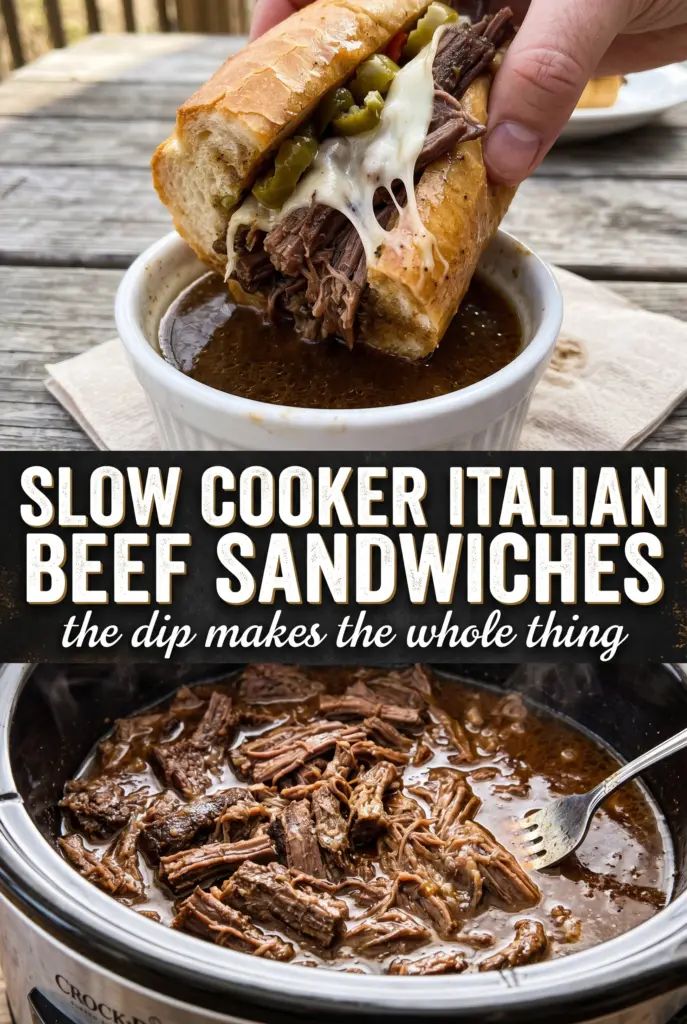
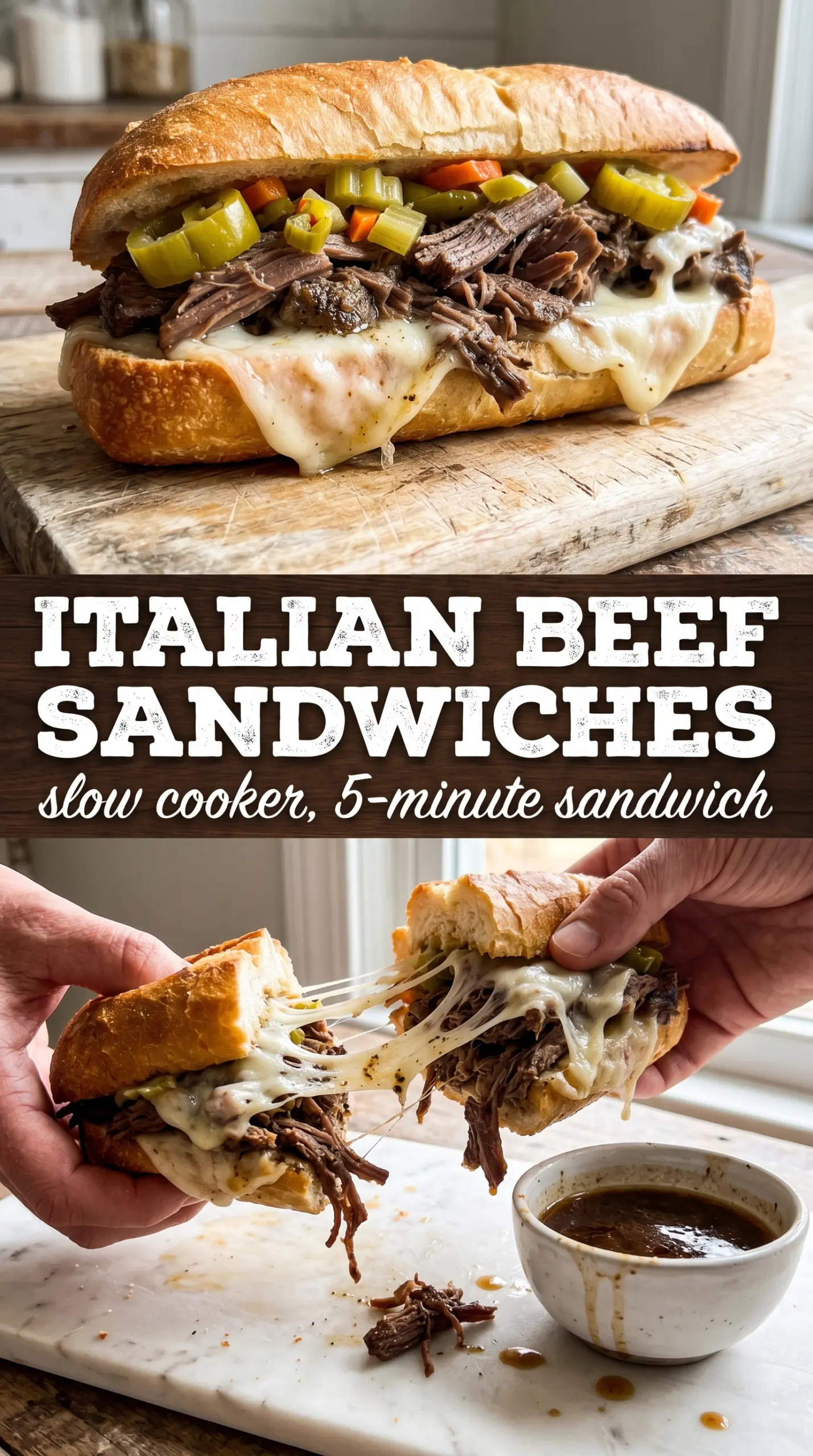
Shredded Italian beef piled high on a crusty roll is the kind of sandwich that disappears fast at the table. The beef turns spoon-tender in a pepperoncini-spiked broth, then soaks back up those savory juices before it ever touches the bun. What you get is messy in the best way: juicy beef, a punch of tang, and just enough heat to keep each bite interesting.
The slow cooker does the heavy lifting here, but the seasoning mix matters. Italian dressing mix brings herbs and a little salt, while the au jus packet adds the deep, beefy base that makes the cooking liquid worth serving alongside the sandwich. Pepperoncini brine is the piece people skip when they shouldn’t; it cuts through the richness and keeps the roast from tasting flat or one-note.
Below, I’ll show you why the roast should go back into its juices after shredding, plus a few smart ways to serve these sandwiches if you want to stretch the filling or change up the heat level.
The beef shredded cleanly after 8 hours and the juices soaked right back in. I strained the liquid for dipping, and my husband kept adding more giardiniera because the tangy heat was perfect.
Like this pepperoncini-spiked Italian beef? Save it to Pinterest for the nights when you want a juicy sandwich with almost no hands-on work.
The Secret to Tender Italian Beef Is Letting It Rest in the Juices
The biggest mistake with slow cooker Italian beef is pulling the meat, shredding it, and serving it dry. Chuck roast needs time to reabsorb the cooking liquid after it comes apart. That last soak is where the sandwich goes from decent to worth making again.
There’s also no need to chase deep browning here. This recipe leans on the seasoning packets, pepperoncini, and broth to build the sauce in the slow cooker itself. If the roast is submerged and left alone, the connective tissue breaks down and the meat shreds in soft strands instead of falling into dry chunks.
- Chuck roast — This cut has enough fat and connective tissue to turn silky after a long cook. Leaner beef dries out before it ever gets tender.
- Au jus gravy mix — This gives the cooking liquid that roast-beef depth. A packet is the easiest way to get the right savory backbone without building a pan sauce from scratch.
- Italian dressing mix — The dried herbs and seasoning salt wake up the beef and keep the flavor from tasting flat. Homemade seasoning can work, but it won’t have the same punch unless you season aggressively.
- Pepperoncini with brine — The peppers bring gentle heat, but the brine is what sharpens the whole pot. If you only use the peppers and skip the liquid, the result loses that classic tang.
- Beef broth — This stretches the cooking juices without making them thin or bland. Water works in a pinch, but the broth keeps the final dipping liquid full-bodied.
- Giardiniera — This is the finishing bite that cuts through the richness. Mild or hot both work; use the kind that matches how much heat you want in the sandwich.
What Each Ingredient Is Actually Doing in This Slow Cooker Beef
- Beef (chuck roast, short ribs, or ground beef) — Tougher cuts break down beautifully in slow cooking. The connective tissue becomes gelatin, enriching the broth.
- Liquid (beef broth, wine, or sauce) — This becomes both the cooking medium and the final sauce. Choose quality broth for better flavor.
- Onions (the aromatic base) — Slice thick so they stay distinct while melting into the sauce. They become sweet and mellow during cooking.
- Garlic (the depth flavor) — Minced garlic cooks into the broth; sliced stays more distinct. Use generously for deep flavor.
- Vegetables (carrots, potatoes, peppers) — Layer them by cooking time. Hard vegetables first, softer ones later so everything finishes together.
- Seasonings (salt, pepper, Worcestershire, spices) — Build flavor as you layer. Taste midway and adjust because flavors concentrate during cooking.
- Tomato paste or sauce (optional richness) — This adds body and depth. Cook for hours so it becomes part of the sauce rather than a separate element.
- Low heat for 8 hours (the transformation) — Long, slow cooking turns tough cuts into fork-tender meat. This is what makes cheap cuts taste expensive.
Build the Juicy Filling Before You Touch the Rolls
Seasoning the Roast
Set the chuck roast in the slow cooker and scatter the seasoning mixes evenly over the top so the surface gets seasoned from edge to edge. The pepper and garlic powder help round out the packet mixes, especially if your au jus blend leans salty. Pouring everything on in layers instead of dumping it all in one corner keeps the seasoning from clumping.
Cooking Low and Slow
Add the broth and the full jar of pepperoncini, brine included, then cover and cook on low until the beef falls apart with almost no resistance. Eight hours is the sweet spot for most 3-pound roasts, but a thicker roast may need the full nine. If it still fights the fork, it needs more time; if you rush it, the meat will shred into dry threads instead of soft strands.
Shredding and Soaking
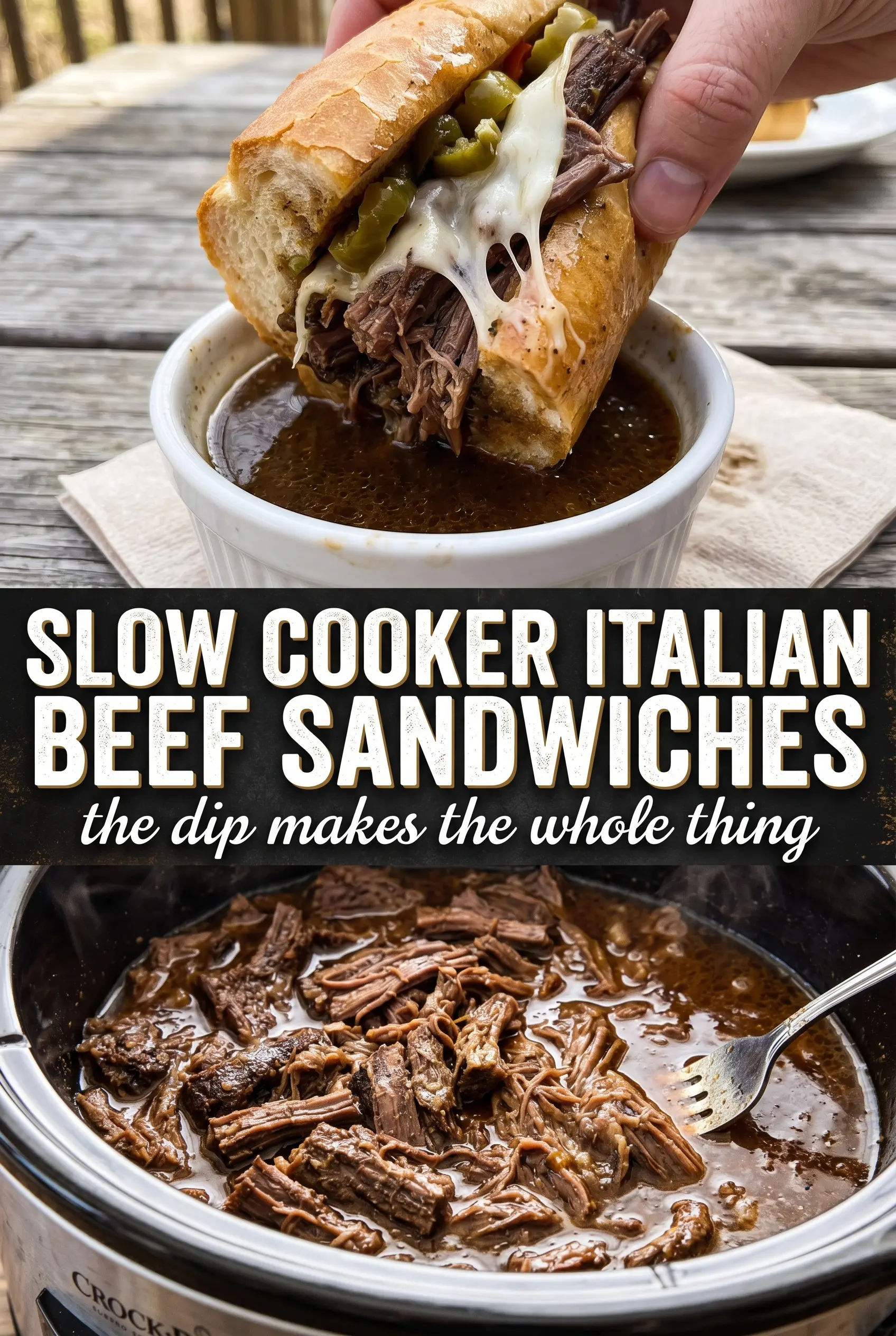
Lift the beef out, shred it with two forks, and return it to the slow cooker for a final soak in the juices. That step matters because the shredded meat acts like a sponge and pulls flavor back in while it sits. Strain some of the liquid for dipping if you like a cleaner sandwich, but keep enough in the pot so the meat stays glossy and moist.
Assembling the Sandwiches
Pile the beef onto crusty Italian rolls or hoagies that can stand up to the juices without collapsing. Spoon giardiniera over the top and serve with a little cup of the strained broth for dipping. If the rolls are too soft, they’ll go soggy before the first bite, so choose bread with a firm crust and a chewy interior.
How to Adjust the Heat, the Salt, or the Crowd Size
Make it milder for kids or spice-sensitive eaters
Use the pepperoncini brine but cut the peppers in half or leave out a few from the jar. You’ll still get the tang that gives the beef its signature flavor, but the heat will stay softer and more background-level.
Gluten-free version
Use gluten-free au jus and Italian dressing mixes, then serve on gluten-free rolls or over mashed potatoes. The texture of the beef stays the same; the only thing that changes is the bread, so the key is choosing a roll sturdy enough to handle the juices.
Turn it into a crowd spread
Stretch the shredded beef with extra broth and serve it buffet-style with rolls, sliced provolone, and giardiniera on the side. This keeps the beef from drying out on a serving platter and lets everyone build their own sandwich without the bread getting soggy early.
Skip the sandwich and serve it another way
Pile the beef over rice, roasted potatoes, or creamy polenta if you want a fork-and-knife dinner. The cooking liquid becomes the sauce, so you get the same punchy flavor without needing a roll at all.
Storage and Reheating
- Refrigerator: Store the beef and juices together for up to 4 days. The flavor deepens overnight, and the meat stays juicier if it isn’t left dry.
- Freezer: Freeze the shredded beef in its liquid for up to 3 months. Thaw it in the fridge so the meat doesn’t tighten up from a fast temperature change.
- Reheating: Warm it gently on the stove or in the microwave with a spoonful of the cooking juices. High heat dries out the edges before the center is hot, so go slow and keep the meat covered.
Questions I Get Asked About This Recipe
Slow Cooker Italian Beef Sandwiches
Ingredients
Equipment
Method
- Place the beef chuck roast in the slow cooker.
- Sprinkle Italian dressing mix, au jus gravy mix, dried Italian seasoning, garlic powder, and black pepper over the beef.
- Pour the beef broth and the entire jar of pepperoncini peppers with brine over everything.
- Cook on low for 8–9 hours until the beef is completely tender and shreds easily.
- Remove the beef and shred with two forks, then return it to the slow cooker to soak in the juices.
- Pile the shredded Italian beef onto crusty Italian or hoagie rolls.
- Top generously with giardiniera.
- Serve with a small cup of the strained cooking juices for dipping.