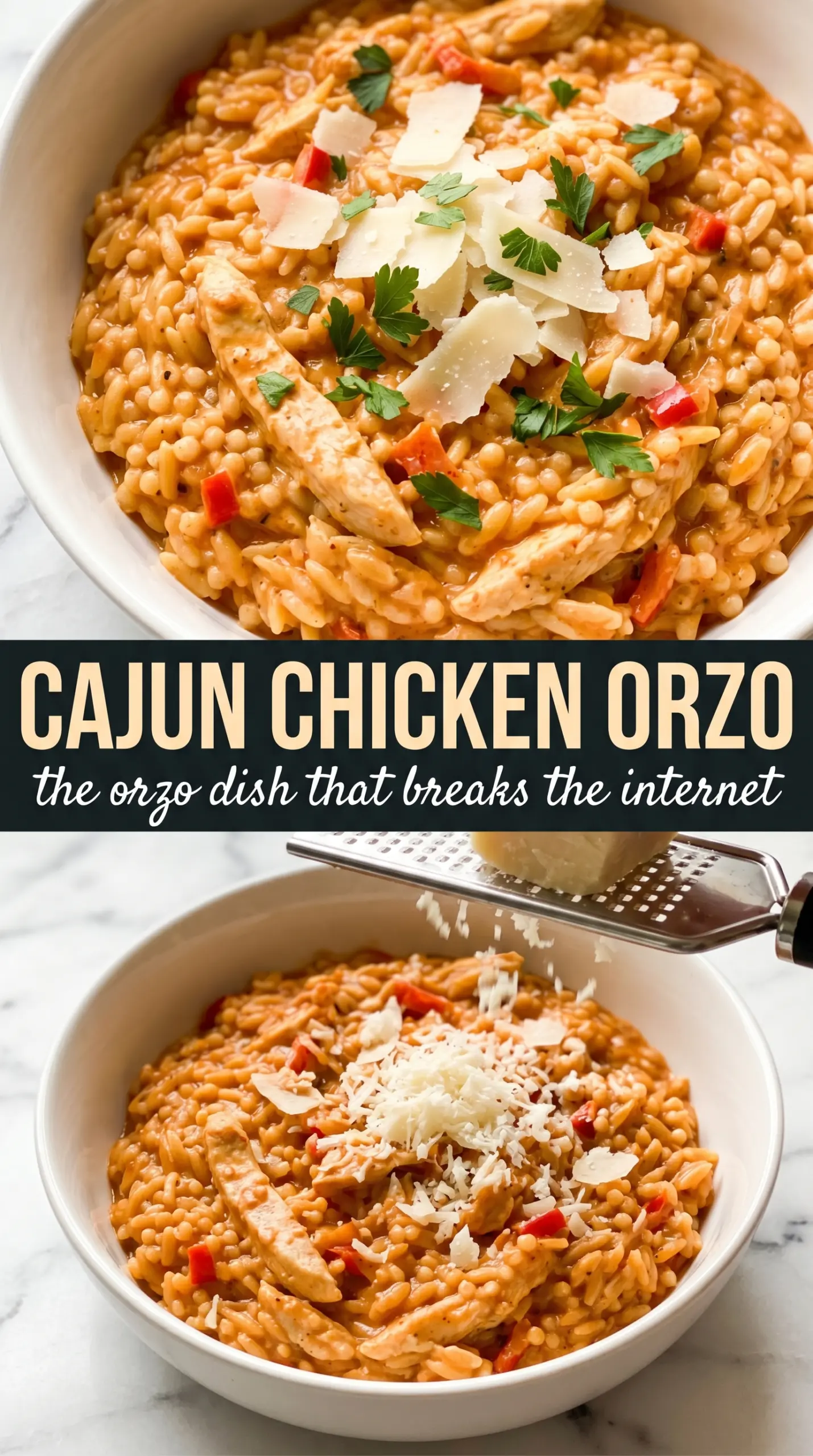
Blackened Cajun chicken over creamy orzo is the kind of dinner that hits hard in the best way: smoky, peppery chicken on top of a rich, orange-tinted pan sauce with just enough heat to keep every bite interesting. The orzo stays spoonable and glossy instead of turning heavy, and the peppers and onion give it the backbone it needs so the whole skillet tastes layered, not flat.
What makes this version work is the order. The chicken gets a hard sear first, which leaves seasoned browned bits in the pan for the vegetables and broth to pick up later. The orzo is toasted before the liquid goes in, so it keeps a little bite instead of going soft and gluey. A short simmer with cream and Parmesan at the end turns everything silky without dulling the Cajun seasoning.
Below, I’m walking through the parts that matter most: how to get that blackened crust without drying out the chicken, why the orzo should be stirred often, and what to change if you want to tone down the heat or stretch the dish a little farther.
The chicken got that dark, spicy crust I was hoping for, and the orzo turned creamy without sticking to the bottom of the pan. I added the lemon at the table and it woke everything up.
Save this Cajun Chicken Orzo for a one-pan dinner with blackened chicken, creamy orzo, and a little kick from the Cajun seasoning.
The Part Most People Get Wrong When They Cook Orzo in One Pan
Orzo looks like a tiny pasta, but it behaves like a troublemaker if you treat it like rice. It needs enough liquid to stay moving, and it needs attention while it cooks or the starch will settle on the bottom and turn sticky before the middle is tender. The fix is straightforward: toast it first, then simmer it uncovered in broth and stir often so the pasta cooks evenly while the sauce thickens around it.
The other trap is adding the cream too early. Cream doesn’t help the orzo cook, and if it goes in before the pasta has taken on enough liquid, you end up with a sauce that tastes thin and the pasta that still needs time. Wait until the broth has reduced and the orzo is almost tender, then finish with cream and Parmesan so the pan turns glossy instead of heavy.
What the Cajun Seasoning, Cream, and Parmesan Are Each Doing Here
Use a Cajun seasoning you actually like eating straight from the jar. Some blends are salt-heavy and one-note; others bring garlic, paprika, cayenne, and herbs in a way that gives the chicken real depth. If yours is very salty, cut back a little and season the chicken lightly before cooking.
- Boneless skinless chicken thighs — Thighs stay juicy under a hard sear, which matters here because the Cajun crust needs time in the pan. Chicken breast will work, but it cooks faster and goes dry more easily, so pull it the moment it reaches 165°F.
- Orzo — This pasta is what gives the dish its creamy, almost risotto-like body. Regular rice won’t behave the same way, and larger pasta shapes won’t absorb the sauce evenly.
- Heavy cream — This is what turns the broth and starch into a silky sauce. Half-and-half can work in a pinch, but the sauce will be looser and more likely to split if you boil it hard.
- Parmesan cheese — Parmesan adds salt, body, and a little sharpness. Grate it fresh if you can; pre-shredded cheese often melts less cleanly and can make the sauce grainy.
- Bell peppers, onion, and garlic — These build the base and soften the heat of the seasoning without muting it. Dice them small so they melt into the orzo instead of staying chunky and watery.
Building the Skillet So the Chicken Stays Blackened and the Orzo Stays Creamy
Getting the Chicken Crust First
Rub the chicken thighs with one tablespoon of Cajun seasoning and let the surface look evenly coated, not clumpy. Sear them in hot olive oil over medium-high heat until the outside is dark and crusted and the meat releases from the pan without sticking. If the pan is too cool, the seasoning will steam instead of blacken, and you’ll lose that smoky edge before the chicken is cooked through.
Cooking the Vegetables in the Chicken Drippings
Once the chicken is out, the pan should still have browned bits stuck to the bottom. Add the peppers and onion and cook them until they soften and pick up a little color, then stir in the garlic and remaining seasoning just long enough for it to smell toasty. If the garlic goes in too early, it burns before the vegetables finish, and bitter garlic can take over the whole skillet.
Simmering the Orzo Until It Turns Saucy
Stir in the dry orzo and let it toast for a minute before adding the broth. That short toast keeps the pasta from tasting raw and helps it hold its shape during the simmer. Cook uncovered and stir often, scraping the bottom of the pan each time; if you walk away, the starch settles and the orzo grabs the skillet before it softens.
Finishing With Cream and Parmesan
When the orzo is tender and most of the broth is gone, lower the heat and stir in the cream and Parmesan. The sauce should thicken in a couple of minutes and coat the pasta instead of pooling around it. If it looks grainy, the heat was too high when the cheese went in, so pull the pan off the burner and stir until it comes back together.
How to Bend This Recipe Without Losing What Makes It Work
Make it dairy-free
Swap the heavy cream for full-fat coconut milk and leave out the Parmesan, or use a dairy-free Parmesan-style cheese if you like. The sauce will still be creamy, but it will taste a little softer and less sharp, so add an extra pinch of Cajun seasoning at the end to keep the dish lively.
Use chicken breast instead of thighs
Chicken breast works if that’s what you have, but it won’t stay as juicy under a long sear. Slice it a little thicker, cook it just to 165°F, and pull it off the heat right away so it doesn’t dry out while the orzo finishes.
Dial the heat down
Use a mild Cajun seasoning and cut the blend in the chicken rub by a little if yours runs hot. You’ll still get the smoky paprika and garlic notes, but the finish will be more family-friendly and less fiery.
Stretch it for extra servings
Add a splash more broth and a little extra cream, then toss in a handful of spinach at the end. The spinach wilts into the sauce without changing the texture much, and the extra liquid keeps the orzo from turning tight when you reheat leftovers.
Storage and Reheating
- Refrigerator: Store in an airtight container for up to 4 days. The orzo thickens as it sits, so expect it to look a little tighter the next day.
- Freezer: It can be frozen, but the cream sauce may separate a bit after thawing. Freeze in individual portions for up to 2 months and stir well after reheating.
- Reheating: Warm it gently on the stovetop or in the microwave with a splash of broth or water. High heat dries out the chicken and makes the sauce seize up before the orzo loosens again.
Answers to the Questions Worth Asking

Cajun Chicken Orzo
Ingredients
Equipment
Method
- Rub chicken thighs with 1 tablespoon Cajun seasoning. Heat olive oil in a large deep cast iron skillet over medium-high heat, then sear chicken for 4-5 minutes per side until blackened and cooked through to 165°F, and remove.
- Slice the cooked chicken thighs and set aside. Keep any resting juices in the skillet for later.
- In the same skillet, cook bell peppers and onion over medium heat for 4 minutes. Add garlic and remaining Cajun seasoning and cook 1 minute.
- Add orzo to the skillet and toast for 1 minute. Pour in chicken broth, bring to a simmer, and cook uncovered for 10-12 minutes, stirring often, until orzo is tender.
- Stir in heavy cream and Parmesan, then simmer for 2 minutes until creamy. Scrape the bottom to keep the orzo from sticking.
- Top with sliced Cajun chicken. Garnish with sliced green onions and serve with lemon wedges.