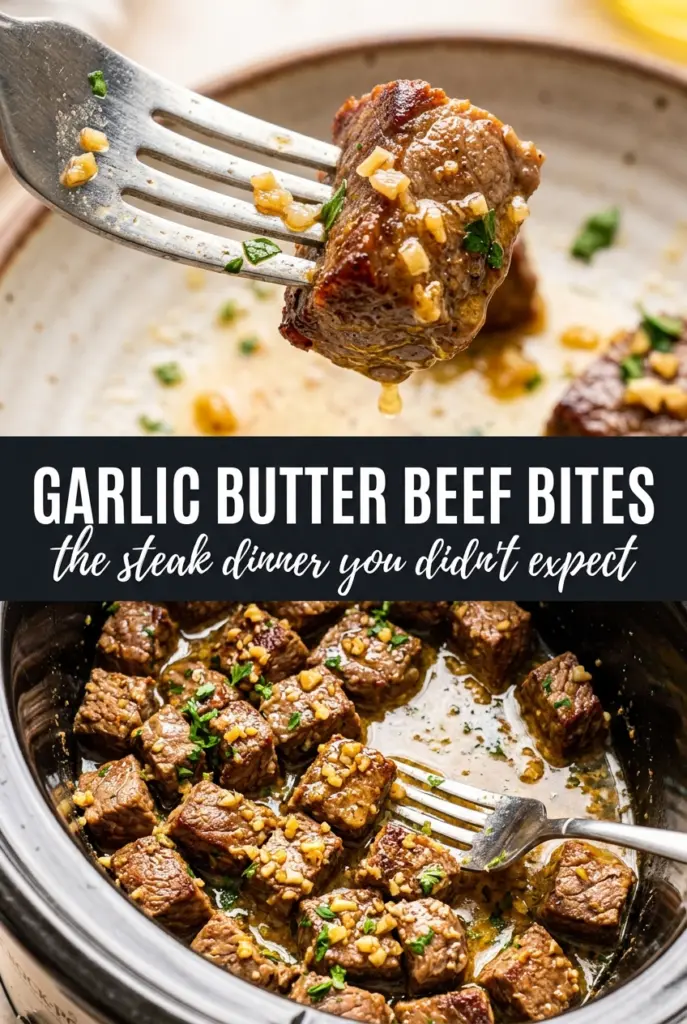
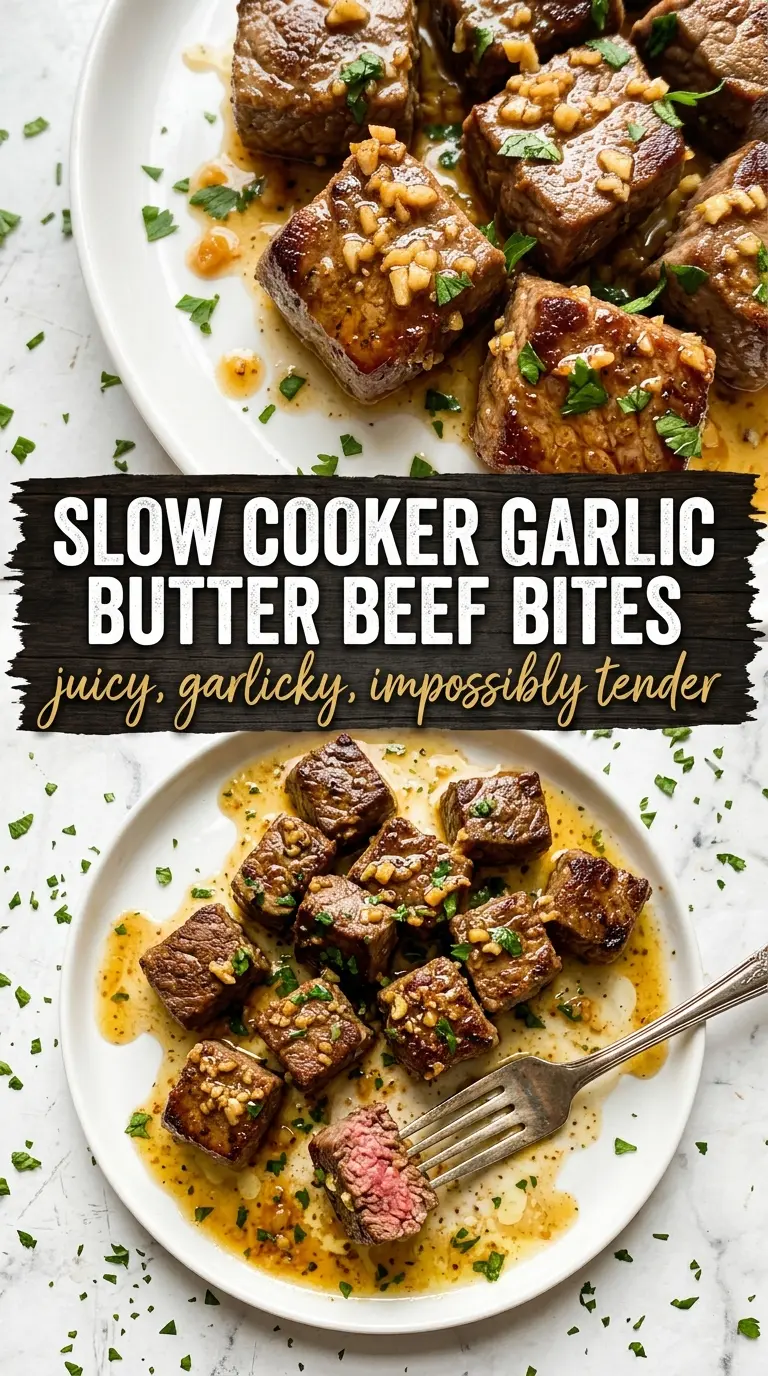
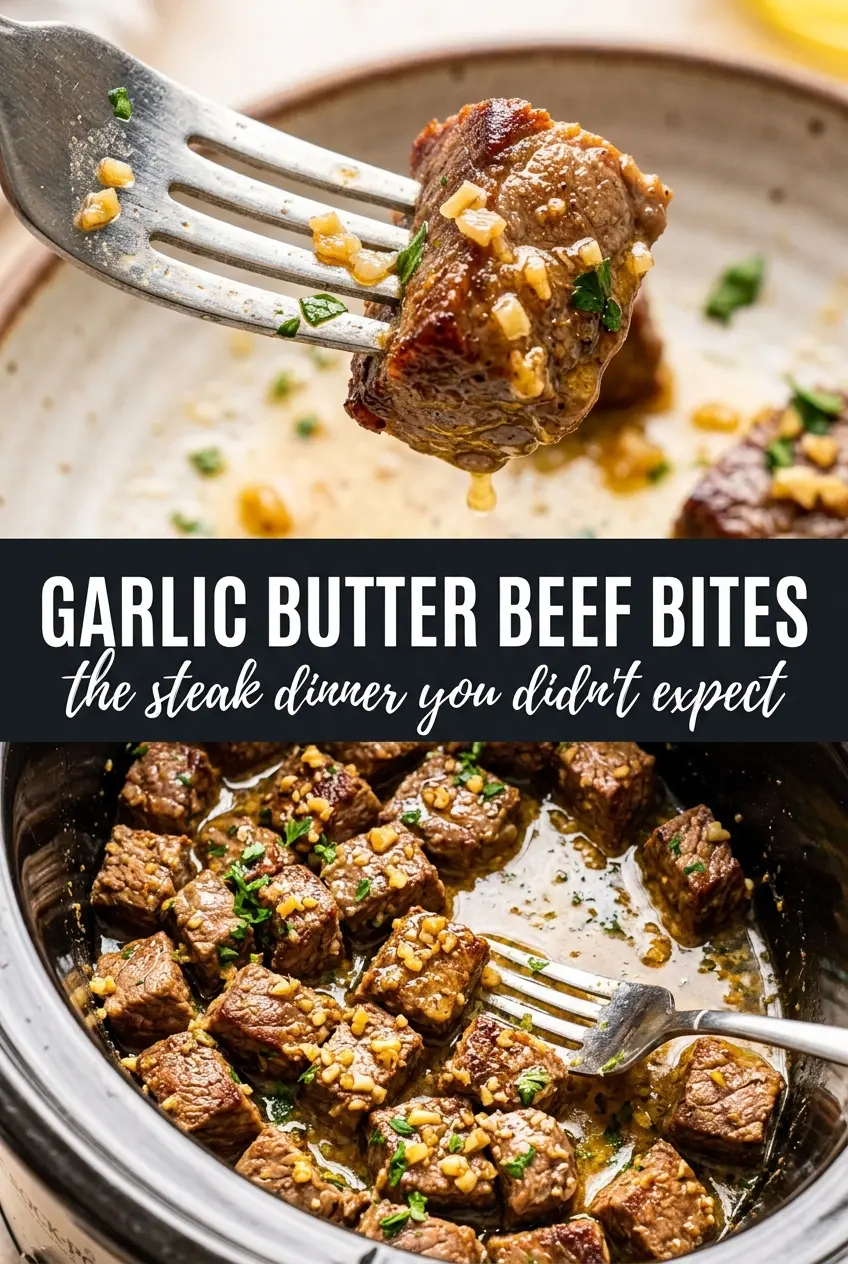
Slow Cooker Garlic Butter Beef Bites come out tender, glossy, and packed with the kind of savory garlic-butter sauce that clings to every piece of beef and begs to be spooned over mashed potatoes. The slow cooker does the heavy lifting here, but the real payoff is in the finish: a last stir of butter turns the cooking liquid into a smooth, rich sauce instead of a thin broth at the bottom of the pot.
This version works because the beef cooks gently in enough liquid to stay juicy, but not so much that the flavor washes out. Soy sauce and Worcestershire bring depth that plain broth can’t give you, while smoked paprika and red pepper flakes add just enough backbone to keep the sauce from tasting flat. The garlic softens as it cooks, so it tastes mellow and savory instead of sharp.
Below, I’ll walk through the small choices that matter most here: which beef cuts stay tender in the slow cooker, when to add the butter, and how to fix the sauce if it comes out thinner than you expected.
The beef turned out fork-tender and the garlic butter sauce was thick enough to coat the noodles instead of running all over the plate. I used stew meat and it was perfect after 4 hours on low.
Save these Slow Cooker Garlic Butter Beef Bites for a tender, saucy dinner that finishes with a glossy garlic butter sauce.
Why the Butter Goes in Twice
The first portion of butter does more than add richness. It melts slowly over the beef and helps carry the garlic, spices, and Worcestershire through the whole pot so the sauce tastes seasoned all the way through, not just on the surface. The second addition at the end is what changes the texture: it gives the cooking liquid a silky finish and a little sheen.
If you put all the butter in at the start, you’ll still get flavor, but the sauce won’t have the same glossy finish when it’s done. That final stir of butter matters because it emulsifies with the hot liquid after the beef is cooked, which is what keeps the sauce from tasting watery.
- Beef stew meat or sirloin — Stew meat is the forgiving choice for long, gentle cooking. Sirloin works too if it’s cut into even 1.5-inch pieces and not overcooked. Uneven chunks lead to some pieces drying out before the rest turn tender.
- Beef broth — This is the base of the sauce, so use one with decent flavor. A low-sodium broth gives you more control, especially because soy sauce and Worcestershire already bring salt.
- Soy sauce and Worcestershire sauce — These are doing the deep savory work. There isn’t a perfect substitute for the combination, but if you need one, coconut aminos can stand in for soy sauce and a little extra broth plus a splash of apple cider vinegar can replace some of the Worcestershire’s tang.
- Garlic — Fresh minced garlic gives the sauce its backbone. Jarred garlic will work in a pinch, but the flavor is sharper and less rounded after hours in the slow cooker.
What Each Ingredient Is Actually Doing in This Slow Cooker Beef
- Beef (chuck roast, short ribs, or ground beef) — Tougher cuts break down beautifully in slow cooking. The connective tissue becomes gelatin, enriching the broth.
- Liquid (beef broth, wine, or sauce) — This becomes both the cooking medium and the final sauce. Choose quality broth for better flavor.
- Onions (the aromatic base) — Slice thick so they stay distinct while melting into the sauce. They become sweet and mellow during cooking.
- Garlic (the depth flavor) — Minced garlic cooks into the broth; sliced stays more distinct. Use generously for deep flavor.
- Vegetables (carrots, potatoes, peppers) — Layer them by cooking time. Hard vegetables first, softer ones later so everything finishes together.
- Seasonings (salt, pepper, Worcestershire, spices) — Build flavor as you layer. Taste midway and adjust because flavors concentrate during cooking.
- Tomato paste or sauce (optional richness) — This adds body and depth. Cook for hours so it becomes part of the sauce rather than a separate element.
- Low heat for 8 hours (the transformation) — Long, slow cooking turns tough cuts into fork-tender meat. This is what makes cheap cuts taste expensive.
Keeping the Beef Tender Without Watering Down the Sauce
Layer the Flavor Before the Heat Starts
Put the beef directly into the slow cooker, then pour the broth, soy sauce, Worcestershire, garlic, and seasonings over the top. The liquid doesn’t need to cover the beef completely; it just needs enough depth to keep things moist while the cooker does its job. If the meat is piled too tightly, give it a quick stir so the seasonings don’t stay concentrated in one corner.
Let the Butter Melt Slowly Across the Top
Place the butter on top in slices instead of dropping in one big chunk. As it melts, it spreads over the beef and into the broth, which helps the sauce stay rich instead of greasy. If you’re using high heat, check at the lower end of the time range so the butter doesn’t separate and the beef doesn’t go past tender into stringy.
Finish with a Gloss, Not a Boil
Once the beef is tender, stir in the remaining butter and let it melt into the hot sauce. Don’t crank the cooker to high at the end; that can make the sauce taste broken and thin. You want a glossy coating that clings to the beef, and that happens best with gentle residual heat.
How to Adapt These Beef Bites for Different Tables
Dairy-Free Version
Swap the butter for a good dairy-free butter substitute that melts cleanly. You’ll still get richness, but the sauce may be a touch less silky, so let it rest for a few minutes after cooking before serving. That resting time helps the juices settle and thickens the sauce a little naturally.
Gluten-Free Option
Use a certified gluten-free soy sauce or tamari. Worcestershire sauce can be a hidden source of gluten depending on the brand, so check the label before it goes in. The texture stays the same, and the flavor is still deep and savory.
Using Chuck Instead of Stew Meat
Chuck roast cut into chunks works beautifully here and often tastes beefier than packaged stew meat. Trim only the toughest excess fat, then keep the pieces similar in size so they finish at the same time. This is the best swap if you want meat that shreds a little at the edges but still holds together.
Storage and Reheating
- Refrigerator: Store in an airtight container for up to 4 days. The sauce thickens as it chills, so expect it to look more set the next day.
- Freezer: It freezes well for up to 2 months. Freeze the beef and sauce together in a sealed container, leaving a little room for expansion.
- Reheating: Reheat gently on the stove or in the microwave with a splash of broth to loosen the sauce. High heat can make the beef tough and can separate the butter-based sauce.
The Questions Worth Asking Before You Start
Slow Cooker Garlic Butter Beef Bites
Ingredients
Equipment
Method
- Add the beef pieces to the slow cooker.
- Add beef broth, soy sauce, Worcestershire sauce, minced garlic, onion powder, smoked paprika, salt, black pepper, and red pepper flakes.
- Place 4 tablespoons of butter on top of the beef.
- Cover and cook on low for 4–5 hours, or on high for 2–3 hours, until the beef is tender and pulls apart easily.
- Stir in the remaining 2 tablespoons of butter and continue stirring until fully melted and the sauce looks glossy.
- Serve hot over mashed potatoes, egg noodles, or rice, then garnish with fresh parsley.