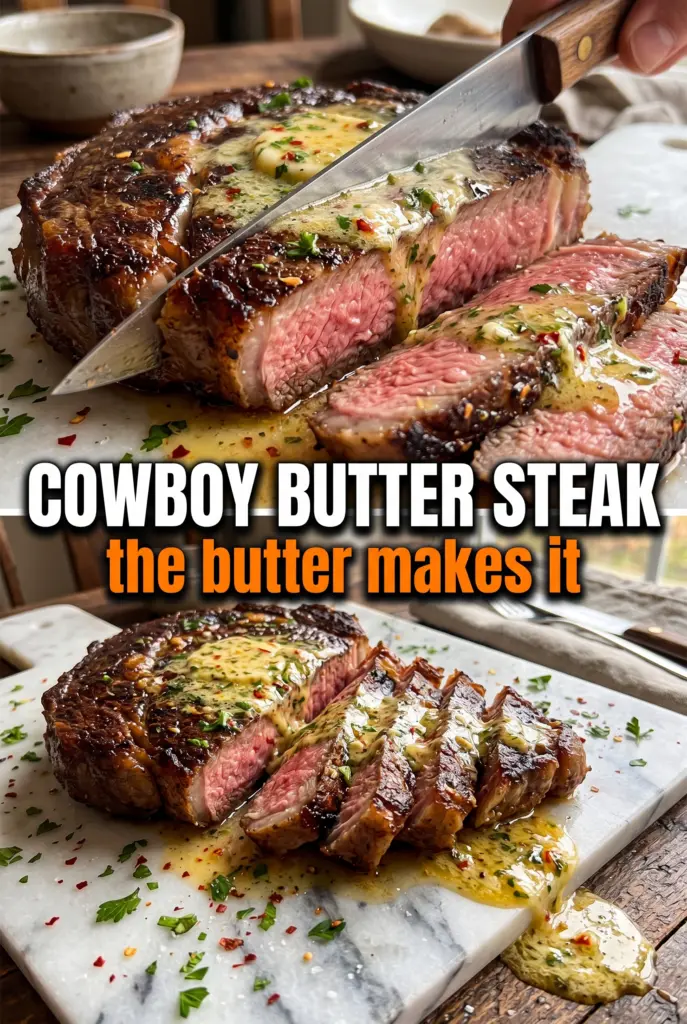
Thick ribeye with cowboy butter is the kind of steak dinner that tastes like you worked a lot harder than you did. The crust turns dark and savory in a hot cast iron skillet, then the warm butter melts into the meat and carries garlic, herbs, lemon, and a little heat into every bite. It’s rich without feeling heavy, and the sauce clings to the steak instead of running off the plate.
What makes this version work is timing. The butter gets mixed ahead of time so it has a chance to firm up, which means it can melt slowly over the hot steak instead of disappearing into the pan. The skillet has to be properly hot before the steak goes in, or you’ll steam the outside before you ever build that crust. Then the final butter pat goes on after resting, when the steak is warm enough to melt it but not so hot that the herbs taste scorched.
Below, I’m walking through the part that matters most: how to get a deep sear without overcooking the center, plus the small details that keep the cowboy butter bright instead of greasy.
The butter melted into the steak perfectly and the crust stayed crisp even after resting. My husband said it tasted like a steakhouse dinner, and the garlic-herb butter on top made every bite better.
Like this ribeye? Save it to Pinterest for the nights when you want a crackly cast iron crust and a glossy cowboy butter finish.
The Part Most Steak Recipes Get Wrong: The Pan Has to Be Smoking
The biggest mistake with a ribeye like this is starting with a skillet that’s merely hot. You want the oil shimmering and the pan just about smoking before the steak goes in, because that blast of heat is what gives you the deep brown crust before the center has time to race ahead. If the pan is too cool, the steak releases moisture and starts to stew in its own juices. That’s where the gray, soft exterior comes from.
Ribeye works especially well here because the marbling keeps the meat tender while the outside takes on serious color. A thinner steak won’t give you as much leeway, and a thicker cut needs those full 3 to 4 minutes per side to build the crust without losing the pink center. If you press down on the steak with the spatula, stop. Let the weight of the meat and the heat of the pan do the work.
What Each Part of the Cowboy Butter Is Doing
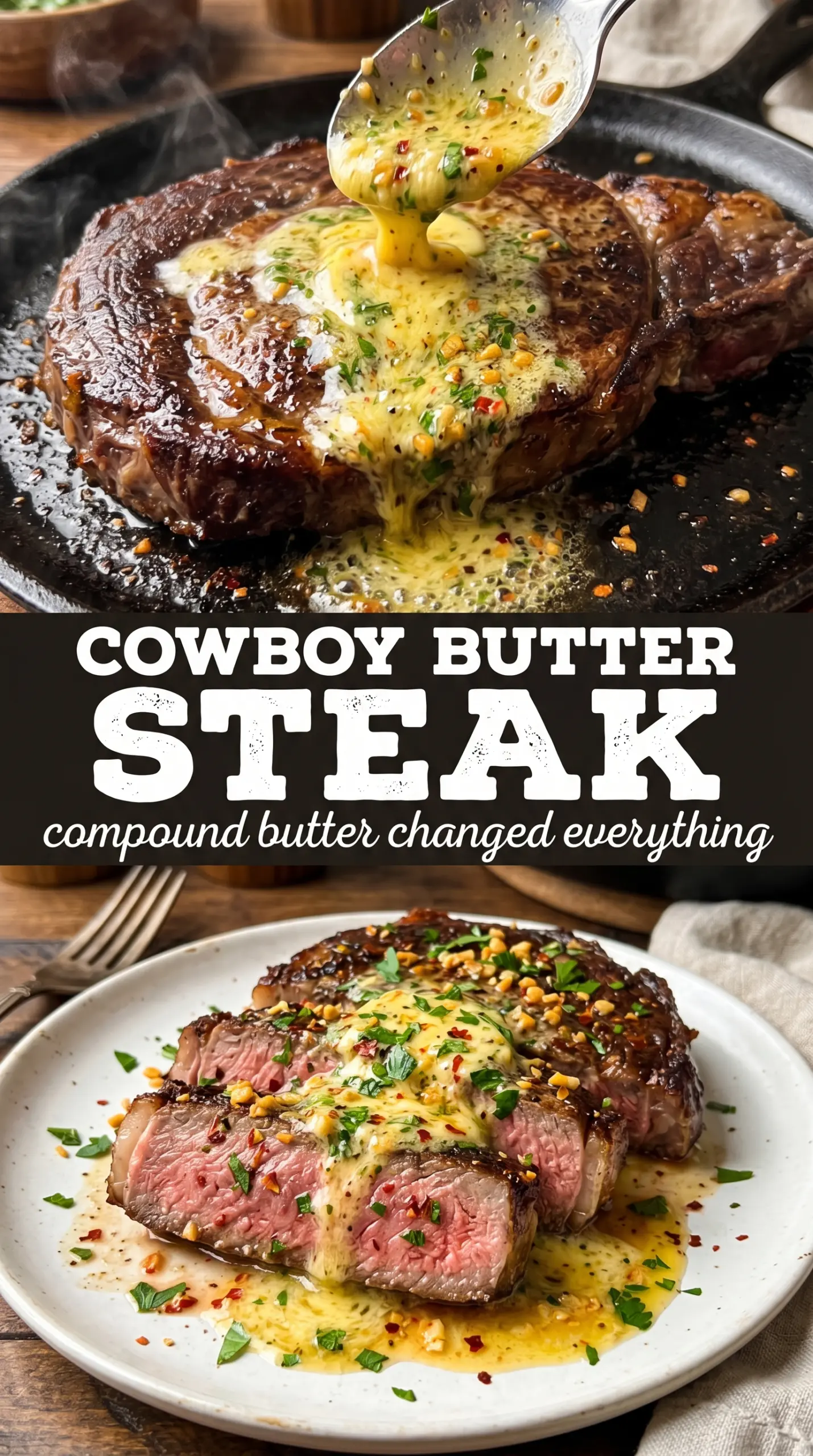
- Unsalted butter — This gives you control over the salt level, especially since the steak is seasoned aggressively. Softened butter blends cleanly, while cold butter leaves little pockets that don’t carry the herbs evenly.
- Garlic, parsley, chives, Dijon, and lemon juice — This is the heart of the cowboy butter. Garlic brings punch, the herbs keep it fresh, Dijon adds a faint tang and helps the butter emulsify, and lemon keeps the richness from tasting flat. Fresh herbs matter here; dried herbs don’t give the same bright finish.
- Smoked paprika and red pepper flakes — These don’t make the butter taste spicy-hot so much as deeper and warmer. The smoked paprika gives the butter a grilled note, and the pepper flakes leave a light burn that shows up after the beefy flavor.
- Ribeye — This cut is worth it because the fat marbling bastes the steak from within. You can use strip steak or even filet, but ribeye gives you the richest result and stands up best to the strong butter.
How to Build the Sear, Rest, and Finish Without Losing the Crust
Mix the Butter First
Stir the cowboy butter ingredients together until they look evenly speckled and smooth, then roll them into a log and chill it until firm. That chill time matters because soft butter on a hot steak melts too fast and turns greasy instead of glossy. If you want clean slices for serving, let the butter firm all the way through before you cut it.
Season the Steaks Properly
Salt and coarse black pepper should cover every surface of the steak, including the edges. This is one of those places where underseasoning shows immediately, because ribeye can take more salt than most people think. If the steak is wet on the surface, pat it dry first; moisture is the enemy of browning.
Sear in the Hot Cast Iron
Add the oil, lay in the steaks, and leave them alone for the first few minutes. You’re listening for a steady aggressive sizzle, not a gentle one. If the steak sticks when you try to move it, it’s not ready to flip yet; once the crust forms, it releases naturally. For medium-rare, 3 to 4 minutes per side is the target, but use the color and feel of the steak more than the clock.
Baste, Rest, and Finish With Butter
In the last minute, add a pat of cowboy butter and tilt the pan so you can spoon the melted butter over the steak. That gives the surface extra shine and pulls the garlic and herbs into the crust without burning them. Then rest the steak for 5 minutes under loose foil. If you cut too early, the juices run out and the butter slides off instead of soaking into the meat.
Three Smart Ways to Work This Steak Into Your Kitchen
Make it dairy-free with a good plant butter
A high-quality vegan butter will carry the garlic and herbs better than oil alone, but it won’t taste as rich or steakhouse-like. Pick one that’s firm when cold and unsalted if possible. The result is still good, just a little less plush on the finish.
Swap the ribeye for strip steak
Strip steak gives you a leaner bite and a tighter grain, which means the cowboy butter stands out even more. It doesn’t have quite the same lush marbling as ribeye, so watch the cook time closely and pull it a touch earlier if the steak is thinner.
Use the butter on chicken or potatoes
The cowboy butter is excellent on grilled chicken, roasted potatoes, or corn on the cob. That said, the butter is strongest when it melts over something hot and sturdy enough to carry the garlic and lemon, so don’t save it for delicate vegetables that need a lighter hand.
Storage and Reheating
- Refrigerator: Store cooked steak and cowboy butter separately for up to 3 days. The butter stays best as a log and can be sliced as needed.
- Freezer: The cowboy butter freezes well for up to 2 months. Wrap it tightly and slice off rounds straight from the frozen log; cooked steak is better fresh than frozen because reheating dulls the crust.
- Reheating: Warm the steak gently in a low oven or in a skillet over low heat until just heated through, then add fresh butter on top. High heat will overcook the center and wreck the crust you worked to build.
Answers to the Questions Worth Asking
Cowboy Butter Steak
Ingredients
Equipment
Method
- Blend unsalted butter, minced garlic, lemon juice, fresh parsley, fresh chives, Dijon mustard, smoked paprika, red pepper flakes, and salt until smooth, with no visible butter streaks.
- Roll the mixture in plastic wrap into a log shape, then refrigerate until firm, about 5 minutes.
- Pat ribeye steaks dry and season generously with salt and coarse black pepper on all sides so the surface looks evenly dusted.
- Heat a cast iron skillet over high heat until smoking, then add vegetable oil and swirl to coat the pan.
- Sear steaks 3–4 minutes per side for medium-rare, then baste with a pat of cowboy butter in the final minute so it melts and coats the meat.
- Remove steaks and rest for 5 minutes tented with foil to keep the juices inside the cut.
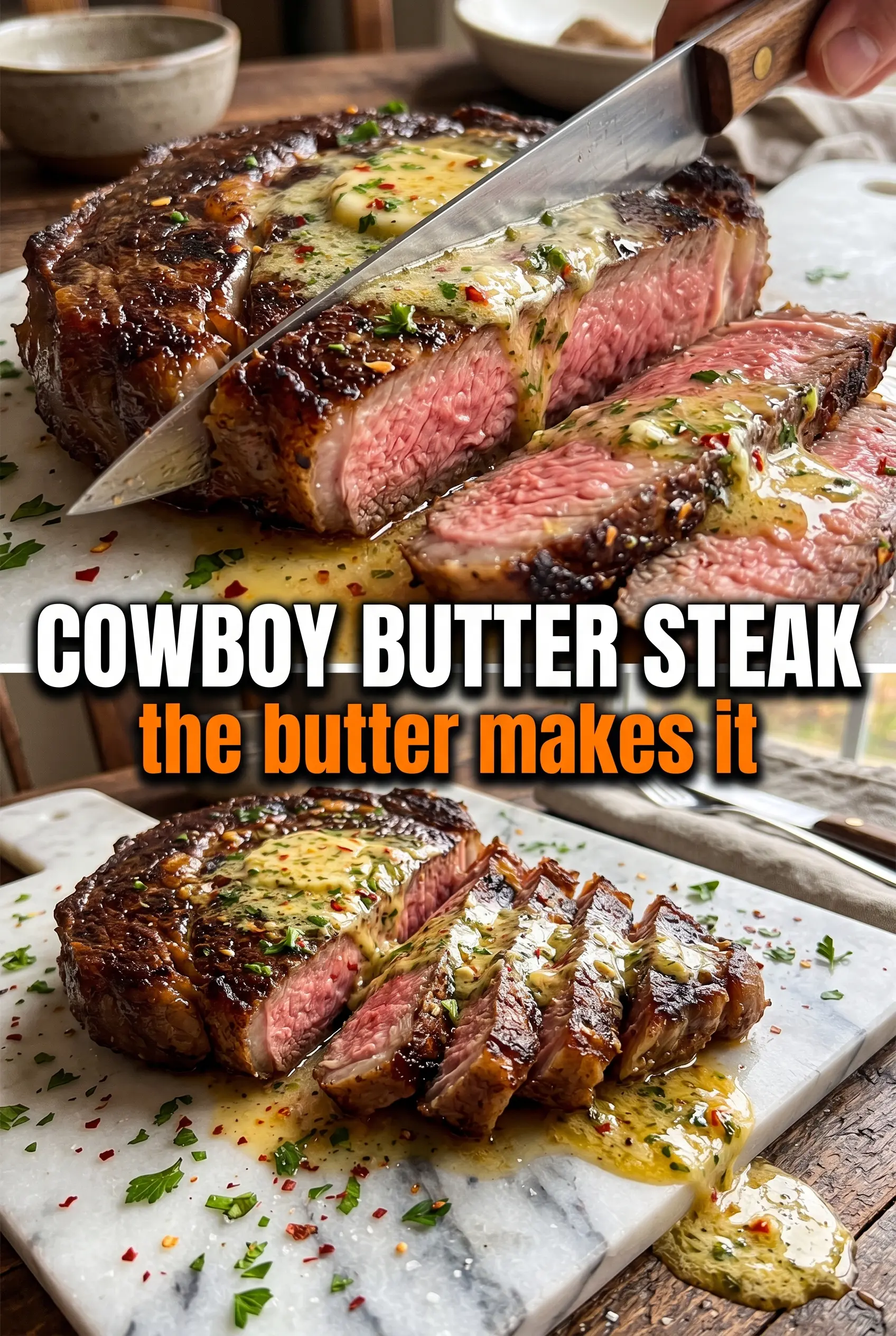
- Place a thick slice of cowboy butter directly on each steak while still warm so it melts into a glossy topping.
- Serve with extra cowboy butter on the side for added melting butter at the table.