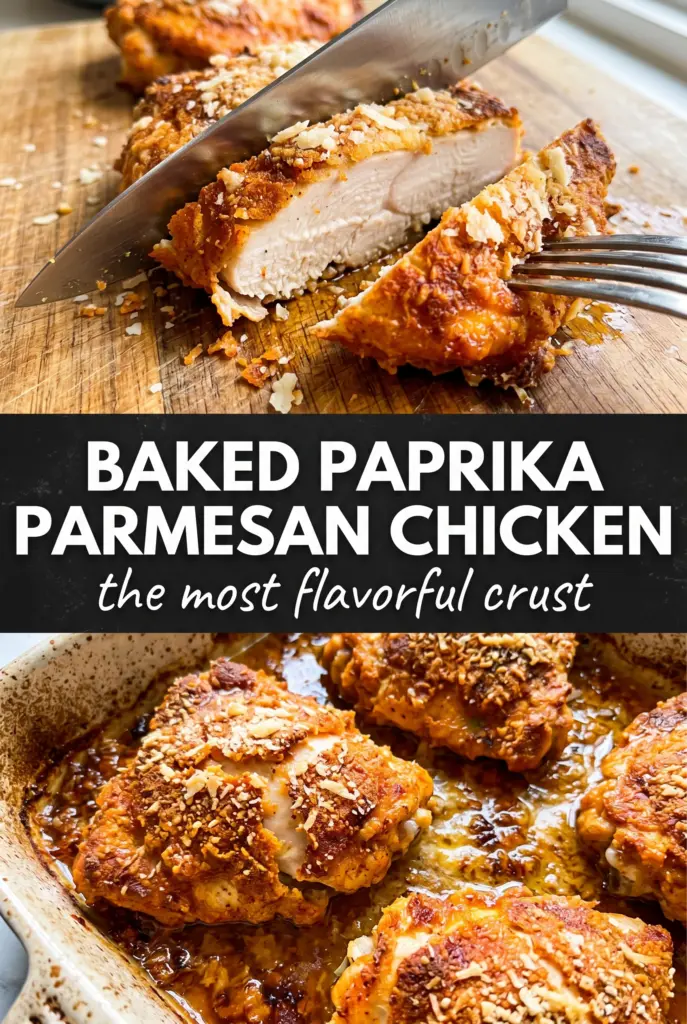
Golden, crackly paprika Parmesan chicken is the kind of baked dinner that lands on the table looking far more involved than it is. The chicken stays juicy under a sharply seasoned crust, and the top bakes into a vivid orange-red layer that tastes smoky, savory, and just a little nutty from the cheese. It’s the sort of meal that gets quiet at the table for the first few bites.
What makes this version work is the layering. The paprika goes into the oil first, which helps it bloom and coat the chicken evenly before the Parmesan and panko go on. That keeps the crust from tasting dusty or patchy. Freshly grated Parmesan matters here, too, because it melts and browns in a way the shelf-stable stuff never quite can. Panko gives the crust lift, so it bakes up crisp instead of turning heavy.
Below you’ll find the small details that keep the coating attached, the oven hot enough to crisp the top without drying out the chicken, and a few ways to adapt it if you want to change the seasoning or make the recipe work with what’s already in your kitchen.
The paprika oil gave the chicken such a deep color, and the Parmesan crust stayed on instead of sliding off when I sliced it. I baked it for 24 minutes and the crust was crisp at the edges with the chicken still juicy inside.
Save this baked paprika Parmesan chicken for the nights when you want a crisp, smoky chicken dinner with almost no cleanup.
The Crust Needs Heat Before the Chicken Needs Time
The biggest mistake with breaded chicken is treating the oven like it’s just there to finish the job. For a coating like this, the oven has to work fast enough to set the panko and brown the Parmesan before the chicken has time to dry out. That’s why 425°F matters. A lower oven will leave you with pale crumbs and a coating that tastes soft instead of crisp.
The other thing people miss is the oil step. The paprika mixed into oil clings to the chicken and helps the top layer color evenly. If you try to sprinkle the spices over dry chicken, the crust cooks in patches and the flavor stays on the surface instead of getting into the meat.
- 425°F oven — High heat gives the coating a head start on browning. Anything gentler will bake the chicken through before the crust really develops.
- Smoked paprika — This is the ingredient that gives the chicken its deep color and that subtle woodsy note. Sweet paprika alone won’t give the same depth.
- Panko — The larger crumbs stay airy and crisp. Regular breadcrumbs work in a pinch, but the crust will be denser.
- Fresh Parmesan — Grating it yourself gives you a sharper flavor and a better melt. Pre-grated cheese can be used, but it won’t brown as evenly.
What Each Ingredient Is Actually Doing in This Chicken
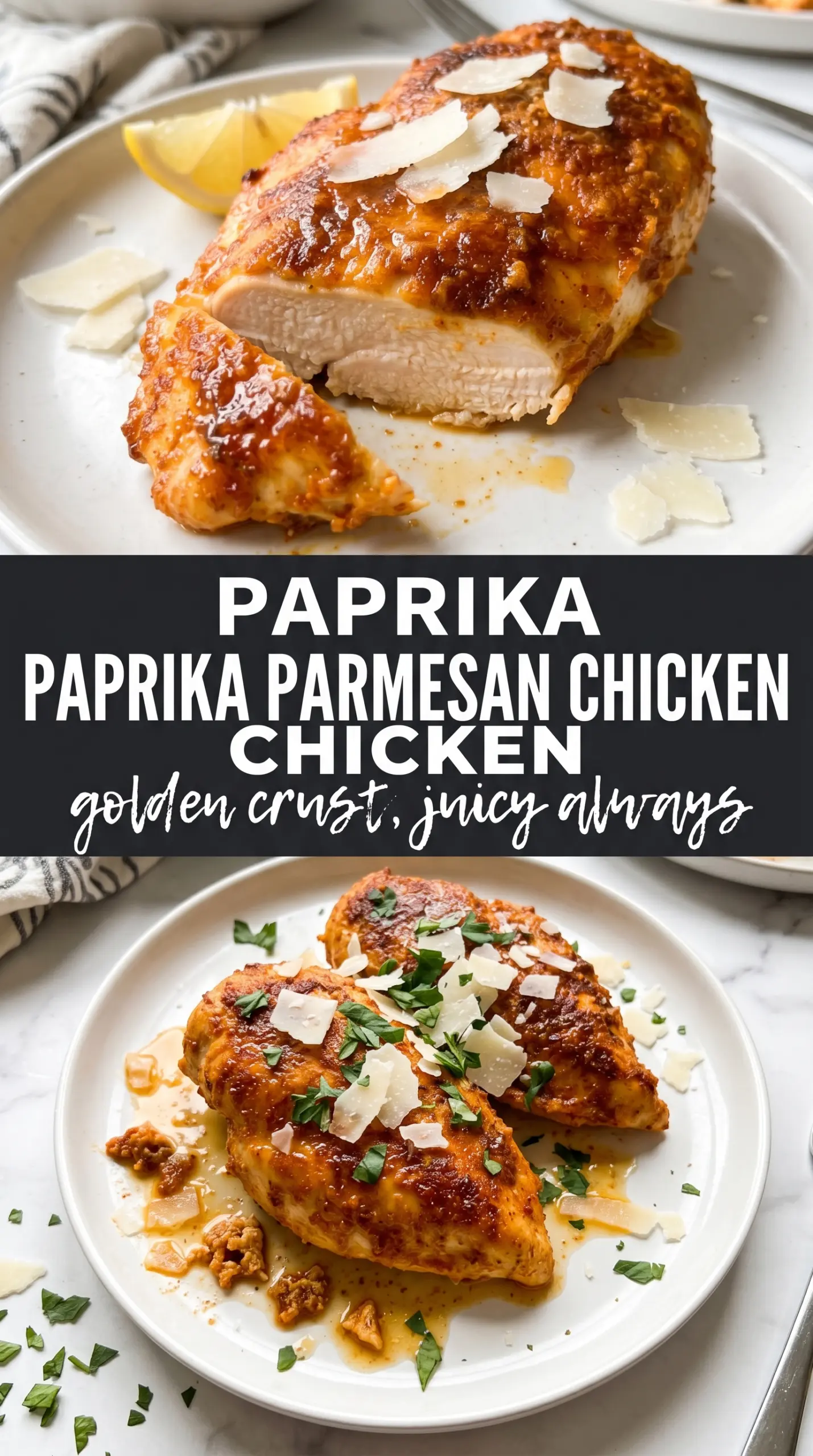
- Chicken breasts — Use pieces that are close in size so they finish together. If one side is much thicker, pound it lightly for even baking and a juicier result.
- Olive oil — This carries the paprika and helps the coating stick. A neutral oil works too, but olive oil gives the crust a fuller taste.
- Smoked paprika and sweet paprika — The smoked paprika brings color and depth, while the sweet paprika rounds it out so the crust doesn’t taste sharp or one-note.
- Garlic powder and onion powder — These season the coating without adding moisture. Fresh garlic is not a good swap here because it can burn under the crust.
- Parmesan and panko — This combination is what creates the crispy, savory top. If you need a gluten-free version, use gluten-free panko and keep the ratio the same.
Getting the Coating to Stick and the Chicken to Stay Juicy
Make the Spice Oil First
Stir the olive oil, smoked paprika, sweet paprika, garlic powder, onion powder, salt, and pepper into a loose paste before it touches the chicken. That step keeps the seasoning evenly suspended instead of ending up in streaks on the pan. Brush it generously over both sides of the chicken so there’s enough moisture for the crust to grab onto. If the chicken looks dry in spots, the topping will fall off there.
Press the Crumb Layer, Don’t Sprinkle It
Mix the Parmesan and panko together, then press it firmly onto the oiled tops of the chicken breasts. Pressing matters here. A light dusting looks fine for a minute, but it won’t bake into that crackly shell you want. Don’t coat the bottom unless you want to sacrifice crispness where the chicken sits on the pan.
Bake Until the Center Reaches 165°F
Slide the chicken onto a parchment-lined sheet and bake until the crust is golden-red and the thickest part reads 165°F. The top should look set and crisp, and the Parmesan should have browned in little spots around the edges. If the crust is getting dark before the chicken is done, drop the oven to 400°F for the remaining minutes. Let the chicken rest for a few minutes before slicing so the juices stay put instead of running onto the board.
Make It Dairy-Free Without Losing the Crunch
Swap the Parmesan for a dairy-free Parmesan-style alternative and keep the panko the same. You’ll lose a little of the sharp, salty bite, so season the coating a touch more aggressively with salt. The crust will still bake up crisp if the topping is pressed on firmly.
Use Chicken Thighs for a Richer Finish
Boneless skinless thighs work well if you want a little more forgiveness. They stay juicier and handle a few extra minutes in the oven, though the shape is less uniform and the coating can look more rustic. Check temperature early because thighs can go from done to overdone quickly at this heat.
Turn It Gluten-Free
Use gluten-free panko in the same amount. The texture stays light and crisp, which matters more here than in a standard breadcrumb crust. Don’t swap in almond flour unless you want a softer, more delicate finish instead of a true crunch.
Add Heat Without Changing the Method
Stir a pinch of cayenne or red pepper flakes into the paprika oil if you want a little burn with the smoky crust. Go light, because the Parmesan already brings plenty of salt and the goal is warmth, not heat that masks the chicken.
Storage and Reheating
- Refrigerator: Store for up to 3 days. The crust softens a little, but the flavor stays strong.
- Freezer: It freezes well once baked. Wrap pieces tightly and thaw in the refrigerator before reheating so the coating doesn’t go soggy.
- Reheating: Warm in a 375°F oven or air fryer until hot through and the crust tightens back up. The microwave will heat the chicken, but it will soften the topping.
Answers to the Questions Worth Asking
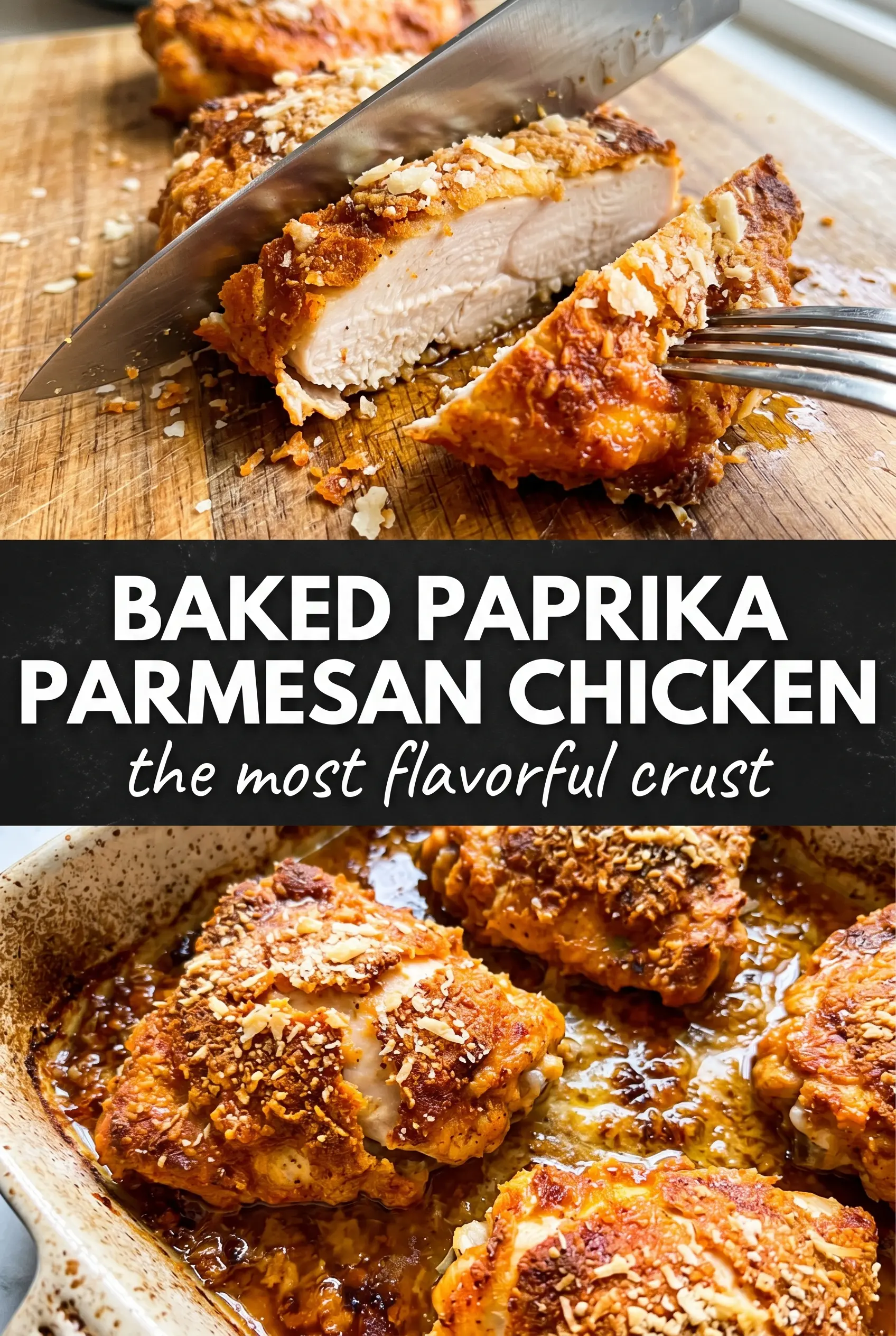
Baked Paprika Parmesan Chicken
Ingredients
Equipment
Method
- Preheat your oven to 425°F and line a sheet pan with parchment for easy cleanup.
- Mix olive oil with smoked paprika, sweet paprika, garlic powder, onion powder, salt, and pepper until evenly colored.
- Brush the paprika oil generously over both sides of each chicken breast so the surface looks glossy.
- Combine Parmesan and panko, then press the mixture firmly onto the oiled chicken tops so it clings in an even layer.
- Bake for 22-25 minutes until the crust is golden-red and the internal temperature reaches 165°F, with caramelized edges visible.
- Garnish with fresh parsley and serve with lemon wedges for bright flavor contrast.