
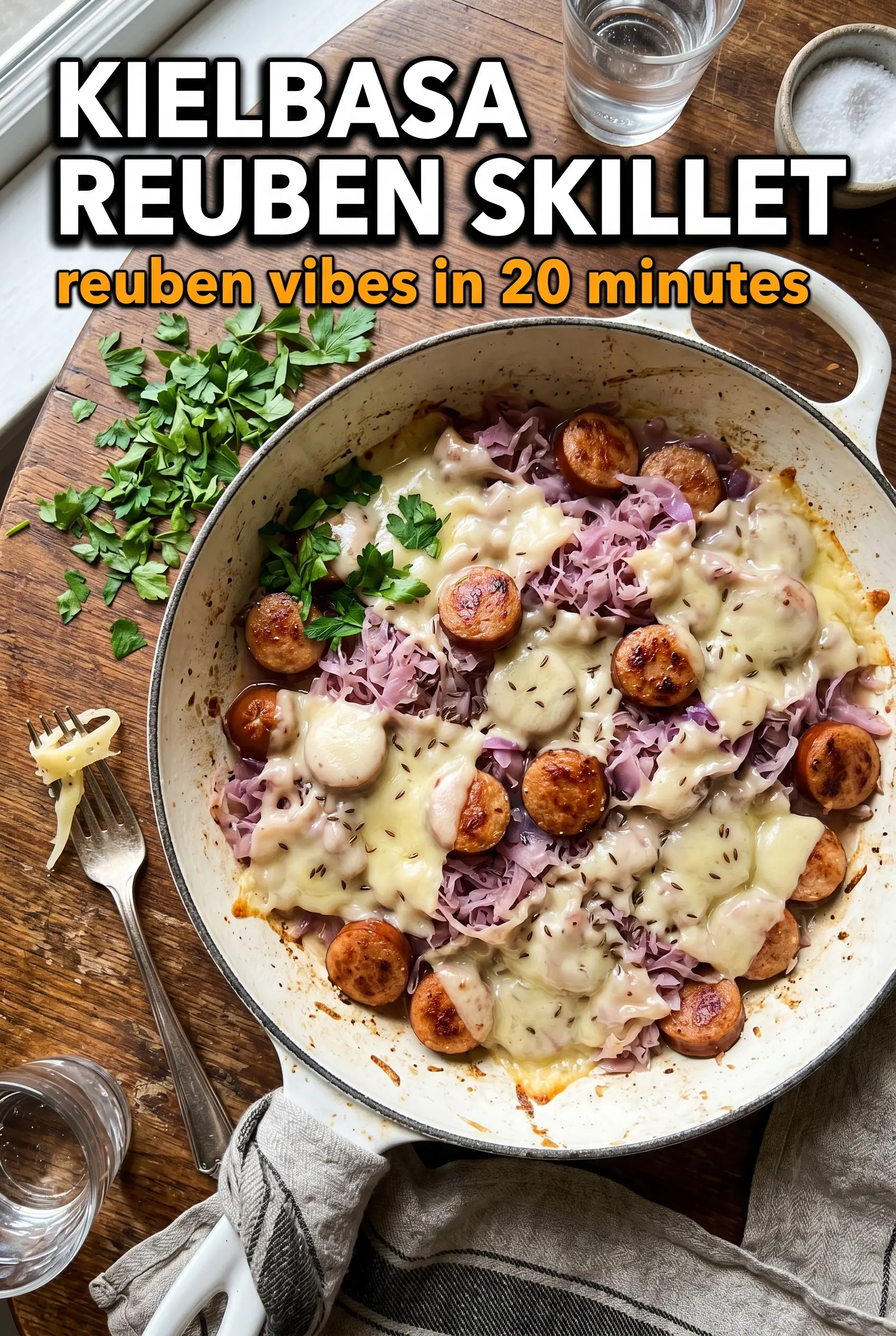
Golden kielbasa, tangy sauerkraut, and melted Swiss cheese hit the pan all at once in a way that feels a lot bigger than the short ingredient list suggests. This skillet has the same sharp, savory pull of a Reuben sandwich, but without the extra steps of building individual sandwiches or juggling a griddle. The sausage browns, the sauerkraut softens into the broth and mustard, and the cheese melts into a blanket that ties everything together.
What makes this version work is the balance. The sauerkraut gets drained first, so it doesn’t drown the skillet, and the beef broth gives the mustard and caraway seeds a little room to bloom into the pan juices. Browning the kielbasa before anything else matters too, because those browned edges carry the whole dish. Skip that, and the skillet tastes flatter and more one-note.
Below, you’ll find the small details that keep this from turning watery or bland, plus a few smart swaps if you want to adjust the cheese, sausage, or serving style.
The kielbasa got a great little crust and the sauerkraut cooked down just enough without losing its tang. I served it with rye toast, and the whole skillet was gone fast.
Save this Kielbasa Reuben Skillet for the nights when you want all the Reuben flavors without building sandwiches.
The Step That Keeps This Skillet From Turning Watery
The biggest mistake with a Reuben-style skillet is treating sauerkraut like a dry seasoning instead of a wet ingredient. If it goes straight from the bag into the pan without draining, the whole dish can slide from saucy into soupy before the cheese ever gets a chance to melt properly. A quick drain is enough here, but don’t rinse it unless your sauerkraut is aggressively sour and salty; rinsing washes away the sharp edge that gives the dish its personality.
The other thing worth respecting is the browning on the kielbasa. You only need a few minutes, but those browned spots bring a smoky, savory depth that the broth alone can’t fake. Once the mustard and broth go in, the skillet should simmer, not boil hard. A hard boil beats the texture of the sausage and reduces the liquid too fast before the flavors have time to blend.
What Each Ingredient Is Actually Doing in the Pan

- Kielbasa — This is the backbone of the dish. A fully cooked smoked kielbasa gives you rich flavor and browning in minutes, which is exactly what you want in a skillet like this. If you swap in another sausage, choose one with enough fat to brown instead of dry out.
- Sauerkraut — The kraut gives the dish its Reuben bite. Drain it well so the skillet stays saucy instead of watery, and leave a little of the brine behind if you like a sharper finish. Bagged sauerkraut is fine here; the texture matters less than getting the liquid under control.
- Whole grain mustard — This adds the sandpapery, mustardy punch that makes the skillet taste like a Reuben rather than just sausage and cabbage. Yellow mustard won’t give the same depth, and Dijon will taste smoother and less textured. If that’s what you have, use it, but the flavor will shift.
- Beef broth — The broth loosens the skillet just enough to coat everything and helps the mustard and caraway distribute evenly. Use a decent broth if you can, since it seasons the entire pan. Water will work in a pinch, but the dish will taste thinner and less savory.
- Swiss cheese — Swiss melts into the sauce and adds that familiar Reuben finish. Shred it yourself if possible, because pre-shredded cheese can melt a little more reluctantly. Gruyère is the best upgrade if you want a nuttier, richer melt.
- Caraway seeds — These give the rye-bread note that makes the whole skillet taste unmistakably Reuben. Crush them lightly between your fingers before adding if you want them to release more aroma. If you hate caraway, leave it out, but you’ll lose part of the sandwich illusion.
Building the Reuben Flavor Without Soggy Rye Bread
Brown the Kielbasa First
Melt the butter in a large skillet over medium-high heat, then add the sliced kielbasa in a single layer. Let it sit long enough to take on color before stirring, because constant movement keeps it pale. You’re looking for golden edges and a little bit of fat in the pan, not deep searing. If the pan looks dry, the heat is too low or the sausage is too crowded.
Let the Sauerkraut Simmer, Not Boil
Once the sauerkraut, broth, mustard, caraway, and black pepper go in, stir everything well and bring it to a steady simmer. The liquid should bubble gently around the edges and reduce slightly, leaving the kraut tender but still a little structured. If the pan is boiling hard, turn the heat down; that’s how the broth disappears before the flavor settles in.
Finish Under a Lid for a Clean Melt
Scatter the Swiss cheese over the top and cover the skillet just until it melts, about two minutes. Don’t leave it covered too long or the cheese can separate and the kraut will keep releasing steam. You want a glossy melted top that drapes over the kielbasa and sauerkraut without looking oily. Serve it right away with rye bread on the side so the bread stays crisp enough to swipe through the pan juices.
How to Adapt This for the Ingredients You Have
Dairy-Free Version
Skip the butter and cheese and use a neutral oil plus a spoonful of dairy-free butter if you want that richer skillet base. The dish will still taste bold and tangy, but you’ll lose the creamy finish that softens the kraut. Add a little extra broth reduction at the end so the pan juices coat everything instead of feeling sharp.
Gluten-Free Serving Idea
The skillet itself is naturally gluten-free if your kielbasa and broth are certified gluten-free. Swap the rye bread for gluten-free toast, roasted potatoes, or even lettuce cups if you want to keep the meal lighter. You still get the same tangy-savory contrast without changing the cooking method.
Make It Sharper and More Sandwich-Like
For a more classic Reuben taste, add a little extra mustard and serve with toasted rye instead of plain fresh slices. Toasted bread stands up better to the juices and gives you more of that deli-sandwich experience. The tradeoff is that the meal feels less soft and cozy, but the flavor gets closer to the original sandwich.
Swap the Sausage
Smoked turkey sausage works if you want something lighter, but it won’t brown as richly and the skillet will taste leaner. Polish sausage is a good stand-in if that’s what’s in the fridge, though it may be a little saltier. Keep the browning step the same either way so the pan still develops a strong base.
Storage and Reheating
- Refrigerator: Store leftovers in an airtight container for up to 3 days. The sauerkraut softens a little more as it sits, but the flavor holds up well.
- Freezer: Freezing isn’t ideal because the sauerkraut and cheese both change texture after thawing. If you do freeze it, cool it completely first and reheat gently from thawed.
- Reheating: Warm in a skillet over low heat with a splash of broth or water to loosen the pan juices. The common mistake is blasting it in the microwave until the cheese turns greasy and the sausage tightens up.
Questions I Get Asked About This Recipe
Kielbasa Reuben Skillet
Ingredients
Equipment
Method
- Melt the butter in a large skillet over medium-high heat. Add the sliced kielbasa and cook for 3-4 minutes, stirring occasionally, until lightly browned with sizzling edges.
- Add the sauerkraut, beef broth, whole grain mustard, caraway seeds, and black pepper to the skillet. Stir well and simmer for 8-10 minutes until the liquid looks slightly reduced and the flavors are evenly combined.
- Sprinkle the shredded Swiss cheese over the sauerkraut mixture and cover the skillet. Cook for about 2 minutes, until the cheese is fully melted and glossy.
- Serve the skillet hot with fresh rye bread slices on the side. The top should still look melted when you plate it.