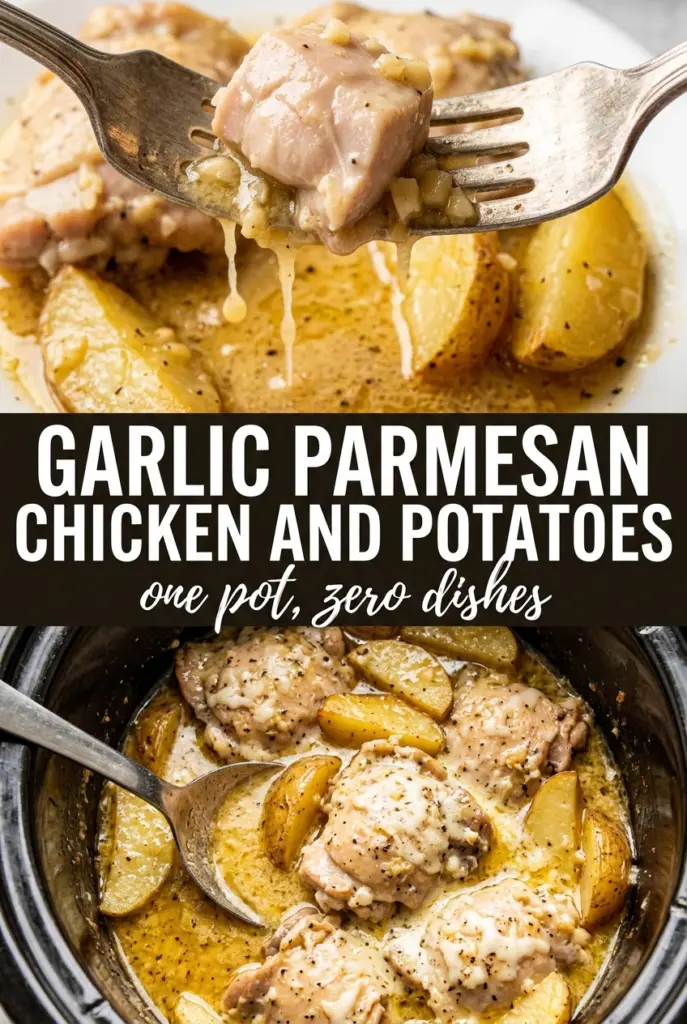
Garlic Parmesan Crockpot Chicken and Potatoes comes out rich, tender, and built for real dinner hours, not just the kind of meal that looks good on paper. The chicken turns fall-apart juicy, the baby potatoes soak up the garlicky broth underneath, and the parmesan cream sauce pulls everything into one pan of comforting, savory food that actually tastes like it had time to develop.
The trick here is starting with the potatoes on the bottom and the chicken on top. That keeps the potatoes in the heat and lets the chicken juices drip down as everything cooks. The cream and parmesan go in at the end, after the chicken is done, which keeps the sauce smooth instead of grainy or split. You get a slow-cooked base with a fresh, creamy finish.
Below, I’ll walk through the part that matters most: how to keep the sauce silky, how to season the chicken so it doesn’t taste flat, and which swaps still hold up if you need to work with what’s already in the kitchen.
The sauce thickened up beautifully after I stirred in the parmesan at the end, and the potatoes were buttery and tender without falling apart. My husband kept scooping up the sauce with bread.
Like this garlic parmesan crockpot chicken and potatoes dinner? Save it to Pinterest for the nights when you want tender chicken, creamy sauce, and barely any cleanup.
The Part That Stops the Sauce From Turning Grainy
The biggest mistake in a crockpot parmesan sauce is adding the dairy too early and letting it boil for hours. Cream and parmesan both hate hard heat. They separate, turn sandy, or take on that broken look nobody wants on a dinner plate. This recipe waits until the chicken and potatoes are fully cooked, then finishes the sauce off the heat of the slow cooker’s residual warmth.
That timing matters more than people think. The broth builds the base while the meat cooks, and the starch from the potatoes helps the final sauce cling without turning thick and gluey. If your crockpot runs hot, pull the insert from the base for a minute before stirring in the cream and cheese. That short pause keeps the sauce smooth.
What the Garlic, Butter, and Parmesan Are Each Doing Here
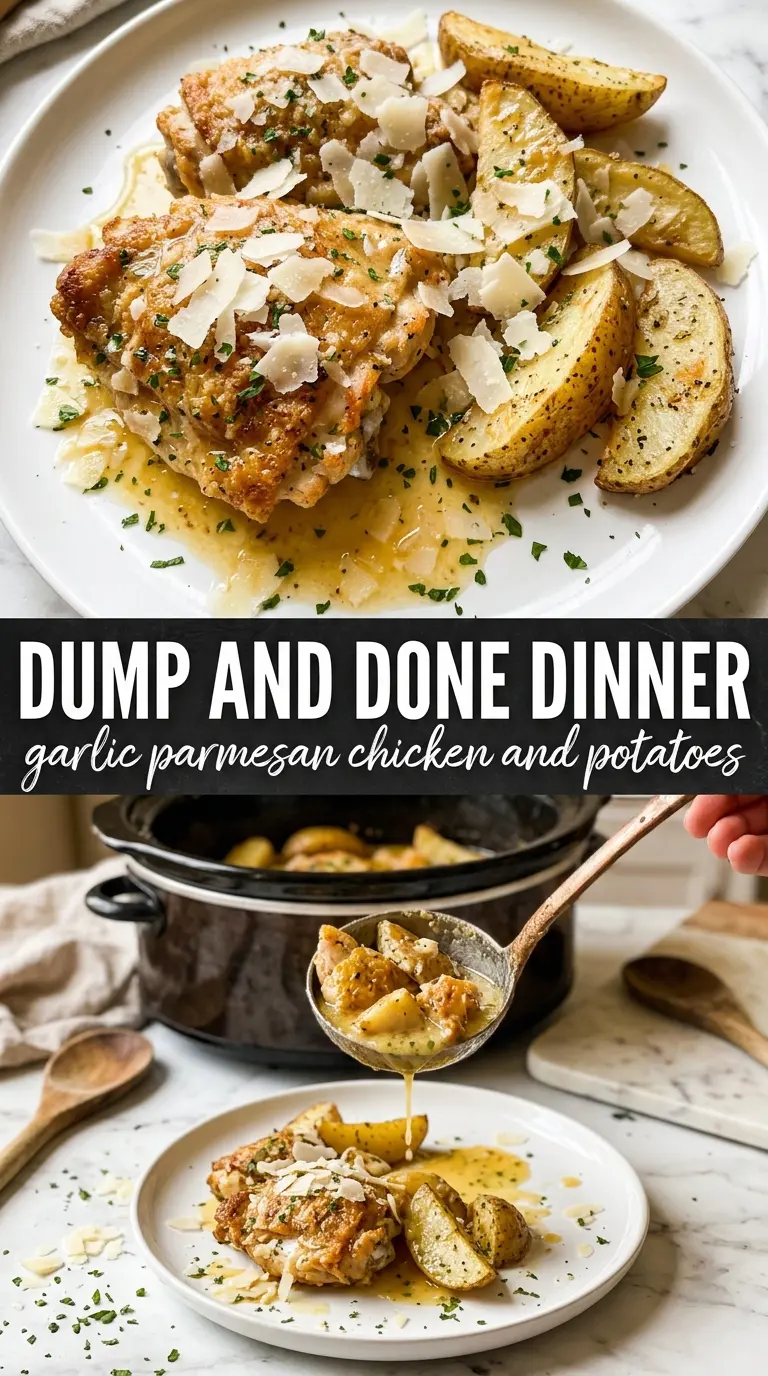
- Bone-in chicken thighs — These stay juicier than breasts over a long cook. The bones help protect the meat from drying out, and the skinless version still brings enough richness to stand up to the sauce. If you swap in boneless thighs, cut the cooking time a little so they don’t go stringy.
- Baby potatoes — They hold their shape better than larger chunks of russet or Yukon Gold potatoes, and their waxy texture turns creamy instead of mushy. Halving them gives the heat a chance to reach the center without overcooking the outside.
- Garlic and garlic powder — Fresh garlic gives the sauce its sharp, cooked-down aroma, while garlic powder seasons the chicken itself so the flavor runs all the way through the dish. Using both keeps the garlic taste layered instead of thin.
- Parmesan — Grated parmesan melts into the broth and cream at the end and gives the sauce body. Use the finely grated kind from a block if you can; pre-shredded parmesan can leave the sauce a little gritty because of the anti-caking agents.
- Heavy cream — This is what turns the cooking liquid into an actual sauce. Half-and-half can work in a pinch, but it won’t thicken as smoothly and it is more likely to split if the crockpot is still very hot.
- Butter — It adds fat to the broth and carries the garlic flavor into the potatoes and chicken. Slice it over the top instead of melting it separately so it disperses evenly while cooking.
Building the Crockpot Layers So Everything Cooks Evenly
Start With the Potatoes on the Bottom
The potatoes go in first because they need the most direct heat. They act like a built-in rack for the chicken and help keep the meat from sitting in too much liquid. If you pile the chicken on the bottom, the potatoes stay pale and underdone while the meat overcooks. Halved baby potatoes cook best here because the cut side grabs the sauce later.
Season the Chicken Before It Goes In
Coat the chicken thighs with salt, pepper, garlic powder, and Italian seasoning before they touch the crockpot. That gives the meat flavor on the outside and inside instead of only in the sauce. If the seasoning looks like it disappeared, that’s fine — it will bloom as the chicken cooks and the fat renders into the broth.
Add the Broth Around the Sides
Pour the broth around the edges instead of directly over the top. That keeps the seasoning in place and helps the butter and garlic sit on the surface where they can perfume the whole dish. You want a gentle simmering environment, not a fully submerged one. Too much liquid turns the potatoes waterlogged and leaves the sauce thin at the end.
Finish the Sauce After the Chicken Is Tender
When the chicken is fully cooked and the potatoes give easily with a fork, remove the chicken and stir in the cream and parmesan until smooth. The sauce should go from thin and cloudy to glossy and lightly thickened in a minute or two. If it still looks loose, let it sit with the lid off for a few minutes before returning the chicken. That extra minute helps the parmesan finish melting without clumping.
How to Change This Dish Without Losing What Makes It Work
Make It Dairy-Free Without Losing the Creamy Finish
Use full-fat coconut cream in place of the heavy cream and a dairy-free parmesan alternative that melts well. The sauce will taste a little different and lean richer-sweeter, but the texture still stays spoonable. Keep the heat low when you add the substitute so it doesn’t separate.
Use Chicken Breasts When That’s What You Have
Chicken breasts work, but they need less time and a little more attention. Start checking early so they stay juicy, and pull them as soon as they reach temperature. Breasts won’t bring quite the same richness as thighs, so the sauce does more of the heavy lifting.
Swap the Potatoes for Cauliflower for a Lower-Carb Version
Cauliflower florets work if you’re aiming for fewer carbs, but they cook faster and won’t hold the sauce the same way potatoes do. Add them later in the cook so they stay intact. The final dish will be lighter and softer, with less of that hearty, stew-like feel.
Storage and Reheating
- Refrigerator: Store leftovers in an airtight container for up to 4 days. The sauce will thicken as it chills, and the potatoes will soften a bit more.
- Freezer: This freezes, but the cream sauce can loosen and turn slightly grainy after thawing. Freeze only if you need to, and expect the texture to be less silky than when fresh.
- Reheating: Warm gently on the stove or in the microwave at medium power, adding a splash of broth or cream to loosen the sauce. High heat is what breaks the dairy, so go slow and stir often.
Questions I Get Asked About This Recipe
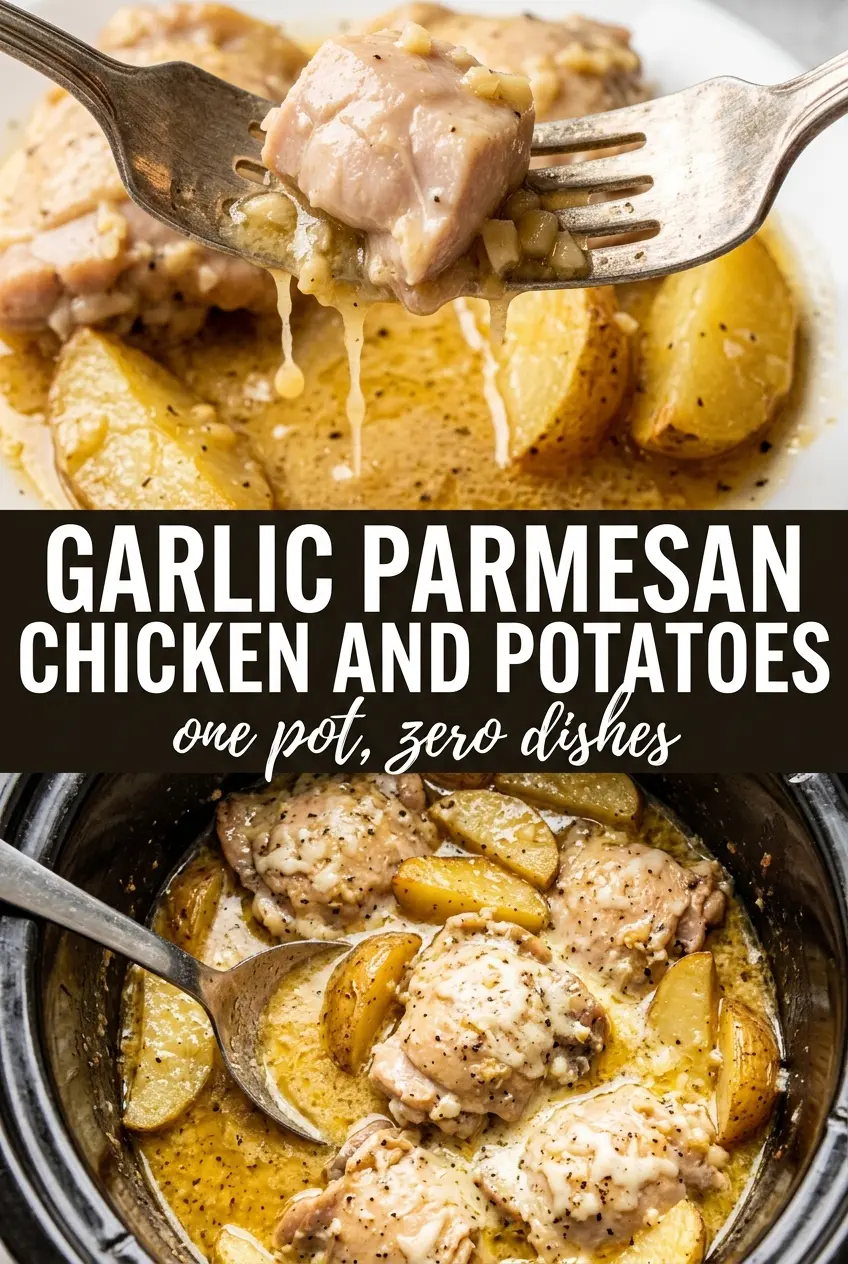
Garlic Parmesan Crockpot Chicken and Potatoes
Ingredients
Equipment
Method
- Season the chicken thighs generously with salt, black pepper, garlic powder, and Italian seasoning so the coating looks even and speckled.
- Place the halved baby potatoes in the bottom of the crockpot and arrange the seasoned chicken thighs on top so they sit snugly.
- Scatter the minced garlic and sliced butter over everything, then pour the chicken broth around the sides so it doesn’t wash off the seasonings.
- Cook on LOW for 6 hours, until the chicken is fully cooked and the potatoes are tender; the liquid should be actively simmering through the crockpot.
- If cooking on HIGH, cook for 3–4 hours until the chicken is fully cooked and potatoes are tender, with the chicken edges turning opaque and the potatoes easily pierced.
- Remove the chicken and stir the heavy cream and grated parmesan into the crockpot liquid until smooth and glossy.
- Return the chicken to the crockpot and coat everything in the sauce so the potatoes look lightly glazed.
- Serve garnished with fresh parsley and extra parmesan, with visible herb flecks on top and a lightly browned, creamy surface.