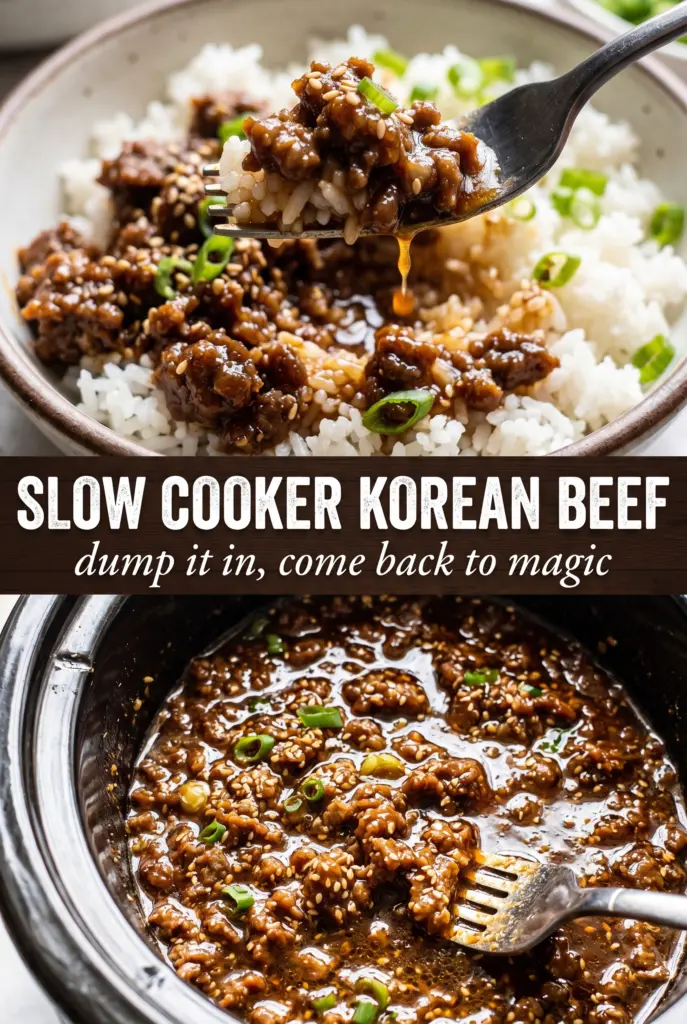
Slow Cooker Korean Beef comes out tender enough to fall apart with a fork, coated in a glossy soy-garlic sauce that clings to every piece of meat. It’s the kind of dinner that tastes like you worked harder than you did, which is exactly why it earns a permanent spot in my rotation. Served over hot rice with scallions and sesame seeds, it hits that sweet-savory-spicy balance that keeps people going back for one more scoop.
The key here is letting the beef cook until it’s genuinely shreddable before you touch it. Chuck roast has enough fat and connective tissue to turn silky in the slow cooker, while the cornstarch slurry thickens the liquid at the end into a sauce instead of a thin broth. The sesame oil, ginger, and garlic do a lot of the flavor work, so don’t skimp on those.
Below, I’ve included the timing cue that matters most, the swap I’d use if chuck roast isn’t available, and a few variations for making this work with what’s already in your kitchen.
The sauce thickened up beautifully at the end and the beef was so tender it shredded without any fighting. I served it over rice with extra green onions, and my husband went back for seconds before I even sat down.
Like this sticky-sweet Korean beef? Save it for the nights when you want tender shredded beef over rice with almost no hands-on work.
The Low Heat Finish That Keeps the Beef Tender
The biggest mistake with slow cooker beef is treating the whole process like a one-and-done dump-and-go situation, then wondering why the sauce tastes flat at the end. The beef needs time to soften, but the sauce also needs a separate finishing step so it thickens and turns glossy instead of staying watery. That last 15 minutes is where the dish changes from cooked meat in liquid to proper Korean-American beef for rice.
Using chuck roast is what makes the long cook work. It has enough connective tissue to break down into strands instead of drying out, which is why a lean cut can turn chewy in the same amount of time. If you’re using flank steak, cut it across the grain and keep an eye on the timing, because it will reach tenderness sooner and can go stringy if left too long.
- Chuck roast — This is the cut that turns rich and shreddable after hours of gentle cooking. Flank steak works in a pinch, but it won’t give you the same silky texture.
- Soy sauce — Use a regular soy sauce for the best balance of salt and depth. Low-sodium works if that’s what you keep on hand, but the sauce will taste a little lighter and may need a touch more time to reduce.
- Brown sugar — This gives the sauce its sticky, caramelized edge. Packed light or dark brown sugar both work; dark brown sugar brings a deeper molasses note.
- Sesame oil — Don’t swap this for a neutral oil. Sesame oil is one of the main flavors here, and it’s what makes the sauce taste round instead of one-note.
- Cornstarch slurry — Mix it with cold water before adding it to the hot sauce. If you dump cornstarch straight into the slow cooker, it clumps and never fully dissolves.
What Each Ingredient Is Actually Doing in This Slow Cooker Beef
- Beef (chuck roast, short ribs, or ground beef) — Tougher cuts break down beautifully in slow cooking. The connective tissue becomes gelatin, enriching the broth.
- Liquid (beef broth, wine, or sauce) — This becomes both the cooking medium and the final sauce. Choose quality broth for better flavor.
- Onions (the aromatic base) — Slice thick so they stay distinct while melting into the sauce. They become sweet and mellow during cooking.
- Garlic (the depth flavor) — Minced garlic cooks into the broth; sliced stays more distinct. Use generously for deep flavor.
- Vegetables (carrots, potatoes, peppers) — Layer them by cooking time. Hard vegetables first, softer ones later so everything finishes together.
- Seasonings (salt, pepper, Worcestershire, spices) — Build flavor as you layer. Taste midway and adjust because flavors concentrate during cooking.
- Tomato paste or sauce (optional richness) — This adds body and depth. Cook for hours so it becomes part of the sauce rather than a separate element.
- Low heat for 8 hours (the transformation) — Long, slow cooking turns tough cuts into fork-tender meat. This is what makes cheap cuts taste expensive.
Building the Sauce in the Slow Cooker, Not Around the Beef
Layer the beef first
Put the beef straight into the slow cooker in an even layer so every piece gets coated as the sauce circulates. If you pile it into a tight mound, the center steams while the outside cooks, and you lose that even tenderness you want for shredding. The meat should look sealed in the sauce by the time it settles.
Whisk the sauce until the sugar disappears
Stir the soy sauce, brown sugar, sesame oil, garlic, ginger, red pepper flakes, and black pepper until the sugar starts to dissolve. You don’t need to heat it first, but you do want it fully combined so the seasoning is evenly distributed from the start. If the sugar sits in a gritty layer, the flavor ends up patchy and the sauce won’t coat the beef as evenly.
Cook until the beef pulls apart cleanly
Set it on low for the best texture, especially if you’re using chuck roast. At six hours, the beef should give way easily to a fork and fall into shreds without resistance; if it still slices neatly, it needs more time. The goal is tender, not just cooked through, because undercooked connective tissue is what makes the final texture stubborn.
Thicken the sauce after shredding
Pull the beef out, shred it, then whisk the cornstarch with cold water before stirring it into the sauce. Turn the slow cooker to high and give it about 15 minutes, until the liquid goes from thin and shiny to lightly thickened and able to coat a spoon. If you skip this step, you’ll have good beef but a weak sauce that sinks into the rice instead of clinging to it.
What to Change When You Need a Different Version
Flank Steak Instead of Chuck Roast
Flank steak gives you a leaner result with a slightly firmer bite. Cut it into large pieces against the grain, and start checking for tenderness early, because it can go from just right to stringy faster than chuck roast.
Gluten-Free Version
Use a certified gluten-free soy sauce or tamari and keep everything else the same. That swap preserves the same salty-sweet balance, and the sauce still thickens the same way with cornstarch.
Milder Heat
Cut the red pepper flakes in half or leave them out if you’re serving kids or anyone who wants the sauce sweet and savory instead of spicy. You’ll still get depth from the ginger, garlic, and sesame oil, just with a softer finish.
Storage and Reheating
- Refrigerator: Store in an airtight container for up to 4 days. The sauce will thicken more as it chills, which is normal.
- Freezer: Freezes well for up to 3 months. Cool it completely first, then portion it with some sauce so the beef doesn’t dry out when thawed.
- Reheating: Warm it gently on the stove or in the microwave with a splash of water if needed. The common mistake is blasting it on high heat, which tightens the beef and makes the sauce separate.
Questions I Get Asked About This Recipe
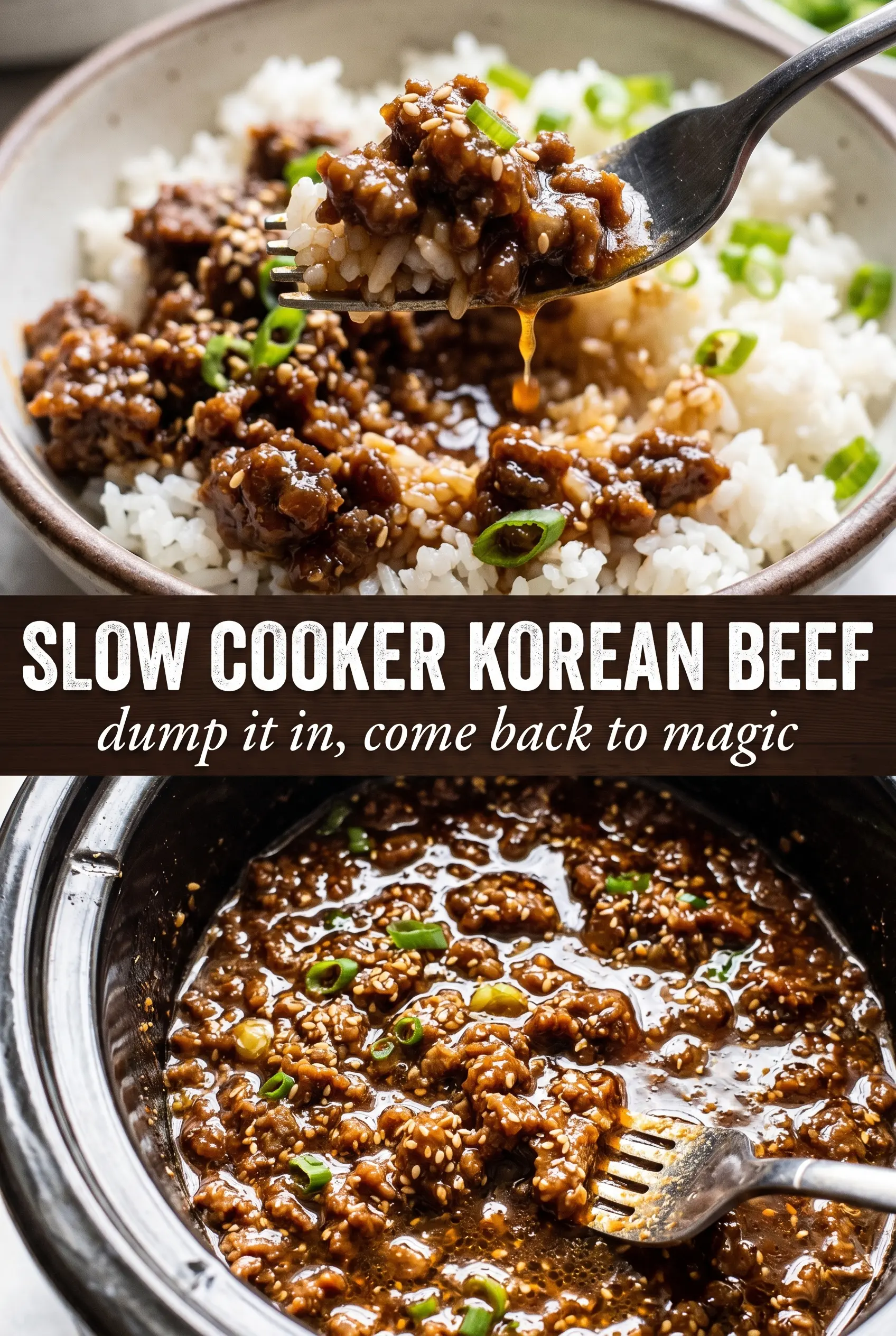
Slow Cooker Korean Beef
Ingredients
Equipment
Method
- Place the beef into the slow cooker in an even layer.
- Whisk together soy sauce, brown sugar, sesame oil, garlic, ginger, red pepper flakes, and black pepper until the sugar dissolves and the mixture looks glossy.
- Pour the sauce over the beef so most pieces are coated.
- Cook on low for 6–7 hours, or on high for 3–4 hours, until the beef is very tender and shreds easily when pressed with a fork.
- Remove the beef and shred with two forks until you have strands.
- Whisk cornstarch and cold water together, then stir the slurry into the sauce in the slow cooker.
- Cook on high for 15 minutes until thickened, with the sauce looking smooth and clinging to a spoon.
- Return the shredded beef to the sauce and toss to coat until everything is evenly glazed.
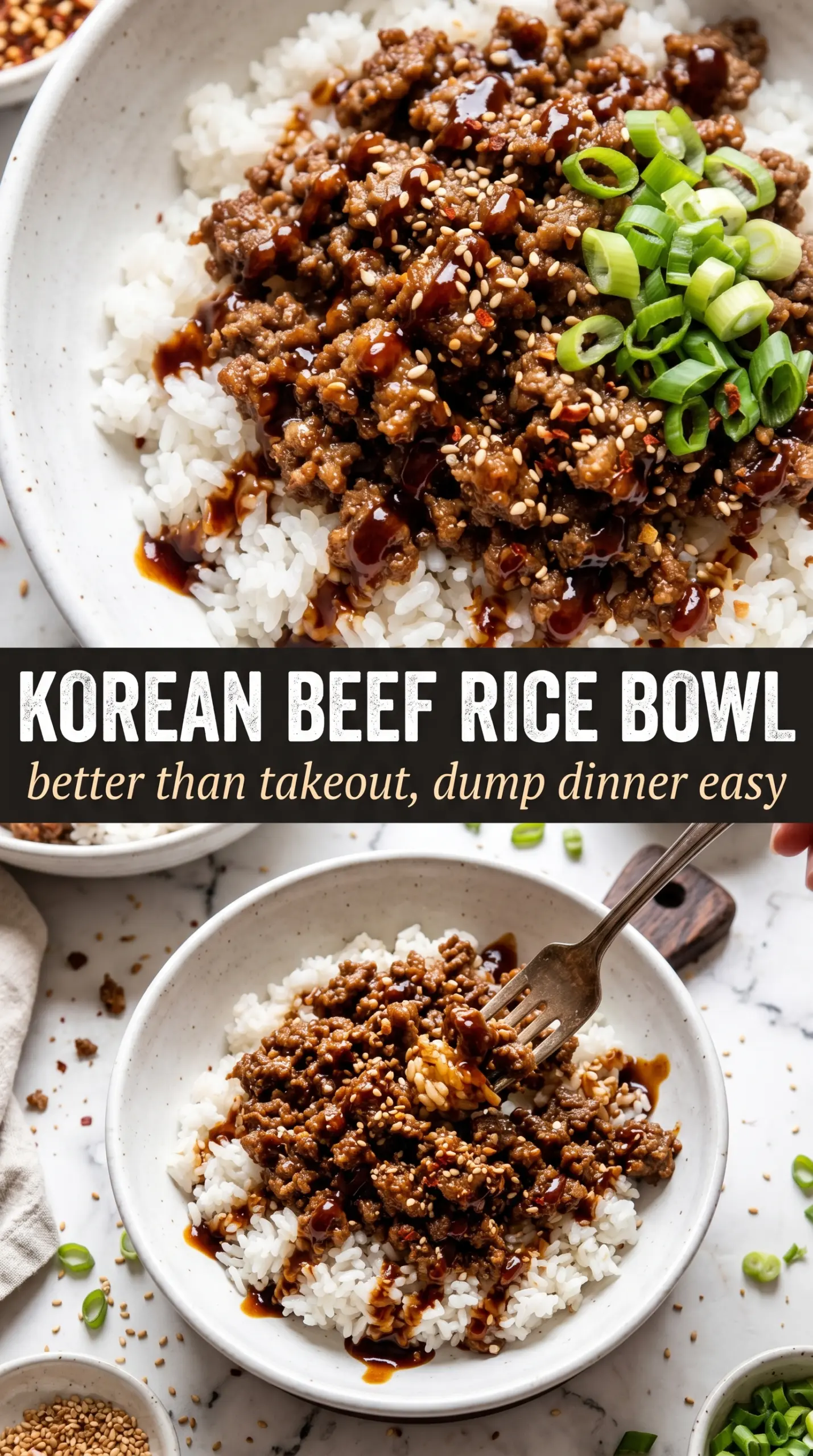
- Serve the Korean beef over cooked white rice.
- Garnish with sliced green onions, sesame seeds, and a drizzle of sriracha if desired.