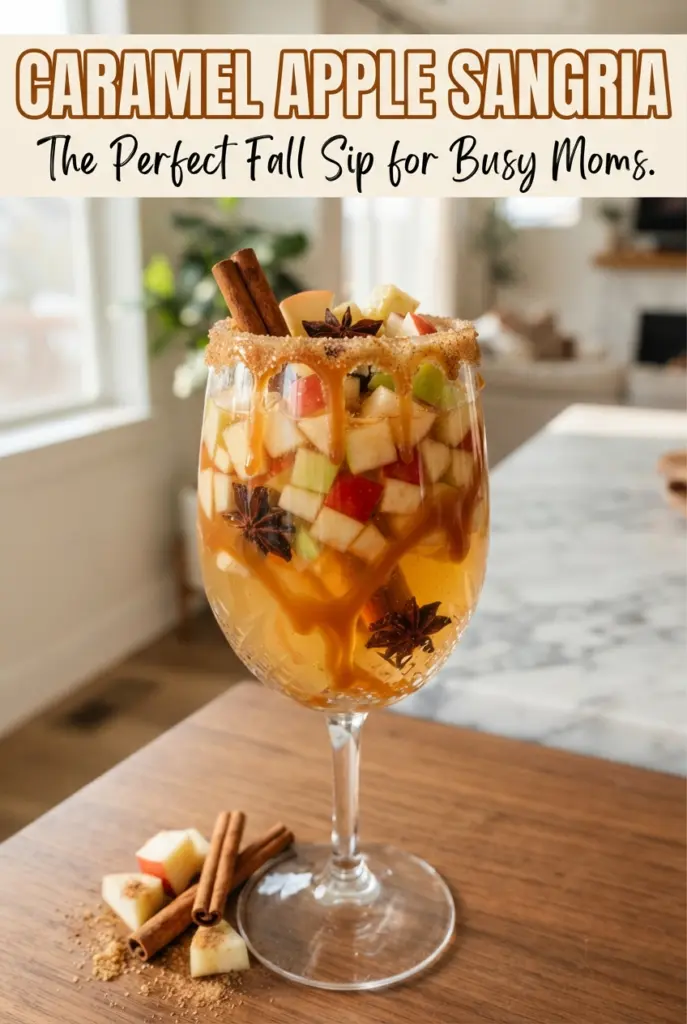
Golden, crisp, and lightly sweet, caramel apple sangria goes down like a party drink with a little more backbone than the usual fruit punch version. The apple cider keeps it bright and fruity, the white wine stays clean instead of heavy, and the caramel adds just enough depth to make each sip taste like fall without turning syrupy. The fruit doesn’t just float there looking pretty either. It soaks up the wine-cider mixture and turns into the best part of the pitcher.
This version works because the balance is built in from the start. Chilled pinot grigio brings acidity, which keeps the cider and caramel from cloying. Ginger ale goes in at the end for lift and bubbles, not hours ahead where it would go flat. If you’re using caramel sauce instead of caramel vodka, whisk it well into the liquid base so it doesn’t sink or clump.
Below, I’ve included the small details that matter most: how to keep the rim tidy, why the fruit should be sliced thin, and the timing that gives you the best flavor without losing the sparkle.
The caramel mixed in smoothly and the apples actually picked up flavor after a couple hours in the fridge. I served it over ice with the sugared rims and it looked like something from a nice cocktail bar.
Caramel Apple Sangria with cinnamon-spiced fruit and a sugared rim is the kind of pitcher drink that disappears fast.
Why the Caramel Stays Smooth Instead of Sinking
The tricky part in caramel apple sangria is not the fruit or the wine. It’s the caramel. Straight caramel sauce can clump or sink if it hits cold liquid and never gets fully worked in, which leaves you with sweet streaks at the bottom of the pitcher. That’s why the order matters here: wine, cider, and caramel first, then a good whisk if you’re using sauce. Once that base is unified, the fruit and cinnamon have something even to steep in.
Chilling time matters too. Two hours gives the apple and pear slices time to perfume the drink without turning soft and dull. Longer than that is fine, but don’t add the ginger ale until the end. If you put the bubbles in too early, the drink loses the lift that makes each glass taste fresh.
What Each Ingredient Is Doing in the Pitcher
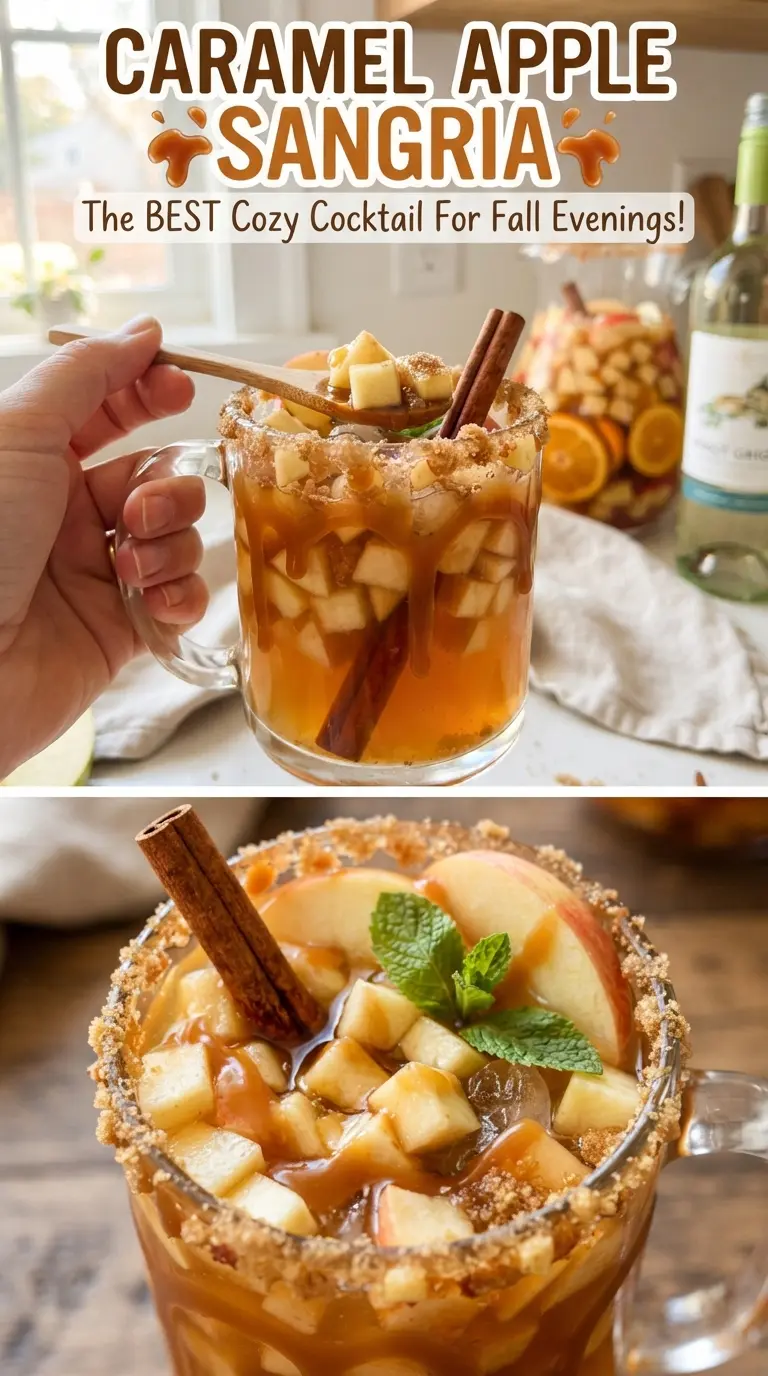
- Pinot grigio — A dry, chilled white wine keeps the sangria crisp. You want something clean and light here, not an oaky or buttery bottle that fights the cider and caramel. If you need a swap, use another dry white like sauvignon blanc or pinot blanc.
- Apple cider — This is what gives the drink its apple-forward body. Fresh cider tastes brighter and more layered than apple juice, which can read flat and overly sweet. If cider isn’t available, unfiltered apple juice is the closest substitute, though the drink will taste a little less rounded.
- Caramel vodka or caramel sauce — Vodka gives you a smoother, more integrated caramel note, while sauce gives you a thicker, dessert-like edge. Sauce works fine, but it needs whisking into the liquid base so it doesn’t settle. If you want a stronger caramel hit, use the sauce and stir well before chilling.
- Apples and pear — Thin slices absorb flavor quickly and stay pretty in the glass. Thicker chunks don’t soak up as much of the sangria and can feel awkward to drink around. A firm apple like Honeycrisp or Gala holds up best.
- Cinnamon sticks — These add warmth without muddying the pitcher the way ground cinnamon would. Ground cinnamon turns cloudy and gritty. Stick with whole sticks so the drink stays clear and polished.
- Ginger ale or club soda — Ginger ale adds a little sweetness and spice, while club soda keeps things cleaner and less sugary. Either one should go in right before serving so the sangria still has a lively finish. If you like a drier drink, club soda is the better call.
Building the Sangria So It Stays Bright and Bubbly
Mix the Base First
Pour the wine, apple cider, and caramel vodka or caramel sauce into a large pitcher and stir until the liquid looks evenly blended. If you see streaks of caramel on the bottom, keep stirring or whisking until they disappear. That step matters because once the fruit goes in, you won’t be able to judge whether the sweetener is fully dissolved. The base should look smooth before anything else is added.
Add the Fruit and Let Time Do the Work
Stir in the apple slices, pear slices, and cinnamon sticks, then cover and chill for at least two hours. As it sits, the fruit softens just a little and the drink takes on a fuller apple flavor. Don’t skip the chill time unless you want a drink that tastes like wine with fruit dropped into it at the last minute. The difference is obvious in the glass.
Finish With the Bubbles Right Before Serving
Top the pitcher with ginger ale or club soda only when you’re ready to pour. Give it a gentle stir, just enough to combine without flattening the carbonation. Rim the glasses with caramel and coarse sugar, then pour over ice with a few pieces of fruit in each glass. If the rim starts sliding, the glass was too wet, so dab it dry first for a cleaner edge.
How to Adapt This for a Crowd, a Stronger Caramel Note, or a Lighter Pour
Make it less sweet
Swap the ginger ale for club soda and use the drier end of the white wine aisle. This keeps the drink crisp and lets the apple and caramel flavors stay in the background instead of taking over. It’s the best version if you want something refreshing rather than candy-sweet.
Make it dairy-free and vegan-friendly
Use caramel sauce made without dairy or choose caramel vodka if you have a brand you trust. The rest of the recipe is already plant-based, so this is mainly about checking the caramel component. The drink keeps the same texture and still tastes rich.
Turn it into a stronger party pitcher
Use the full half cup of caramel vodka and chill the wine and cider well before mixing. The colder the base, the fresher the drink tastes once the bubbles go in. If you’re serving a crowd, keep extra ginger ale beside the pitcher and top off each round as needed instead of mixing it all in at once.
Storage and Make-Ahead Tips
- Refrigerator: The wine, cider, caramel, fruit, and cinnamon can be mixed up to 24 hours ahead. After that, the fruit starts to lose its fresh texture even though the flavor still holds.
- Freezer: Don’t freeze the finished sangria. The carbonation won’t survive, and the fruit turns mushy once thawed.
- Make-ahead: Mix everything except the ginger ale and caramel-sugar rim a few hours early. Add the bubbles and rim the glasses right before serving so the drink stays bright.
Answers to the Questions Worth Asking
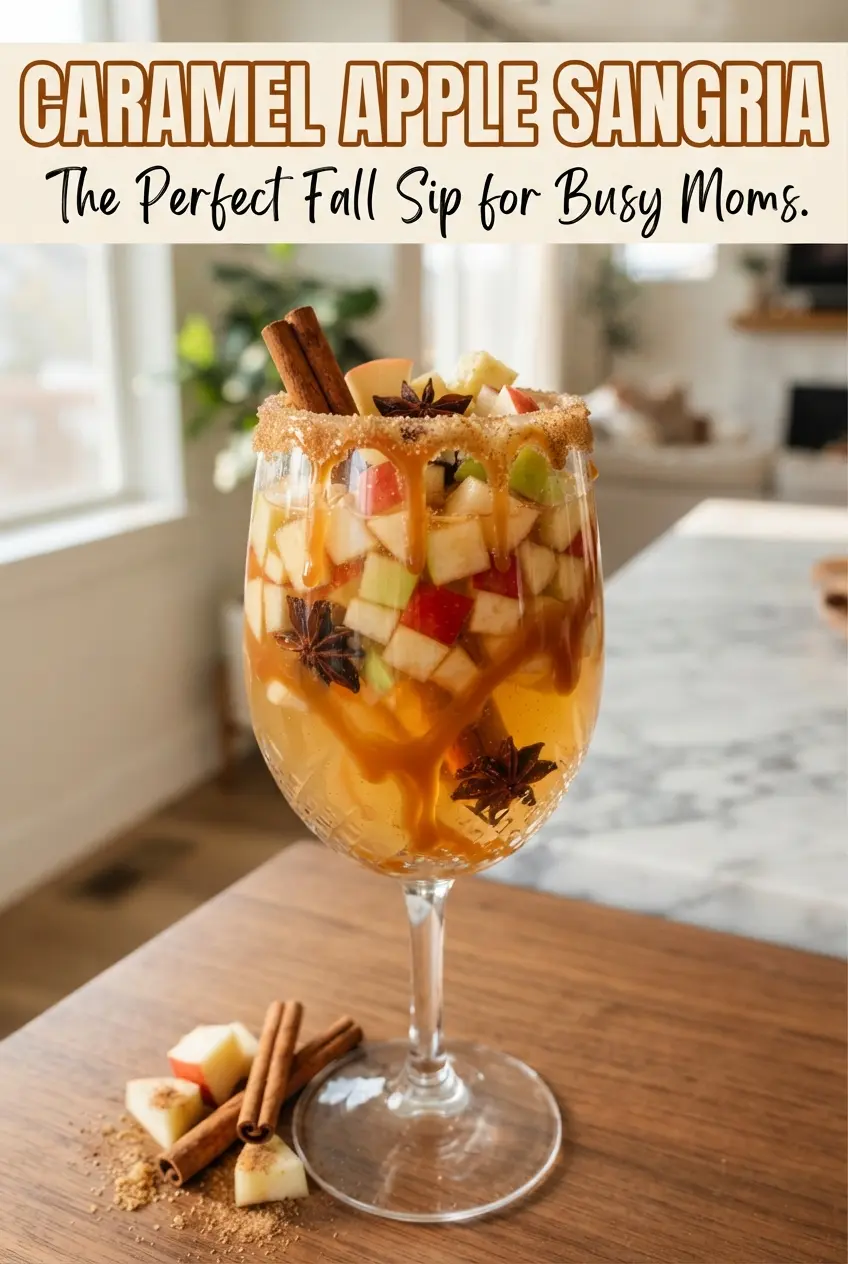
Caramel Apple Sangria
Ingredients
Equipment
Method
- Combine pinot grigio, apple cider, and caramel vodka in a large pitcher, then whisk well if using caramel sauce. Make sure everything is evenly mixed and looks uniformly caramel-kissed.
- Add apple slices, pear slices, and cinnamon sticks to the pitcher. Stir gently so the fruit settles through the liquid.
- Chill the sangria at least 2 hours. The fruit should appear slightly softened and the flavor should turn noticeably more caramel and cinnamon-forward.
- Dip the glass rims in caramel, then in coarse sugar. Place glasses on a tray so the sugar adheres and any excess can fall off.
- Just before serving, top the pitcher with ginger ale, then pour over ice with some fruit in each glass. Stop stirring once bubbles are added so the drink stays lively.