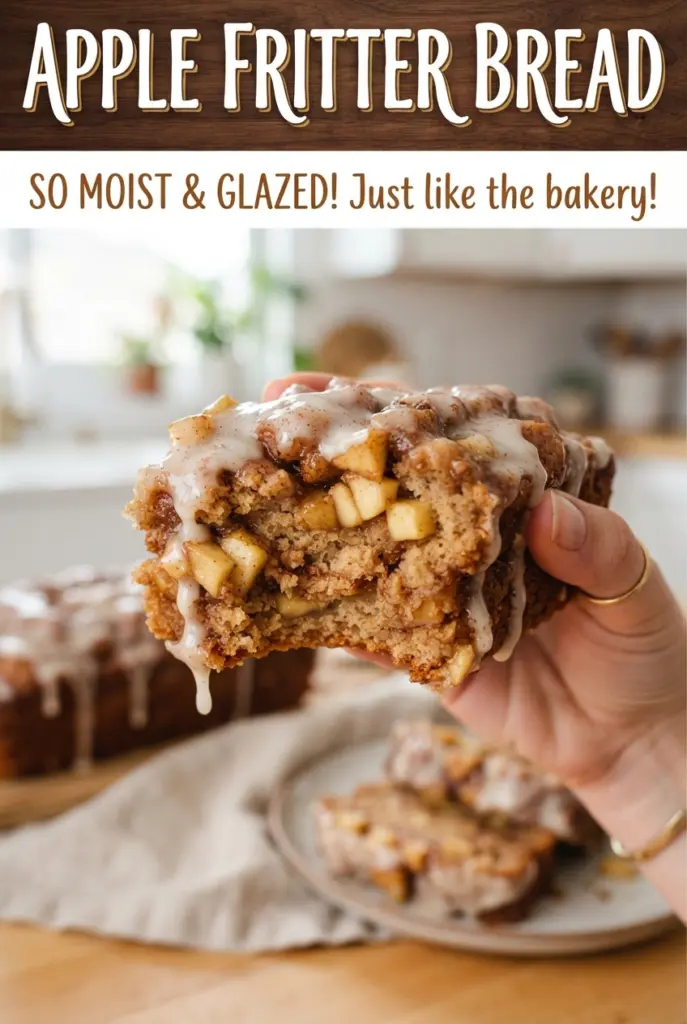
Apple fritter bread bakes up with a soft, buttery crumb, pockets of tender apple, and those ribboned layers of cinnamon sugar that sink just enough to create the kind of sticky, bakery-style bites people go after first. The glaze finishes it with a thin crackly sweetness that soaks into the top without making the loaf soggy. It slices cleanly once it cools, but the texture stays moist for days, which is why this loaf disappears fast around here.
The trick is keeping the apples coated in cinnamon sugar before they hit the batter. That little toss helps them stay flavorful and keeps the spice distributed through the loaf instead of settling in one heavy layer. I also like layering the batter and apples instead of folding everything together at once, because that gives you the streaks and pockets that make it taste like a real apple fritter rather than plain apple cake.
Below, I’ve included the part that matters most: how to keep the center baked through without drying out the edges, plus a few smart swaps if your apples are extra juicy or you want a different finish on top.
The cinnamon sugar stayed in those gorgeous layers and the glaze set up just enough that the top wasn’t sticky. I brought it to brunch and there wasn’t a crumb left after ten minutes.
Like this apple fritter bread? Save it for the next time you want cinnamon-swirled loaf cake with juicy apples and a thick vanilla glaze.
The Secret to Getting Apple Fritter Swirls Instead of a Heavy Apple Loaf
The biggest mistake with this kind of bread is overmixing once the flour goes in. That knocks out the air you worked into the butter and sugar, and the loaf bakes up dense instead of tender. Stir only until the flour disappears, then stop. The other trap is dumping all the apples into one layer. When the fruit is stacked too thick, the center can turn wet and gummy before the edges finish baking.
Layering the batter with the cinnamon apples gives you pockets of fruit and spice through the whole loaf. The gentle swirl on top is enough to marble the sugar through the batter without blending it into nothing. You want visible streaks, not a uniform brown batter. If the top starts browning too quickly in the oven, cover it loosely with foil during the last 15 minutes so the middle can catch up.
What Each Ingredient Is Actually Doing in This Loaf
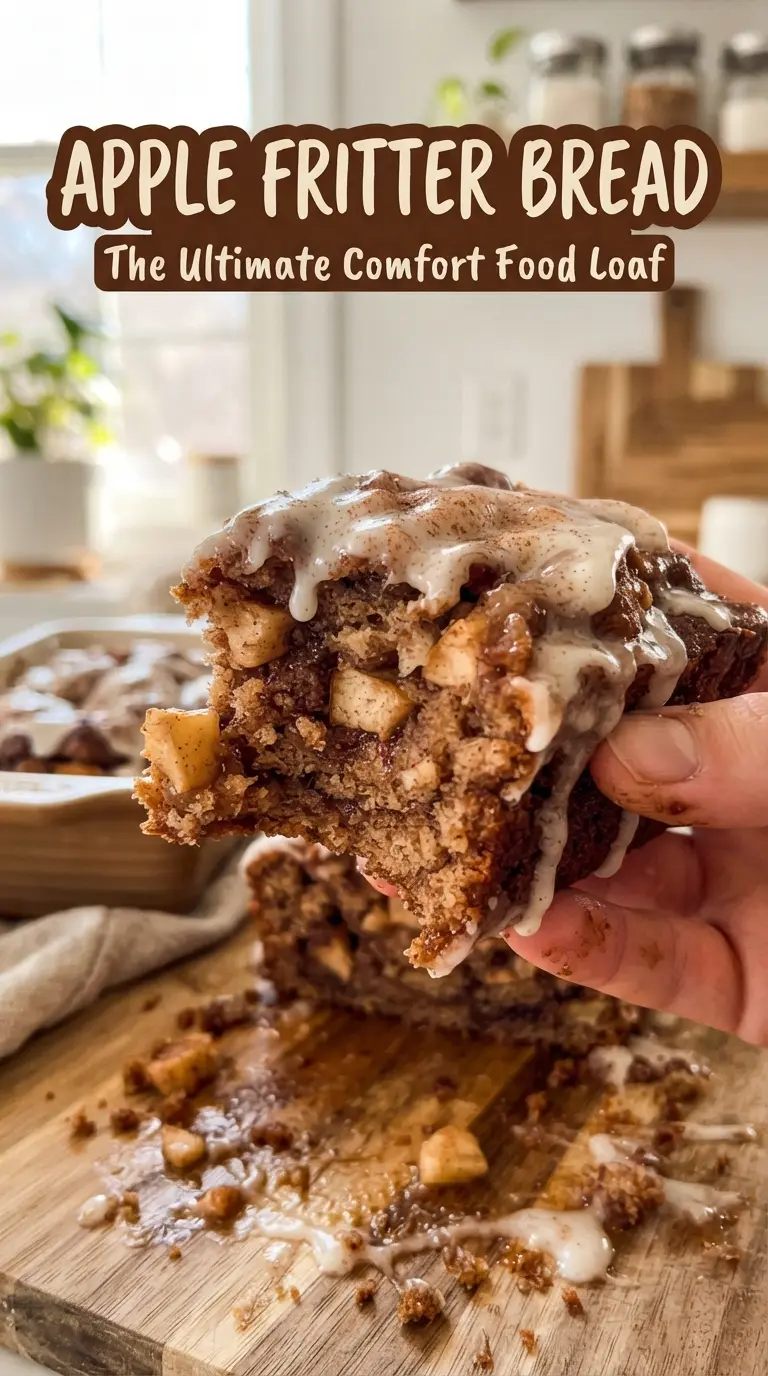
- Apples — These bring the soft fruit pockets that make the bread taste like an apple fritter. A firm baking apple holds its shape best, but if all you have are softer apples, chop them a little larger so they don’t melt into the crumb.
- Brown sugar and cinnamon — This is the flavor that gives the loaf its fritter character. Tossing some of it with the apples keeps the spice from clumping and helps the fruit release just enough juice as it bakes.
- Butter — Softened butter creams with the sugar to trap air, which gives the loaf its lighter texture. Cold butter won’t whip properly, and melted butter changes the structure, so let it soften at room temperature before you start.
- Milk — Added alternately with the dry ingredients, milk keeps the batter smooth and helps it stay tender. Whole milk gives the best richness, but 2% works if that’s what you keep on hand.
- Powdered sugar — This makes the glaze set with that classic bakery finish. Add the milk slowly so you end up with a drizzly consistency instead of a glaze that runs straight off the loaf.
Building the Layers So the Apple Cinnamon Streaks Stay Distinct
Creaming the Base Until It Looks Light
Beat the butter and granulated sugar until the mixture looks pale and fluffy, not just combined. That step builds the structure that keeps the loaf tender. Once the eggs and vanilla go in, the batter may look slightly curdled for a moment; that’s normal and it smooths out when you add the dry ingredients.
Mixing the Dry and Wet Ingredients Without Toughening the Crumb
Whisk the flour, baking powder, and salt together first, then add them in alternating additions with the milk. This keeps the batter from turning lumpy, and it also helps you stop mixing sooner. If you beat it hard at this stage, the finished loaf turns tight and chewy instead of soft.
Layering and Swirling for the Fritter Effect
Spread half the batter in the pan, add half the apples, then repeat with the remaining batter and fruit. Sprinkle on the cinnamon sugar between layers so it melts into ribbons instead of disappearing into the batter. Drag a knife through the top just once or twice; too much swirling mixes the layers completely and you lose the look that makes this bread special.
Knowing When It’s Done in the Center
Bake until a toothpick in the middle comes out clean or with just a few moist crumbs, usually around 50 to 55 minutes. If the toothpick has wet batter on it, the center still needs time. Pull the loaf before it looks deeply dark on top, because the glaze will cover any pale spots and the loaf keeps cooking a little as it cools.
How to Adapt Apple Fritter Bread for Different Kitchens and Different Cravings
Make it dairy-free
Use a plant-based butter stick and an unsweetened non-dairy milk in both the batter and glaze. The loaf will still be tender, but the flavor will be a little less rich, so choose a dairy-free butter with a neutral taste rather than a spread from a tub.
Use pears instead of apples
Firm pears can stand in for the apples if that’s what you have. They bake a little softer and sweeter, so keep the pieces on the larger side and don’t overdo the swirl or the fruit can disappear into the crumb.
Skip the glaze for a less sweet finish
The loaf is still flavorful without the powdered sugar topping, especially if you want the cinnamon and apple to stand out more. In that version, dust the top lightly with cinnamon sugar right after baking for a drier, bakery-style finish.
Storage and Reheating
- Refrigerator: Store covered for up to 4 days. The crumb stays moist, but the glaze softens after the first day.
- Freezer: This loaf freezes well. Wrap slices individually and freeze for up to 2 months so you can thaw only what you need.
- Reheating: Warm a slice in the microwave for 10 to 15 seconds or toast it gently in a low oven. High heat dries out the edges before the center warms through, so keep it light.
Answers to the Questions Worth Asking
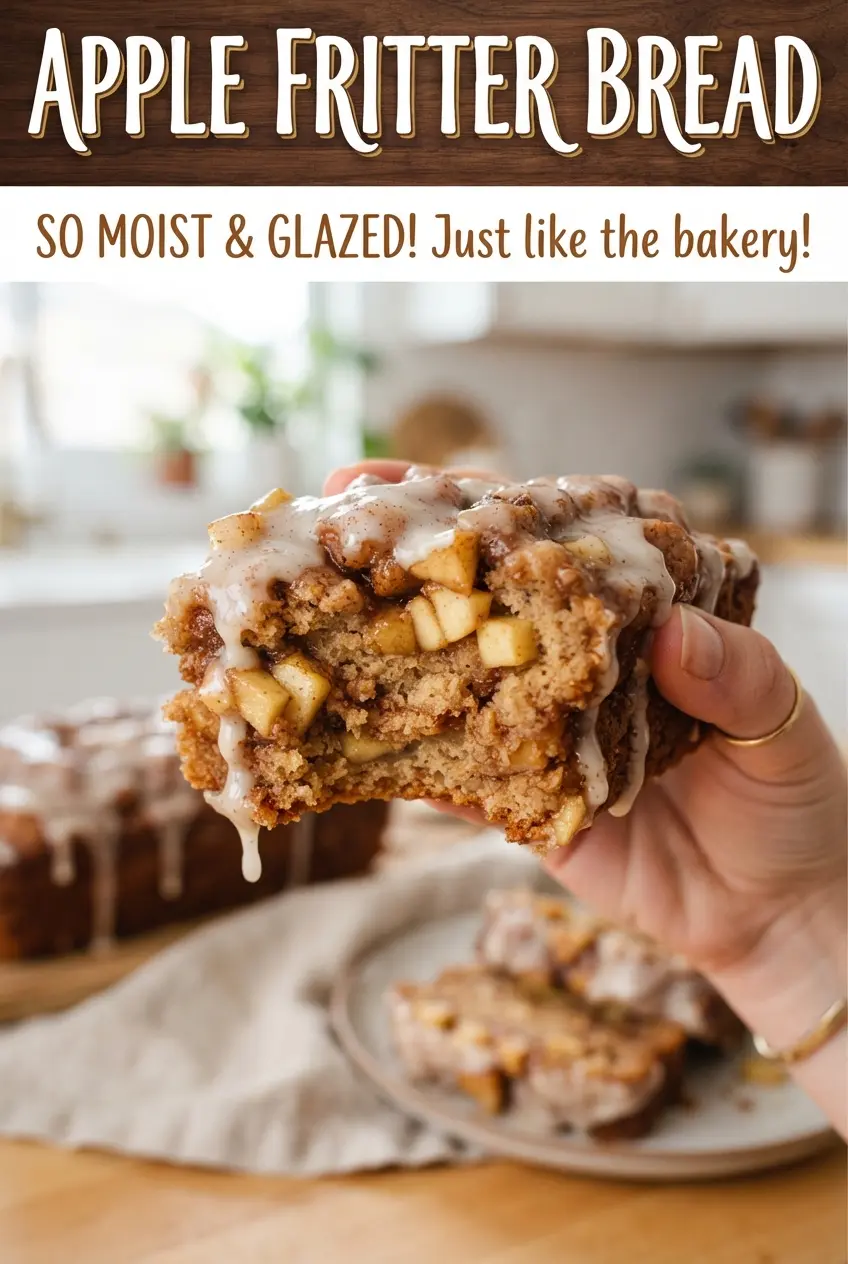
Apple Fritter Bread
Ingredients
Equipment
Method
- Preheat the oven to 350F, then grease and line a 9x5-inch loaf pan so the bread releases cleanly.
- Mix the packed brown sugar with the ground cinnamon, then toss the chopped apples in 2 tablespoons of the cinnamon sugar.
- Beat the softened butter and granulated sugar until fluffy, then beat in the eggs and vanilla extract until smooth.
- Whisk the all-purpose flour, baking powder, and salt, then add to the batter alternately with the milk until just combined.
- Spread half the batter in the loaf pan, top with half the apples, and sprinkle on half of the remaining cinnamon sugar.
- Repeat the layers with the remaining batter, remaining apples, and the remaining cinnamon sugar.
- Swirl gently with a knife to create cinnamon-brown sugar streaks through the loaf.
- Bake at 350F for 50–55 minutes, until a toothpick inserted in the center comes out clean (look for a golden top and set edges).
- Cool the loaf for 15 minutes, then whisk powdered sugar with milk to make a thick glaze.
- Drizzle the glaze over the warm loaf so it sinks slightly into the swirls.