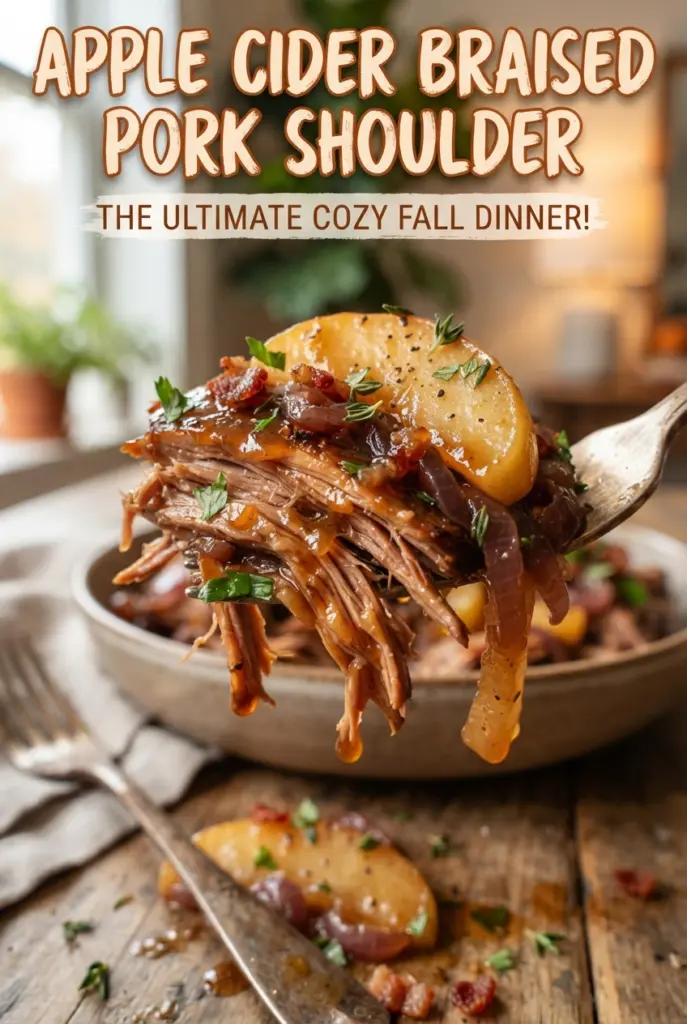
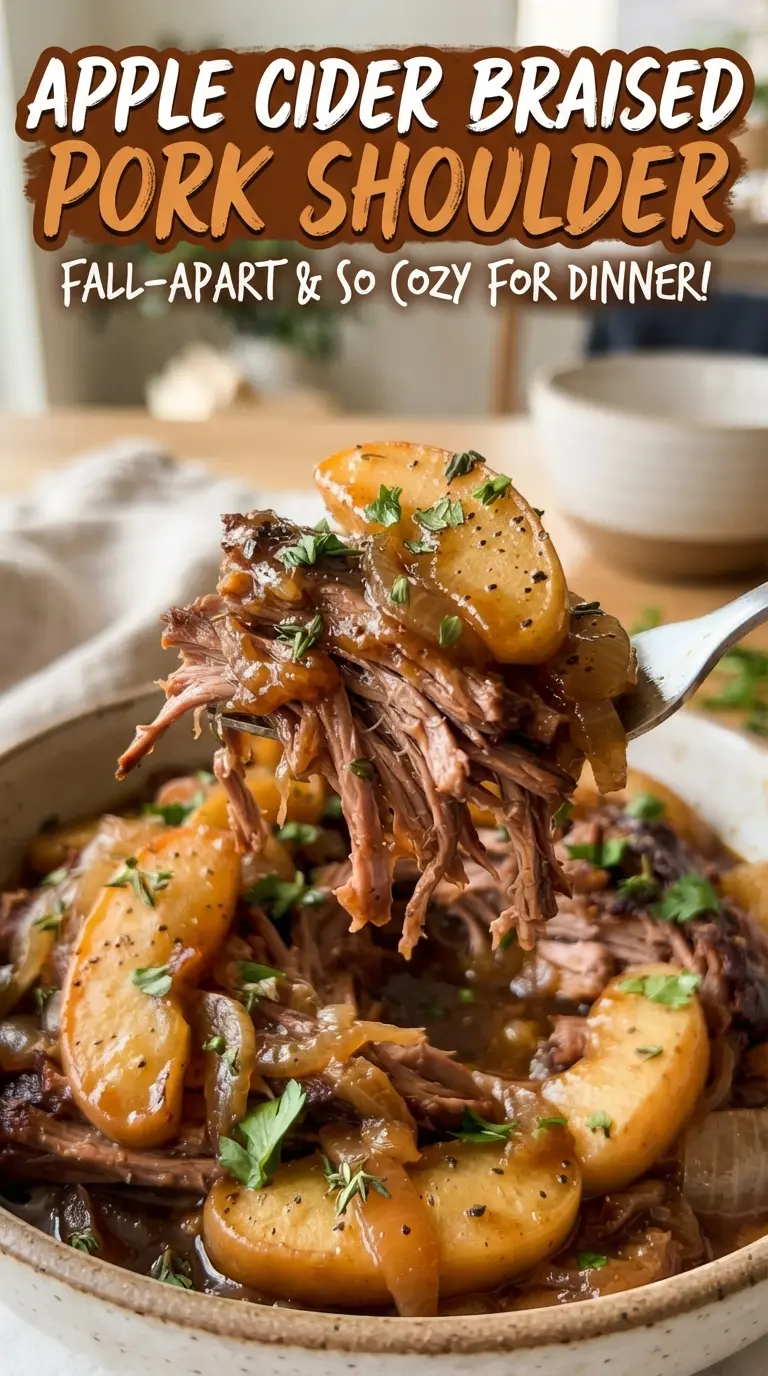
Pork shoulder turns silky and spoon-tender when it gets the right kind of time, and the apple cider here gives the braising liquid a round, tart sweetness that keeps the whole dish from tasting heavy. The meat comes out rich and deeply savory, with soft apples and onions collapsing into the sauce at the end. It’s the kind of dinner that looks like it took more effort than it did, which is always a nice place to be.
The trick is in the sear and the braising liquid. Browning the pork first builds the base flavor, and the cider needs a little sharpness from vinegar and Dijon so it doesn’t turn flat or cloying. The apples go in late on purpose; if they braise the whole time, they dissolve before the pork is ready. Added near the end, they hold their shape and soak up the sauce instead.
Below you’ll find the small timing details that matter, plus a few smart swaps if you’re working with what’s already in the kitchen.
The pork was fall-apart tender and the cider sauce reduced into something glossy and rich without tasting sweet. I loved that the apples held their shape at the end instead of turning to mush.
Save this Apple Cider Braised Pork Shoulder for the kind of dinner where you want tender pork, soft apples, and a cider sauce that tastes slow-cooked and polished.
The Browned Bits Are the Difference Between Good and Flat
Pork shoulder can absolutely braise in cider and still taste one-note if the pan isn’t built properly first. The sear is not there for color alone. It leaves behind browned bits that dissolve into the cider and broth, giving the sauce depth that plain simmering can’t create. If the meat goes into the oven pale, the sauce has to do all the work on its own.
The other thing that matters here is balance. Apple cider brings sweetness, but the vinegar and Dijon keep it sharp enough to cut through the pork fat. That’s what keeps each bite lively instead of heavy. The sauce should taste a little too bold in the pot before it goes into the oven; it mellows as the pork braises.
- Pork shoulder — This cut has the fat and connective tissue that break down into tenderness over a long braise. Leaner cuts dry out before they get to the same place.
- Apple cider — Use fresh, unfiltered cider if you can get it. Apple juice works in a pinch, but it tastes sweeter and less layered, so the sauce needs the vinegar more.
- Dijon mustard — It sharpens the braising liquid and helps the sauce emulsify a little as it reduces. Yellow mustard won’t give the same clean, savory edge.
- Thyme and rosemary — These herbs stand up to long cooking and keep the braise tasting like more than fruit and meat. Dried thyme can work, but use less; rosemary is worth keeping fresh if you can.
What Each Ingredient Is Actually Doing in This Recipe
- Primary ingredient (the star) — Quality matters most. Choose the best you can find.
- Cooking medium (oil, butter, or broth) — This carries flavors and prevents dryness.
- Seasonings (salt, pepper, spices, herbs) — Layer flavors so nothing overpowers. Build depth gradually.
- Aromatics (garlic, onion, herbs) — Cook with fat to bloom flavors. Become the foundation.
- Supporting ingredients — Complement the main ingredient without overpowering it.
- Sauce or liquid (if applicable) — Brings flavors together. Balance richness with acid.
- Acid (lemon, vinegar, wine, or other) — Brightens and prevents flat-tasting results.
- Final finish (garnish, glaze, or sauce) — Prevents one-dimensional taste and adds visual appeal.
Building the Braise So the Pork Stays Juicy
The oven does the slow work, but the stove gives this dish its structure. Start by seasoning the pork generously and searing it in hot oil until each side has a deep brown crust. If the pan is crowded or the heat is too low, the meat steams instead of browns, and that missing caramelization shows up in the final sauce. After the pork comes out, cook the onions until they soften and pick up some color, then use the cider mixture to scrape up every bit from the bottom of the pot.
Once the liquid goes in, the goal is a gentle braise, not a hard boil. A tight lid and a low oven keep the meat tender while the sauce slowly concentrates. The apples go in for the last stretch so they soften without collapsing, and the pork should shred easily with a fork when it’s done.
Getting the Sear Without Burning the Spice
Heat the oil until it shimmers before the pork goes in. The seasoning should stay on the meat, not fall off into the pan, so pat the pork dry first and leave it alone long enough to form a crust. If it sticks at first, it usually means it isn’t ready to turn yet. When it releases cleanly, that’s your cue.
Making the Braising Liquid Taste Balanced
Stir the cider, broth, vinegar, Dijon, and brown sugar into the pot and scrape until the bottom looks clean. The liquid should taste bright, savory, and slightly sweet all at once. If it tastes thin at this stage, that’s normal; the oven will concentrate it. What matters is having enough acid and salt to carry the flavor once the pork fat melts into the sauce.
Finishing When the Meat Finally Gives
Add the apples only after the pork has had most of its braise time. They need enough heat to soften but not enough to disappear. When the pork shreds with almost no resistance, pull it apart in large pieces and simmer the sauce on the stove for a few minutes so it coats a spoon instead of running off like broth. That last reduction is what makes the whole dish feel finished.
What to Change When You Need a Different Version
Dairy-Free, Naturally
This recipe already skips dairy, which means the texture comes entirely from the pork, the cider reduction, and the natural body of the onions and apples. Keep the braising liquid as written so the sauce still has enough richness without cream or butter.
A Less Sweet Sauce
Cut the brown sugar in half and add an extra teaspoon of apple cider vinegar. The result is brighter and more savory, with the apples and cider reading as a background note instead of the main flavor.
Using Pork Butt Instead of Shoulder
Pork butt behaves almost the same as shoulder because it comes from the same general area and has the same marbling. Trim only the thickest exterior fat, then cook it by tenderness, not the clock, since a slightly heavier piece may need a little more time in the oven.
Gluten-Free Serving Ideas
The braise itself is gluten-free as written. Serve it with mashed potatoes, polenta, or rice to catch the sauce, and check your broth label if you’re using a brand that isn’t certified gluten-free.
Storage and Reheating
- Refrigerator: Store the pork and sauce in an airtight container for up to 4 days. The flavor deepens overnight, and the sauce may thicken as it chills.
- Freezer: It freezes well for up to 3 months. Cool completely, portion with plenty of sauce, and thaw overnight in the refrigerator before reheating.
- Reheating: Warm gently on the stove over low heat or in a covered dish in the oven. High heat dries out the pork and can make the sauce taste flat, so reheat slowly with a splash of broth if it looks tight.
Answers to the Questions Worth Asking
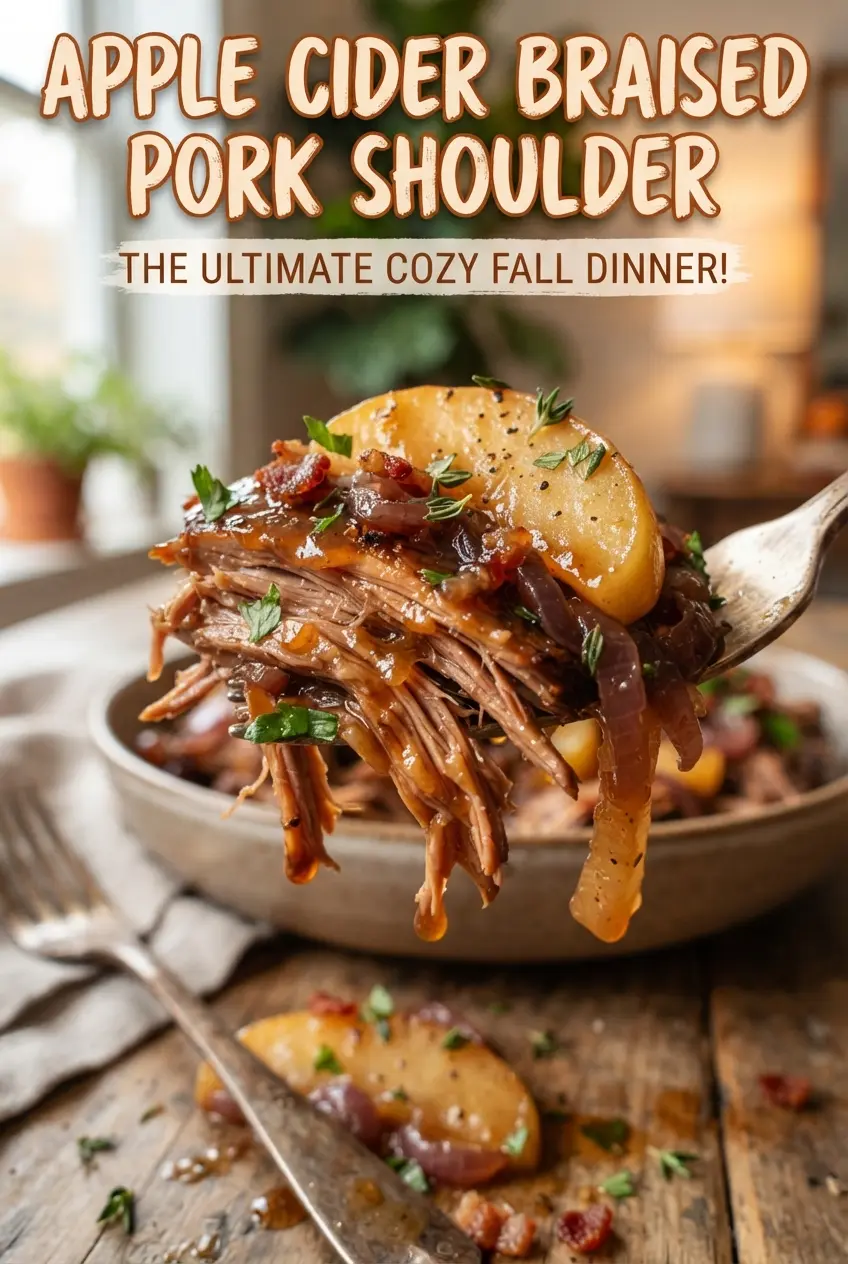
Apple Cider Braised Pork Shoulder
Ingredients
Equipment
Method
- Preheat the oven to 325°F. Season the pork all over with salt, black pepper, and smoked paprika.
- Heat olive oil in a Dutch oven over high heat until hot, then sear the pork 4-5 minutes per side until well browned. Remove pork from the pot and set aside.
- Add the sliced onion to the Dutch oven and cook for 5 minutes. Add the smashed garlic and cook for 1 minute.
- Stir in apple cider, chicken broth, apple cider vinegar, Dijon mustard, and brown sugar, scraping up the browned bits from the bottom. Bring the mixture to a brief simmer as you stir.
- Return the pork to the Dutch oven, then add fresh thyme and fresh rosemary on top. Cover and braise for 2 1/2 hours at 325°F.
- Add the apple wedges and continue braising, covered, for 45 minutes more at 325°F until the pork is fork-tender. Use a fork to confirm the meat pulls apart easily.
- Shred the pork into large pieces using two forks. Transfer the pork back to the sauce and simmer the liquid on the stove for 10 minutes to reduce.
- Serve the pork with the reduced cider sauce and the soft apples and onions. Spoon sauce over the meat so it clings to every bite.