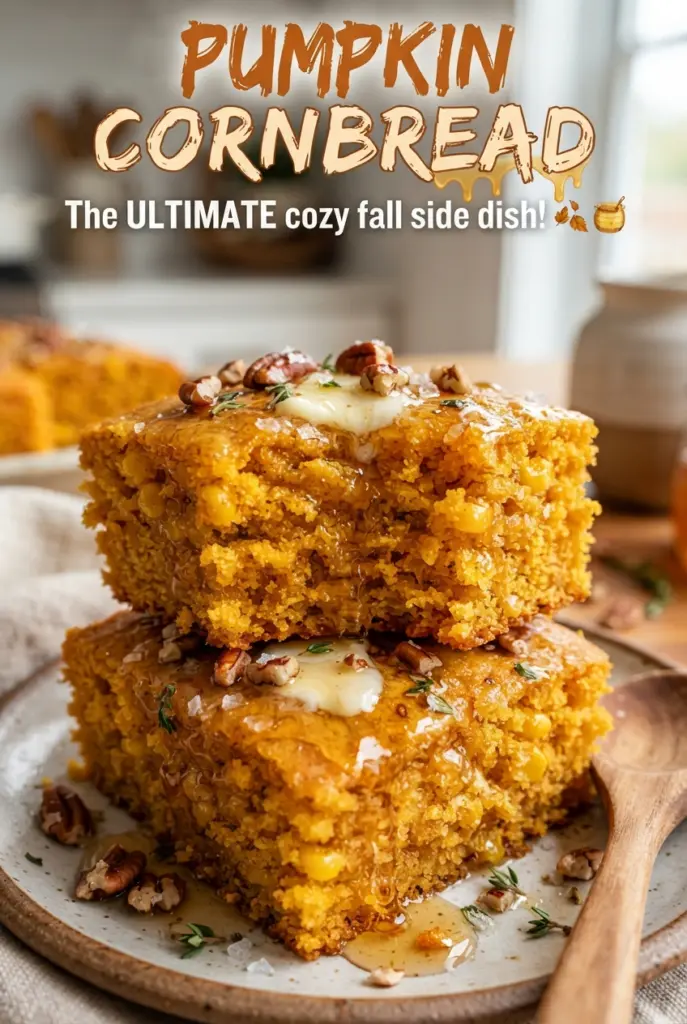
Golden pumpkin cornbread lands with a tender crumb, a lightly crisp edge, and just enough maple sweetness to make it feel special without tipping into dessert. The pumpkin keeps the center soft and moist, while the cornmeal gives each bite that familiar cornbread texture people expect. Warm from the oven, it’s the kind of side that disappears fast next to chili, roast chicken, or a bowl of beans.
The trick is keeping the batter just barely mixed. Once the wet and dry ingredients come together, stop stirring before the flour can build up toughness. Pumpkin puree adds body and moisture, but it also makes the batter denser than standard cornbread, so the balance of buttermilk and melted butter matters. That combination gives you a cornbread that slices cleanly without drying out.
Below you’ll find the exact pan options, the best way to tell when it’s done, and a few smart swaps if you want to make it dairy-free or a little richer. I also included storage notes, because this reheats well and makes excellent leftovers.
The pumpkin kept it moist for days, and the maple butter melted into the top just like I hoped. I baked mine in cast iron, and the edges came out perfectly crisp without drying the middle.
Save this pumpkin cornbread for the days when you want a golden, buttery side with maple warmth and crisp edges.
The Secret to Pumpkin Cornbread That Stays Tender Instead of Gummy
Pumpkin cornbread goes wrong when the batter gets overmixed or the pan runs too cool. Cornmeal needs enough heat to set the edges before the center dries out, and pumpkin puree adds moisture that can tip the crumb toward dense if the bake is timid. A hot 400F oven gives you the lift you need and helps the top set with a little color before the inside overbakes.
The other thing that matters is balance. Too much pumpkin and the cornbread turns heavy; too much flour and it loses that pleasant grainy bite. This version keeps the structure tight enough to slice but soft enough to eat warm with butter melting into the top. If the center still looks wet when you test it, give it a few more minutes rather than pulling it early, because underbaked pumpkin cornbread usually sinks after it cools.
What Each Ingredient Is Actually Doing In This Pan
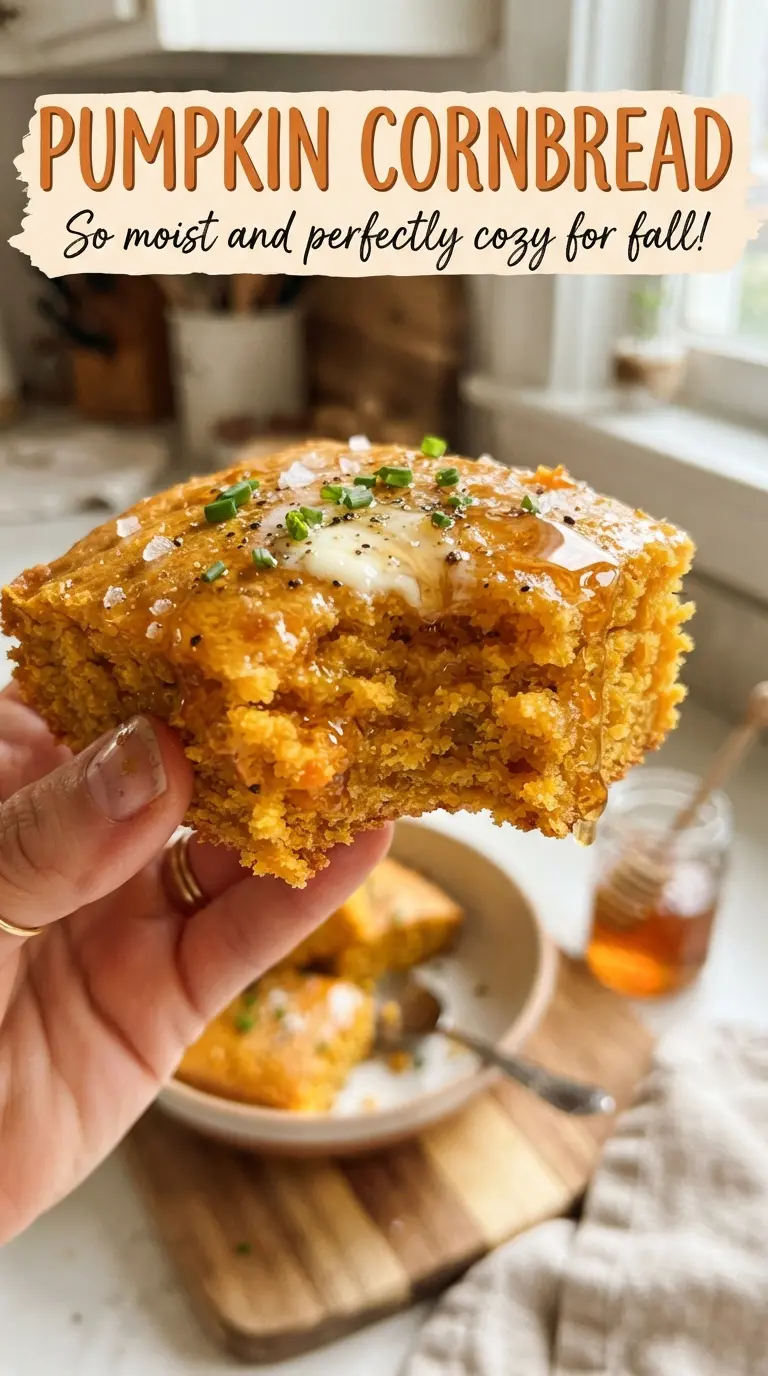
- Yellow cornmeal — This gives the cornbread its backbone and that classic little bit of grit. Fine or medium grind both work; coarse cornmeal makes a more rustic texture, while finer cornmeal bakes up softer.
- All-purpose flour — Flour holds the loaf together so the pumpkin doesn’t make it crumbly. Don’t replace all of it with cornmeal unless you want a much looser, more fragile bake.
- Pumpkin puree — Use pure pumpkin, not pumpkin pie filling. Pie filling already contains sugar and spices, which throws off both the sweetness and the balance of this batter.
- Buttermilk — This keeps the crumb tender and adds a gentle tang that plays well with the maple and spice. If you’re out of buttermilk, use milk mixed with a little lemon juice or vinegar and let it sit for 5 minutes.
- Melted butter and maple syrup — The butter adds richness and the maple softens the pumpkin flavor without making the bread taste like cake. Browned butter works if you want a deeper, nutty note, but keep it cooled slightly before whisking it in.
Building the Batter So the Cornbread Bakes Up Light
Mix the dry ingredients first
Whisk the cornmeal, flour, brown sugar, baking powder, salt, and pumpkin pie spice until the mixture looks even. This keeps the leavener from clumping, which matters because baking powder needs to be evenly distributed for a steady rise. If you see streaks of spice or pockets of sugar, keep whisking for another few seconds.
Bring the wet ingredients together separately
Whisk the pumpkin, eggs, buttermilk, melted butter, and maple syrup until smooth and glossy. The butter should be warm, not hot; if it’s steaming, it can start cooking the eggs. A uniform wet mixture helps the batter come together quickly once it hits the dry bowl, which is how you avoid tough cornbread.
Stop stirring at the first sign of combined batter
Pour the wet mixture into the dry and stir just until no dry pockets remain. The batter should look thick and slightly lumpy, not whipped smooth. Overmixing builds gluten in the flour and tightens the crumb, which is the fastest way to lose that soft, tender slice.
Bake until the center sets
Spread the batter into your greased pan and bake until the top is golden and a toothpick comes out clean, usually 22 to 25 minutes. In a cast iron skillet, the edges may finish a touch sooner and brown more deeply, which is exactly what you want. If the top is browned but the center still clings to the toothpick, give it a few more minutes and test again in the middle, not near the edge.
Three Ways to Adjust This Without Losing the Good Part
Dairy-Free Version
Use a plain unsweetened non-dairy milk mixed with 1 teaspoon vinegar in place of the buttermilk, and swap in melted vegan butter or neutral oil for the butter. The crumb will still be moist, though it loses a little of the rich dairy flavor that makes the original taste fuller.
Extra Rich and Dessert-leaning
Replace half of the buttermilk with sour cream for a denser, richer crumb and a little more tang. This version is excellent with maple butter, but it bakes up slightly heavier, so check the center carefully before pulling it from the oven.
Muffin Tin Cornbread
Divide the batter into a greased 9-cup muffin tin and bake until the centers spring back, about 14 to 17 minutes. You’ll get more crust per serving and a slightly drier edge, which is great if you want individual portions for a crowd.
Storage and Reheating
- Refrigerator: Store in an airtight container for up to 4 days. The crumb tightens a little after chilling, but it stays moist.
- Freezer: It freezes well. Wrap slices tightly and freeze for up to 2 months, then thaw at room temperature before reheating.
- Reheating: Warm slices in a 300F oven or toaster oven until heated through. The mistake to avoid is microwaving it too long, which makes the texture rubbery instead of soft.
Questions I Get Asked About This Recipe
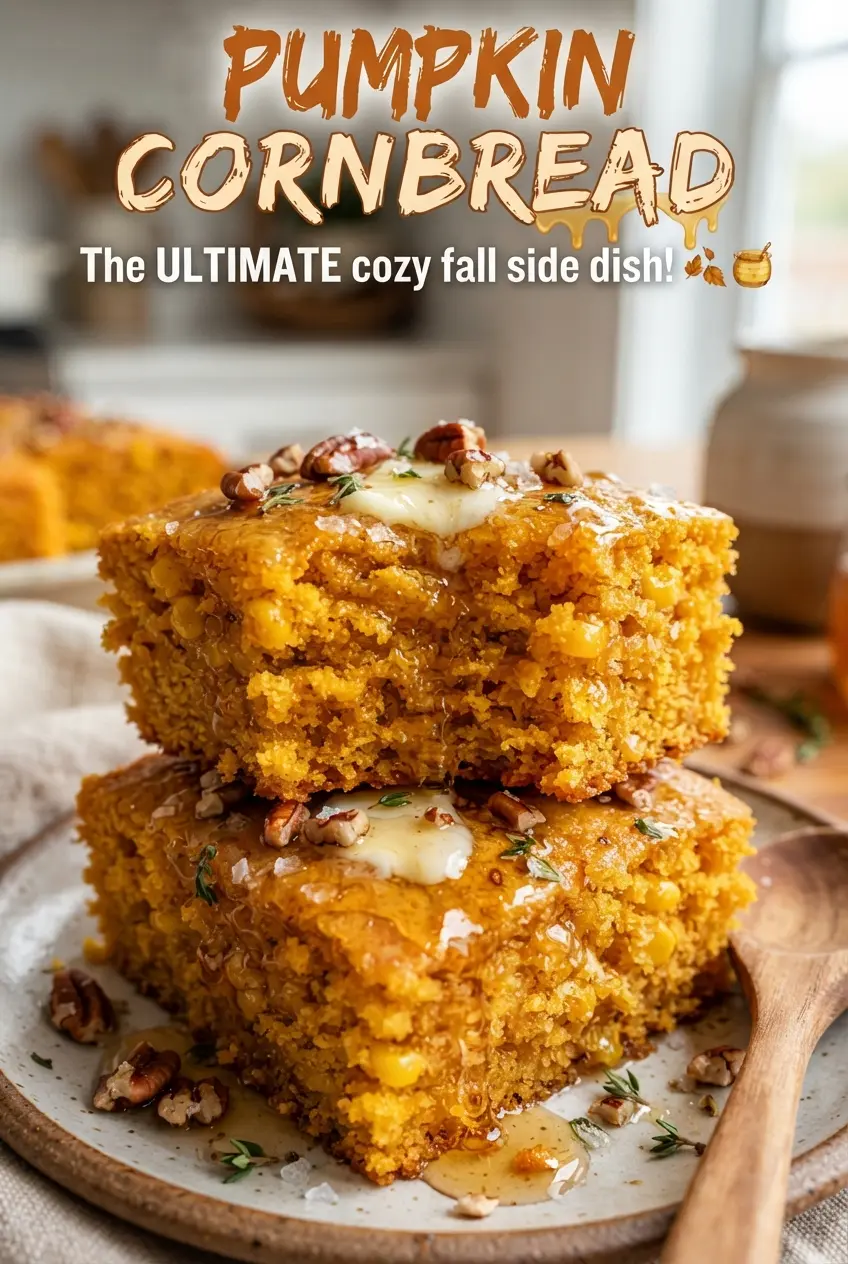
Pumpkin Cornbread
Ingredients
Equipment
Method
- Preheat oven to 400F and grease an 8x8-inch pan or 10-inch cast iron skillet. You should see the oven fully reaching temperature before baking (visual cue: heated indicator or preheat beep).
- Whisk yellow cornmeal, all-purpose flour, brown sugar, baking powder, salt, and pumpkin pie spice until evenly combined. The mixture should look uniform in color with no dry streaks.
- Whisk pumpkin puree, eggs, buttermilk, melted butter, and maple syrup until smooth. The batter should look glossy and cohesive, with no eggy lumps visible.
- Stir wet into dry just until combined. Stop when the flour is no longer visible—overmixing can make the crumb tough (visual cue: a thick batter with streak-free dry spots).
- Spread the batter into the prepared pan and smooth the top. Level it so the cornbread bakes evenly (visual cue: flat, even surface).
- Bake for 22-25 minutes at 400F until golden and a toothpick comes out clean. The top should be set and browned with a springy look when lightly touched.
- Serve warm with butter. The first bite should be tender and moist, and you should see butter melt into the warm surface.