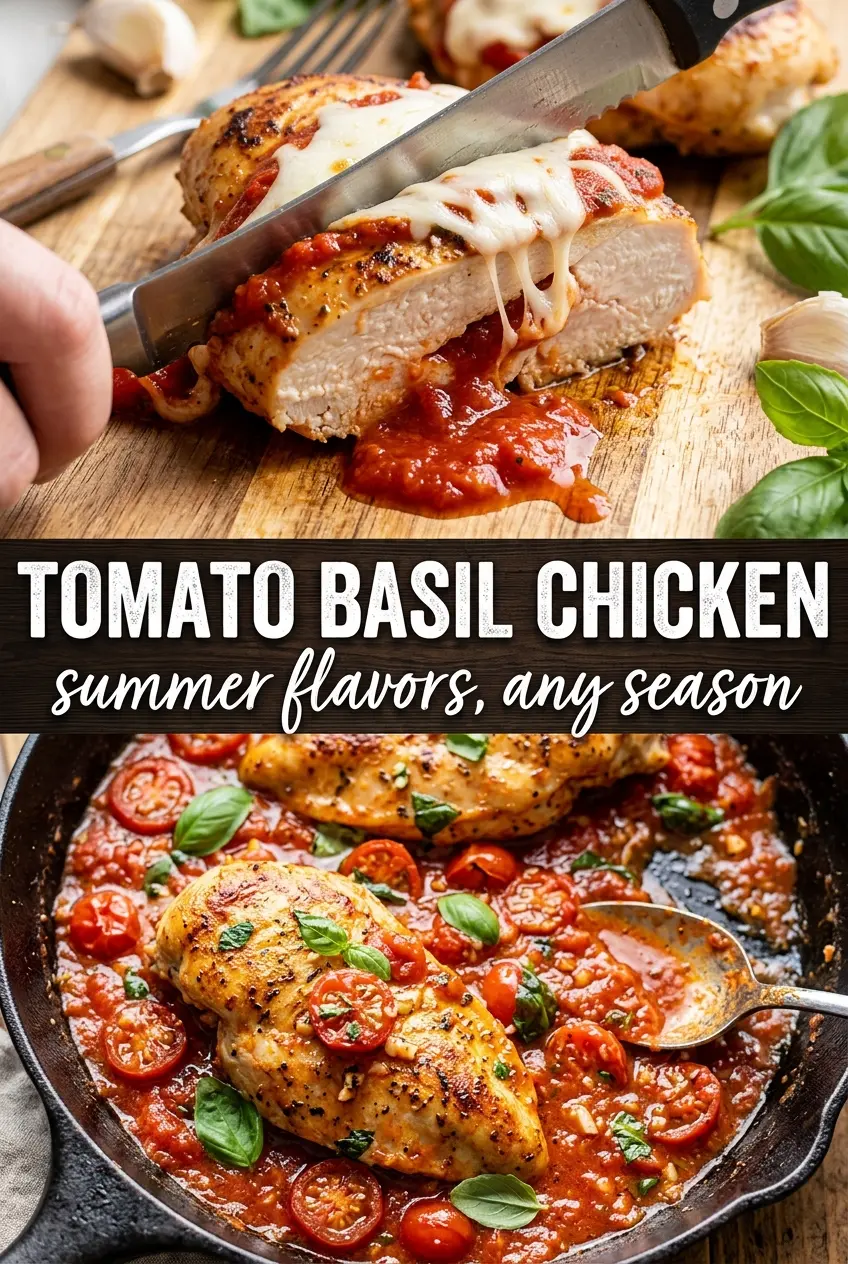
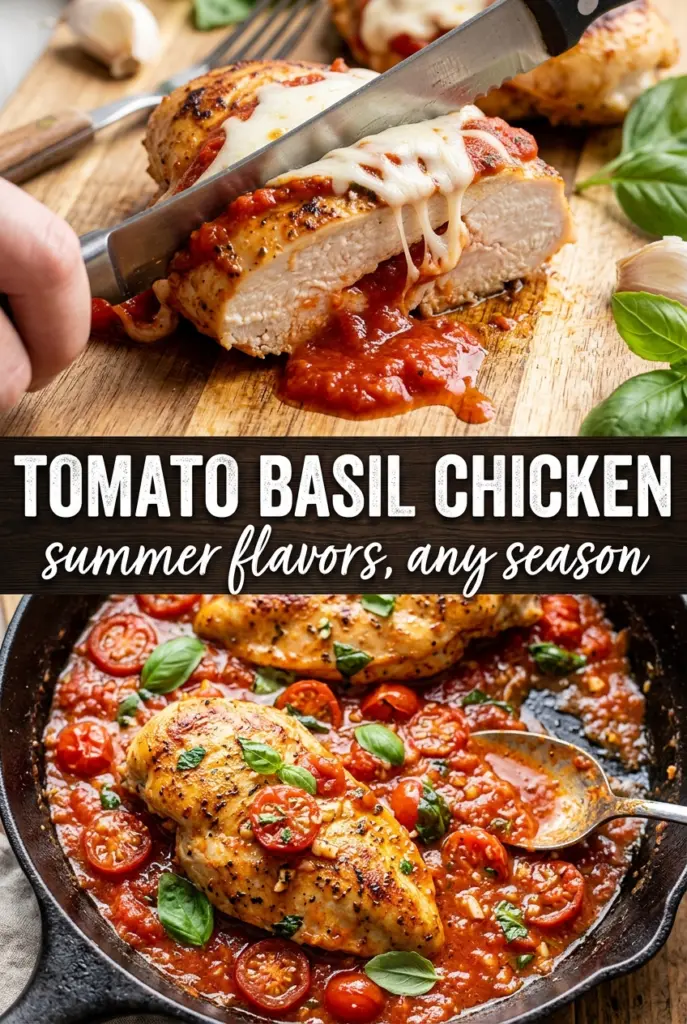
Golden chicken breasts tucked into a bright tomato basil skillet sauce are the kind of dinner that makes a plain weeknight feel a little more put together. The chicken stays juicy because it’s seared first, then finished in the sauce just long enough to soak up the tomatoes without turning dry. What you get is tender meat, burst tomatoes, garlic, and basil in every bite, with just enough balsamic and Parmesan to make the whole pan taste finished.
This version works because it builds flavor in layers instead of relying on one big seasoning dump. The chicken gets a hard sear for color and fond in the pan, the tomatoes cook just until they collapse, and the wine or broth loosens all those browned bits into the sauce. Basil goes in at the end so it stays fresh and fragrant instead of fading into the background. Parmesan and a final drizzle of olive oil round out the sauce without making it heavy.
Below you’ll find the small details that matter here, especially how to keep the sauce bright and how to avoid overcooking the chicken. If you’ve ever ended up with tomato chicken that tasted flat or watery, this method fixes both problems.
The tomatoes burst right on cue and the sauce turned glossy without getting watery. I used broth instead of wine and the chicken still came out juicy with enough flavor to spoon over rice.
Save this tomato basil chicken breasts recipe for the nights when you want a one-pan Italian-style dinner with juicy chicken and a bright skillet sauce.
The Reason This Sauce Stays Bright Instead of Going Flat
The trap with tomato chicken is letting the pan turn into soup before the tomatoes have a chance to do their job. Here, the chicken gets browned first, then the tomatoes cook in the hot skillet just until they split and release their juice. That gives you a sauce that tastes concentrated instead of watery.
The other thing that matters is timing. Basil goes in at the very end, after the pan comes off the harshest heat, because fresh basil bruises and darkens fast. The Parmesan finishes the sauce with a little body, but it shouldn’t be cooked hard or it can clump instead of melting into the juices.
- Boneless skinless chicken breasts — These are lean, so the sear-and-finish method matters. If your pieces are uneven, pound them lightly to the same thickness so the thinner end doesn’t dry out before the center is done.
- Cherry tomatoes — They bring sweetness and enough natural juice to build the sauce without needing canned tomatoes. Halving them helps them collapse faster and gives you those burst edges that make the skillet look and taste alive.
- Dry white wine or chicken broth — Wine adds a little sharpness and depth, while broth keeps the sauce savory and still works well. If you skip wine, use broth and add a small extra splash of balsamic at the end for brightness.
- Fresh basil — Dried basil won’t give the same finish here. Chiffonade the leaves right before serving so they stay fragrant instead of turning dark and limp in the pan.
What Each Ingredient Is Actually Doing in This Chicken Dish
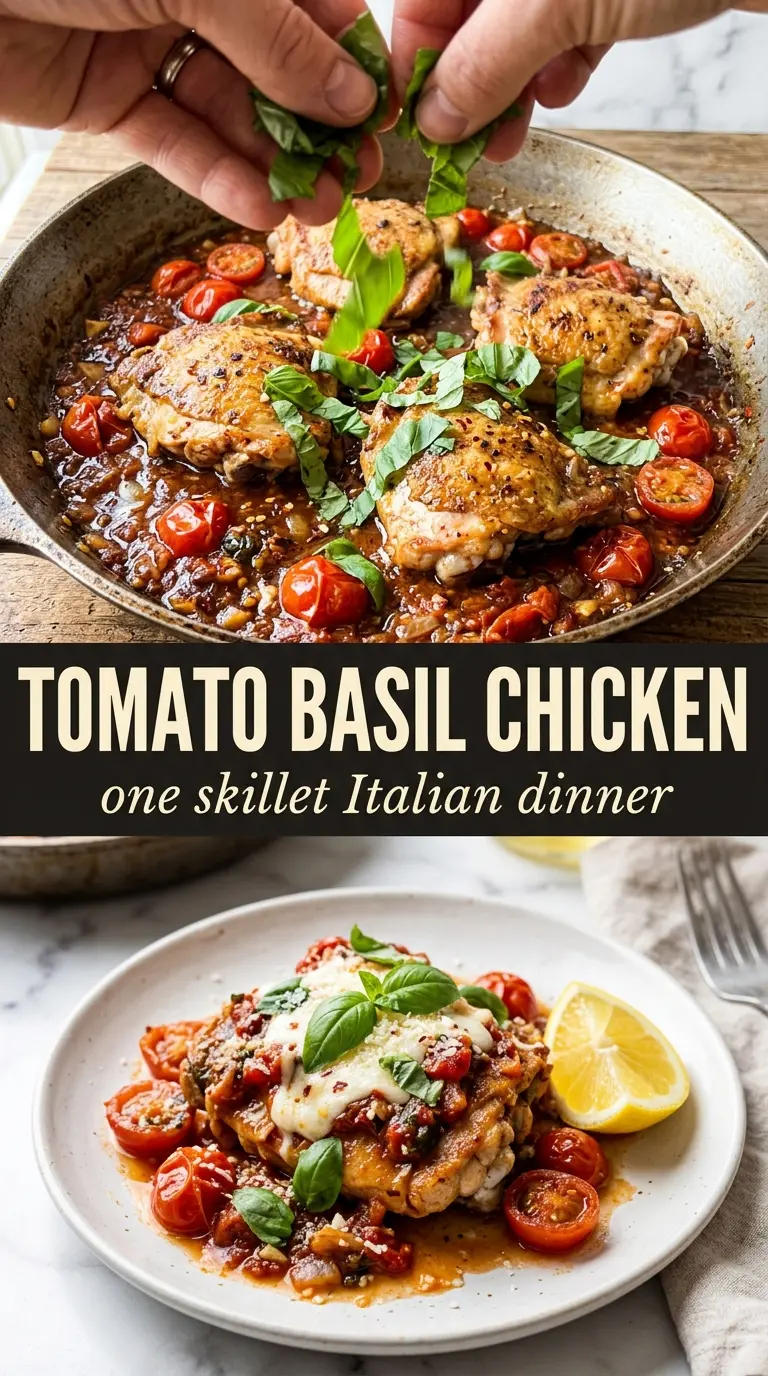
- Chicken (bone-in or boneless, skin-on or skinless) — Each cut has different cooking times and flavor profiles. Let thighs reach 165°F; breasts dry out if overcooked past that.
- Sauce or braising liquid (the moisture keeper) — This prevents the chicken from drying out and adds flavor. Don’t skip it even if the recipe seems moist.
- Aromatics (garlic, onion, herbs) — These add depth and complexity. Cook them with fat so they soften and sweeten instead of staying sharp.
- Cream or butter (optional richness) — These make the dish luxurious. Add to the sauce off the boil so it stays smooth instead of breaking.
- Cheese (if using) — This adds umami and richness. Mix into the sauce or sprinkle on top; either works depending on the dish.
- Acid (lemon, vinegar, wine, or tomato) — This prevents heavy sauces from tasting flat. Add at the end so the brightness doesn’t cook off.
- Proper temperature (165°F is perfect) — Use a thermometer to avoid guessing. Pull slightly early if the chicken will rest or finish in residual heat.
- Resting time (at least 5 minutes) — This lets juices redistribute so the meat stays moist when you cut into it instead of running dry.
Building the Chicken and Tomatoes in the Right Order
Season and Sear for Color
Pat the chicken dry before it hits the skillet or it will steam instead of brown. Season it well, then sear in olive oil over medium-high heat until the crust turns deep golden and the chicken releases easily from the pan. If it sticks hard, it needs another minute; forcing it early tears off the crust and leaves flavor behind.
Let the Tomatoes Collapse
Use the same pan and keep every brown bit in place. Garlic only needs about 30 seconds before the tomatoes go in, and once they hit the heat, leave them alone long enough to blister and burst. If you stir constantly, they’ll soften without giving you that concentrated, jammy texture that makes the sauce taste cooked and not just warmed through.
Finish the Sauce Without Overcooking the Chicken
When the wine bubbles in, it should loosen the pan and smell sharp for a moment before it mellows. Return the chicken just long enough to spoon the sauce over the top and bring it back to temperature; the goal is 165°F in the thickest part, not a long simmer. Basil and Parmesan go on after that, when the skillet is off the hottest heat, so the herbs stay fresh and the cheese melts into the juices instead of tightening up.
How to Tweak This Skillet Chicken Without Losing the Point
Make It Dairy-Free
Skip the Parmesan and finish with a little extra olive oil and a pinch of salt instead. You’ll lose the salty, savory edge that cheese gives the sauce, but the tomatoes, garlic, and balsamic still carry plenty of flavor on their own.
Use Chicken Thighs Instead
Boneless skinless thighs stay juicier and tolerate a little more simmering, which makes them forgiving if you cook a minute too long. Keep the sear, but expect a slightly richer, less lean finish.
Swap the Wine for Broth
Chicken broth keeps the skillet family-friendly and still lifts the browned bits from the pan. The sauce will be a little rounder and less sharp, so the balsamic matters more for giving it some edge.
Turn It Into a Gluten-Free Dinner
The skillet itself is naturally gluten-free as written, so this one is more about the sides than the sauce. Serve it over rice, mashed potatoes, polenta, or gluten-free pasta and keep the pan juices spooned over the top.
Storage and Reheating
- Refrigerator: Store in an airtight container for up to 3 days. The basil will darken a bit, but the flavor holds up well.
- Freezer: The chicken and tomato sauce freeze well for up to 2 months, though the fresh basil is best added after reheating if you can manage it.
- Reheating: Warm gently in a covered skillet over low heat with a splash of broth or water. High heat dries out the chicken fast and can make the sauce taste dull.