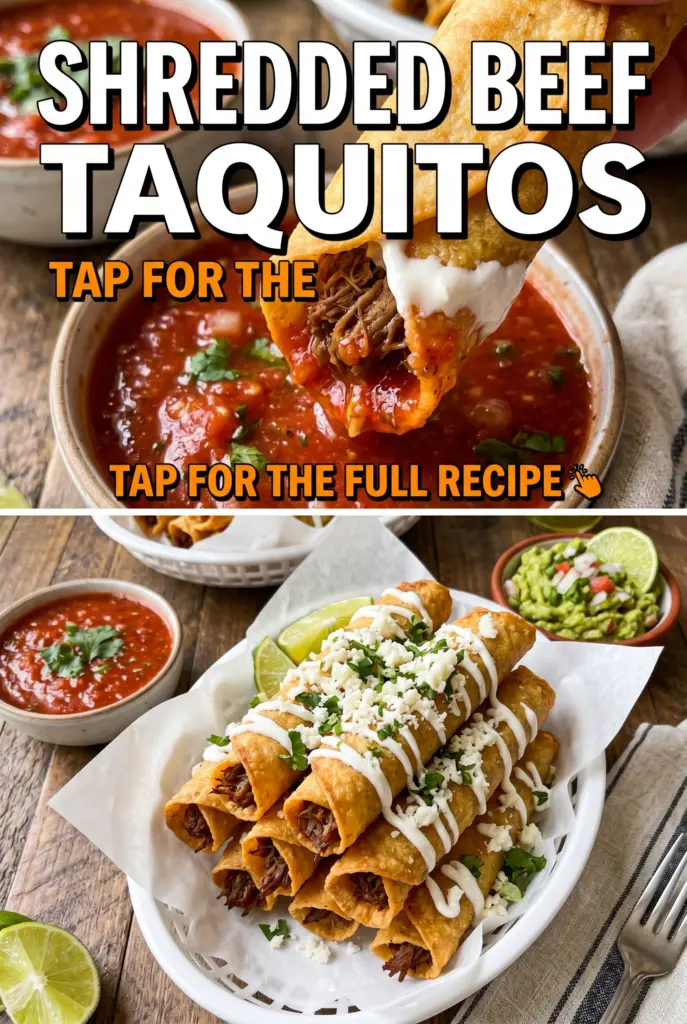
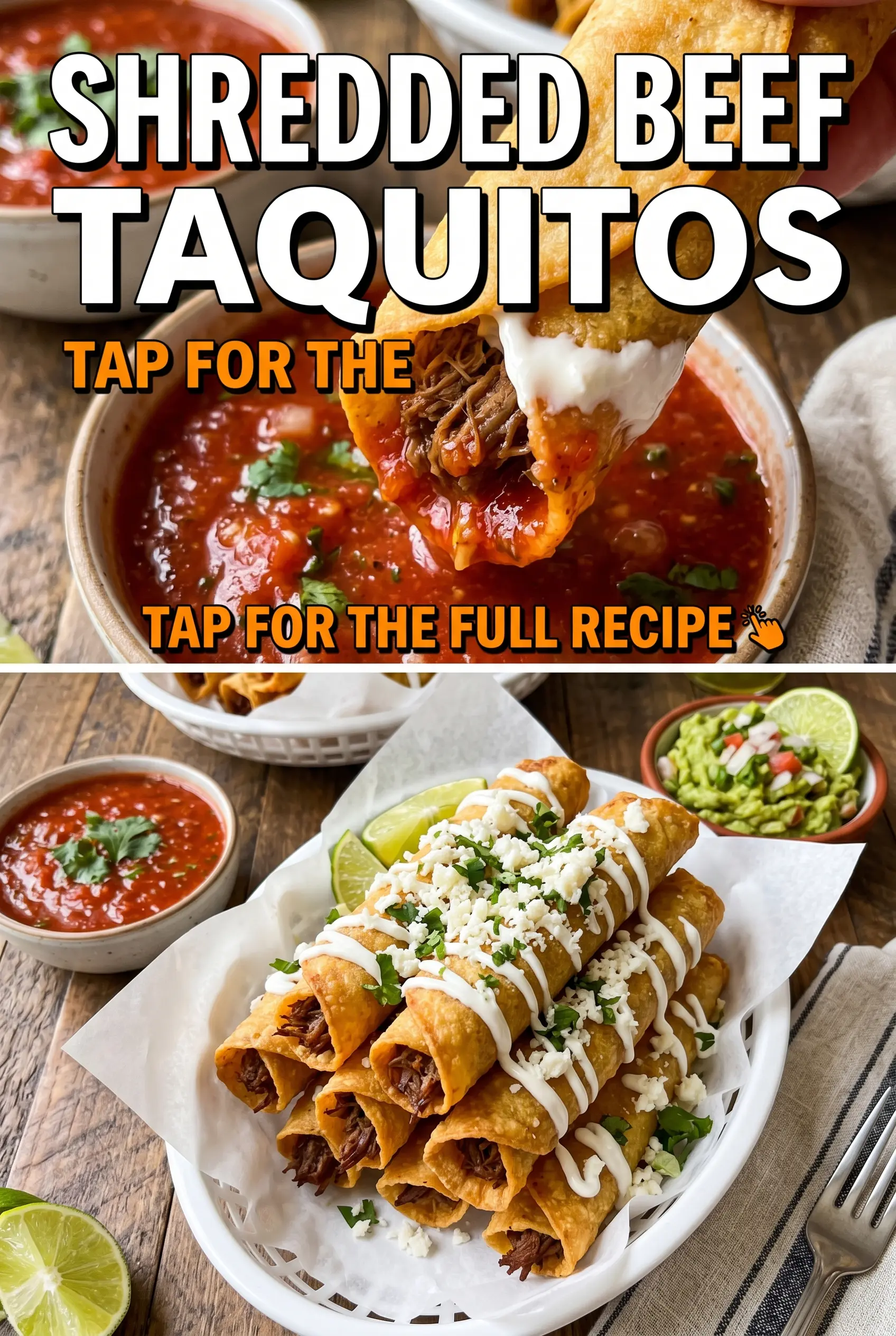
Crispy shredded beef taquitos are the kind of thing that disappear the second they hit the table. The tortilla turns blistered and golden, the beef stays juicy, and the cheddar melts just enough to glue everything together without turning the filling heavy. That contrast between crackly shell and tender meat is what makes a taquito worth frying at home.
What makes this version work is keeping the filling balanced and not overstuffing the tortillas. A little salsa adds moisture and seasoning, but too much will make the rolls burst or steam instead of crisp. The onion and cilantro give the beef a fresh edge, and the cheese helps hold the filling in place while the taquitos fry. If your beef is already well seasoned, you don’t need to pile on extra spices to make it taste complete.
Below, you’ll find the exact cues I watch for so the tortillas stay sealed and the oil stays hot enough for a crisp finish. There are also a few simple swaps and storage notes for when you want to stretch a batch or prep ahead.
The filling stayed put, the tortillas crisped up in two minutes, and the beef stayed tender instead of drying out. I loved that the cheese melted into the meat without leaking everywhere.
Save these crispy shredded beef taquitos for the nights when you want a fast fried dinner with tender beef and a crunchy finish.
The Small Tortilla Trick That Keeps Taquitos From Bursting
The biggest problem with taquitos isn’t the frying. It’s overfilling the tortilla until the seam splits open before the outside has time to crisp. Small flour tortillas work well here because they soften enough to roll tightly, but they still need a restrained amount of filling. Two tablespoons sounds modest, but that’s the sweet spot for a roll that stays closed and cooks evenly.
Another thing that matters is temperature. If the oil isn’t hot enough, the tortillas soak it up and turn greasy before they brown. If it runs too hot, the outside colors before the cheese inside has a chance to melt. Around 350°F is the range that gives you a shattering crust and a warm, cohesive center.
- Roll tight, not bulky — A snug roll helps the seam seal against itself instead of springing open in the oil.
- Don’t overdo the salsa — It should season the beef, not wet it down. Too much liquid makes the filling slide out.
- Fry in batches — Crowding the pan drops the oil temperature fast and leaves you with pale, soggy taquitos.
What Each Ingredient Is Actually Doing In This Dish
The filling here is simple, but every part earns its spot. The shredded beef is the main event, and it works best when it’s already tender enough to pull apart easily. Cheddar melts smoothly and helps bind the filling, while onion and cilantro keep it from tasting flat or one-note. The salsa adds moisture and a little brightness, which matters because fried food needs something sharp to balance the richness.
Flour tortillas are more forgiving than corn tortillas for this method. They roll without cracking, and they brown into a crisp shell that still has a little chew under the crust. If you only have corn tortillas, warm them first until flexible, then expect a more delicate, slightly more rustic result. Vegetable oil is the right choice for frying because it has a neutral flavor and stays steady at high heat.
- Shredded beef — Use beef that’s already tender and well-seasoned. Leftover pot roast, chuck roast, or any braised beef works as long as it shreds cleanly.
- Flour tortillas — Small street-taco size tortillas are easiest to roll and fry. Larger ones can work, but you’ll need to use more filling and the texture won’t be as crisp.
- Cheddar cheese — Sharp cheddar gives the filling a salty edge and helps hold everything together. Monterey Jack or a Mexican blend also melts well if that’s what you have.
- Cilantro and onion — These keep the beef from tasting heavy. If raw onion is too sharp for you, mince it finer or soak it in cold water for a few minutes first.
- Salsa — Use a thick salsa rather than a watery one. Thin salsa makes the filling loose and can cause the taquitos to pop open.
Rolling, Frying, and Getting That Clean Golden Finish
Mix the Filling First
Combine the shredded beef with onion, cilantro, salsa, salt, and pepper until the meat is evenly coated. The mixture should look moist but not wet; if you can see liquid pooling in the bowl, the tortillas will struggle to hold together. Taste it before rolling, because once the taquitos hit the oil, the seasoning won’t change. This is the point where the filling should taste slightly punchy on its own.
Roll Them Tight and Keep the Seam Down
Spoon about two tablespoons of filling into each tortilla, add a little cheese, and roll it up as tightly as you can without tearing the tortilla. If the tortillas feel stiff, warm them briefly in the microwave or on a dry skillet until they’re pliable. A toothpick can help hold the roll closed, but placing the taquitos seam-side down before frying often keeps them shut on its own. Loose rolls split, and once one opens in the oil, the filling can escape fast.
Fry Until the Shell Sounds Crisp
Heat the oil to 350°F and fry the taquitos in batches for about two minutes per side, or until deep golden and crisp. You want steady bubbling, not violent splattering; if the oil is smoking, it’s too hot. Pull them out when the color is even and the tortillas feel firm, then drain on paper towels so the surface stays crisp instead of steaming on the plate. Serve them warm, while the cheese inside is still soft.
How to Adapt These Taquitos Without Losing the Crunch
Use corn tortillas for a more traditional taquito
Corn tortillas bring a deeper corn flavor and a more classic texture, but they crack if you try to roll them cold. Warm each one until soft, then work quickly while they’re pliable. The result is a slightly sturdier, more rustic taquito with a crisper edge and a little less chew than the flour version.
Make them gluten-free with corn tortillas
This is the cleanest gluten-free swap because the filling already doesn’t rely on flour. Use certified gluten-free corn tortillas and warm them well so they don’t split while rolling. The texture shifts from soft-crisp to more fragile and shattery, which is exactly what you want if you’re after a classic fried taco shell feel.
Bake or air-fry for a lighter finish
You can brush the rolled taquitos with oil and bake them at 425°F or air-fry them until browned, but they won’t taste exactly like the fried version. The shell comes out drier and a little less blistered, though still crisp enough to work well for a weeknight dinner. Keep an eye on the seam side first, since that’s where they tend to open if they weren’t rolled tightly.
Storage and Reheating
- Refrigerator: Store leftovers in an airtight container for up to 3 days. The crust will soften as it sits, but the flavor holds up well.
- Freezer: Freeze cooked taquitos in a single layer, then transfer to a bag once solid. They reheat best from frozen and keep their texture better than if thawed first.
- Reheating: Reheat in a 400°F oven or air fryer until hot and crisp again. The common mistake is microwaving them, which warms the filling but leaves the tortillas limp.
Questions I Get Asked About This Recipe
Shredded Beef Taquitos
Ingredients
Equipment
Method
- Stir shredded beef, diced onion, cilantro, salsa, and salt and pepper to taste in a bowl until evenly combined, so every tortilla gets the same mix of beef and aromatics.
- Lay small flour tortillas on a flat surface and place about 2 tablespoons of the beef mixture in the center of each.
- Add some shredded cheddar cheese on top of the beef mixture in the center of each tortilla.
- Roll each tortilla tightly around the filling and secure with a toothpick if needed so it holds during frying.
- Heat vegetable oil for frying in a Dutch oven to 350°F.
- Fry the taquitos in batches until golden and crispy, about 2 minutes per side, turning carefully so both sides brown evenly.
- Remove taquitos and drain on paper towels to keep the crust crisp.
- Serve taquitos warm with sour cream and salsa for serving on the side for a cool, creamy contrast to the hot filling.