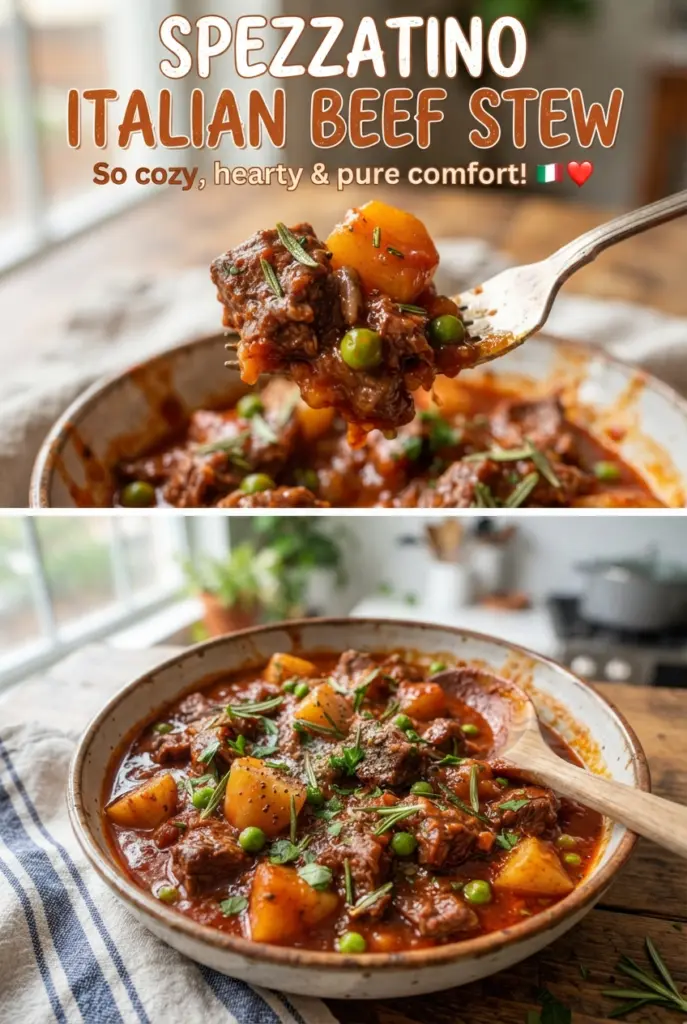
Spezzatino turns humble beef chuck into spoon-tender pieces wrapped in a deep tomato-wine broth that clings to potatoes and soaks into crusty bread. It tastes like the kind of stew that spent all afternoon doing the hard work for you: rich, savory, and layered with rosemary and slow-cooked vegetables.
The key is patience at the front end. Browning the beef in batches builds the base flavor, and reducing the wine before the tomatoes go in keeps the stew from tasting thin or sharp. The flour on the beef does a little quiet work too, helping the broth settle into a light, silky body instead of staying watery.
Below you’ll find the small choices that matter most here, from when to add the potatoes so they hold their shape to why the peas go in at the very end. This is one of those stews that gets better as it sits, and it rewards you with a pot full of dinner that feels complete without much else on the table.
The beef came out meltingly tender and the sauce thickened just enough to coat the potatoes without turning gluey. I loved how the rosemary and red wine settled in after the long simmer.
Save this Spezzatino for the night you want tender beef, rosemary, and potatoes in one deep red wine tomato stew.
The Reason the Beef Stays Tender Instead of Stringy
Spezzatino depends on two things working together: a well-browned surface and a long, gentle simmer. If the pot is crowded when the beef goes in, it steams instead of searing, and you lose the browned bits that give the sauce its depth. Browning in batches takes a little longer, but it pays back every minute later when the broth tastes round and meaty instead of flat.
The other place people rush is the simmer. Chuck needs time for the connective tissue to relax, and that happens below a hard boil. Keep the liquid at a lazy bubble. If it boils aggressively, the meat tightens before it softens, and the potatoes can start breaking before the beef is ready.
What the Wine, Tomatoes, and Flour Are Doing Here
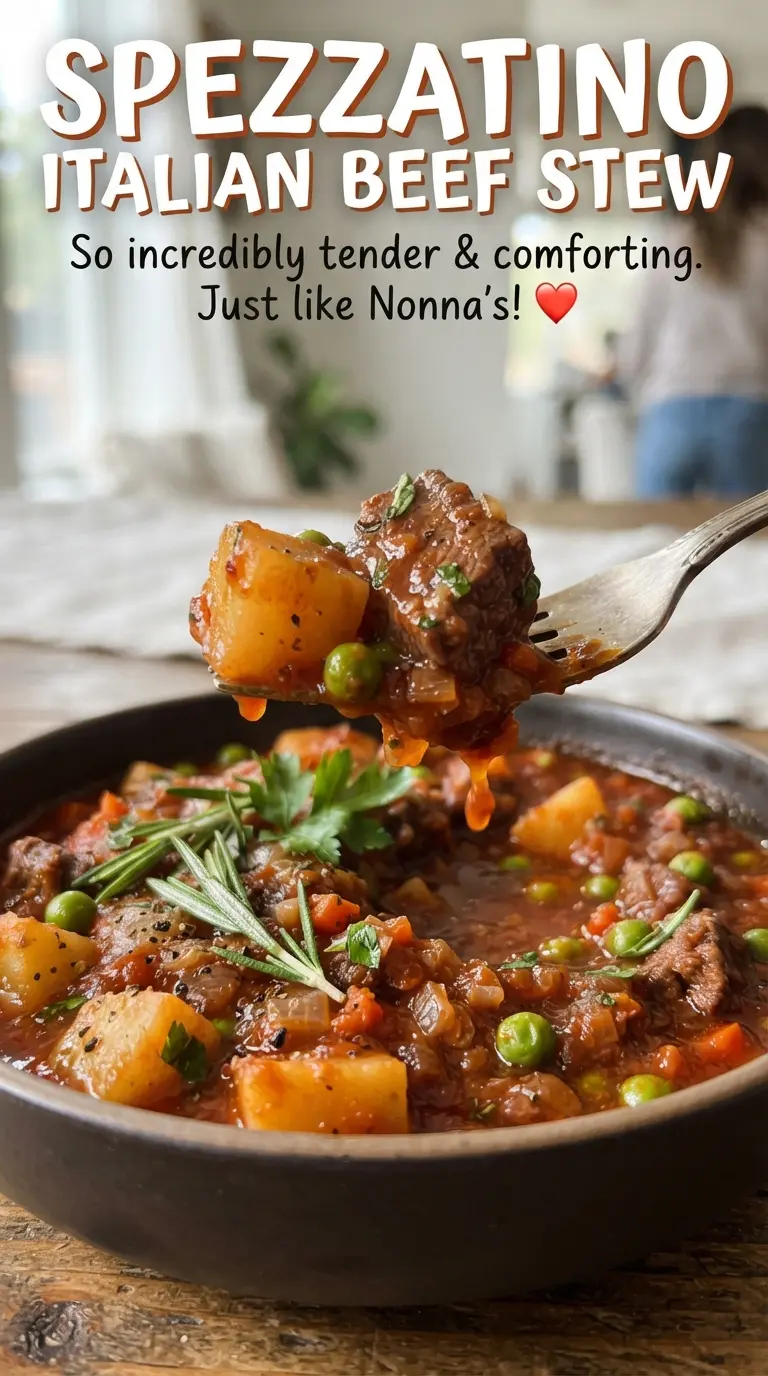
- Beef chuck — This cut has enough fat and connective tissue to turn lush after a long simmer. Lean stew meat won’t give you the same silky texture, and it can dry out before the sauce is finished.
- Dry red wine — The wine does more than add flavor; it lifts the browned bits off the pot and gives the stew its backbone. Use something dry and drinkable, not sweet, because the sauce reduces and concentrates quickly.
- Crushed tomatoes — They bring body and a gentle acidity that keeps the stew from tasting heavy. If all you have are diced tomatoes, pulse them briefly or simmer a few extra minutes so the sauce thickens properly.
- Flour — The light coating on the beef helps the sauce settle into a more coherent, spoon-coating texture. Too much flour makes the browning patchy, so dust lightly and shake off the excess before the meat hits the pan.
- Potatoes and peas — Potatoes belong in later so they stay intact, and peas go in at the end so they keep their bright color and fresh pop. Add either too early and they turn soft in a way that dulls the whole pot.
Building the Pot in the Right Order
Browning the Beef in Batches
Season the beef, toss it with the flour, and brown it in hot olive oil without crowding the pan. You want a dark crust on the outside and a little resistance when you move the pieces, not a gray surface from trapped steam. Leave the browned bits in the pot; they are part of the stew’s flavor base.
Softening the Aromatics
Add the onion, carrot, and celery to the same pot and cook them until they lose their raw edge and turn glossy and soft. If the pan looks dry, add a touch more olive oil, but don’t chase browning here. Garlic goes in last because it burns fast; one minute is enough to smell it bloom without letting it turn bitter.
Reducing the Wine Before the Broth
Pour in the wine and scrape the bottom well, then let it simmer until it drops by about half. This step strips away the sharp alcohol edge and leaves behind the part of the wine that tastes deep and rounded. If you add the tomatoes too soon, that sharpness stays locked in the pot.
Slow Simmer, Then the Finish
Once the tomatoes, broth, rosemary, bay leaves, and beef are in, cover the pot and let it cook at a very low simmer until the meat starts to give when pressed. Add the potatoes only after the beef has had its long head start, or they’ll dissolve before the stew is done. The peas go in for the last few minutes, just long enough to warm through and stay green.
Make It Heartier with Mushrooms
Brown sliced cremini mushrooms after the beef and before the onions if you want a deeper, earthier pot. They absorb the wine and tomato well, and they make the stew feel even more substantial without changing the method.
Gluten-Free Version
Skip the flour or use a gluten-free all-purpose blend for the light coating. The stew will still work, but the broth will be a little looser, so simmer uncovered for the last 10 to 15 minutes if you want more body.
No Wine, Still Good
Use extra beef broth plus 1 tablespoon red wine vinegar or lemon juice to replace the brightness the wine would have brought. You won’t get the same depth, but the stew still tastes balanced instead of heavy.
Storage and Reheating
- Refrigerator: Keeps well for 4 days. The flavor deepens overnight, and the sauce thickens as it chills.
- Freezer: Freezes well for up to 3 months. Cool completely, portion into airtight containers, and leave a little space for expansion.
- Reheating: Reheat gently on the stove over low heat with a splash of broth if needed. A hard boil can make the beef tighter and can break down the potatoes more than you’d want.
Questions I Get Asked About This Recipe
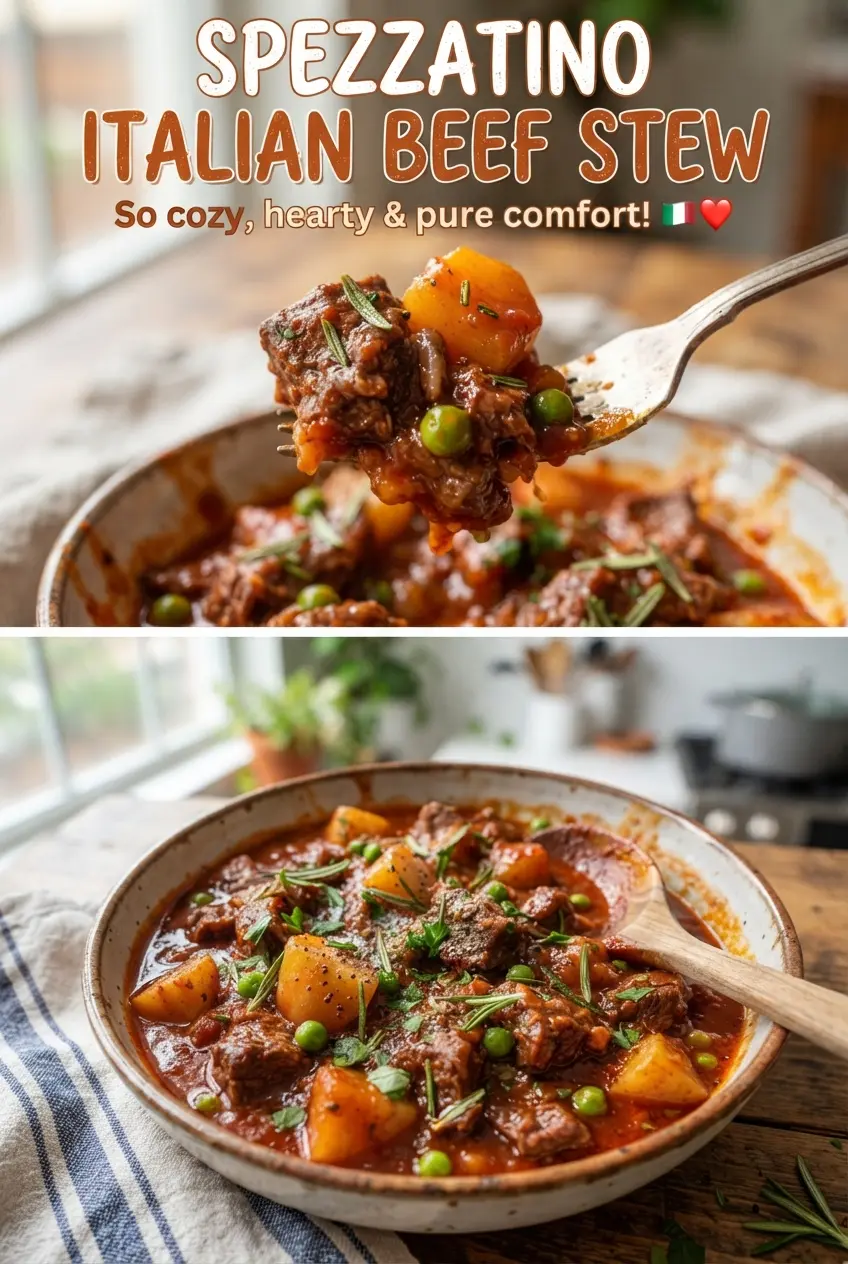
Spezzatino Italian Beef Stew
Ingredients
Equipment
Method
- Season beef cubes with salt and black pepper, then dust with all-purpose flour.
- Heat olive oil in a Dutch oven over medium-high heat and brown the beef in batches, cooking until deeply browned on the outside, 3-5 minutes per batch.
- Add onion, carrot, and celery to the Dutch oven and cook until soft, about 8 minutes.
- Stir in garlic and cook for 1 minute, until fragrant.
- Pour in dry red wine and simmer until reduced by half, 6-10 minutes, scraping the bottom to release browned bits.
- Add crushed tomatoes, beef broth, fresh rosemary, bay leaves, and the browned beef; bring to a simmer.
- Cover and simmer until the beef is nearly tender, about 1 1/2 hours, stirring occasionally so it stays at a steady simmer.
- Add cubed potatoes and simmer until tender, about 40 minutes.
- Stir in frozen peas during the last 5 minutes of simmering so they stay bright and just cooked.
- Remove the rosemary and bay leaves and serve hot with crusty bread.