
Mulligan stew earns its place when you want one pot that eats like a full meal. The broth turns rich from browned beef, smoky sausage, and the long simmer, while the potatoes, cabbage, corn, and beans make every bowl hearty enough to stand on its own. It’s the kind of stew that gets better as it sits on the stove, with the flavors settling into something deep, savory, and comforting.
What makes this version work is the layering. The beef and sausage get real color before any liquid goes in, which builds the base instead of boiling the meat pale. Worcestershire sauce and diced tomatoes add just enough acidity to keep the broth from tasting flat, and the vegetables are staggered so the potatoes and cabbage stay intact instead of disappearing into the pot. That timing matters if you want a stew with texture, not just thickness.
Below, I’ve included the small choices that make a big difference here, from the best way to brown the meat to what to do if you want to stretch the pot for a crowd or make it ahead for the next day.
The broth got rich and the potatoes held their shape, and the smoked sausage gave the whole pot a deeper flavor than I expected. I had it for lunch the next day and it was even better.
Save this hearty Mulligan Stew for a one-pot dinner with beef, sausage, potatoes, cabbage, and beans.
The Trick to Keeping the Broth Rich Instead of Watery
The biggest mistake with stew like this is rushing past the browning step. Beef chuck needs that first hard sear because the browned bits on the bottom of the pot become part of the broth when the tomatoes and stock go in. If you skip that color, the stew still cooks through, but it tastes flat and more like boiled meat and vegetables than a proper stew.
The other thing worth protecting is texture. The beef goes in first because it needs time to soften, but the potatoes, carrots, and cabbage wait until later so they don’t dissolve into the broth. Cabbage especially can go from tender to limp fast, so adding it with the potatoes keeps it from losing all structure. That staggered timing is what gives you a pot that feels hearty instead of muddy.
What the Beef, Sausage, and Beans Each Bring to the Pot
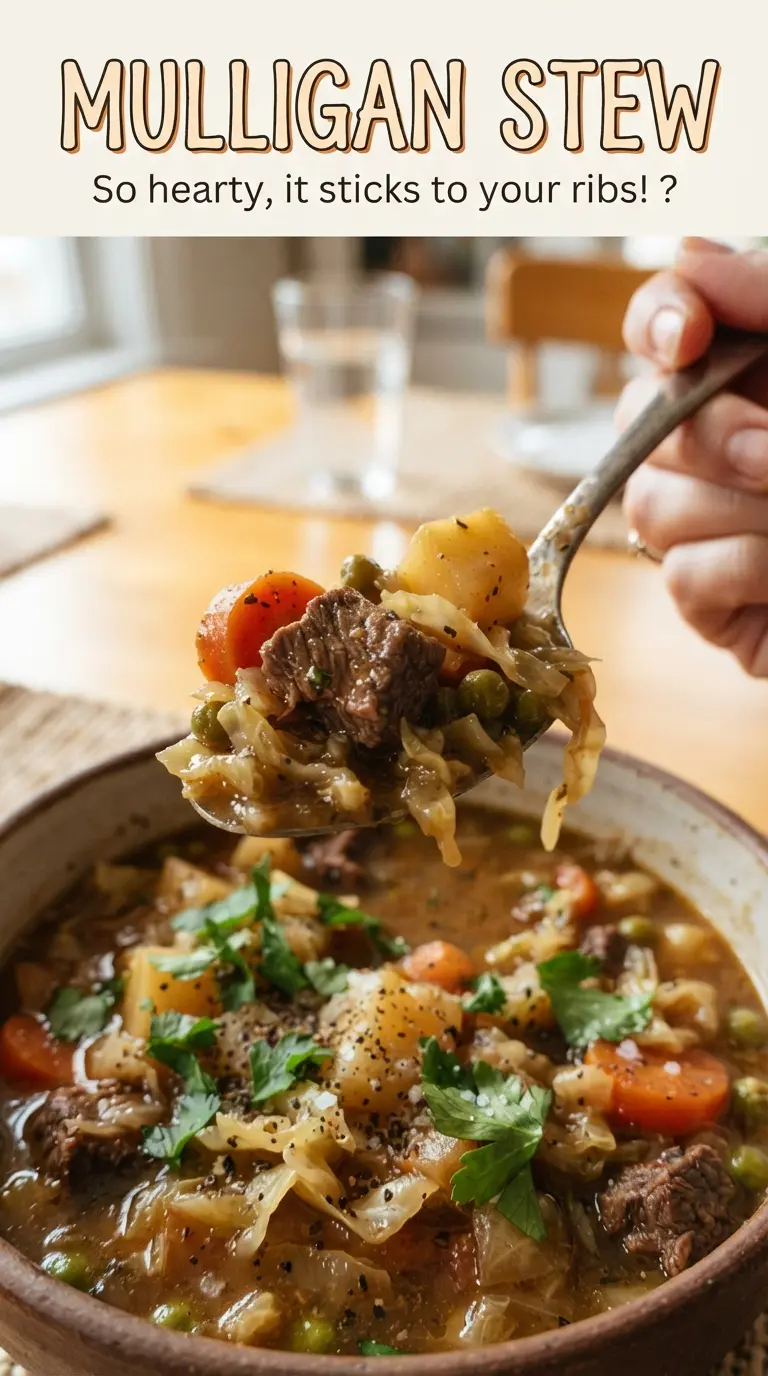
- Beef chuck — This is the backbone of the stew. It has enough fat and connective tissue to turn tender during the long simmer, which is something lean stew meat won’t do nearly as well. If you need a swap, use another well-marbled braising cut and give it the same long cook time.
- Smoked sausage — This adds salt, smoke, and a different kind of richness that plain beef can’t give you. Slice it before browning so the edges pick up some color. If you use a milder sausage, the stew will taste rounder and less smoky, but it still works.
- Worcestershire sauce — It doesn’t make the stew taste like Worcestershire. It deepens the savory base and sharpens the broth without making it sour. There isn’t a perfect substitute for the same effect, but soy sauce plus a tiny splash of vinegar gets close in a pinch.
- Potatoes and cabbage — These are the texture makers. The potatoes thicken the broth just a little as they simmer, while the cabbage softens into tender ribbons that still hold enough shape to notice. Cut the potatoes into even cubes so they finish at the same time.
Building the Pot in the Right Order
Browning the Meat First
Season the beef before it hits the pot, then brown it in hot oil with the sausage until you get dark edges and actual fond on the bottom. Don’t crowd the pan or the meat will steam and stay gray. If your pot is on the small side, brown in batches and keep going until everything has color. That first layer of browning is what gives the broth its depth.
Cooking the Onion and Garlic Without Burning Them
Once the meat is out, the onion goes into the same pot to soften in all that flavor left behind. Cook it until it turns translucent and starts to sweeten, then add the garlic for just 30 seconds. Garlic burns fast in a dry pot, so this part moves quickly. If the bottom looks too dark at this point, splash in a spoonful of broth and stir before the garlic goes in.
Letting the Stew Simmer in Two Waves
Add the tomatoes, broth, Worcestershire sauce, thyme, beef, and sausage, then let the pot simmer covered until the beef starts to relax. That long first simmer is what turns chuck tender enough to eat with a spoon. After that, add the potatoes, carrots, and cabbage so they finish cooking without falling apart. The final ten minutes for corn and beans is just enough to warm them through and keep their texture intact.
How to Adapt This Stew When You Need to
Make it dairy-free and gluten-free
This stew already fits both without any special changes if your broth and sausage are gluten-free. Check the sausage label carefully, since some brands use fillers or additives that contain gluten. The result stays just as hearty because the body of the stew comes from the beef, potatoes, and long simmer, not from dairy or flour.
Use all beef instead of sausage
If you leave out the sausage, the stew will be less smoky and a little cleaner tasting, but still solid. Add an extra pinch of salt and a little more Worcestershire to replace some of the savory punch. A smoked paprika finish also helps make up for the missing sausage flavor without changing the texture.
Stretch it for a bigger crowd
This stew scales up well as long as your pot is large enough for a full simmer, not just a crowded boil. Increase the broth in proportion so the vegetables have room to cook and the stew doesn’t turn into a dry hash. The flavor actually benefits from the bigger batch because the meat and vegetables have more time to mingle.
Storage and Reheating
- Refrigerator: Store in an airtight container for up to 4 days. The broth thickens as it chills, and the flavor gets deeper by the next day.
- Freezer: It freezes well for up to 3 months. Cool completely first, then portion it into freezer-safe containers so the potatoes don’t break down from repeated thawing.
- Reheating: Warm it gently on the stove over medium-low heat, stirring now and then. If it looks too thick, add a splash of broth or water. Don’t boil it hard or the potatoes will start to collapse and the sausage can turn rubbery.
Answers to the Questions Worth Asking

Mulligan Stew
Ingredients
Equipment
Method
- Season the beef chuck cubes with salt and black pepper, then heat the vegetable oil in a Dutch oven over medium-high heat and brown the beef until browned on all sides, about 8 to 10 minutes. Add the sliced smoked sausage and cook until lightly browned, about 3 to 4 minutes; transfer beef and sausage to a set-aside plate.
- In the same Dutch oven, cook the diced onion over medium heat for 4 minutes, stirring occasionally, until softened. Add the minced garlic and cook for 30 seconds, stirring just until fragrant; do not let it brown.
- Stir in diced tomatoes, beef broth, Worcestershire sauce, and dried thyme, then add the browned beef and sausage. Cover and simmer at a gentle bubble for 1 1/4 hours, stirring once or twice so nothing sticks to the bottom.
- Uncover and add cubed potatoes, sliced carrots, and chopped cabbage. Simmer at a gentle bubble for 30 minutes, stirring occasionally, until the potatoes are tender.
- Stir in corn kernels and drained kidney beans, then simmer for 10 minutes more. Taste and season to your preference with additional salt and black pepper, then serve hot.