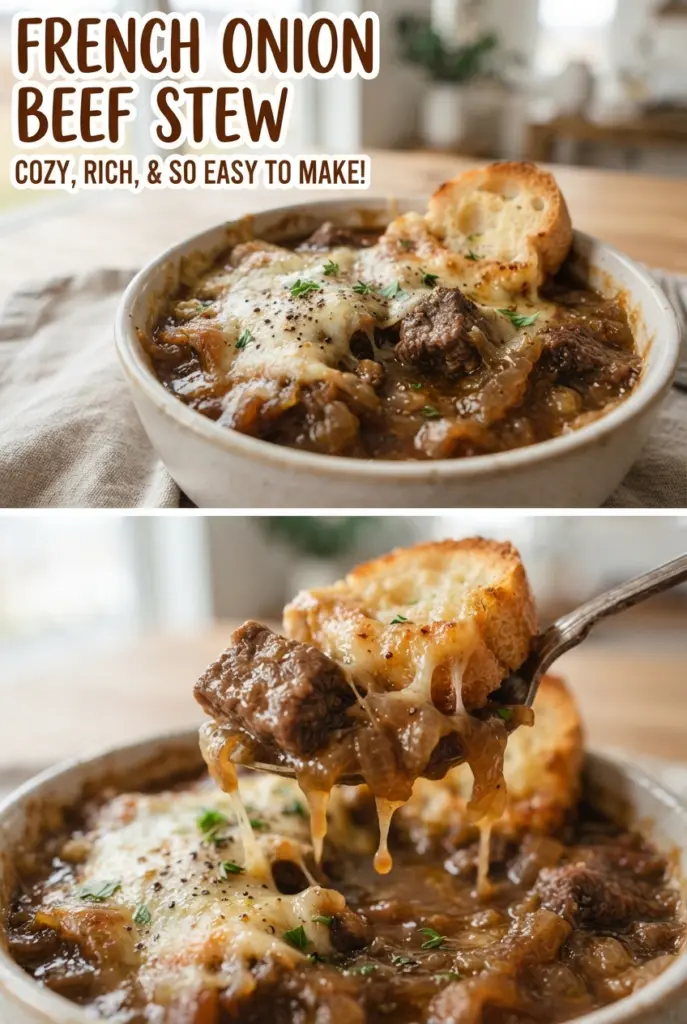
French onion beef stew brings all the best parts of French onion soup into a deeper, heartier bowl. The beef turns spoon-tender, the onions melt into a dark, sweet base, and the Gruyere on top gives every serving that familiar browned, savory finish. It eats like a proper stew, but it still has the layered onion flavor that makes French onion anything worth slowing down for.
What makes this version work is patience in two places: the beef needs a hard sear in batches, and the onions need enough time to lose their raw sharpness and turn jammy and gold. The flour goes in after the garlic, just long enough to cook off the raw taste before the wine loosens all those browned bits from the pan. That gives the broth a fuller body without making the stew taste paste-like or dull.
Below, I’ve included the little details that keep the onions from scorching, the stew from tasting thin, and the cheese topping from sliding off instead of broiling into a proper crust.
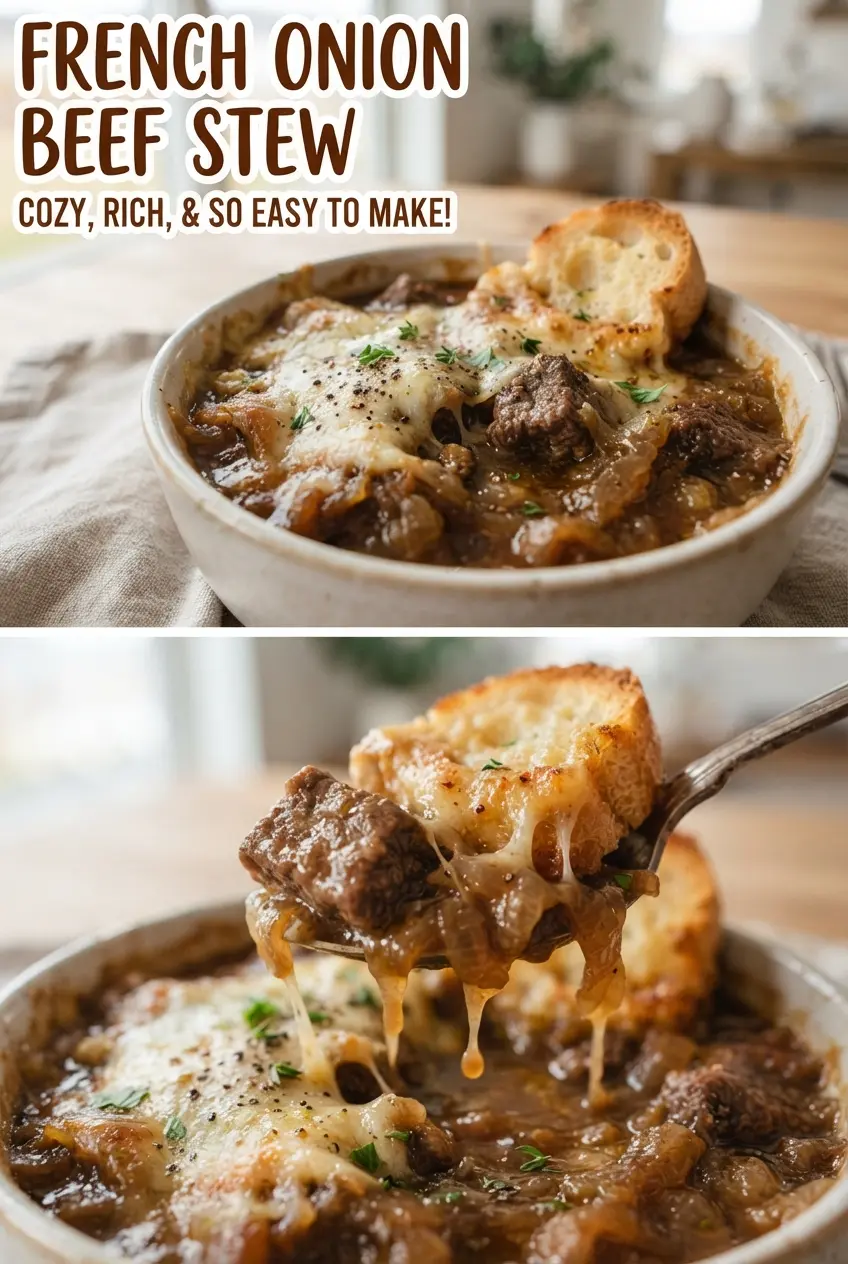
The onions turned deep golden without burning, and the broth picked up that rich French onion taste after just a short simmer. The Gruyere on the baguette stayed bubbly and browned instead of disappearing into the stew.
Save this French Onion Beef Stew for the kind of night when you want tender beef, sweet onions, and a bubbling Gruyere-baguette topping.
The Browning Step That Gives This Stew Its Backbone
If the beef goes into the pot crowded, it steams instead of searing, and the whole stew loses depth before it even starts. Brown it in batches until the surfaces look deeply caramelized and a dark fond builds on the bottom of the pan. That fond is not a mess to clean up; it is the flavor base for the whole stew.
The onions need the same patience. They should soften first, then slowly turn brown and collapse into something sweet and silky. If the heat runs too high, they’ll color on the outside before they’ve truly cooked down, and the finished stew will taste sharp instead of round. Low to medium heat and regular stirring are what turn a pile of sliced onions into the signature backbone of this dish.
What Each Ingredient Is Doing in the Pot

- Beef chuck — This cut has enough fat and connective tissue to turn silky after a long simmer. Lean stew meat won’t give you the same richness or tender texture.
- Yellow onions — These are the whole point of the French onion flavor. Sweet onions can work, but yellow onions hold their shape at first and still caramelize into something deeper and more savory.
- Dry white wine — It loosens the browned bits from the pot and adds a little acidity so the stew doesn’t taste heavy. If you don’t use wine, add a splash more broth with a teaspoon of vinegar, but the flavor will be flatter.
- Gruyere — This melts smoothly and browns under the broiler without turning greasy. Swiss cheese is the closest swap, though it’s a little milder and less nutty.
- Baguette — It gives the topping structure so the cheese has something to sit on. Toast it well; soft bread turns soggy under the stew.
Building the Stew So the Broth Stays Rich, Not Flat
Sealing in the Beef
Season the beef before it hits the pan, then brown it in a single layer with space between the pieces. You want a crust, not pale cubes that have only warmed through. If the pot looks wet, wait; the meat is too crowded and the surface moisture is stopping the sear. Pull the beef out once it has real color so the drippings stay in the pot for the onions.
Cooking the Onions All the Way Down
Melt the butter, add the onions, and keep the heat low enough that they soften without scorching. The sugar helps them brown evenly, but it does not replace time. Stir often, scrape the bottom, and watch for that deep golden color that borders on amber. If they start to catch, lower the heat and add a small splash of broth to loosen the pan.
Finishing the Base and Simmering
Stir in the garlic and flour just long enough to lose the raw flour smell, then add the wine and scrape until the bottom is clean. That step matters because the brown bits hold most of the beef flavor. Once the broth, Worcestershire, thyme, bay leaf, and beef go in, keep the simmer gentle. A hard boil can make the beef tighten up before it gets tender.
The Broiled Topping
Ladle the stew into oven-safe bowls, set a toasted baguette slice on top, and pile the Gruyere over the bread, not around it. Broil close to the heat just until the cheese bubbles and spots of brown appear. Walk away from the broiler for one minute and you’ll come back to a scorched top instead of a glossy, bronzed finish.
How to Adapt This for a Different Table
Make it gluten-free without losing body
Use a gluten-free flour blend or skip the flour and simmer the stew uncovered for the last 20 to 30 minutes to reduce the broth slightly. Serve it with gluten-free toast or leave off the bread and cheese topping if needed; the stew itself still carries the French onion flavor.
Skip the wine and keep the depth
Use an extra 1/2 cup broth plus 1 teaspoon red wine vinegar or sherry vinegar. You’ll lose a little of the sharp aromatic edge that wine brings, but the vinegar keeps the stew from tasting heavy and helps lift the caramelized onion flavor.
Use a more budget-friendly cheese topping
Swiss or Emmental will melt and brown in a similar way if Gruyere is out of budget. The flavor comes out milder and less nutty, so add an extra pinch of black pepper over the top before broiling to keep the finish from tasting flat.
Make it ahead for better flavor
The stew tastes even better the next day after the onion and beef flavors have had time to settle together. Reheat it gently on the stove, then add the baguette and cheese topping right before serving so the bread stays crisp enough to hold up under the broiler.
Storage and Reheating
- Refrigerator: Store the stew without the baguette and cheese for up to 4 days. The broth thickens a little as it chills, which is normal.
- Freezer: The stew base freezes well for up to 3 months. Freeze it before adding the bread and Gruyere, then thaw overnight in the fridge.
- Reheating: Warm it slowly on the stove over medium-low heat until steaming and hot through. Don’t boil it hard, or the beef can tighten and the onions can lose their silky texture.
Answers to the Questions Worth Asking
French Onion Beef Stew
Ingredients
Equipment
Method
- Season the beef with salt and black pepper. Heat olive oil in a Dutch oven and brown the beef in batches, then set aside.
- Melt the butter in the Dutch oven and add the sliced yellow onions with sugar. Cook for 30-35 minutes, stirring often, until deep golden.
- Stir in the minced garlic and all-purpose flour for 1 minute. Pour in the dry white wine and scrape the bottom to release browned bits.
- Return the browned beef to the pot and add beef broth, Worcestershire sauce, fresh thyme, and bay leaf. Cover and simmer for 2 hours, until the beef is tender.
- Ladle the stew into oven-safe bowls and top each with a toasted baguette slice and shredded Gruyere. Broil for 2-3 minutes until the cheese is bubbly and browned.