
Warm, brothy Tuscan chickpea soup hits the table with the kind of comfort that doesn’t feel heavy. The broth tastes like garlic, rosemary, and tomatoes simmered together long enough to mellow into something deep and savory, while the chickpeas add enough body to make each bowl feel complete. A handful of kale at the end keeps the texture lively instead of soft and one-note.
What makes this version work is the layering. The onion cooks first until sweet, then the garlic and red pepper flakes bloom briefly so they don’t turn harsh, and the broth picks up even more flavor from a parmesan rind if you have one. Mashing part of the chickpeas is the move that turns a thin soup into something with real substance without needing cream or flour.
Below you’ll find the small details that matter: when to add the kale so it stays bright, how much chickpea to blend for a thicker spoonful, and the best swaps if you want to keep it dairy-free or use what you already have in the pantry.
The broth got thick and silky after I mashed a cup of the chickpeas, and the rosemary with the lemon at the end made it taste like something from a restaurant.
Save this Tuscan Chickpea Soup for the nights when you want a garlicky rosemary broth, creamy chickpeas, and a bowl that eats like a meal.
The Small Trick That Gives This Soup Real Body
Tuscan chickpea soup can go flat fast if the broth stays too thin. Chickpeas are sturdy, but they need a little help to turn into something that feels cohesive in the bowl instead of scattered in liquid. The trick here is to mash or blend part of the pot after simmering, which thickens the broth naturally and gives it that rustic, spoon-coating texture without adding cream.
The other thing that matters is timing. Kale goes in at the end because it only needs a few minutes to soften, and if it cooks for the full simmer it loses its color and turns muddy. The rosemary and parmesan rind do their job during the simmer, then come out before serving so the flavor stays fragrant instead of woody or overly sharp.
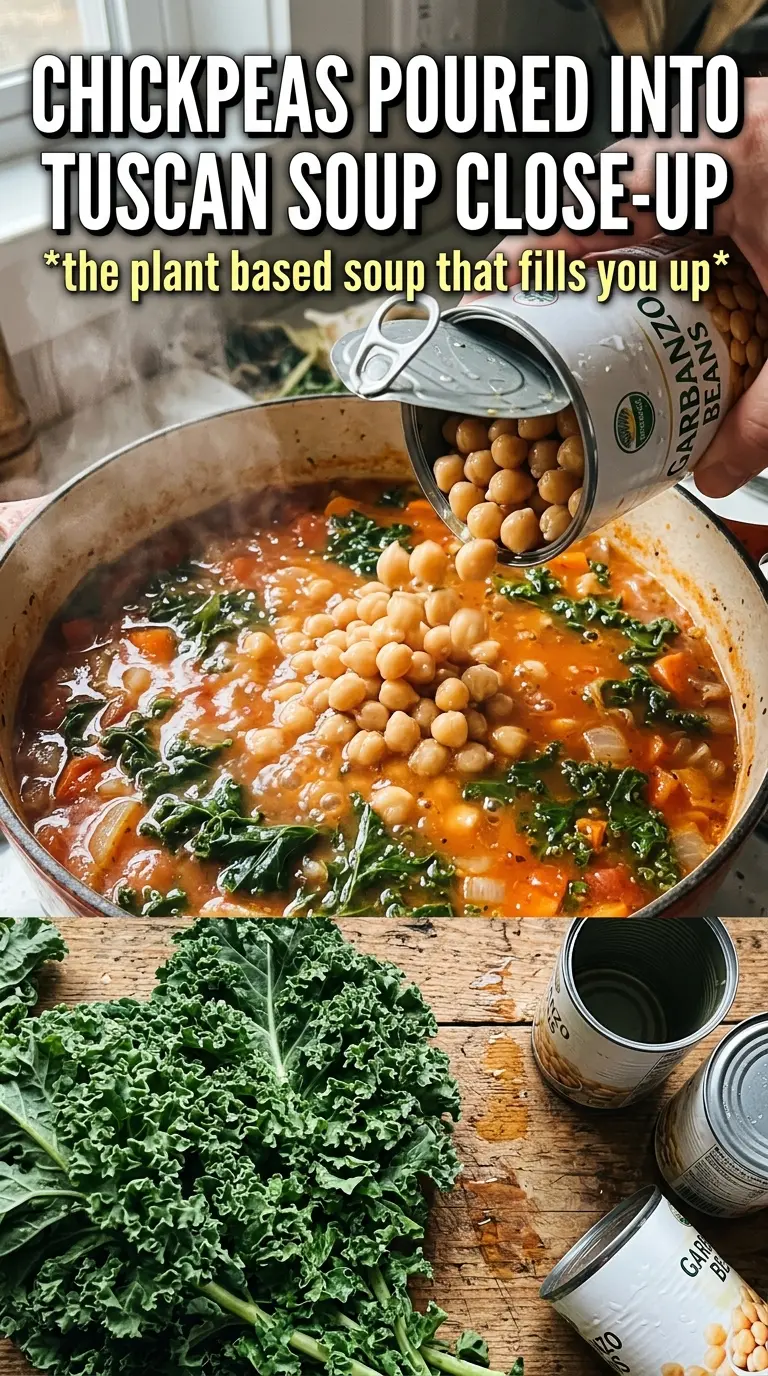
- Chickpeas — These are the backbone of the soup. Canned chickpeas work perfectly here because they soften just enough to help thicken the broth when you mash some of them.
- Parmesan rind — Optional, but worth using if you have it. It adds a salty, savory depth that you can’t quite fake; if you’re keeping the soup dairy-free, just skip it and finish with extra lemon and olive oil.
- Fresh rosemary — Fresh sprigs give the broth a piney, herbal note that feels much more balanced than dried rosemary here. If you have to use dried, use a small pinch and add it with the Italian seasoning so it has time to soften.
- Kale — Add it only at the end so it stays tender and green. Swiss chard also works, but it wilts faster, so watch it closely and pull the pot off the heat as soon as the leaves soften.
What Each Ingredient Is Actually Doing in This Recipe
- Primary ingredient (the star) — Quality matters most. Choose the best you can find.
- Cooking medium (oil, butter, or broth) — This carries flavors and prevents dryness.
- Seasonings (salt, pepper, spices, herbs) — Layer flavors so nothing overpowers. Build depth gradually.
- Aromatics (garlic, onion, herbs) — Cook with fat to bloom flavors. Become the foundation.
- Supporting ingredients — Complement the main ingredient without overpowering it.
- Sauce or liquid (if applicable) — Brings flavors together. Balance richness with acid.
- Acid (lemon, vinegar, wine, or other) — Brightens and prevents flat-tasting results.
- Final finish (garnish, glaze, or sauce) — Prevents one-dimensional taste and adds visual appeal.
Building the Broth Before the Greens Go In
Sweating the Onion
Start by cooking the diced onion in olive oil until it turns soft and translucent, about 5 minutes. You want it sweet and fragrant, not browned; if the heat is too high, the onion will color before it has a chance to lose its raw edge. This base gives the soup a rounder flavor before anything else goes in.
Blooming the Garlic and Pepper Flakes
Add the garlic and red pepper flakes and cook just until the garlic smells sharp and warm, about 2 minutes. The garlic should not take on color, because browned garlic tastes bitter and can take over the whole pot. Keep stirring so nothing sticks to the bottom.
Simmering for Depth
Stir in the chickpeas, tomatoes, broth, rosemary, Italian seasoning, and parmesan rind, then bring everything up to a boil before lowering it to a steady simmer. Let it cook for 20 minutes so the rosemary and parmesan can steep into the broth and the tomatoes lose their tinny edge. If the soup is boiling hard the whole time, the broth can taste harsh instead of mellow.
Thickening and Finishing the Bowl
Remove the rosemary sprigs and parmesan rind, then mash or blend about a third of the chickpeas right in the pot. The soup should look a little creamier and less watery, but still have plenty of whole beans for texture. Stir in the kale and cook just until wilted, then season with salt, pepper, and a squeeze of lemon before finishing with a drizzle of olive oil and parmesan.
Make It Dairy-Free Without Losing the Savory Depth
Skip the parmesan rind and the parmesan topping, then finish each bowl with good olive oil and extra lemon. The soup still tastes full and layered because the tomatoes, rosemary, and garlic do the heavy lifting; you just lose that subtle salty richness from the cheese.
Use Swiss Chard or Spinach Instead of Kale
Swiss chard gives you a softer, silkier green with a slightly sweeter edge, while spinach melts down almost immediately and makes the soup feel lighter. Either one should go in at the very end, and spinach needs only a minute or two or it can turn dull and stringy.
Make It Thicker for a Heartier Meal
Blend closer to half the chickpeas instead of just a third if you want a thicker, more stew-like bowl. That change gives the broth a creamier body, but it also makes the soup less brothy, so I like serving it with crusty bread if I go that route.
Storage and Reheating
- Refrigerator: Store in an airtight container for up to 4 days. The chickpeas will soften a little more as it sits, and the broth may thicken.
- Freezer: This soup freezes well for up to 3 months. Cool it completely first, then freeze without the parmesan topping; kale holds up better than spinach, which can turn soft after thawing.
- Reheating: Warm it gently on the stove over medium-low heat with a splash of broth or water if needed. Don’t boil it hard, or the greens will overcook and the broth can taste flat.
Questions I Get Asked About This Recipe
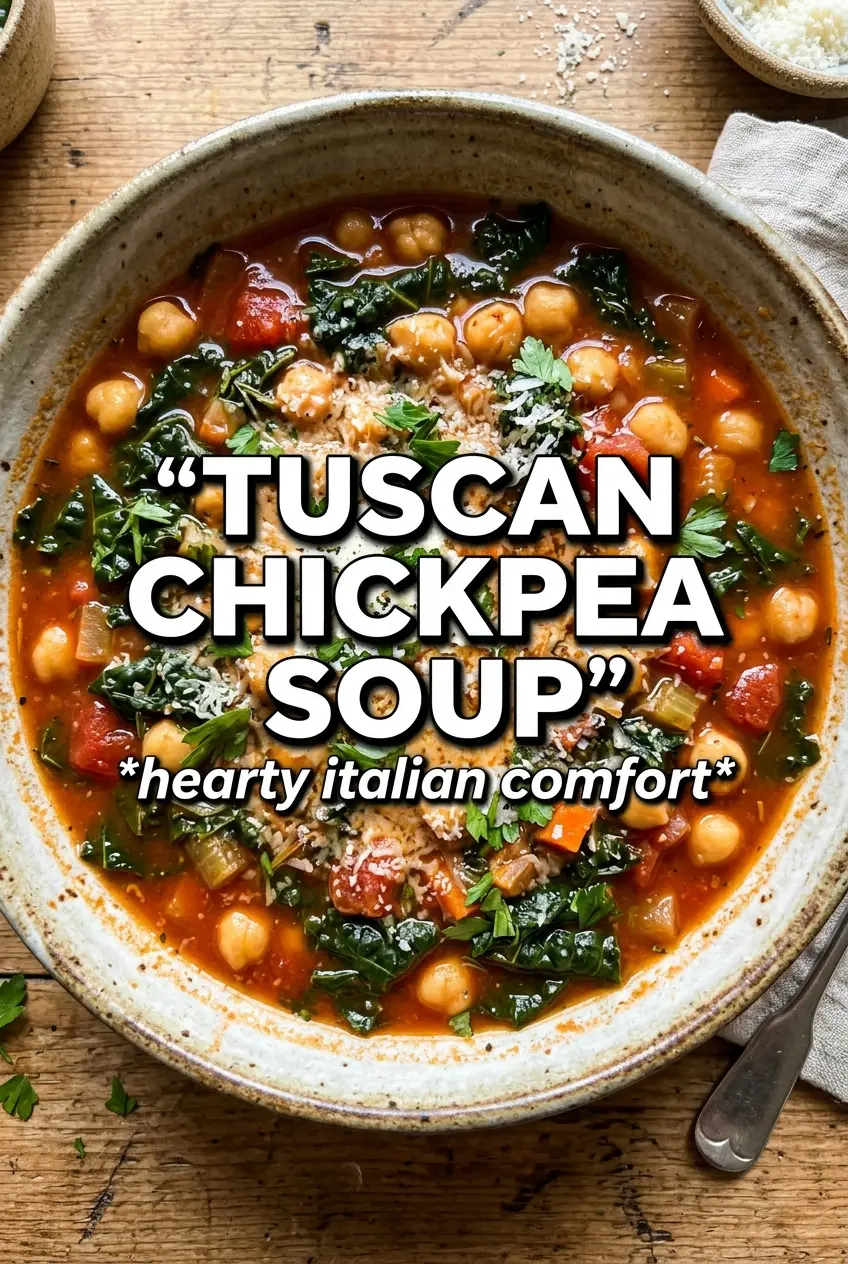
Tuscan Chickpea Soup
Ingredients
Equipment
Method
- Heat the olive oil in a large pot over medium heat, then sauté the diced onion for 5 minutes until softened and slightly translucent.
- Add the minced garlic and red pepper flakes and cook for 2 minutes, stirring, until fragrant but not browned.
- Add the drained chickpeas, fire-roasted diced tomatoes, vegetable broth, rosemary, Italian seasoning, and the optional parmesan rind, then bring to a boil.
- Simmer for 20 minutes, then remove the rosemary and parmesan rind.
- Mash or blend about a third of the chickpeas for a thicker consistency, then return them to the pot.
- Add the chopped kale and cook for 5 minutes until wilted.
- Season with salt and pepper to taste, then squeeze in lemon for brightness.
- Drizzle with olive oil and top with parmesan before serving.