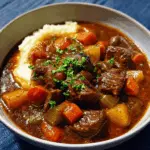
Slow cooker white wine chicken stew turns into the kind of dinner that tastes like it took all afternoon at the stove, even though the slow cooker handled most of the work. The chicken goes tender without drying out, the mushrooms soak up the broth, and the wine gives the whole pot a gentle brightness that keeps the stew from feeling heavy. It’s the sort of meal that lands in the regular rotation because it’s comforting without being flat.
What makes this version work is the balance. Dry white wine adds acidity and depth, but it gets softened by chicken broth, Dijon mustard, and a little tomato paste, so the sauce tastes rounded instead of sharp. Bone-in thighs matter here because they stay juicy through a long cook and help enrich the broth as they simmer. The cornstarch slurry goes in at the end, after the meat is already tender, which keeps the sauce smooth and glossy instead of muddy.
Below, I’ll walk through the one step that keeps the sauce from tasting thin, how to choose the right wine, and a few smart swaps if you need to work with what’s already in your kitchen.
The sauce thickened up beautifully at the end and the chicken was fall-apart tender without getting stringy. I used frozen pearl onions and it still tasted like I’d done a lot more work than I actually did.
Save this slow cooker white wine chicken stew for nights when you want tender chicken, silky broth, and crusty bread without standing over the stove.
The Step That Keeps the Wine Sauce From Tasting Flat
The biggest mistake in a slow cooker stew like this is treating the liquid like plain broth and hoping the chicken will carry everything. It won’t. White wine needs something grounding next to it, which is why the tomato paste and Dijon matter so much here — they give the sauce body and keep the acidity from reading as thin or sour after hours of cooking.
Bone-in thighs are the other part of the equation. They hold up to the long, gentle heat and release flavor into the pot without turning stringy. If you use boneless thighs, the stew will still work, but the broth won’t taste as full and the meat can go a little soft before the sauce has finished developing.
- Dry white wine — Pick something you’d actually drink. Sauvignon Blanc, Pinot Grigio, or unoaked Chardonnay all work. Avoid sweet wine, which makes the stew taste oddly sugary after it cooks down.
- Tomato paste — This doesn’t make the stew taste like tomato. It deepens the color and gives the broth a slow-simmered backbone.
- Dijon mustard — A tablespoon is enough to sharpen the sauce without making it taste mustardy. It also helps the broth feel more cohesive.
- Fresh herbs — Thyme and rosemary hold up well in a long cook. Dried herbs can work in a pinch, but use less because they come on stronger and can taste dusty if you overdo them.
What Each Ingredient Is Doing in the Pot

- Chicken thighs — The fat and connective tissue keep the meat tender through the full cook. Breasts dry out too easily here.
- Cremini mushrooms — They bring a deeper, earthier flavor than white button mushrooms and hold their shape better over time.
- Pearl onions — Fresh or frozen both work. Frozen are a smart shortcut because they save peeling time and soften perfectly in the slow cooker.
- Carrots — They sweeten the broth a little and give the stew the right rustic feel. Slice them on the thicker side so they don’t disappear.
- Cornstarch slurry — This is what turns the cooking liquid into a proper stew. Stir it in only after the chicken is done, or the sauce can go dull and slightly gummy.
- Butter at the end — It gives the sauce a soft finish and a little shine. Don’t skip it if you want the broth to taste rounded instead of thin.
Building the Stew So the Sauce Stays Glossy
Layer the Chicken and Vegetables First
Season the chicken with salt and pepper, then nestle it into the slow cooker with the mushrooms, pearl onions, carrots, and garlic. Putting the vegetables under and around the chicken lets them braise in the broth instead of sitting dry on top. If the chicken is crowded too tightly, the pieces can steam unevenly, so keep everything in a fairly even layer.
Pour in the Wine Mixture
Whisk the white wine, chicken broth, tomato paste, and Dijon together before adding it to the pot. You want the tomato paste fully dissolved so it doesn’t sit in a clump and leave bitter spots in the stew. The liquid won’t cover the chicken completely, and that’s fine — slow cooker heat circulates moisture well enough for braising.
Cook Low and Slow Until the Meat Is Ready to Fall Apart
Cook on Low for 6 to 7 hours, or on High for 3 to 4 hours if that’s your only window. The chicken is ready when it pulls apart easily with a fork and the carrots are tender all the way through. If the stew starts smelling sharp instead of mellow, the wine wasn’t dry enough; next time use a more neutral bottle and let the finished sauce simmer with the lid off for a few minutes.
Thicken and Finish Without Breaking the Sauce
Stir in the cornstarch slurry, then cook on High for about 20 minutes until the broth turns lightly glossy and coats a spoon. Pull out the herb stems before adding the butter, since long-cooked rosemary can get woody. Stir in the butter at the end for a smoother finish, then taste and adjust salt and pepper. That last seasoning pass matters because the sauce concentrates as it thickens.
How to Adapt This Stew Without Losing the Good Part
Make It Dairy-Free
Skip the butter and finish with a small drizzle of olive oil instead. You’ll lose a little of the round, silky finish, but the stew still tastes rich because the chicken thighs and mushrooms carry the body of the dish.
Use Boneless Chicken Thighs
Boneless thighs work if that’s what you have, but cut the cook time a little because they’ll turn soft faster than bone-in pieces. The broth will still be good, just a little less deep, since the bones add extra flavor while the stew cooks.
Make It Gluten-Free
The recipe is already gluten-free as written if your broth and Dijon are certified gluten-free. Cornstarch gives the sauce its body without needing flour, so there’s no tradeoff in texture here.
Swap the Wine if You Need To
If you don’t cook with wine, replace it with more chicken broth plus 1 to 2 teaspoons of white wine vinegar or lemon juice. You’ll lose some depth, but the acid keeps the stew from tasting heavy.
Storage and Reheating
- Refrigerator: Store for up to 4 days. The sauce thickens as it chills, and the carrots soften a little more overnight.
- Freezer: Freezes well for up to 2 months. Cool it fully, pack it in airtight containers, and leave a little space at the top for expansion.
- Reheating: Reheat gently on the stove over low to medium-low heat, adding a splash of broth if needed. High heat can make the chicken tough and can push the sauce from silky to greasy.
Answers to the Questions Worth Asking

Slow Cooker White Wine Chicken Stew
Ingredients
Equipment
Method
- Season the chicken thighs with salt and pepper, then place them in the slow cooker with the mushrooms, pearl onions, carrots, and garlic.
- Whisk the white wine, chicken broth, tomato paste, and Dijon mustard until smooth, then pour the mixture over the chicken.
- Add the thyme sprigs and rosemary sprig on top for flavor.
- Cook on Low for 6–7 hours until the chicken is very tender.
- If cooking on High instead, cook for 3–4 hours until the chicken is very tender.
- Whisk the cornstarch with the water to make a slurry, then stir it into the stew.
- Cook on High for 20 minutes until the broth is thickened.
- Remove the thyme and rosemary sprigs, then stir in the unsalted butter until melted.
- Taste and adjust seasoning with salt and pepper, then serve topped with fresh parsley alongside crusty bread.