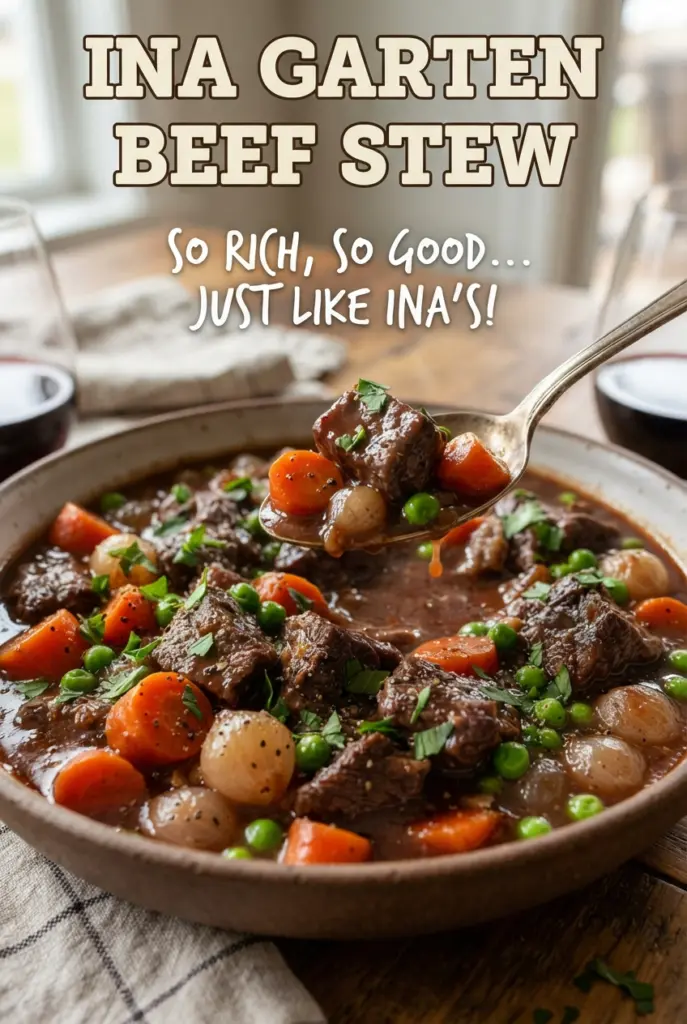
Rich, spoonable beef stew starts with deep browning and finishes with a broth that tastes like it spent the whole afternoon getting better. The beef turns tender without falling apart, the carrots hold their shape, and the potatoes soak up just enough of the winey, savory sauce to make every bite taste balanced. This version earns a regular place in the rotation because it doesn’t rush the base, and that matters here.
The flour on the beef does two jobs at once: it helps the meat develop a better crust in the pot, and it gives the stew a little body once the liquid goes in. The red wine isn’t there to make the dish taste fancy; it lifts the browned bits from the pan and gives the broth the kind of depth water alone can’t build. The long oven time at a low temperature keeps the stew at a gentle burble, which is what turns chuck into fork-tender pieces without drying it out.
Below you’ll find the part that makes the biggest difference, from how to brown the beef in batches without steaming it to when the peas should go in so they stay sweet instead of dull.
The beef browned properly and the stew thickened into that glossy, rich sauce instead of turning soupy. I made it on Sunday and the leftovers tasted even better the next day.
Save this red wine beef stew for the night you want tender chuck, buttery potatoes, and a rich broth that tastes better the next day.
The Reason This Stew Stays Rich Instead of Watery
Beef stew goes flat when the meat never gets a real sear or when the pot is crowded enough to steam everything. This recipe avoids both problems by browning the beef in batches and using that empty pot space for the wine deglaze. Those browned bits aren’t background flavor; they’re the backbone of the broth.
The oven does the rest of the work. A covered pot at 300°F keeps the liquid at a lazy simmer, which is hot enough to soften chuck but gentle enough that the potatoes and carrots don’t collapse before the meat is done. If the stew boils hard, the beef tightens up and the vegetables go mushy at the edges before the center has had time to soften.
- Browning in batches — If you dump all the beef in at once, the pan temperature drops and the meat gives off moisture before it browns. Work in smaller batches and let each side get a dark crust before turning.
- Red wine — Use a dry wine you would actually drink. It adds acidity and depth, while sweet or overly oaky wine can make the broth taste heavy.
- Tomato paste — A small amount gives the stew a deeper color and a rounder base without turning it into tomato stew.
- Frozen peas — They go in at the end for color and sweetness. Add them early and they’ll lose that bright pop that makes the bowl taste finished.
What Each Ingredient Is Doing in the Pot
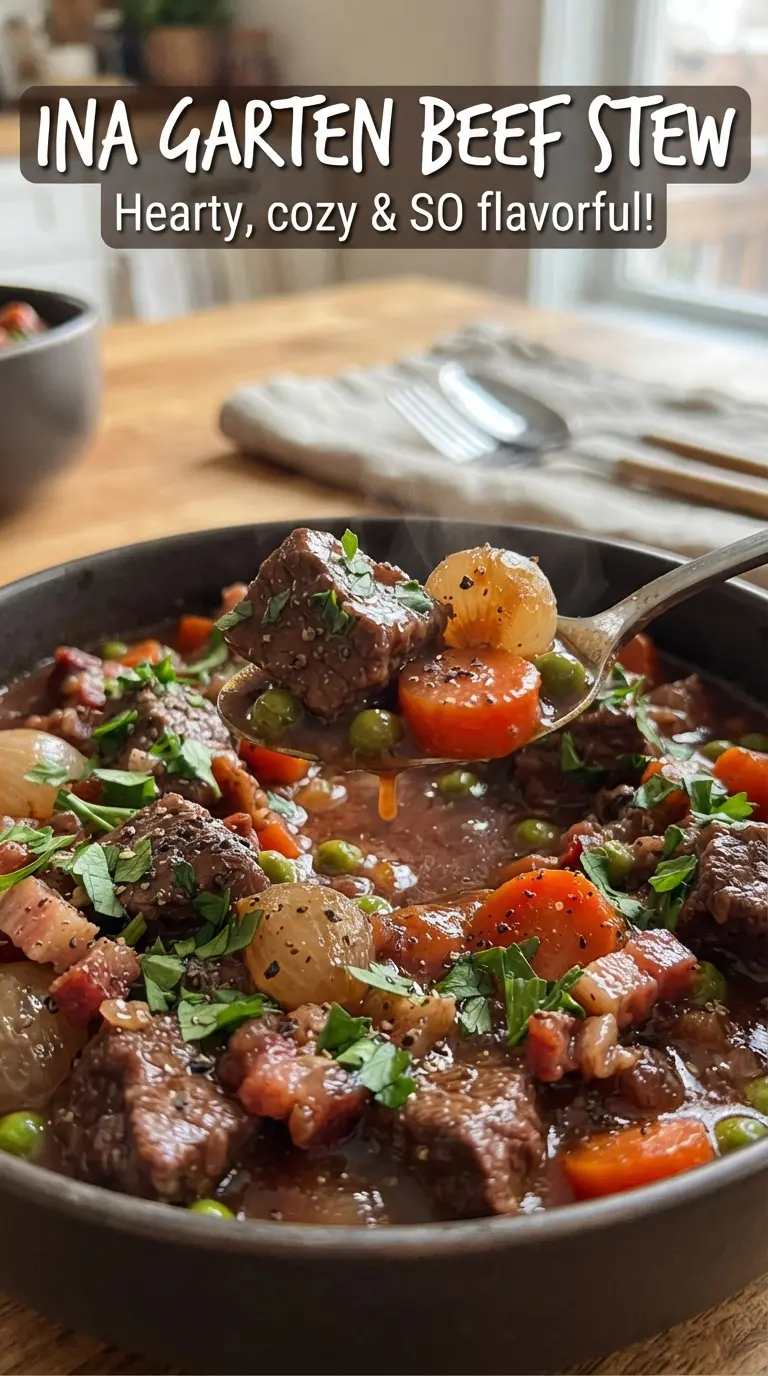
The beef chuck matters most. Chuck has enough connective tissue to turn silky during the long braise, but it needs time and steady heat. Leaner stew meat can work in a pinch, but it won’t give you the same lush texture.
- All-purpose flour — It lightly coats the beef and helps the stew thicken as it cooks. If you need a gluten-free version, use a 1:1 gluten-free flour blend that can handle browning.
- Olive oil — Use enough to coat the bottom of the pot and help the beef brown evenly. A neutral oil also works, but olive oil gives the stew a fuller edge.
- Dry red wine — This is the ingredient that pulls flavor off the bottom of the pan. If you don’t want to cook with wine, swap in more beef broth plus 1 tablespoon red wine vinegar, but the broth will taste a little less layered.
- Beef broth — Use a broth with real body, not a thin salted liquid. If your broth is weak, the stew will taste flat no matter how good the beef is.
- Rosemary and thyme — Fresh herbs keep the stew tasting clean through the long cook. Dried herbs can work, but use less; they get louder and more woody as they simmer.
Building the Braise So the Beef Turns Tender
Getting the Crust on the Beef
Toss the beef with flour, salt, and pepper until every surface is lightly coated, then brown it in a hot pot with olive oil. Don’t rush this part. You want a deep brown crust, not pale gray edges, because that’s where the stew picks up its roasted flavor. If the meat sticks at first, leave it alone; once it browns, it releases more easily.
Pulling Flavor from the Bottom of the Pot
After the beef is browned, pour in the wine and scrape with a wooden spoon until the bottom looks clean. Those dark spots should dissolve into the liquid, not stay stuck in the pot. Stir in the broth, tomato paste, Worcestershire, and garlic until the mixture looks unified instead of streaky. If the paste clumps, whisk it into the liquid before the vegetables go in.
Slow Roasting Until the Meat Gives In
Once the beef goes back in with the onions, carrots, potatoes, rosemary, and thyme, bring the pot just to a simmer, cover it, and move it to the oven. The liquid should barely bubble at the edges. If it boils, the meat fibers tighten and the stew turns tough. After about 1 3/4 to 2 hours, the beef should break apart with a fork and the carrots should still hold a clean bite.
The Final Five Minutes
Pull out the rosemary sprig, stir in the peas, and simmer on the stove just long enough to warm them through. Taste the broth at the end and adjust the salt and pepper after the stew has reduced a little. This last seasoning check matters because a braise can taste balanced in the middle of cooking and still land flat once the flavors settle.
How to Change the Stew Without Losing Its Character
Gluten-Free Version
Swap the all-purpose flour for a gluten-free 1:1 baking blend that includes xanthan gum. The texture will still thicken nicely, but the crust on the beef may be a little softer than with wheat flour.
No-Wine Substitute
Use extra beef broth plus 1 tablespoon red wine vinegar or balsamic vinegar. You still get the acidity that keeps the stew from tasting heavy, but the broth will be a little less complex than it is with wine.
Make-Ahead for Better Flavor
Cook the stew a day ahead, chill it, then reheat it gently. The broth thickens as it rests, and the flavors settle into each other in a way that makes the next-day bowl taste deeper and rounder.
Storage and Reheating
- Refrigerator: Store covered for up to 4 days. The broth will thicken as it chills, which is exactly what you want.
- Freezer: Freezes well for up to 3 months. Cool it completely first and leave a little space at the top of the container so the liquid can expand.
- Reheating: Reheat slowly on the stove over low heat with a splash of broth or water if needed. Fast reheating breaks the potatoes and can make the beef stringy.
Answers to the Questions Worth Asking
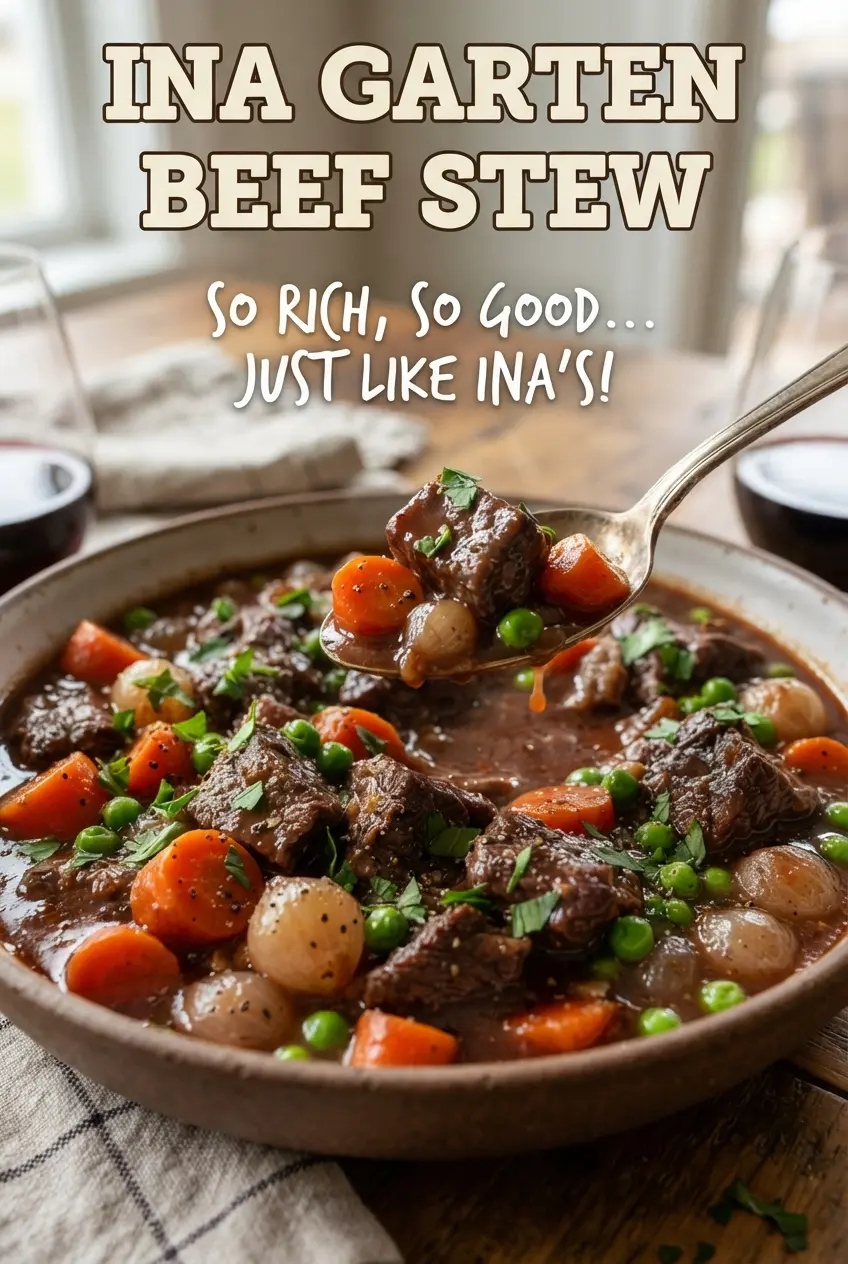
Ina Garten Beef Stew
Ingredients
Equipment
Method
- Preheat the oven to 300°F, then toss the beef with flour, kosher salt, and black pepper.
- Heat olive oil in a Dutch oven, then brown the beef in batches until well browned, adding more oil as needed.
- Add the dry red wine to the pot and scrape up the browned bits, stirring to dissolve them.
- Stir in the beef broth, tomato paste, Worcestershire sauce, and minced garlic until smooth and combined.
- Return the browned beef to the pot, then add the onions, carrots, small potatoes, rosemary sprig, and thyme leaves.
- Bring to a simmer, cover, and bake for 1 3/4–2 hours at 300°F until the beef and vegetables are tender (look for easily pierced potatoes and fork-tender beef).
- Remove the rosemary sprig, then stir in the frozen peas.
- Simmer on the stove for 5 minutes until the peas are hot, then season to taste.