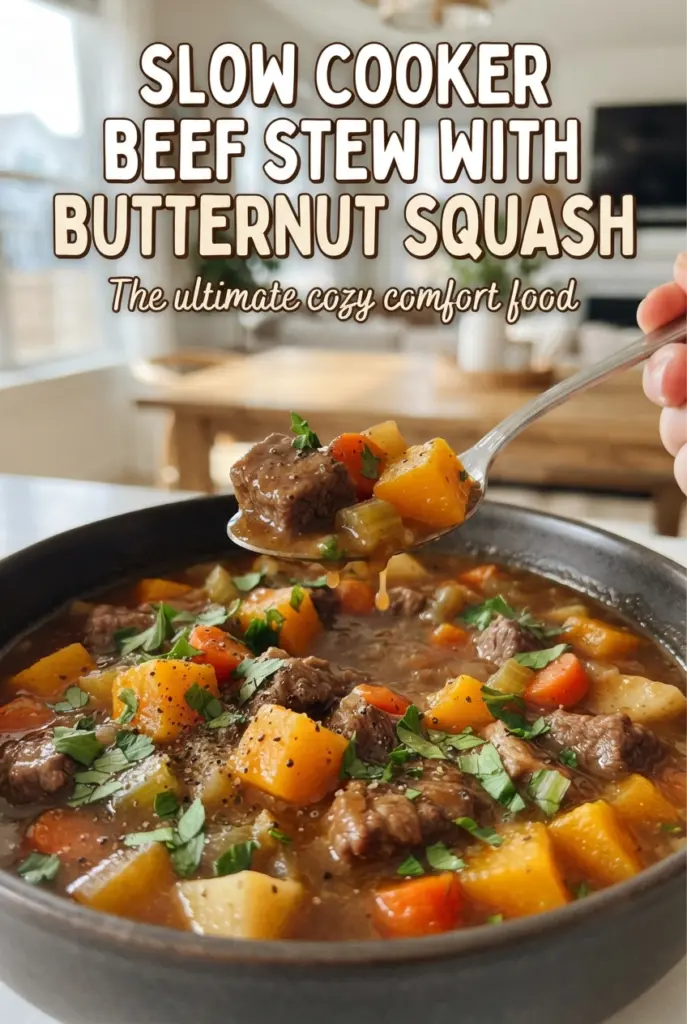
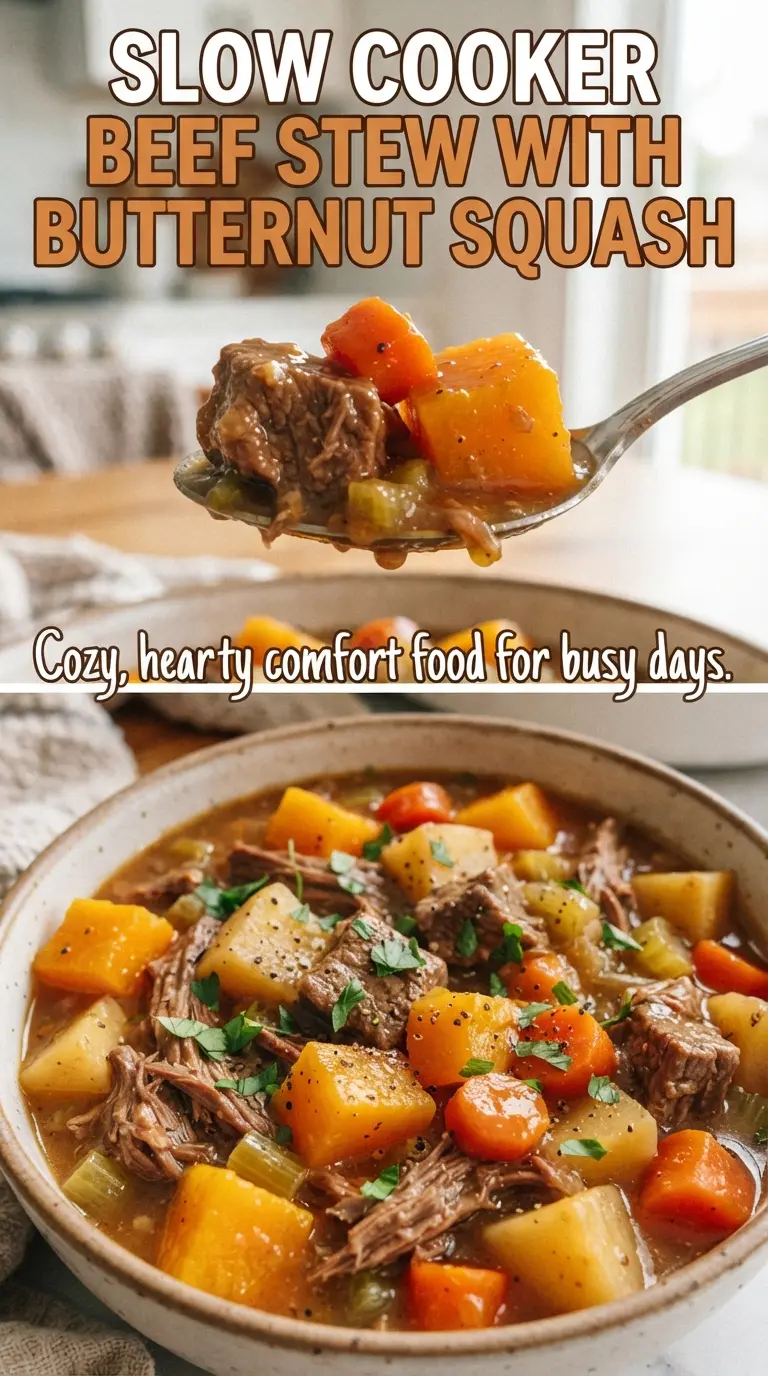
Deep, spoonable beef stew gets better when the broth has time to turn rich and the vegetables keep their shape. The butternut squash softens at the edges without disappearing, the carrots stay sweet, and the kale lands right at the end with enough texture to stand up to the gravy. What you get is a full, sturdy bowl with the kind of balance that makes a slow cooker meal feel finished, not merely convenient.
Browning the beef first matters here. That flour-coated crust gives the broth body, and the browned bits in the pan carry the kind of savory depth you can’t build from the slow cooker alone. The squash goes in later than the carrots because it cooks faster and can turn mushy if it spends eight hours in the pot. A small amount of tomato paste and red wine round out the base without making the stew taste like wine or tomato sauce.
Below, I’ll walk through the timing that keeps the squash intact, the ingredient choices that matter most, and a few smart swaps if you need to work around what’s in the kitchen.
The beef stayed tender and the squash held its shape instead of turning to mash. I loved how the kale stayed a little firm at the end, and the gravy was thick enough to coat the spoon without any extra work.
Save this slow cooker beef stew with butternut squash for a rich, hands-off dinner with tender beef and a glossy gravy.
The Reason Most Beef Stews Turn Flat in a Slow Cooker
Slow cookers are great at tenderness, but they can flatten flavor if every ingredient goes in at once. Beef chuck needs a head start in a hot pan so it can build a crust before the long braise, and that crust becomes part of the broth. The flour on the beef does double duty here: it helps with browning and gives the liquid a little body as it cooks.
The other common mistake is treating every vegetable the same. Butternut squash breaks down faster than carrots, and kale needs almost no time at all. Staggering those additions keeps the stew from turning soft and muddy, which is the difference between a bowl with distinct layers and one that just tastes cooked.
What Each Ingredient Is Actually Doing in This Stew
- Beef chuck — This is the cut you want for long, slow cooking. It has enough connective tissue to turn tender and spoonable instead of dry and stringy. Leaner beef won’t give you the same texture.
- Flour — The light coating helps the beef brown and thickens the stew as it cooks. If you need gluten-free, use a 1:1 gluten-free flour blend and brown the beef the same way.
- Tomato paste — A small amount gives the stew a deeper, more savory base. Cook it briefly with the onions and garlic so it loses the raw edge and turns brick-red.
- Dry red wine — This adds acidity and depth, not a wine flavor. If you skip it, use extra broth and a teaspoon of red wine vinegar at the end if the stew tastes a little round but flat.
- Butternut squash — Add it later so it stays intact and sweet. If you toss it in at the beginning, it softens too much and disappears into the gravy.
- Kale — Stir it in at the very end so it wilts without turning olive-drab and overcooked. If you only have spinach, use it the same way but expect a softer finish.
Building the Stew in the Right Order
Brown the Beef First
Toss the beef with flour, salt, and pepper, then sear it in hot oil until the outside is deeply browned on a few sides. You are not cooking it through at this stage; you’re building flavor and starting the thickening process. If the pan looks crowded, work in batches, because steaming the meat leaves you with gray cubes instead of a browned base.
Cook Down the Aromatics and Paste
Use the same pan for the onion, garlic, and tomato paste. Cook them until the onion softens and the paste darkens slightly, then pour in the wine to loosen the stuck-on bits. That browned residue is where a lot of the stew’s depth comes from, so scrape the pan well before adding the mixture to the slow cooker.
Let the Slow Cooker Do Its Work in Stages
Add the broth, Worcestershire, thyme, sage, and carrots, then cook on LOW for about 5 hours before adding the squash. The beef needs that long first stretch to start turning tender, while the squash needs less time or it will collapse. After you add the squash, cook just until it gives easily when pierced but still holds its shape at the edges.
Finish With the Kale
Stir the kale in during the last 15 minutes, just long enough for it to wilt and darken. If it goes in earlier, it loses its color and texture, and the stew starts to taste dull. Taste the broth at the end and adjust salt and pepper after the kale is in, since greens can soften the saltiness a bit.
How to Adapt It Without Losing the Character of the Stew
Make It Gluten-Free
Use a gluten-free flour blend to coat the beef, or skip the flour and whisk 1 tablespoon cornstarch with 2 tablespoons cold water at the end if you want to thicken the broth. The stew will still be rich, but the sauce will be a touch lighter and less velvety than the flour version.
Skip the Wine and Keep the Depth
Replace the wine with extra beef broth, then add a teaspoon of balsamic vinegar or red wine vinegar at the end if the flavor needs a lift. You lose a little complexity, but the stew stays balanced and savory.
Use Sweet Potato Instead of Butternut Squash
Sweet potato works well if that’s what you have, but it softens faster and brings a sweeter finish. Cut it into larger chunks than the squash and add it at the same stage so it doesn’t dissolve into the broth.
Storage and Reheating
- Refrigerator: Store covered for up to 4 days. The broth thickens as it chills, and the vegetables soften a little more.
- Freezer: It freezes well for up to 3 months, but the squash will be softer after thawing. Cool it completely, portion it into airtight containers, and leave a little headspace.
- Reheating: Reheat gently on the stovetop over low heat or in the microwave at medium power. High heat can make the beef dry and can turn the squash mushy before the center is hot.
Answers to the Questions Worth Asking
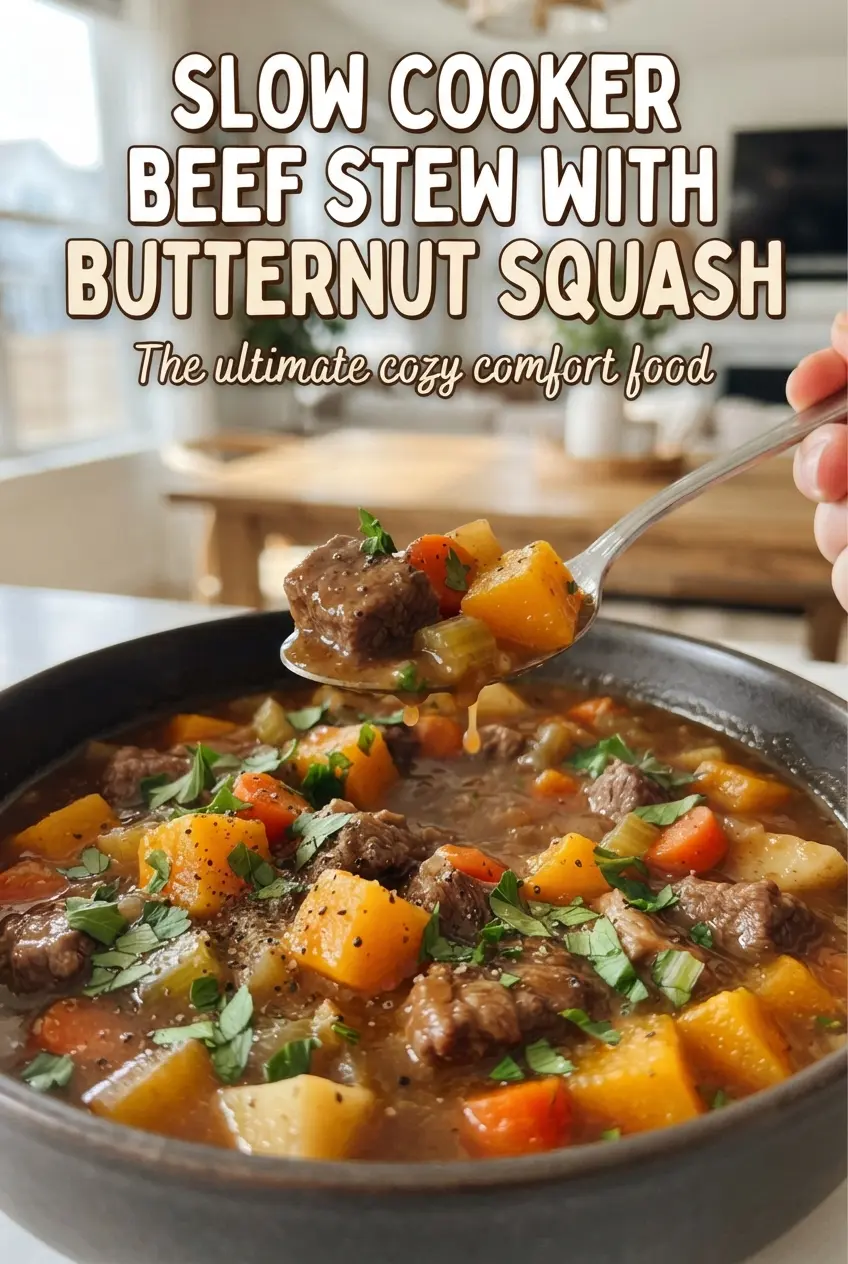
Slow Cooker Beef Stew with Butternut Squash
Ingredients
Equipment
Method
- Toss the beef chuck with the flour, salt, and black pepper until coated. Heat the olive oil in a hot skillet over medium-high heat, then brown the beef in batches and transfer it to the slow cooker.
- In the same skillet, cook the onion, garlic, and tomato paste for 3 minutes, stirring until fragrant. Pour in the dry red wine (or extra broth) to deglaze, scraping up browned bits, then add everything to the slow cooker.
- Add the beef broth, Worcestershire sauce, dried thyme, dried sage, and carrots to the slow cooker. Cover and cook on LOW for 5 hours, until the carrots begin to soften and the gravy looks cohesive.
- Add the butternut squash cubes to the slow cooker, then recover. Cook on LOW for 2 to 3 hours more, until the beef is tender and the squash is easily pierced.
- Stir in the kale and cook on LOW for the last 15 minutes. Season to taste, then serve hot with a glossy gravy and visible squash and carrot pieces.