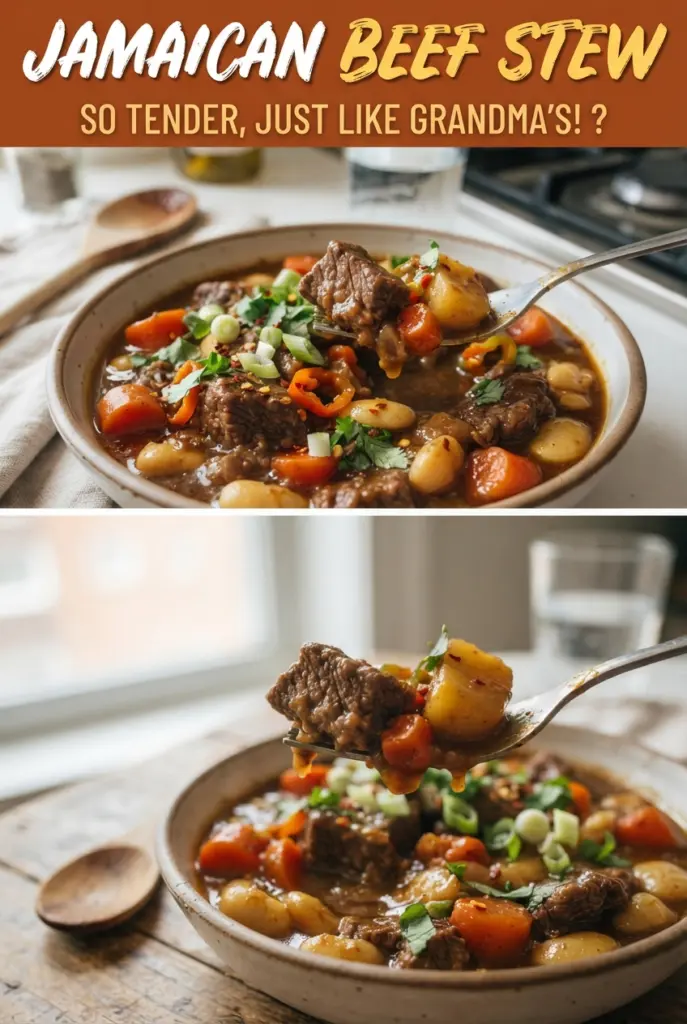
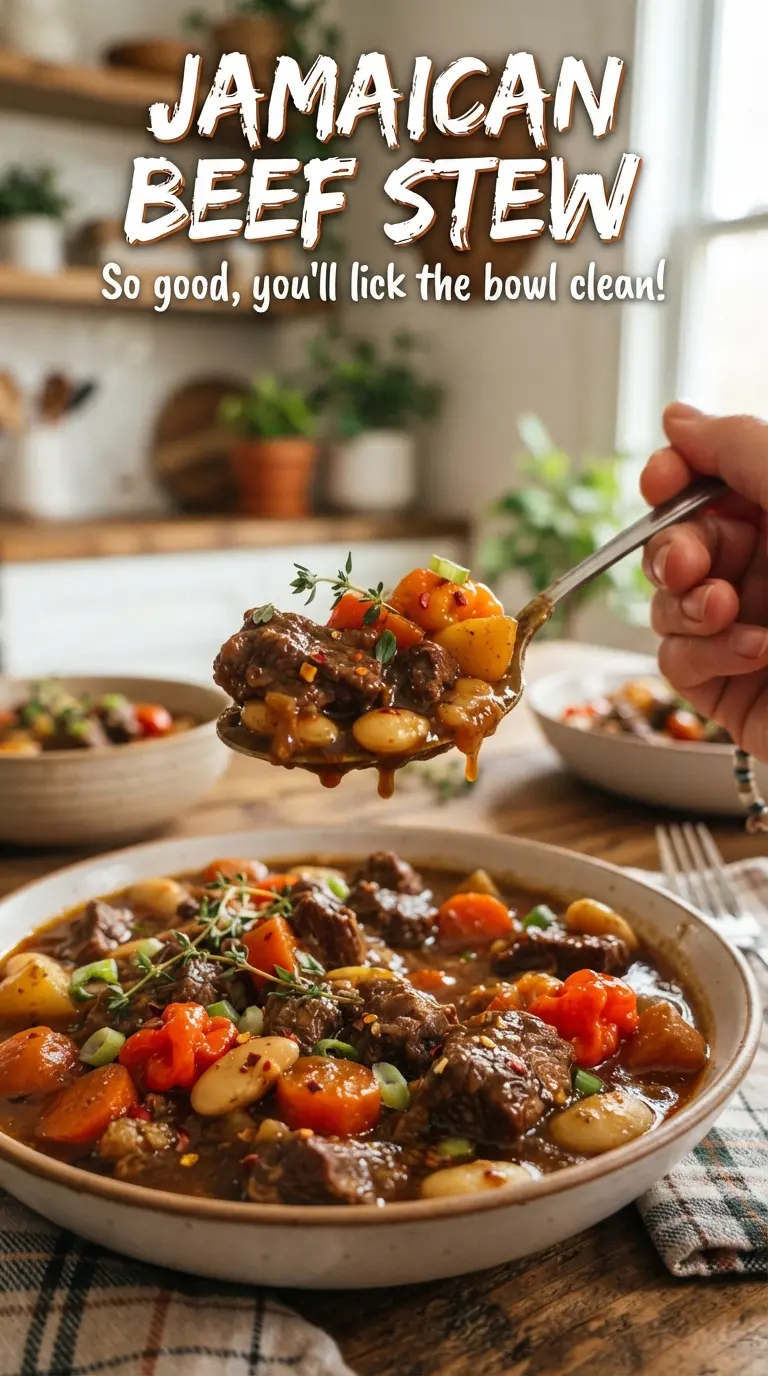
Deep brown, glossy Jamaican beef stew earns its place in the regular dinner rotation because it tastes like it spent all day on the stove, even though most of the work is straightforward. The beef turns tender in a rich, spiced gravy, the carrots and potatoes soak up the sauce, and the butter beans give the whole pot a satisfying, hearty finish. Served over rice, it’s the kind of meal that settles everyone down at the table fast.
What makes this version work is the layering. The beef gets marinated with browning sauce, soy sauce, Worcestershire, allspice, and aromatics before it hits the pot, so the flavor goes all the way through the meat instead of sitting on the surface. The brown sugar gets cooked in the oil first, which builds color and depth in the base before the broth goes in. Keep the scotch bonnet whole so it perfumes the stew without turning it into a fire alarm.
Below you’ll find the exact cues I watch for when the beef is ready, why the vegetables go in later, and a few smart swaps if you need to adjust the heat or the timing.
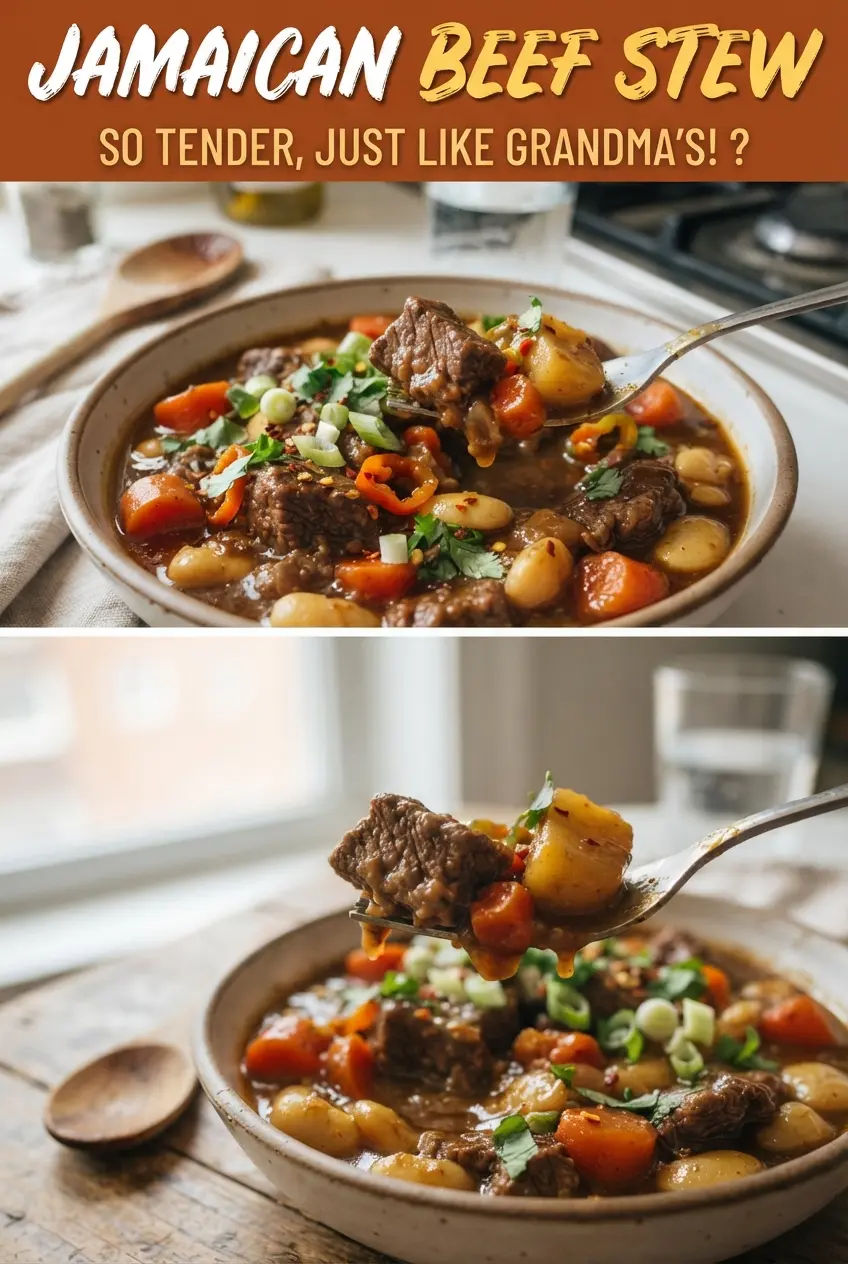
The gravy turned out rich and glossy, and the beef was fork-tender after the simmer. I loved that the potatoes held their shape and the scotch bonnet stayed mellow instead of making the whole pot too hot.
Save this Jamaican Beef Stew for the nights when you want a deep, glossy gravy with tender beef and classic island spice.
The Secret to Browning Without Steaming the Beef
The biggest mistake in a stew like this is crowding the pot too early. Beef chuck needs real heat and space to take on color, and if you dump in too much at once, it gives off liquid and starts braising before it sears. That means less flavor in the pot and a flatter-tasting sauce.
The brown sugar step matters too. Let it darken in the oil before the beef goes in, but don’t walk away from it. You want a deep caramel color, not burnt bitterness. Once the beef hits that base, the pot should smell toasted, rich, and a little sweet before you add the broth.
- Beef chuck — This cut has enough marbling and connective tissue to turn tender during the long simmer. Leaner beef won’t give you the same silky texture.
- Browning sauce — It deepens the color fast and adds that signature dark-stew look. There isn’t a perfect substitute, but a little extra soy sauce plus a touch more brown sugar can help in a pinch.
- Allspice and thyme — These bring the dish into Jamaican territory. Ground allspice matters more than a generic “mixed spice,” and fresh thyme gives a cleaner finish than dried.
- Scotch bonnet — Keep it whole so it flavors the stew without releasing all its heat. If you can’t find one, use a habanero and leave it intact the same way.
What Each Stage Is Doing in the Pot
- Marinating the beef — The soy sauce, Worcestershire, browning sauce, and aromatics season the meat before it cooks, so every bite tastes seasoned instead of just coated. An hour is enough here; much longer doesn’t buy you much extra.
- Building the base — Cooking the brown sugar in the oil first creates the dark, savory-sweet backbone of the stew. Pull the heat back if the sugar starts smoking; scorched sugar tastes harsh, not rich.
- Long simmer — The first covered simmer is what breaks down the beef. The stew should bubble lazily, not boil hard, or the meat will tighten before it softens.
- Vegetable finish — Carrots and potatoes go in only after the beef is almost tender so they hold their shape. Butter beans go in at the end because they only need enough time to warm through and pick up the gravy.
How to Adapt the Stew Without Losing Its Character
Milder Heat
Leave the scotch bonnet whole and remove it a little earlier if you want only background warmth. The stew will still taste right because the pepper is there for aroma as much as heat.
Gluten-Free Version
Use a certified gluten-free Worcestershire sauce and check your browning sauce and broth labels. The method stays the same, and the stew keeps its body because the thickness comes from the beef and the slow simmer, not flour.
No Butter Beans
Kidney beans or lima beans work well if that’s what you have. Add them at the same point, but don’t cook them so long that they start to split and muddy the gravy.
Make-Ahead Storage
The flavor gets even better overnight, so this is a good stew to cook ahead. The potatoes may soften a bit in the fridge, but the gravy thickens up in a way that makes the next day even better.
Storage and Reheating
- Refrigerator: Store for up to 4 days. The sauce thickens and the vegetables soften a little, which is normal.
- Freezer: Freezes well for up to 3 months. Cool it fully first and leave a little headspace so the gravy can expand.
- Reheating: Warm it slowly on the stove over low heat with a splash of broth or water. High heat can make the beef tough and can split the gravy.
Answers to the Questions Worth Asking
Jamaican Beef Stew
Ingredients
Equipment
Method
- Combine beef chuck with browning sauce, soy sauce, Worcestershire sauce, all-purpose seasoning, allspice, diced onion, minced garlic, grated ginger, and chopped green onions. Cover and refrigerate for 1 hour.
- Heat vegetable oil and brown sugar in a Dutch oven over medium heat until the sugar darkens. When it turns darker, add the marinated beef (reserving the aromatics) and sear for 6-8 minutes, until browned.
- Stir in the reserved aromatics, ketchup, beef broth, fresh thyme, and the whole scotch bonnet pepper. Bring to a simmer.
- Cover the Dutch oven and simmer until the beef is nearly tender, about 1 1/2 hours. Look for the liquid to bubble steadily with meat becoming tender.
- Add sliced carrots and cubed potatoes to the stew and continue simmering for 30-40 minutes. Cook until the vegetables are tender, with a thickened, glossy sauce.
- Stir in drained butter beans and simmer for 10 minutes. Keep it at a gentle bubble so the beans heat through.
- Remove the scotch bonnet and thyme stems before serving. Serve the stew hot over rice.