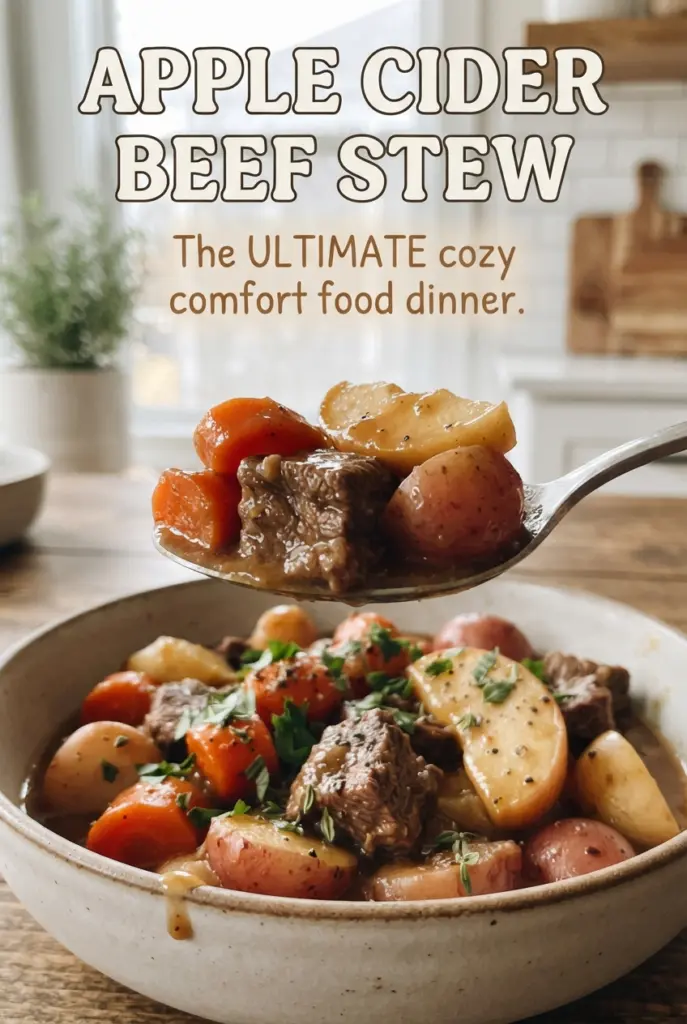
Apple cider beef stew lands in that rare spot between hearty and bright. The beef turns spoon-tender, the cider cooks down into a glossy gravy, and the apples soften just enough to give little sweet-tart pops against the savory broth. It tastes like a slow-cooked stew that woke up with a little more personality than usual.
The trick is using cider for depth, not sweetness. It gets scraped up with the browned bits from the beef, then balanced with broth, vinegar, thyme, and a small hit of cinnamon so the whole pot tastes rounded instead of sugary. Adding the apples near the end keeps them from disappearing into the stew, and the sweet potatoes and carrots hold their shape without turning mushy.
Below, I’ve laid out the timing that matters most, the ingredient choices that actually affect the final bowl, and the small adjustments that help this stew stay rich, balanced, and deeply comforting.
The cider gravy got thick and glossy, and the apples stayed in little tender pieces instead of turning to mush. My husband went back for a second bowl before I’d even sat down.
Save this apple cider beef stew for the night you want tender beef, sweet potatoes, and a cider gravy that tastes slow-cooked and balanced.
The Browning Step That Keeps the Stew from Tasting Flat
Beef stew can taste heavy and one-note when the meat goes straight into liquid without a good sear. Browning the chuck in batches changes that. You’re building deep, roasted flavor on the surface of the meat, and those browned bits stuck to the pot become the base of the sauce once the cider and broth go in.
The other thing that matters here is the flour. It clings to the beef and helps the stew thicken as it simmers, but it only works well if the pieces are browned instead of steamed. Crowding the pan is the fastest way to lose both the crust and the flavor, so work in batches and give each piece room to develop color.
What Each Ingredient Is Doing in the Pot
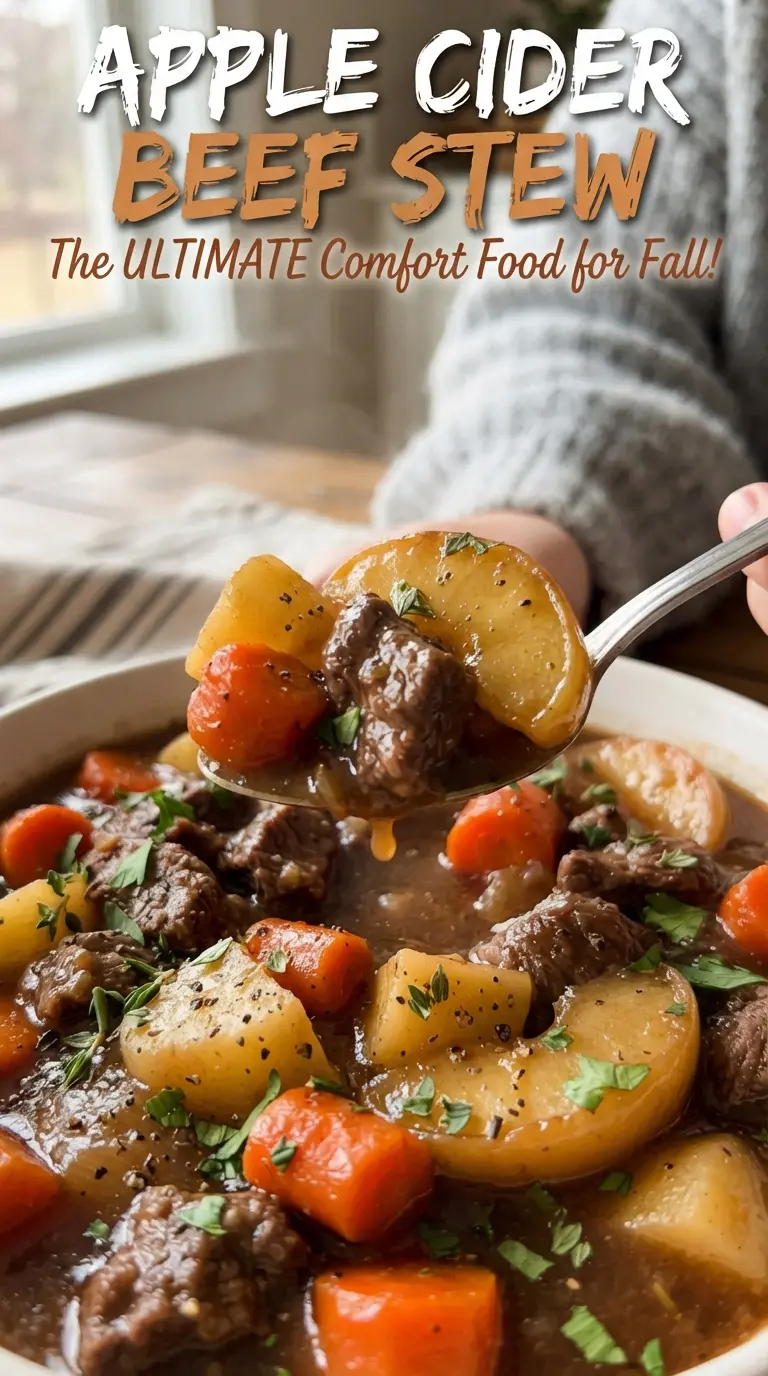
- Beef chuck — This cut has enough marbling and connective tissue to turn silky over a long simmer. Lean stew meat won’t give you the same spoon-tender texture.
- Apple cider — Use real cider, not vinegar and water. It brings body, apple flavor, and natural sweetness that balances the beef once it cooks down.
- Apple cider vinegar — This keeps the stew from tasting flat or overly sweet. It sharpens the cider just enough to make the broth taste fuller.
- Sweet potatoes and carrots — They add heft and turn the stew into a full meal. Cut them into even pieces so they finish at the same pace.
- Apples — Firm apples hold their shape better than soft baking apples. Add them late or they’ll disappear into the sauce.
- Cinnamon and thyme — The cinnamon should read as warmth, not dessert. Paired with thyme, it gives the stew a subtle fall-like depth without tipping it sweet.
Building the Stew in the Right Order
Seasoning and Searing the Beef
Toss the cubed beef with salt, pepper, and flour before it hits the pan. The flour helps create a light coating that thickens the stew later, and the seasoning starts working immediately on the meat. Brown the beef in hot oil in batches until the surfaces are dark and crusty at the edges. If the pieces look gray and wet, the pan is crowded or the heat is too low.
Creating the Aromatic Base
Cook the onion until it softens and takes on a little color, then add the garlic and tomato paste for just a minute. The tomato paste needs that short cooking time to lose its raw edge and deepen the base without tasting tinny. When you pour in the cider, scrape the bottom of the pot hard enough to loosen every browned bit. That’s where the best flavor lives.
Letting the Stew Simmer Cleanly
Add the broth, vinegar, thyme, cinnamon, bay leaves, and beef, then keep the heat low enough that the pot barely bubbles. A hard boil will tighten the beef before it has time to soften and can make the liquid cloudy and harsh. The long simmer is what turns the chuck tender and gives the cider time to mellow into the broth. At this stage, the stew should smell savory first and apple-like second.
Finishing with the Vegetables and Apples
Sweet potatoes and carrots need less time than the beef, so they go in later to stay intact. Once they’re nearly tender, add the apples and give them just long enough to soften at the edges while keeping their shape. That last short simmer keeps the fruit distinct instead of turning the stew jammy. Pull out the bay leaves before serving so every spoonful stays clean and balanced.
How to Adapt the Stew Without Losing the Balance
Make it gluten-free
Swap the all-purpose flour for a 1:1 gluten-free flour blend, or skip coating the beef and stir in a cornstarch slurry at the end. The stew will still thicken, but the finish will be a little smoother and lighter.
Make it dairy-free and naturally weeknight-friendly
This recipe already fits a dairy-free table as written. The only thing to watch is the beef broth; use one with a clean, simple ingredient list so the cider and spices stay in front.
Swap the sweet potatoes
Butternut squash works if that’s what you have, though it will soften a little more than sweet potato. Cut it into larger chunks so it doesn’t break down before the beef is done.
Storage and Reheating
- Refrigerator: Store covered for up to 4 days. The flavor deepens overnight, and the stew usually thickens as it sits.
- Freezer: It freezes well for up to 3 months. Cool it completely first, then pack it in airtight containers with a little headspace.
- Reheating: Warm it gently on the stove over low heat, stirring now and then. A hard boil can overcook the apples and potatoes and make the beef stringy.
Questions I Get Asked About This Recipe
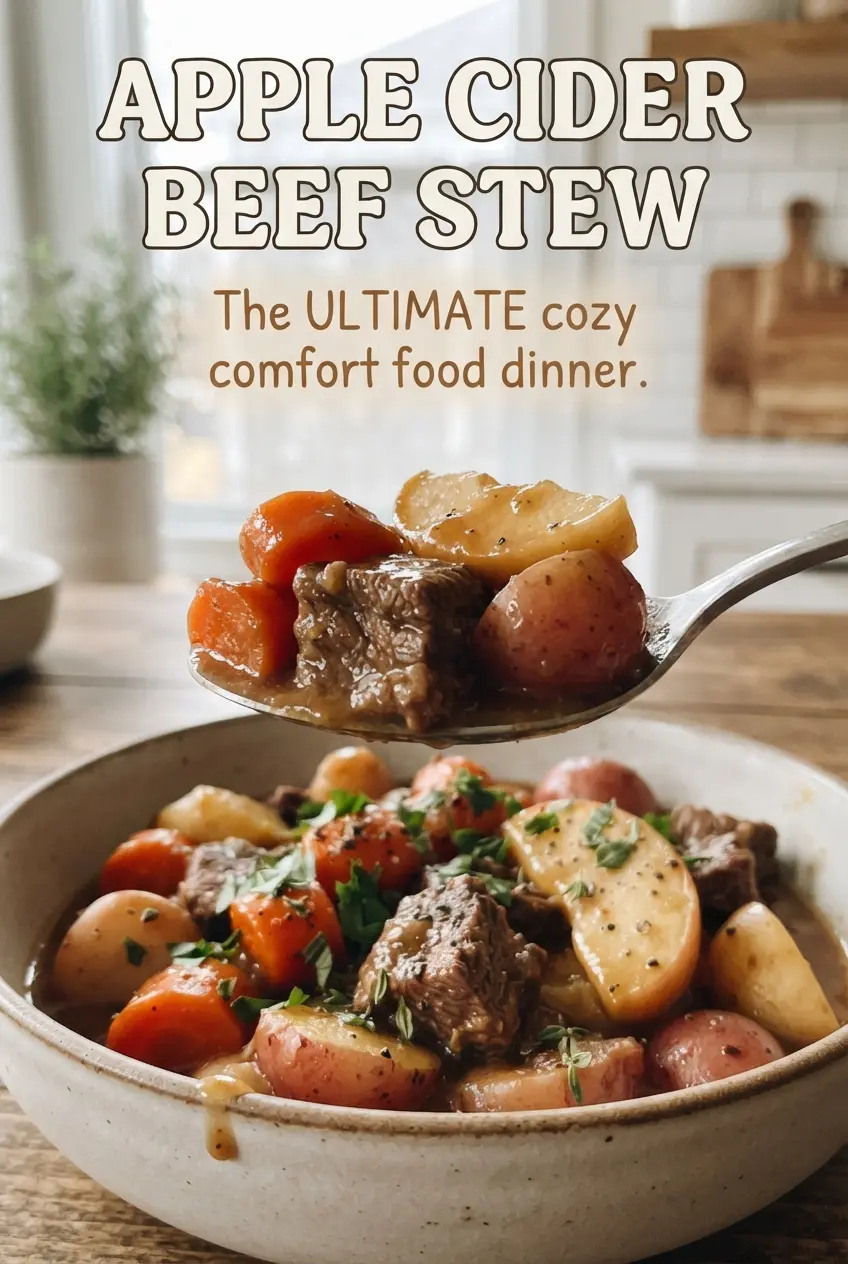
Apple Cider Beef Stew
Ingredients
Equipment
Method
- Season the beef chuck with salt and black pepper, then toss it with all-purpose flour until coated (visual cue: flour clings to the meat).
- Heat olive oil in a Dutch oven over medium-high heat, then brown the beef in batches until deeply browned on all sides (time: 2-3 minutes per batch; visual cue: browned crust).
- Reduce heat to medium and cook the diced onion until softened, about 5 minutes (visual cue: translucent edges).
- Add the minced garlic and tomato paste and cook for 1 minute, stirring until fragrant (visual cue: paste darkens slightly).
- Pour in the apple cider and scrape the bottom of the Dutch oven to lift browned bits (time: 1-2 minutes; visual cue: loosened fond).
- Add the beef broth, apple cider vinegar, dried thyme, ground cinnamon, and bay leaves, then stir in the browned beef (visual cue: liquid begins to steam).
- Cover and simmer at a gentle bubble for 1 1/2 hours, stirring once or twice (time: 90 minutes; visual cue: meat is tender and sauce thickens slightly).
- Uncover and add the cubed sweet potato and sliced carrots, then simmer for 30 minutes (time: 30 minutes; visual cue: vegetables begin to soften).
- Add the apple chunks and simmer for 15 minutes more (time: 15 minutes; visual cue: apples turn glossy but still hold their shape).
- Remove the bay leaves and taste for seasoning, then serve hot (visual cue: no bay leaves remain in the pot).