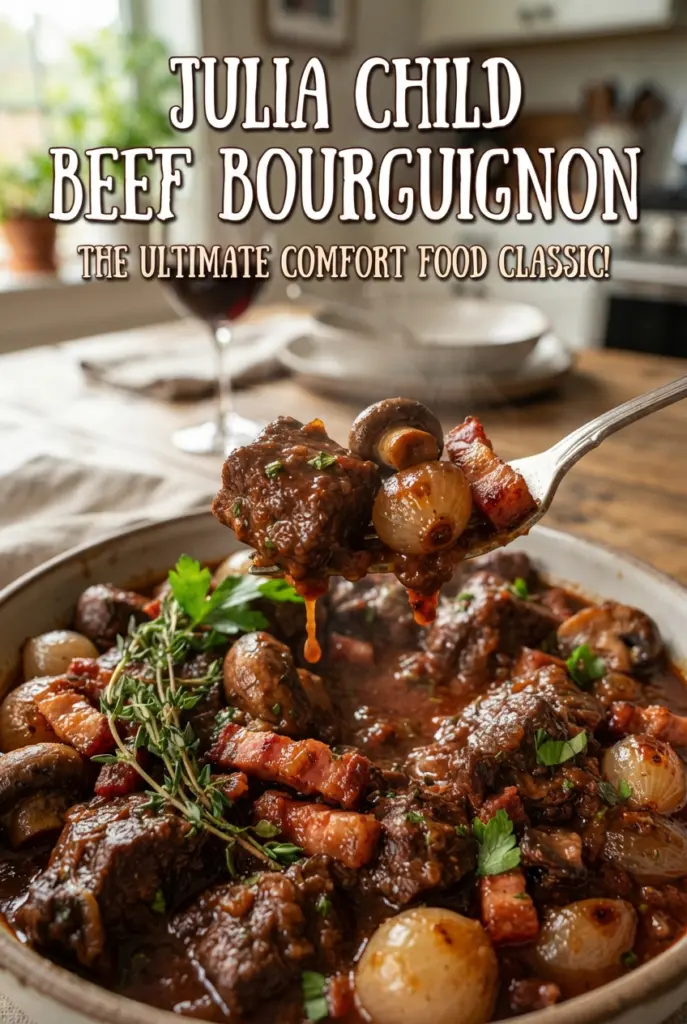
Beef bourguignon earns its place in the rotation because it turns an inexpensive cut of beef into something deeply tender, glossy, and layered with red wine, bacon, mushrooms, and pearl onions. The sauce doesn’t taste flat or heavy; it tastes cooked down and focused, with each ingredient doing a clear job. When it’s right, the beef holds together in thick, spoonable chunks and the sauce clings without turning muddy.
The method matters here. Browning the bacon first gives you fat and flavor for the beef sear, and searing the beef in small batches keeps the meat from steaming. That quick oven step with flour before the liquid goes in is one of the quiet tricks that keeps the sauce from tasting raw or pasty later. The mushrooms and pearl onions get cooked separately on purpose, so they keep their shape and own flavor instead of disappearing into the stew.
Below, I’ve broken down the parts that matter most: how to build real depth in the sauce, which ingredients are worth paying attention to, and the small details that keep this classic from turning into just another beef stew.
The sauce reduced into this gorgeous silky gravy, and the mushrooms still tasted like mushrooms instead of just disappearing into the pot. I followed the batch-browning tip and the beef was fall-apart tender after three hours.
Save this Julia Child beef bourguignon for the night you want a wine-braised stew with deeply browned beef, silky sauce, and the classic pearl onions and mushrooms on top.
The Trick That Keeps Beef Bourguignon Rich Instead of Muddy
Beef bourguignon goes sideways when the pan is crowded or the sauce is rushed. If the beef steams instead of browns, the finished stew tastes flat no matter how much wine you pour in. The other common problem is adding everything at once and expecting the flavors to sort themselves out in the oven. They won’t.
The flour step before the wine matters more than it looks. It coats the meat and helps thicken the braising liquid later, but only if it gets heated for those few minutes in the oven so it doesn’t taste raw. That short blast at 450°F also helps start building the deep, roasted notes that make this dish taste like itself.
- Dry beef browns faster and forms a better crust. If the meat feels damp, pat it again before it hits the pan.
- Batch searing keeps the temperature high enough for browning. If you add too much at once, the beef releases liquid and you lose color.
- The separate garnish vegetables are not decoration. Braised pearl onions and sautéed mushrooms keep their shape and bring clean, distinct flavor to the finished stew.
What Each Ingredient Is Actually Doing in the Pot
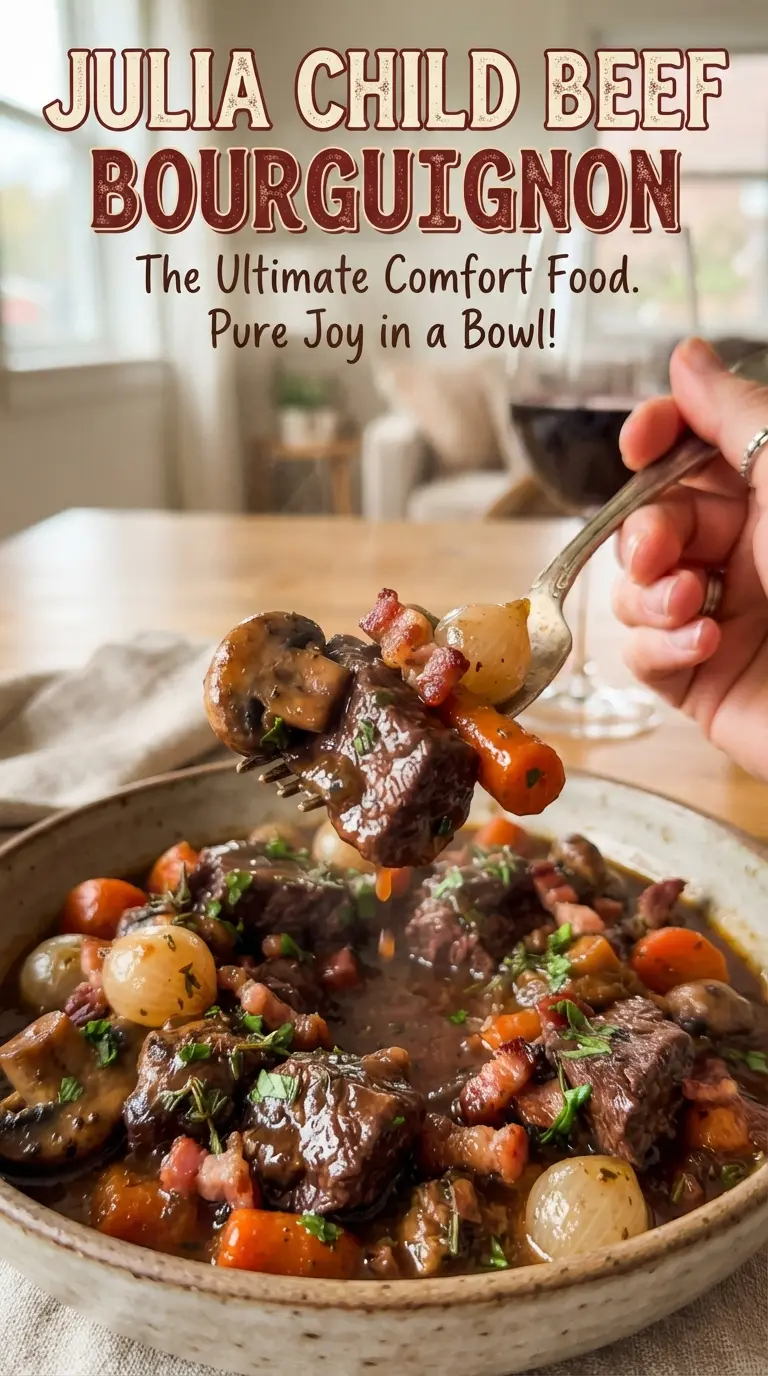
- Bacon gives the base its first layer of smoky fat. Blanching it first pulls off some salt and sharpness, so the finished stew tastes balanced instead of hammy.
- Lean stewing beef needs time, not tenderness shortcuts. Chuck-style stew meat is the right kind of tough for this recipe because long braising turns it silky.
- Full-bodied red wine is the backbone of the sauce, so use one you’d actually drink. A thin or overly sweet wine will leave the stew sharp or dull.
- Tomato paste, thyme, garlic, and bay leaf add backbone and depth without making the dish taste tomato-heavy. Mash the garlic so it melts into the sauce instead of showing up as chunks.
- Pearl onions and mushrooms are best cooked separately. If they go into the pot raw, the onions can fall apart and the mushrooms can turn spongy.
Building the Braise in the Right Order
Rendering the Bacon and Searing the Beef
Start by browning the blanched bacon in the olive oil until it picks up color and gives up some fat. Pull it out, then sear the beef in small batches in the hot fat, letting each piece sit until it releases cleanly from the pan before turning. If the meat sticks hard, it usually needs another minute; if it’s gray and wet, the pan was crowded.
Creating the Base with Carrot and Onion
Once the beef is browned, cook the sliced carrot and onion in the same pan until the edges pick up color. They’re not there to stay crisp; they’re there to soak up the browned bits from the bottom of the casserole. Salt and pepper go in here so the seasoning gets distributed before the flour and liquid change the texture of the pan.
The Quick Oven Step with Flour
Toss the beef and bacon with the flour, then bake uncovered for 4 minutes, stir, and bake 4 minutes more. That short dry heat cooks off the raw flour taste and starts the sauce base before the liquid goes in. Skip this or rush it, and the finished sauce can taste pasty instead of silky.
Braising Until the Beef Gives
Stir in the wine, stock, tomato paste, garlic, thyme, and bay leaf, then cover and braise at 325°F until the beef is fork-tender. The meat should give easily when pressed, but it shouldn’t be shredding into strings. If the sauce looks thin at the end, that’s normal; you strain and reduce it after braising, which gives you control over the final texture.
Finishing with the Mushrooms and Pearl Onions
Strain the sauce, skim off the fat, simmer it until it coats a spoon, then pour it back over the beef with the braised onions and sautéed mushrooms. This is the moment the dish comes together, and it’s worth tasting before serving because the reduction concentrates the salt and wine. Fresh parsley at the end cuts through the richness and keeps the whole pot from tasting heavy.
How to Adapt This for a Different Table
Make-Ahead for Better Flavor
This stew tastes even better the next day. Cool it completely, refrigerate it overnight, then rewarm it gently so the beef stays intact and the sauce doesn’t break from a hard boil.
Gluten-Free Version
Replace the all-purpose flour with a gluten-free 1:1 flour blend and use a stock you trust. The texture stays close to the original, though the sauce may need a few extra minutes of simmering after straining to reach the same body.
Less Wine, Deeper Beef
If you want a softer wine note, swap up to 1 cup of the wine for extra beef stock. The stew will be a little rounder and less sharp, but it won’t have quite the same classic bourguignon depth.
Dairy-Free by Default
The stew itself is naturally dairy-free if you keep the mushroom sauté and pearl onion braise in olive oil and stock instead of butter-based finishes. The only thing to watch is the garnish stage, since butter is often used there.
Storage and Reheating
- Refrigerator: Keeps well for 4 days. The sauce tightens as it chills, which is normal.
- Freezer: Freezes well for up to 3 months. Cool completely first and leave a little headspace if you’re packing it into containers.
- Reheating: Warm it gently on the stove over low heat, covered, until the beef is hot through. A hard boil can make the meat stringy and can dull the sauce.
Questions I Get Asked About This Recipe
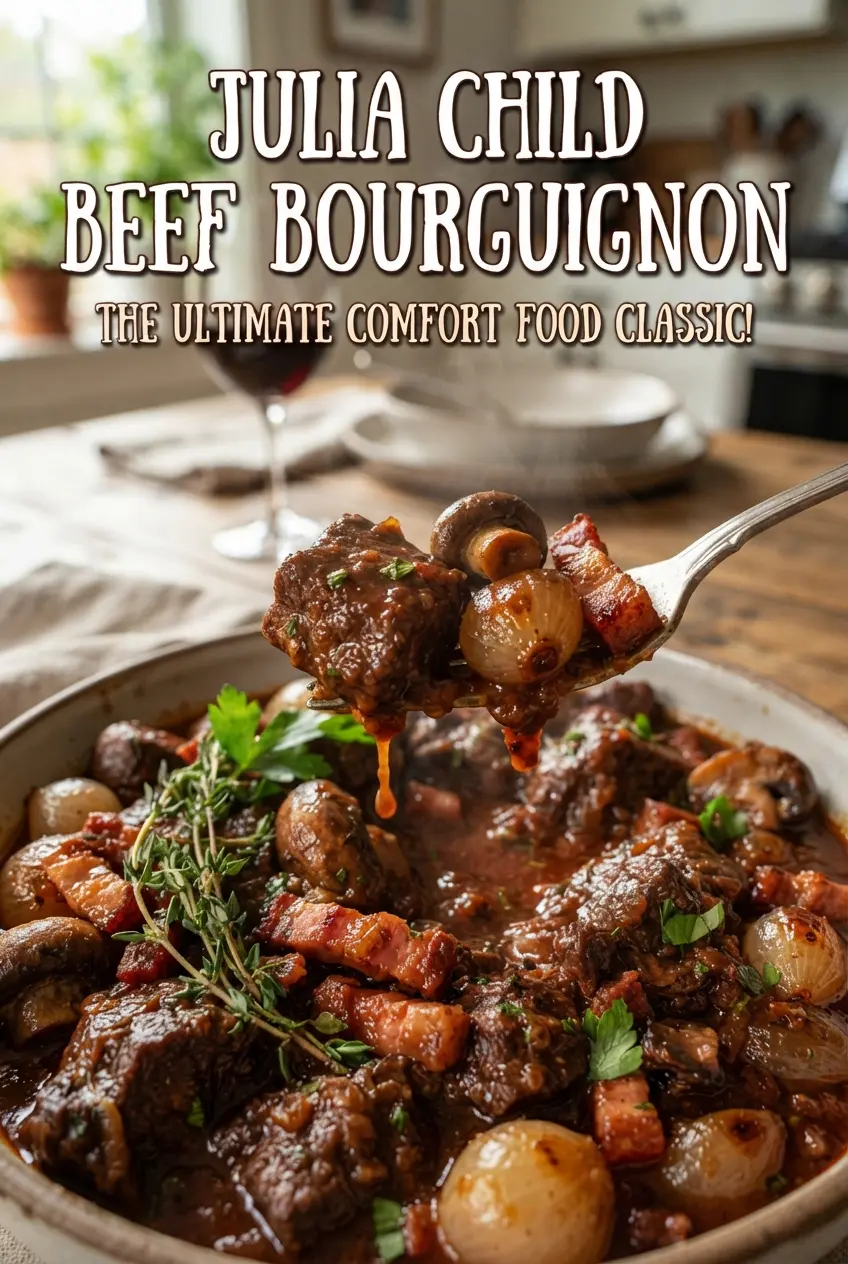
Julia Child Beef Bourguignon
Ingredients
Equipment
Method
- Preheat oven to 450°F. Place the blanched bacon in a casserole with the olive oil and brown it, then remove.
- Sear the dry beef in the hot fat a few pieces at a time until well browned. Add the carrot and onion to the hot fat and brown them.
- Return the beef and bacon to the casserole and season with salt and black pepper. Sprinkle with all-purpose flour and toss until the cubes look lightly coated.
- Bake uncovered at 450°F for 4 minutes, until the coating begins to darken. Toss and bake uncovered for another 4 minutes.
- Reduce oven temperature to 325°F. Stir in the red wine and enough beef stock to barely cover, then add tomato paste, garlic, dried thyme, and bay leaf.
- Cover and braise at 325°F for 2 1/2 to 3 hours, until the beef is fork-tender. Watch for steady simmering with steam building under the lid.
- Strain the sauce and skim the fat. Simmer the strained sauce to thicken until it looks glossy.
- Pour the thickened sauce back over the beef. Add the braised pearl onions and the sautéed mushrooms, then garnish with fresh parsley.