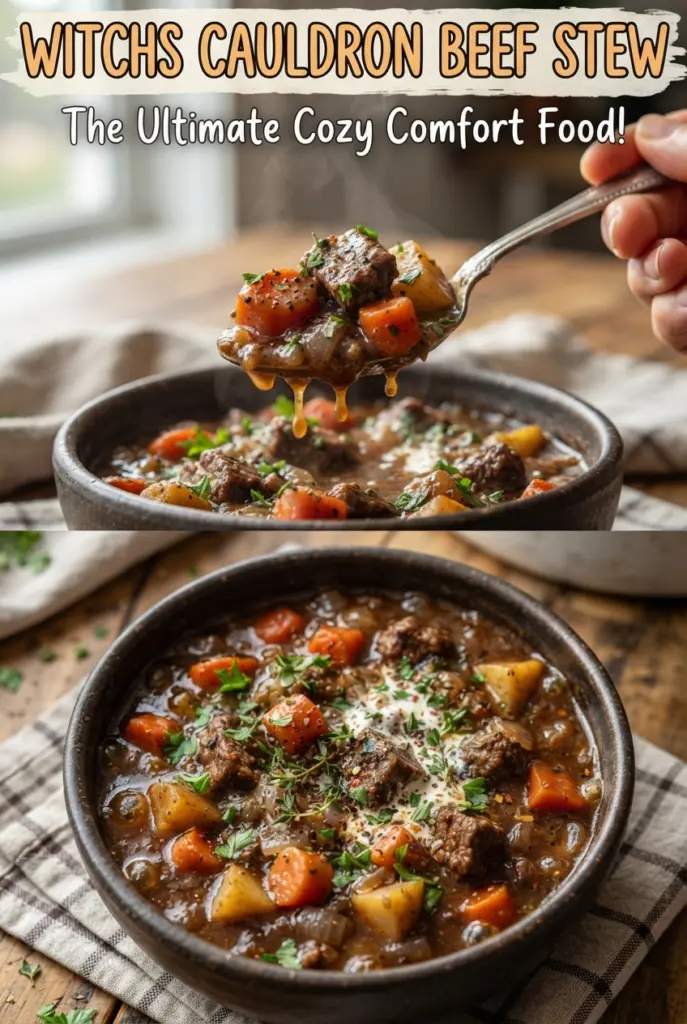
Witch’s Cauldron Beef Stew lands in that sweet spot where the broth turns dark and glossy, the beef goes fork-tender, and every spoonful feels built for cold-weather comfort with a little theatrical flair. The stout deepens the base without making it taste like beer, the balsamic sharpens the edges, and the purple potatoes hold their shape just enough to look dramatic without falling apart. It’s the kind of stew that gets people leaning over the pot before it’s even served.
The real payoff comes from two places: browning the beef in batches and letting the stout hit the pan after the tomato paste. Those browned bits on the bottom carry the backbone of the stew, and the beer loosens them in a way water never could. The black beans add body near the end, which makes the broth feel thicker and more satisfying without needing extra cream or a long flour slurry.
Below, I’ll walk through the part that matters most: how to keep the beef savory, the vegetables intact, and the finish dark and rich. I’ve also included a few smart swaps and storage notes so you can make this ahead and reheat it without losing the texture.
The stout made the gravy deep and rich, and the purple potatoes stayed gorgeous instead of turning to mush. Even the bat pastry on top stayed crisp for long enough to serve.
Save this Witch’s Cauldron Beef Stew for the nights when you want deep stout gravy, tender beef, and those bat pastry toppers.
The Browning Step That Gives This Stew Its Deepest Flavor
If the beef goes pale in the pot, the stew will taste flat no matter how long it simmers. Browning in batches is what builds the dark, savory base, and it only works when the meat has space and the pan is hot enough to sear instead of steam. The flour on the beef does two jobs at once: it helps the cubes take on a better crust, and it gives the broth a little body as everything cooks down.
The other place people go wrong is rushing the onion stage. Once the beef is out, the onion needs time to soften and pick up those browned bits from the pan before the garlic and tomato paste go in. That tomato paste needs a full minute in the heat to darken slightly; if it stays raw, the stew can taste sharp instead of rounded.
What Each Ingredient Is Actually Doing In The Cauldron
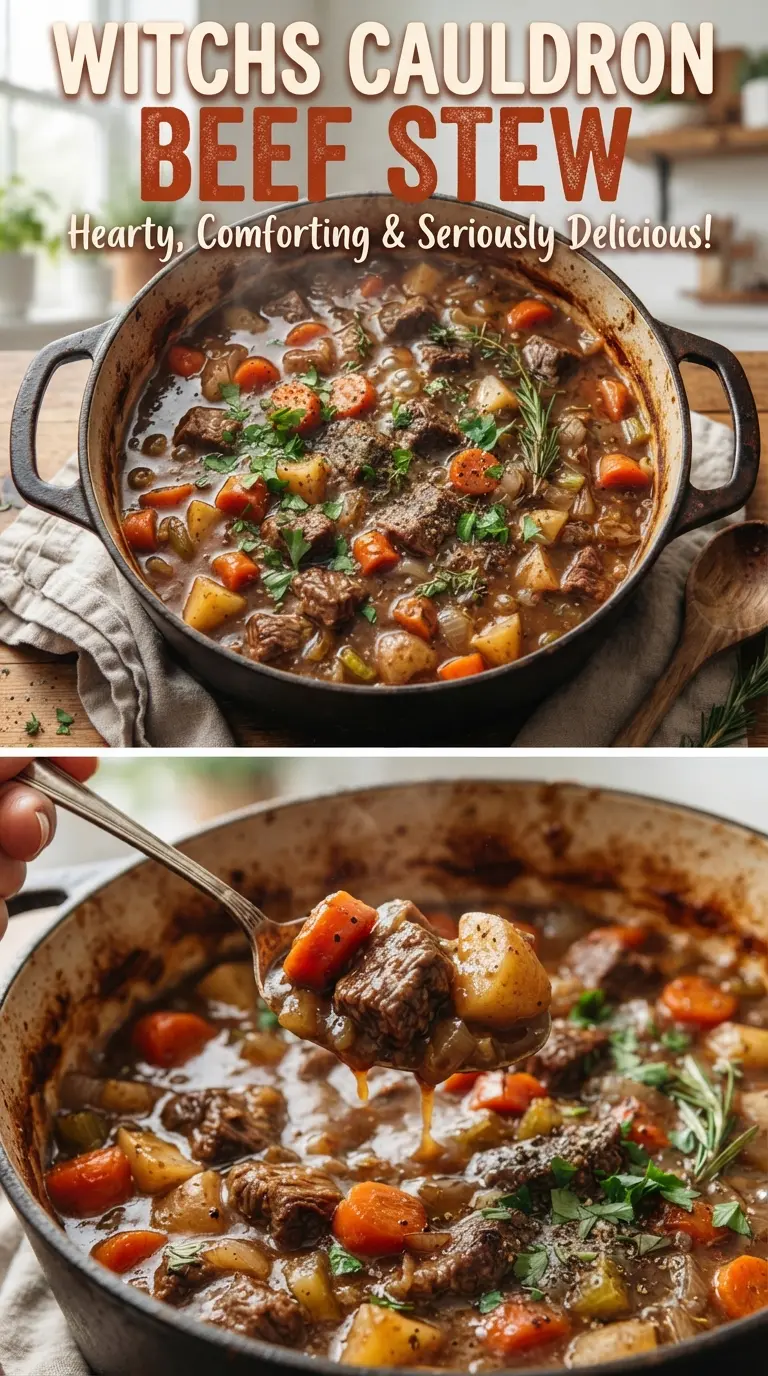
- Beef chuck — This is the cut that turns tender after a long simmer. Anything leaner dries out before the stew is done, so chuck is worth buying here.
- Stout — This adds color, depth, and a little roasted bitterness that plays nicely with the beef. If you swap it, use a dark nonalcoholic stout or extra broth plus a teaspoon of molasses for some of the same darkness.
- Purple potatoes — These keep the dish dramatic and hold their shape better than many waxy potatoes. Cut them into even cubes so they cook at the same rate as the carrots.
- Black beans — They thicken the broth just enough and give the stew a hearty finish. Rinse them well so the liquid stays clean-tasting instead of muddy.
- Puff pastry bats — These are pure presentation, but they matter because they turn the bowl into the full theme. Bake them until deeply golden so they stay crisp when they hit the hot stew.
Building the Cauldron Without Breaking the Broth
Getting the Sear Before the Simmer
Season the beef, toss it with flour, and brown it in small batches in hot oil. You want a hard sizzle the second it hits the pan and a deep brown crust on the outside, not a gray surface with juices pooling underneath. If the pan looks crowded, stop and work in more batches; crowding drops the temperature fast and robs you of that roasted flavor.
Cooking Down the Aromatics
After the beef comes out, cook the onion until it softens and starts to pick up color from the pan. Add the garlic and tomato paste only after the onion has some give, then stir for a minute until the paste darkens slightly and smells sweet and concentrated. That step keeps the stew from tasting raw or tinny.
Letting the Stout Do the Work
Pour in the stout and scrape the bottom of the pot with a wooden spoon until the dark bits release into the liquid. That’s the flavor base, and it should look glossy almost immediately. Add the broth, balsamic, paprika, thyme, and beef, then bring it to a gentle simmer; a hard boil will tighten the beef instead of relaxing it.
Finishing With the Vegetables and Beans
Once the beef has had its long simmer, add the purple potatoes and carrots and cook until the potatoes are just tender at the center. Stir in the black beans at the end so they warm through without breaking apart. If you add them too early, they’ll split and turn the broth gritty.
Make It Heavier, Lighter, or Vegetarian
For a thicker stew, simmer uncovered for the last 15 minutes so the broth reduces a little more. For a lighter finish, skip the puff pastry toppers and serve with a spoonful of parsley on top instead. To make a vegetarian version, replace the beef with seared mushrooms and use mushroom broth plus a dark stout; you’ll lose the meaty chew, but you’ll keep the deep, roasted flavor.
Gluten-Free Version
Use a gluten-free flour blend for tossing the beef and thicken the stew only from that coating and the long simmer. Skip the puff pastry bats unless you’ve got a gluten-free pastry that bakes up crisp; otherwise, serve with roasted potato rounds or leave the topper off entirely.
Make-Ahead and Freezer Notes
This stew tastes even better the next day because the broth settles and deepens overnight. Store the puff pastry bats separately so they stay crisp. If you freeze it, freeze the stew without the pastry and expect the potatoes to soften a little after reheating, though the flavor holds up well.
Storage and Reheating
- Refrigerator: Store covered for up to 4 days. The broth thickens as it chills.
- Freezer: Freeze for up to 3 months in airtight containers. Leave the pastry bats out and add fresh ones when serving.
- Reheating: Warm gently on the stove over low heat with a splash of broth if needed. A hard boil can break the potatoes and make the beef stringy.
Answers to the Questions Worth Asking
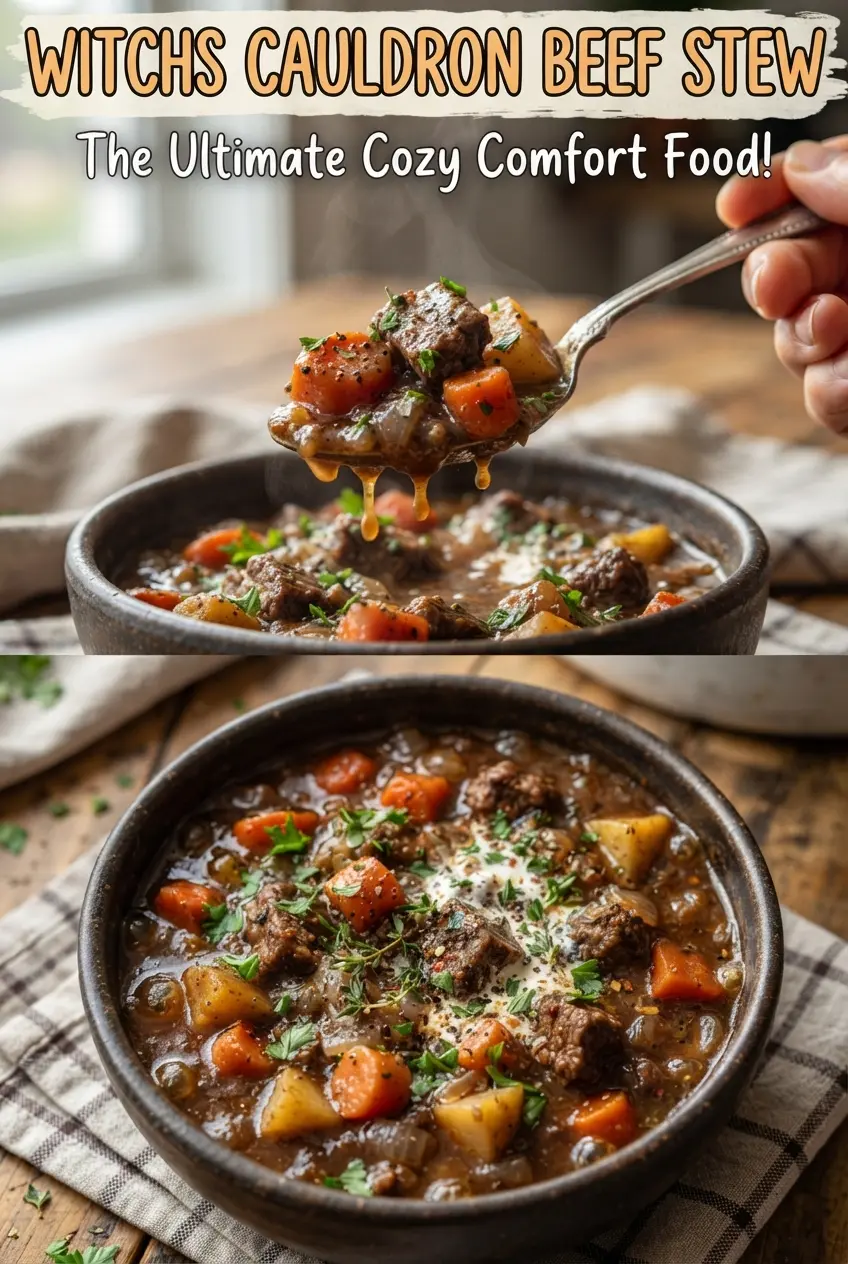
Witchs Cauldron Beef Stew
Ingredients
Equipment
Method
- Season the beef chuck with salt and black pepper, then toss it with the all-purpose flour until evenly coated. Heat the vegetable oil in a Dutch oven over high heat until shimmering, and the beef should look dry-coated and floury before browning.
- Brown the beef in batches in the hot oil, turning to sear on multiple sides. Cook until deep golden-brown with a crust, then transfer to a plate before adding the next batch.
- Reduce heat to medium and add the chopped red onion to the pot, cooking for 5 minutes until softened. The onion should turn translucent around the edges.
- Add the minced garlic and tomato paste and cook for 1 minute, stirring constantly to prevent scorching. The mixture should become fragrant and slightly darker.
- Pour in the stout and scrape the bottom of the pot to release browned bits. Simmer for about 1 minute until you see the liquid darken and loosen the fond.
- Add the beef broth, balsamic vinegar, smoked paprika, and dried thyme, then return the browned beef to the pot. Stir to combine so the seasonings disperse evenly and the stew looks richly colored.
- Cover the Dutch oven and bring to a simmer, then simmer for 2 hours. Keep a steady gentle bubble—small bursts across the surface—so the beef turns very tender.
- Add the cubed purple potatoes and sliced carrot rounds, then simmer for 45 minutes. The potatoes should yield easily with a fork and the stew should thicken slightly.
- Stir in the drained black beans and simmer for 10 minutes. You should see the beans warm through and the stew become cohesive without boiling hard.
- Bake the puff pastry bat shapes at 400F until golden. Look for puffed layers and browned edges for a crisp topper.
- Ladle the stew into bowls and float one puff pastry bat on each serving. The bat should sit on top without sinking, creating a noticeable golden silhouette over the dark stew.