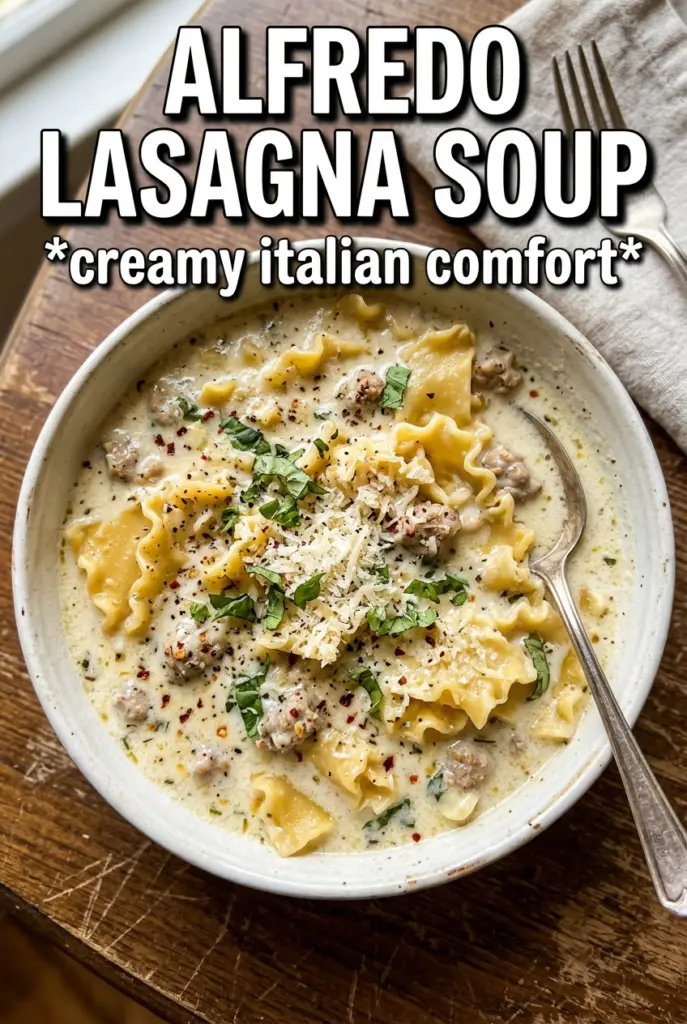
Alfredo lasagna soup gives you all the comfort of a baked lasagna in a bowl, but with a silkier, spoonable sauce that clings to every broken noodle. The broth turns rich and creamy without tasting heavy in a cloying way, and the chicken makes it hearty enough to stand alone as dinner. That ricotta-parmesan dollop on top is the part that pulls the whole bowl together, because it melts into the hot soup in little creamy ribbons.
What makes this version work is the order. The chicken browns first, so the pot picks up flavor before the onions ever go in, and the flour gets cooked briefly before the liquid is added so the broth thickens without tasting pasty. The cheeses go in off the heat at the end, which keeps the Alfredo base smooth instead of grainy. If you’ve had cream soups break on you before, that last step matters more than anything.
Below, I’ve added the small details that keep the noodles tender, the sauce glossy, and the cheese finish stable. I also included a couple of variations for changing the protein or making it lighter without losing the whole point of the dish.
The broth turned out creamy and silky, and the noodles stayed tender without falling apart. I added the parmesan off the heat like you suggested and the soup stayed smooth all the way to the bottom of the bowl.
Save this Alfredo lasagna soup for the nights when you want creamy chicken soup with broken lasagna noodles and that ricotta swirl on top.
The Step That Keeps Alfredo Soup Smooth Instead of Grainy
The biggest mistake in a soup like this is adding cheese to a pot that’s still aggressively bubbling. Parmesan and cream cheese both emulsify best when the heat is low and the base has calmed down a bit. If you dump them into boiling broth, the fat can separate and the texture goes from silky to broken in a hurry.
The other thing that matters here is the flour. It needs just enough time in the butter and onion mixture to lose that raw, dusty taste, but not so much time that it browns hard and turns the soup beige and heavy. A one-minute cook is enough. After that, the broth, cream, and milk build a base that feels rich without becoming gluey.
- Heavy cream — This is what gives the soup its Alfredo body. Half-and-half works in a pinch, but the soup will be thinner and a little less luxurious.
- Freshly grated parmesan — Pre-grated cheese is more likely to clump because of the anti-caking agents. Freshly grated parmesan melts cleaner and tastes sharper, which matters in a white soup.
- Cream cheese — This helps stabilize the sauce and gives it that slightly tangy Alfredo thickness. Soften it first or it’ll sit in little lumps for longer than you want.
- Broken lasagna noodles — They give you the lasagna feel without needing to layer or bake anything. Break them into uneven pieces so every spoonful feels rustic and the noodles catch the sauce differently.
What Each Part of the Pot Is Doing

- Chicken breast — Dicing it small helps it brown faster and stay tender in the simmer. Thigh meat works too if you want a little more richness and don’t mind a softer bite.
- Onion and garlic — They build the savory base under the cream. The onion should soften and turn translucent, not brown hard, or it will fight the pale sauce you’re after.
- Butter and flour — This is the quick roux that thickens the broth. Cook it just long enough to smell nutty; if it gets too dark, the soup loses that clean Alfredo look and taste.
- Ricotta-parmesan dollop — The dollop is not decoration. It melts into the hot soup and gives each bowl a lasagna-like finish, especially if you leave it a little lumpy rather than whisking it completely smooth.
Building the Soup in the Right Order
Brown the Chicken First
Season the diced chicken with salt and pepper, then cook it in butter in a large pot until it gets some color on the edges. You’re not cooking it through here; you’re building flavor and leaving the pot with those browned bits on the bottom. If the pieces crowd too tightly, they’ll steam instead of sear, so use a pot wide enough for the chicken to sit in a single layer as much as possible.
Make the Base Before the Dairy Goes In
Cook the onion in the same pot until it softens, then add the garlic just for a minute. Stir in the flour and let it cook briefly so the soup thickens smoothly instead of tasting like raw paste. Add the broth, cream, and milk gradually while stirring so the roux dissolves evenly and the mixture stays glossy.
Cook the Noodles at a Gentle Simmer
Once the liquid is simmering, add the broken lasagna noodles and keep the heat low enough that the surface barely bubbles. A hard boil will push the noodles around too aggressively and can make the starch go from helpful to thick and starchy in an unpleasant way. Stir often, especially near the bottom of the pot, because lasagna noodles like to stick before they soften.
Finish Off the Heat
Return the chicken to the pot once the noodles are tender, then pull the pot off the burner before adding the parmesan and cream cheese. Stir until the cheese melts into a smooth, pale sauce. Season at the end with white pepper and more salt only if it needs it, because the parmesan brings a lot of salt on its own.
How to Change This Without Losing the Soul of the Dish
Make It with Rotisserie Chicken
Skip the chicken browning step and stir in shredded rotisserie chicken at the same time you return the protein to the pot. You lose a little of the pan-seared flavor, but the soup comes together faster and still tastes rich because the broth, cream, and cheeses carry the base.
Make It Gluten-Free
Use your favorite gluten-free lasagna noodles and a 1:1 gluten-free flour blend for the roux. The noodles may soften a little faster, so start checking them early, and keep the simmer gentle so they don’t break apart before the soup is finished.
Make It Lighter Without Losing Creaminess
Swap the heavy cream for half-and-half and use a little extra broth if the soup gets too thick. It won’t taste as plush, but the parmesan and cream cheese still give you a satisfying creamy finish without feeling as heavy.
Storage and Reheating
- Refrigerator: Keep in an airtight container for up to 4 days. The noodles will keep absorbing liquid, so expect the soup to thicken.
- Freezer: It can be frozen, but the dairy may separate a bit when thawed. For the best texture, freeze before adding the parmesan and cream cheese, then finish those after reheating.
- Reheating: Warm it slowly on the stove over low heat with a splash of broth or milk. Don’t boil it, or the dairy can turn grainy and the noodles can go mushy.
Answers to the Questions Worth Asking
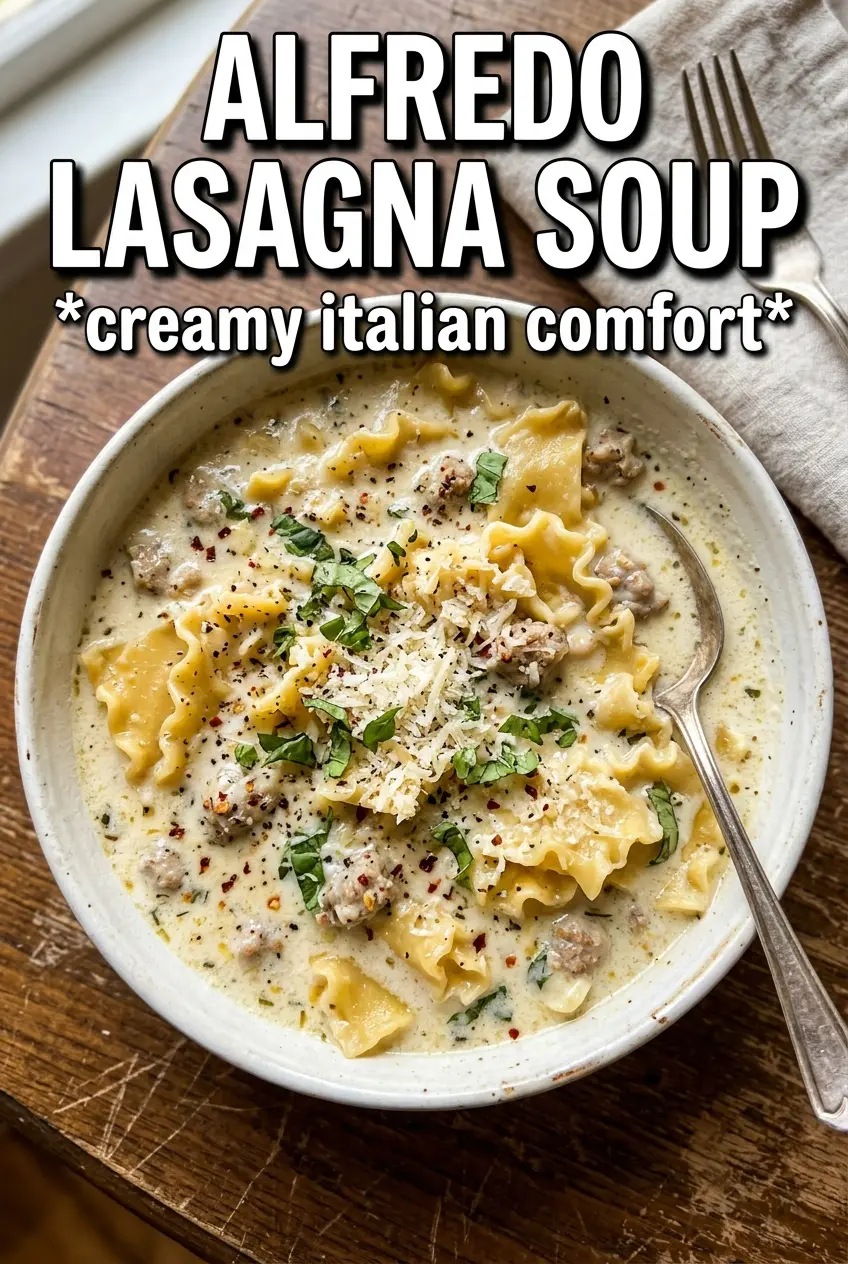
Alfredo Lasagna Soup
Ingredients
Equipment
Method
- Season the diced chicken breast with salt and white pepper, then brown it in the butter in a large pot over medium-high heat for 4-5 minutes until golden. Remove the chicken to a plate.
- Sauté the diced onion in the same pot over medium heat for about 3 minutes until softened.
- Add the minced garlic and cook for 1 minute until fragrant.
- Whisk in the all-purpose flour and cook for 1 minute to remove the raw flour taste.
- Gradually whisk in the chicken broth, then stir in the heavy cream and whole milk until smooth.
- Stir in the garlic powder and nutmeg and continue heating until the mixture is ready to simmer.
- Bring the soup to a simmer over medium heat, then add the broken lasagna noodles so they are mostly submerged.
- Simmer for 10-12 minutes, stirring occasionally, until the noodles are tender and the broth looks creamy.
- Return the browned chicken to the pot and stir until warmed through.
- Remove the pot from the heat, then stir in the parmesan and softened cream cheese until the sauce is smooth and thick.
- Taste and season with more salt and white pepper as needed, then serve hot with a ricotta dollop.
- Mix the ricotta with the additional parmesan and chopped fresh parsley until creamy and spoonable, then dollop on top of each bowl.