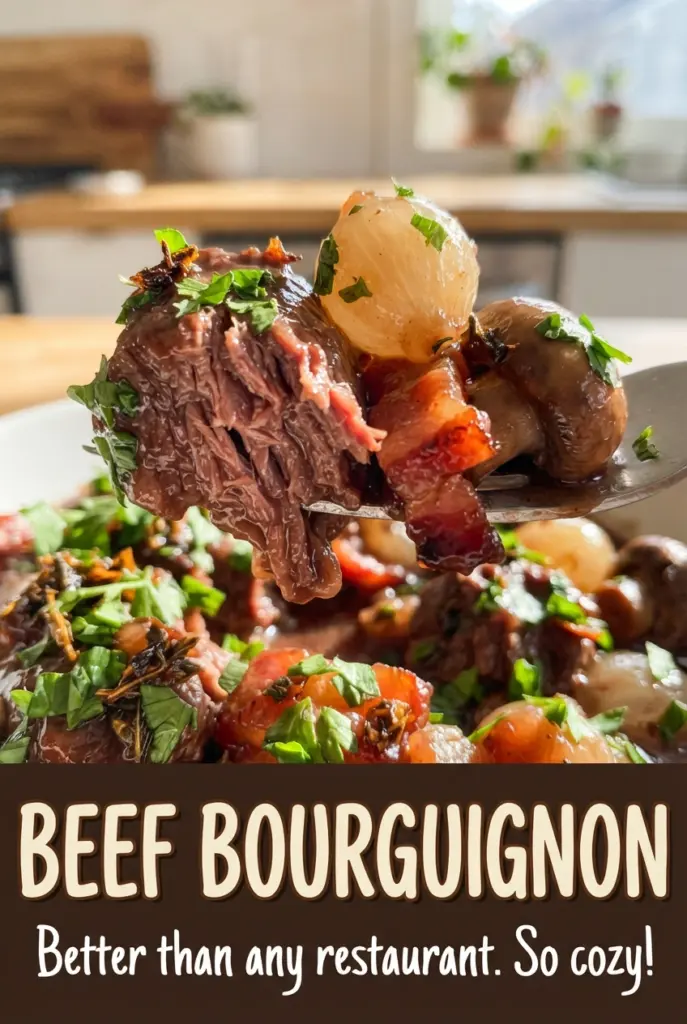
Beef bourguignon earns its place on the table by turning inexpensive beef chuck into something spoon-tender, with a red wine sauce that tastes deep, glossy, and built rather than rushed. The bacon, browned beef, and long oven braise create layers you can’t fake at the end with a splash of wine and a quick stir.
The key is patience with the browning and restraint with the heat. Dry beef sears instead of steams, the flour cooks out before the liquid goes in, and the oven does the slow work so the sauce never boils hard enough to toughen the meat. Browning the mushrooms and pearl onions separately keeps them from collapsing into the stew and gives each bite a little more definition.
Below, I’ve included the parts that matter most: how to build the sauce without a raw flour taste, why the final butter swirl changes the texture, and what to do if you want to make it a day ahead, which is when this dish gets even better.
The sauce turned silky after the final butter swirl, and the beef was fall-apart tender without shredding. I made it the night before and the flavor was even better the next day.
Save this Beef Bourguignon for a slow Sunday braise with red wine, bacon, and tender beef that gets better after a night in the fridge.
The Browning That Keeps the Wine Sauce From Tasting Flat
Beef bourguignon can taste one-note if the meat never gets a real crust. The flavor doesn’t come from the wine alone; it comes from the browned beef, the bacon fat, and the dark bits left in the pot after searing. That fond dissolves into the sauce and gives it the depth people expect from this dish.
The other place this recipe can go sideways is the simmer. If the pot boils hard in the oven, the beef tightens before it has time to relax. A gentle braise is what turns chuck into that soft, spoon-bending texture, and it keeps the sauce glossy instead of harsh.
What Each Ingredient Is Doing in the Pot
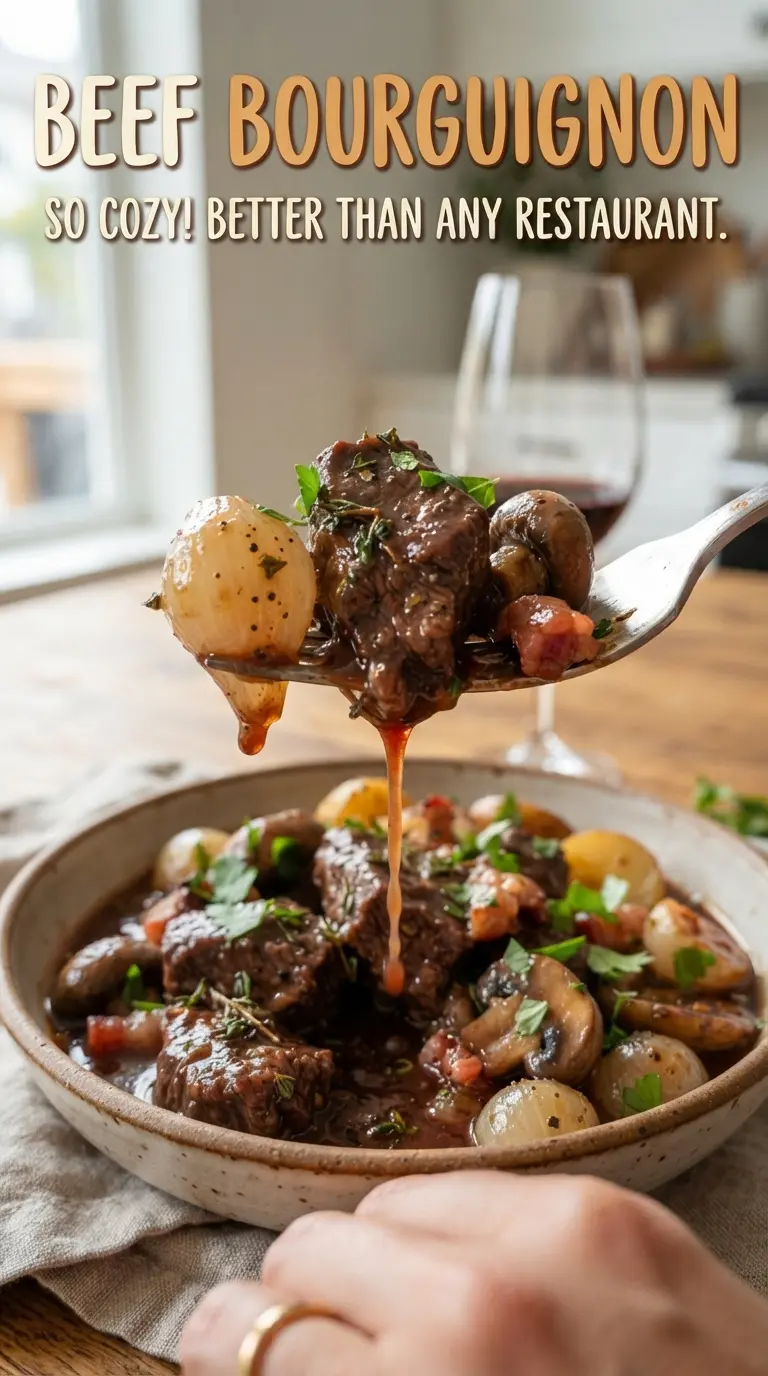
- Beef chuck — This cut has enough connective tissue to turn silky during the long braise. Leaner stew meat tends to dry out before the sauce finishes.
- Dry red wine — Use a bottle you’d actually drink, because it becomes the backbone of the sauce. A Pinot Noir, Côtes du Rhône, or another dry, medium-bodied red works well; avoid anything sweet.
- Bacon — The lardons add smoky salt and render fat for browning the beef. Thick-cut bacon holds its shape better than thin slices, which can disappear into the stew.
- Tomato paste and flour — The tomato paste adds a little sweetness and color, while the flour helps the sauce thicken as it braises. Cook them briefly with the vegetables so the stew doesn’t taste raw or dusty.
- Mushrooms and pearl onions — These are better browned separately, then folded in near the end. That keeps their texture intact and lets them taste like themselves instead of like softened garnish.
- Butter — The final swirl softens the edges of the wine sauce and gives it a smoother finish. It’s a small step, but it changes the mouthfeel immediately.
Building the Braise So the Sauce Stays Rich, Not Muddy
Rendering the Bacon
Start the bacon in olive oil and let it cook until the pieces are browned and some fat has rendered out. You want flavorful drippings, not pale pork. Pull the bacon out before it gets hard, because it goes back into the pot later and will finish tender instead of chewy.
Getting a Deep Sear on the Beef
Pat the beef dry before it hits the pot. If there’s surface moisture, it steams and the crust never forms. Sear in batches so the meat has room to brown; if the pieces crowd together, they’ll dump liquid and the bottom of the pot will stay gray.
Cooking Out the Flour and Tomato Paste
Once the onion, carrots, and garlic soften, stir in the flour and tomato paste and cook them for about two minutes. The mixture should look thick and slightly brick-colored. That short cooking time gets rid of the raw flour taste and deepens the base before the wine goes in.
Letting the Oven Do the Work
After the wine and broth go in, scrape up every browned bit from the pot, then cover and braise at 325°F. The liquid should stay at a gentle simmer, not a rolling boil. After about three hours, the beef should give easily when pressed with a spoon and the sauce should look darker and more cohesive.
Finishing With the Mushrooms and Butter
Brown the pearl onions and mushrooms in butter in a separate skillet so they pick up color instead of steaming in the stew. Add them near the end, just long enough to absorb some of the sauce without losing their shape. Finish with the remaining butter off the heat and parsley on top so the sauce turns glossy instead of heavy.
How to Adapt This for a Bigger Crowd, a Lighter Pot, or a Different Pantry
Make It Ahead for Better Flavor
This stew tastes even better after a night in the fridge. Chill it with the lid slightly ajar until cooled, then refrigerate overnight so the fat rises and the flavors settle. Reheat gently before serving, and add a splash of broth if the sauce has tightened up too much.
Gluten-Free Version
Use a gluten-free all-purpose flour blend in place of the regular flour, or skip the flour and reduce the braising liquid a little more at the end. The texture will be a touch looser without flour, but the wine and butter still give the sauce enough body.
Bacon-Free Version
If you need to skip the bacon, start the beef in a little more olive oil and add a pinch of smoked paprika to the onions. You’ll lose some of the smoky depth, but the long braise still carries the dish.
Using a Different Cut of Beef
Beef short ribs work beautifully if you want a richer, silkier result, though they’re fattier and a little more expensive. Avoid very lean cuts like round roast; they dry out before the sauce gets where it needs to be.
Storage and Reheating
- Refrigerator: Store covered for up to 4 days. The sauce will thicken and the flavor will deepen as it sits.
- Freezer: It freezes well for up to 3 months. Cool completely first, then portion into airtight containers; mushrooms soften a little after freezing, but the stew still holds up well.
- Reheating: Warm it slowly over low heat on the stove or in a 300°F oven, covered. High heat can tighten the beef and make the sauce split, so keep the reheating gentle and add a splash of broth if needed.
Answers to the Questions Worth Asking
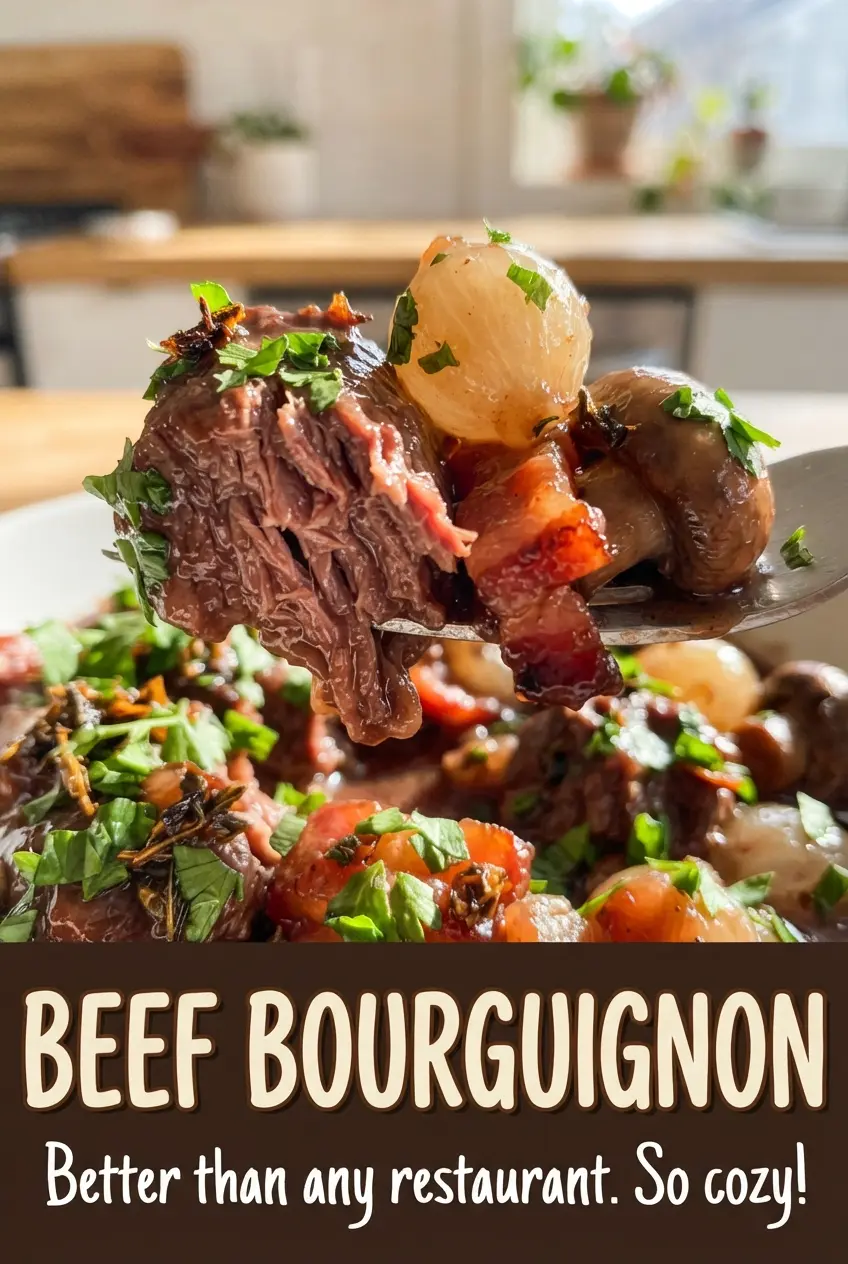
Beef Bourguignon
Ingredients
Equipment
Method
- Preheat the oven to 325F, then brown the bacon in olive oil in a Dutch oven and set it aside.
- Pat the beef dry, season with salt and black pepper, then sear in batches in the bacon fat until deeply browned.
- Cook the onion and carrots for 5 minutes, then add the garlic, flour, and tomato paste and cook for 2 minutes.
- Add the wine, beef broth, thyme, bay leaves, beef, and bacon; bring the mixture to a simmer, cover, and braise in the oven for 3 hours.
- In a cast iron skillet, brown the pearl onions and mushrooms in butter.
- Add the browned pearl onions and mushrooms to the stew for the last 20 minutes of braising.
- Remove the herbs and bay leaves, swirl in the remaining butter, and top with chopped parsley before serving.