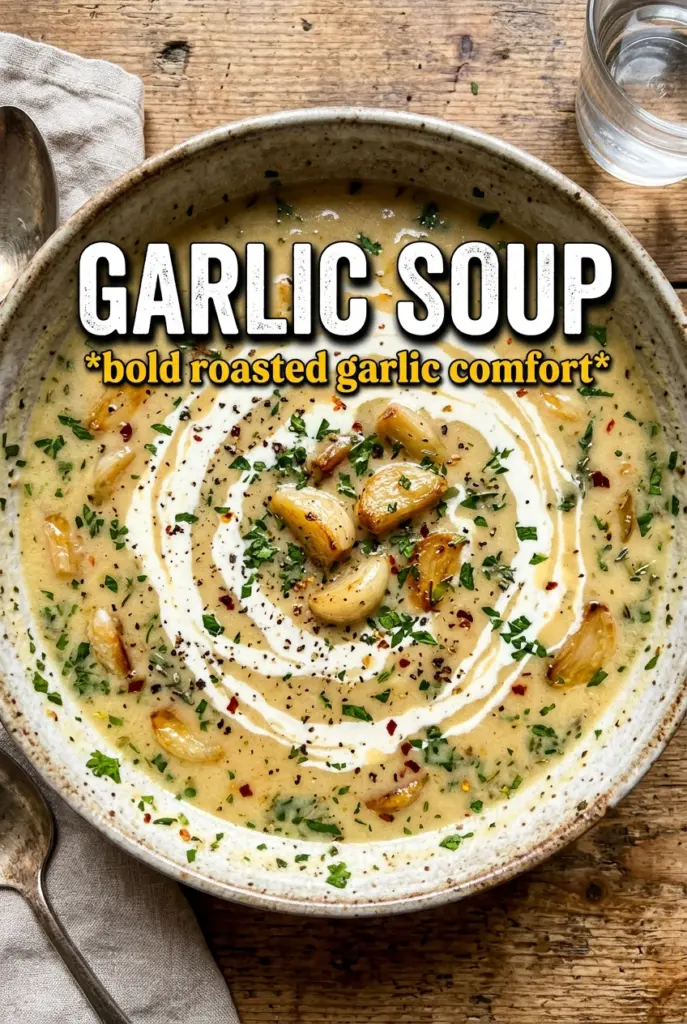
Silky garlic soup has a way of tasting far more luxurious than the ingredient list suggests. The garlic turns mellow and sweet as it cooks low and slow in olive oil, then the broth picks up that deep, roasted flavor without ever turning sharp or harsh. With a poached egg tucked into the bowl and crusty toast on the side, it lands somewhere between comforting supper and restaurant-style starter.
The trick is patience at the beginning. Garlic needs gentle heat so it softens and sweetens instead of browning and going bitter. Smoked paprika and a little cayenne add warmth without taking over, and blending only part of the soup keeps the texture velvety while still leaving a few tender cloves for contrast. A final poached egg makes the broth richer as the yolk breaks into it.
Below, I’ll walk through the part that matters most: how to cook the garlic until it’s silky, not toasted, plus a few practical swaps and storage notes in case you want to make this with what you already have.
The garlic softened into this sweet, almost buttery base, and the poached egg made the broth taste richer than I expected. I loved that the soup wasn’t bland at all, and the croutons stayed crisp just long enough to soak up the broth.
Save this garlic soup for the nights when you want a silky broth, sweet mellow garlic, and a poached egg in every bowl.
The Part That Keeps Garlic Soup Sweet Instead of Bitter
Garlic soup can go wrong fast if the cloves brown before they’ve had time to soften. Once garlic crosses into deep golden or dark brown territory, the flavor turns sharp and the whole pot can taste harsh no matter how good the broth is. The fix is simple, but it matters: keep the heat at medium-low and give the garlic the full 12 to 15 minutes it needs to turn tender and pale gold.
That gentle first cook also changes the texture of the finished soup. Soft garlic blends into a smooth, almost buttery base, while a few left whole give the bowl some body and keep it from tasting one-note. The toasted bread and poached egg do more than garnish here; they turn a light soup into an actual meal.
What Each Ingredient Is Actually Doing in the Bowl

- Garlic — Two full heads might sound like a lot, but this is the backbone of the soup. Once it softens in olive oil, it turns sweet and mellow instead of aggressive. Peel it completely so it cooks evenly; any papery bits left on will stay unpleasantly chewy.
- Olive oil — This gives the garlic a gentle start and carries the herbal and smoky notes through the broth. A decent everyday olive oil is fine here because it’s being used for cooking, not finishing.
- Chicken or vegetable broth — Use the best broth you have, because there isn’t much else masking it. Chicken broth gives a rounder, richer result, while vegetable broth keeps the dish lighter and vegetarian.
- Crusty bread — Toasted bread is what gives the soup contrast. It should be sturdy enough to sit in the bowl without dissolving immediately; soft sandwich bread won’t hold up the same way.
- Eggs — Poaching the eggs directly in the simmering soup makes the yolk part of the broth. If you’d rather not poach in the pot, soft-boil them separately and add them at the end.
- Smoked paprika and cayenne — These don’t make the soup spicy-hot; they add warmth and depth. Smoked paprika especially works like a bridge between the garlic and broth, while the cayenne should stay in the background.
Building the Soup So the Texture Stays Velvety
Softening the Garlic Gently
Warm the olive oil over medium-low heat, then add the peeled garlic cloves and cook them slowly for 12 to 15 minutes. You’re looking for soft, glossy cloves that have turned lightly golden, not browned edges or dark spots. If the pan starts hissing hard or the garlic color deepens too fast, lower the heat right away. This stage is where the sweetness develops, and rushing it is the easiest way to end up with a bitter pot.
Waking Up the Spices
Stir in the smoked paprika and cayenne and cook them for about a minute. The oil should smell fragrant and smoky, not scorched. This brief step blooms the spices so they taste integrated instead of dusty. If they sit in the pan too long, especially over high heat, the paprika can turn harsh, so move on as soon as the aroma lifts.
Simmering and Blending
Add the broth and water, bring everything to a boil, then drop it to a simmer for about 15 minutes. That extra simmer time gives the garlic enough room to fully soften and lets the broth pick up the flavor of the oil, herbs, and spices. Blend most of the soup with an immersion blender, but leave a few cloves whole for texture. If you puree it completely, the soup can feel flat instead of layered.
Finishing With the Egg
Season with salt, pepper, and thyme, then poach the eggs right in the soup for 3 to 4 minutes. The broth should be at a gentle simmer, not a rolling boil, or the egg whites will shred before they set. Serve each bowl with toasted bread, an egg in the center, and parsley over the top. The yolk should still be soft enough to run into the broth when you break into it.
How to Adapt This Garlic Soup Without Losing What Makes It Good
Make It Vegetarian
Use vegetable broth instead of chicken broth. You’ll lose a little roundness, so choose a broth with real body rather than a watery one, and don’t be shy with the thyme and black pepper.
Skip the Egg for a Lighter Bowl
Leave the egg out and finish each bowl with an extra drizzle of olive oil instead. The soup will still feel complete, especially if you keep the bread on the side for dipping, but it will eat more like a starter than a full main dish.
Turn Up the Heat
Increase the cayenne to 1/2 teaspoon if you want a stronger kick. That gives the soup a warm finish without changing the silky texture, but keep the smoked paprika the same so the heat doesn’t drown out the garlic.
Storage and Reheating
- Refrigerator: Store the soup without the bread and egg for up to 3 days. The garlic flavor deepens overnight, and the texture stays smooth.
- Freezer: The base freezes well for up to 2 months. Freeze it before adding the egg, then thaw in the fridge overnight and poach fresh eggs when you reheat.
- Reheating: Warm it slowly over low heat until steaming, not boiling. A hard boil can make the texture taste dull and can overcook any egg you’ve added fresh.
Answers to the Questions Worth Asking
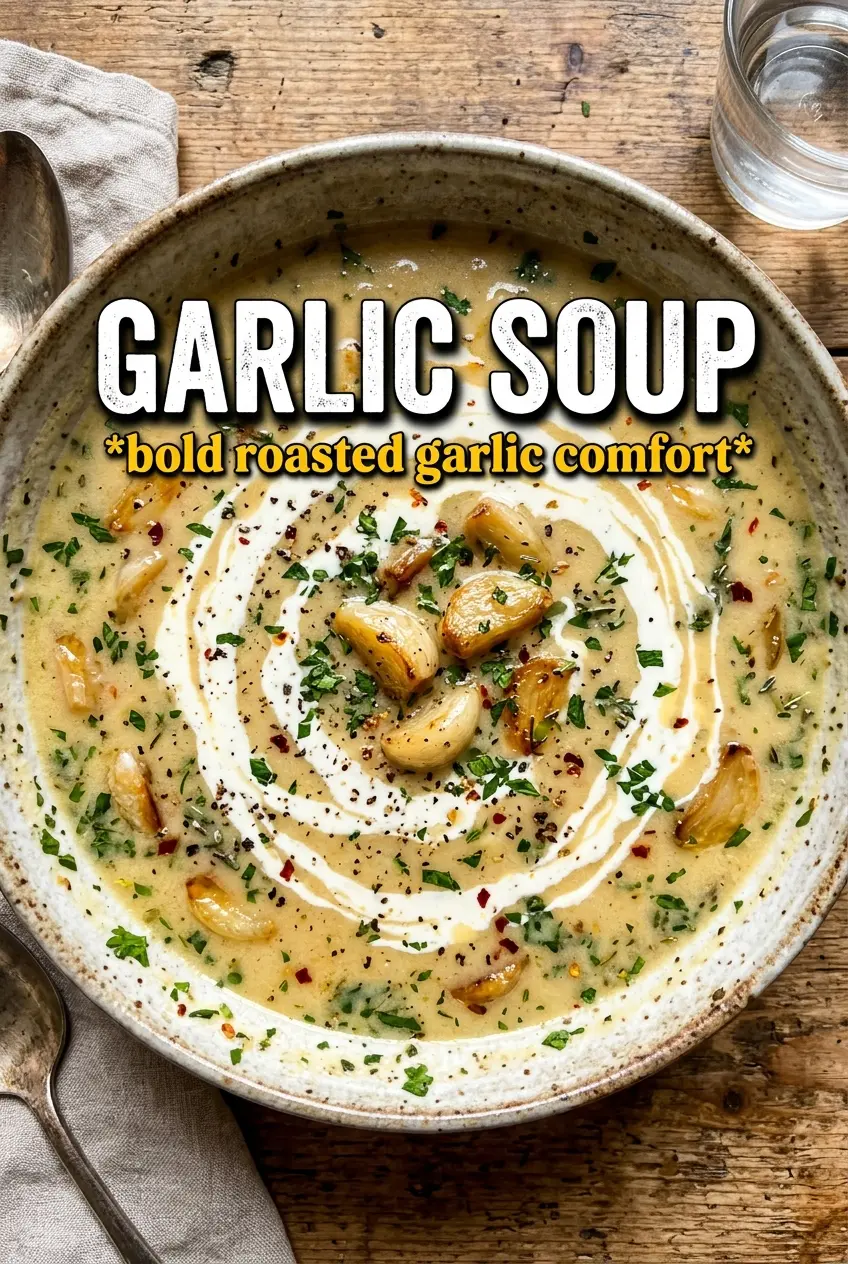
Garlic Soup
Ingredients
Equipment
Method
- Heat the olive oil in a large saucepan, then gently cook the garlic cloves over medium-low heat for 12-15 minutes, until soft and golden but not brown. You should see the garlic turning translucent and fragrant without darkening.
- Add the smoked paprika and cayenne, and cook for 1 minute. Stir until the spices look slightly toasted and very aromatic.
- Add the broth and water, bring to a boil, then simmer for 15 minutes. The soup should bubble gently across the surface.
- Use an immersion blender to blend most of the garlic smooth, leaving a few cloves whole. Stop when the broth looks silky but still has visible garlic pieces.
- Season the soup with salt, pepper, and the fresh thyme leaves. Taste and adjust so the flavor is balanced and clearly seasoned.
- Poach the eggs directly in the simmering soup for 3-4 minutes. The whites should be set while the yolks remain soft.
- Serve the soup with toasted bread, a poached egg in the center, and fresh parsley. Garnish right before eating so the bread stays crisp.