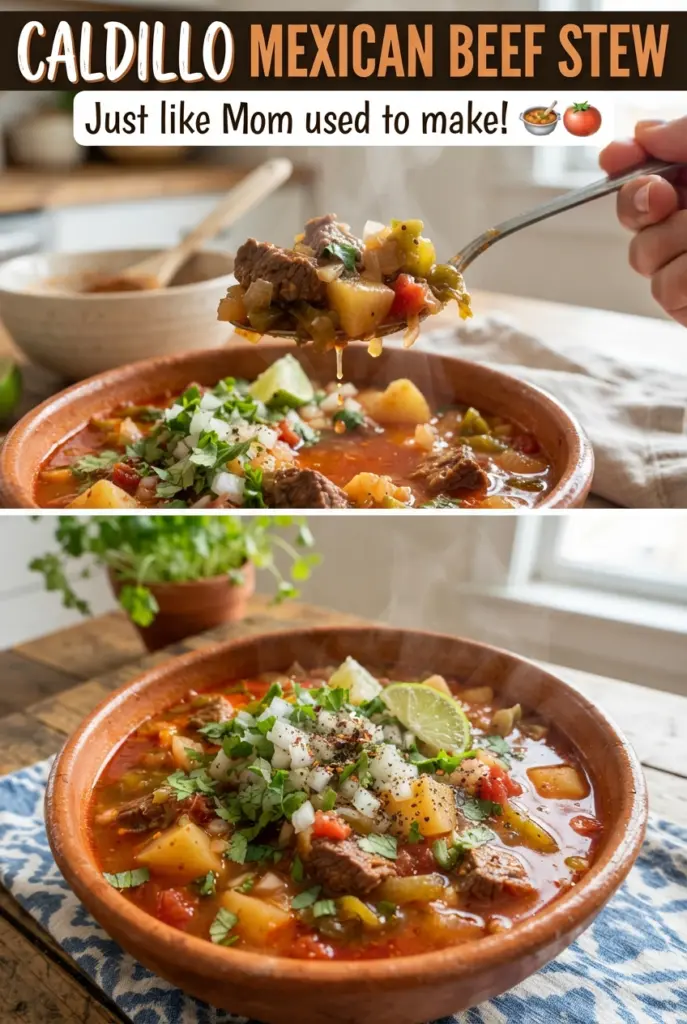
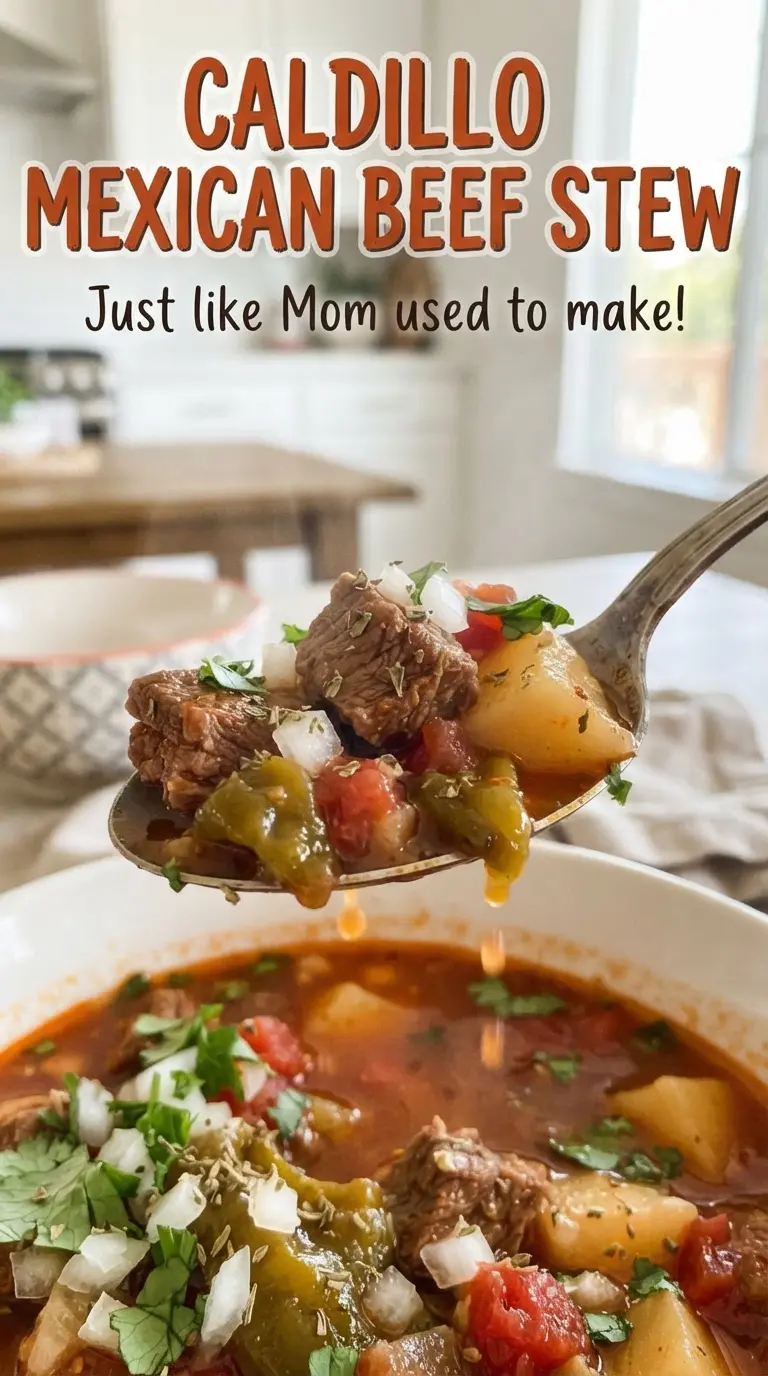
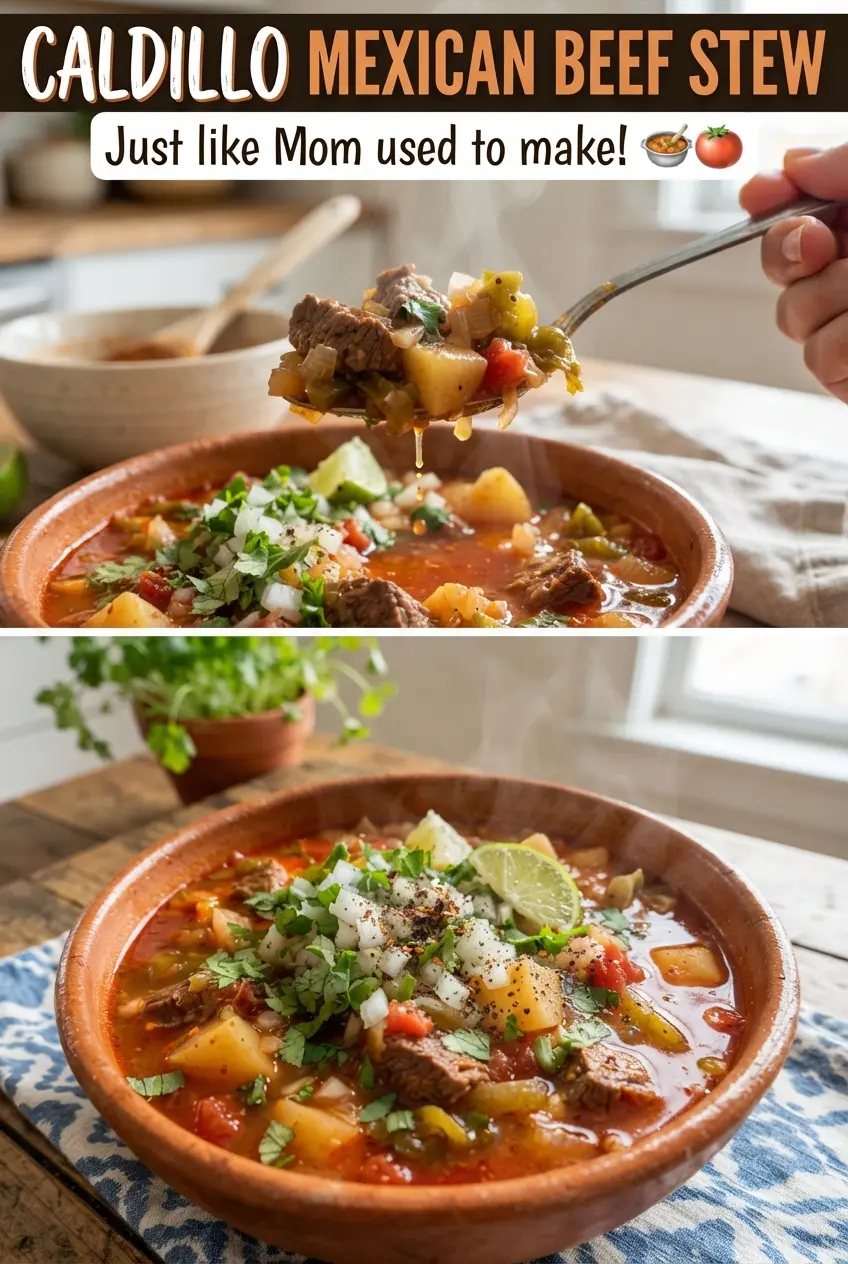
Brothy, beefy caldillo settles into the bowl with tender cubes of chuck, soft potatoes, and the gentle heat of roasted green chiles. The broth stays light enough to sip, but it carries enough body from the browned beef and tomatoes to feel satisfying with every spoonful. It’s the kind of stew that tastes even better after the first bite, when the chile flavor starts to bloom and the lime at the table sharpens everything up.
What makes this version work is the layering. The beef gets a hard sear first, which builds the savory base you need for a broth that doesn’t taste flat. Then the onion, garlic, chiles, tomato, cumin, and oregano cook long enough to lose their raw edge before the broth goes in. That small pause matters. It keeps the stew tasting rounded instead of muddy, and it lets the roasted chile flavor stay front and center.
Below, you’ll find the timing that keeps the beef tender without turning the potatoes to mush, plus a few smart swaps if Hatch chiles aren’t in the kitchen.
The beef got perfectly tender and the potatoes held their shape, which is rare in stews like this. I loved how the roasted green chiles stayed bright instead of disappearing into the broth.
Save this Caldillo Mexican Beef Stew for the nights when you want tender beef, roasted green chiles, and a light tomato broth with warm tortillas on the side.
The Step That Keeps Caldillo Brothy Instead of Bland
Caldillo can go flat fast if the beef never gets a real sear. Those browned bits on the pan are what give the broth its depth, especially because this stew stays lighter than a thick chili. If you crowd the pot, the meat steams and the broth ends up tasting thin even after two hours.
The other point that matters is the short cook on the chile-tomato mixture before the broth goes in. Roasted green chiles already bring smoky sweetness, but they need a minute with the onion, garlic, cumin, and oregano to stop tasting sharp. That quick cook rounds everything out and keeps the broth from tasting like plain stock with vegetables floating in it.
- Beef chuck — Chuck is the right cut here because it turns tender during a long simmer without shredding into nothing. Stew meat can work, but chuck usually has better marbling and gives you a richer broth.
- Roasted Hatch or Anaheim green chiles — These are the backbone of the dish. Hatch chiles bring more depth and heat; Anaheim is milder and still gives the stew its signature flavor. Use what you can find, but roast and peel them first so the broth stays clean and not grassy.
- Roma tomatoes — Roma tomatoes add just enough acidity and body without turning the broth heavy. If your tomatoes are pale, the stew will taste flatter, so let them cook with the spices before adding liquid.
- Potatoes — Waxy potatoes hold their shape best. Russets will break down more and thicken the broth, which isn’t wrong, but it changes the texture a lot.
What Each Ingredient Is Actually Doing in This Recipe
- Primary ingredient (the star) — Quality matters most. Choose the best you can find.
- Cooking medium (oil, butter, or broth) — This carries flavors and prevents dryness.
- Seasonings (salt, pepper, spices, herbs) — Layer flavors so nothing overpowers. Build depth gradually.
- Aromatics (garlic, onion, herbs) — Cook with fat to bloom flavors. Become the foundation.
- Supporting ingredients — Complement the main ingredient without overpowering it.
- Sauce or liquid (if applicable) — Brings flavors together. Balance richness with acid.
- Acid (lemon, vinegar, wine, or other) — Brightens and prevents flat-tasting results.
- Final finish (garnish, glaze, or sauce) — Prevents one-dimensional taste and adds visual appeal.
What to Do So the Beef Turns Tender Before the Potatoes Fall Apart
Building the Browning
Season the beef well, then brown it in batches in hot oil. You want a deep crust, not just a gray exterior, and that only happens when the pan isn’t crowded. If the meat starts releasing a lot of liquid, the heat is too low or the pan is too full. Pull each batch out as soon as it’s browned on the outside; it will finish cooking later in the broth.
Softening the Base
Cook the onion until it turns translucent and starts to sweeten, then add the garlic for just a minute. Garlic burns fast, and once it does, the whole pot tastes bitter. Stir in the green chiles, tomatoes, cumin, and oregano and let them cook for about three minutes until the tomatoes break down and the spices smell warm instead of raw.
The Long Simmer
Pour in the broth, return the beef, cover, and let it simmer gently for about 1 1/2 hours. Keep the heat low enough that you only see a few lazy bubbles breaking at the surface. A hard boil tightens the beef and clouds the broth, which is the opposite of what you want here.
Adding the Potatoes at the Right Time
Stir in the potatoes once the beef is nearly tender, then simmer until they’re cooked through and the tip of a knife slides in without resistance. This timing keeps them from collapsing into the stew. If your potatoes are cut small, check early; if they’re large or very waxy, they may need the full 30 minutes.
How to Adjust Caldillo Without Losing Its Identity
Use pork shoulder for a richer, softer stew
Pork shoulder can stand in for the beef if you want a slightly sweeter, silkier stew. It becomes spoon-tender in the same simmering time, but the broth will taste a little rounder and less beef-forward. Keep the browning step the same.
Make it dairy-free and gluten-free without changing the method
This stew already fits both of those needs as written, as long as your broth is gluten-free. The broth stays naturally thick enough from the potatoes and simmered vegetables, so you don’t need flour, cream, or any other thickeners.
Use Yukon Gold potatoes for a creamier finish
Yukon Golds soften into a more velvety texture than russets or red potatoes. They still hold enough shape for a stew, but they release a little starch, which gives the broth a fuller body.
Add carrots if you want a sweeter pot
A couple of sliced carrots can go in with the potatoes. They add sweetness and color, but they also push the stew a little farther from the clean chile-and-beef balance, so use them when you want a softer, sweeter bowl.
Storage and Reheating
- Refrigerator: Keeps well for 4 days. The flavor deepens overnight, and the broth may thicken a bit as the potatoes rest in it.
- Freezer: Freezes well for up to 3 months, though the potatoes soften more after thawing. For the best texture, freeze in portions and thaw overnight in the refrigerator.
- Reheating: Rewarm gently on the stove over low heat until hot. A hard boil can break up the potatoes and make the beef dry at the edges, so go slow and add a splash of broth if the stew has tightened up.
Questions I Get Asked About This Recipe
Caldillo Mexican Beef Stew
Ingredients
Equipment
Method
- Season the beef chuck cubes with salt and black pepper. Brown the beef in batches in hot vegetable oil in a Dutch oven, using high heat until well-browned on multiple sides, about 3 to 5 minutes per batch, until the meat releases easily from the pot (visual cue: deep brown crust).
- Once all beef is browned, keep it in the Dutch oven and reduce the heat slightly to build the base. Ensure any browned bits remain in the pot to deglaze later with the broth.
- Add the diced onion to the Dutch oven and cook for 4 minutes. Stir often at a steady simmer so it softens (visual cue: translucent edges).
- Add the minced garlic and cook for 1 minute. Stir continuously just until fragrant (visual cue: aromatic, not browned).
- Add roasted Hatch or Anaheim green chiles, diced Roma tomatoes, ground cumin, and dried Mexican oregano, and cook for 3 minutes. Stir frequently so the tomatoes start to break down (visual cue: sauce looks slightly thicker and glossy).
- Pour in the beef broth and add the browned beef. Cover the Dutch oven and simmer at a gentle, steady bubble for 1 1/2 hours (visual cue: beef is fork-tender around the edges).
- Add the cubed potatoes and simmer for 25 to 30 minutes until tender. Keep the lid on partway and stir occasionally (visual cue: potato cubes break or mash easily).
- Turn off the heat and top the stew with chopped fresh cilantro. Let it sit for 2 to 3 minutes so the cilantro brightens, then serve immediately (visual cue: fresh green on the surface).
- Serve the caldillo with lime wedges and warm tortillas on the side. Squeeze lime over each bowl at the table (visual cue: broth looks brighter after squeezing).