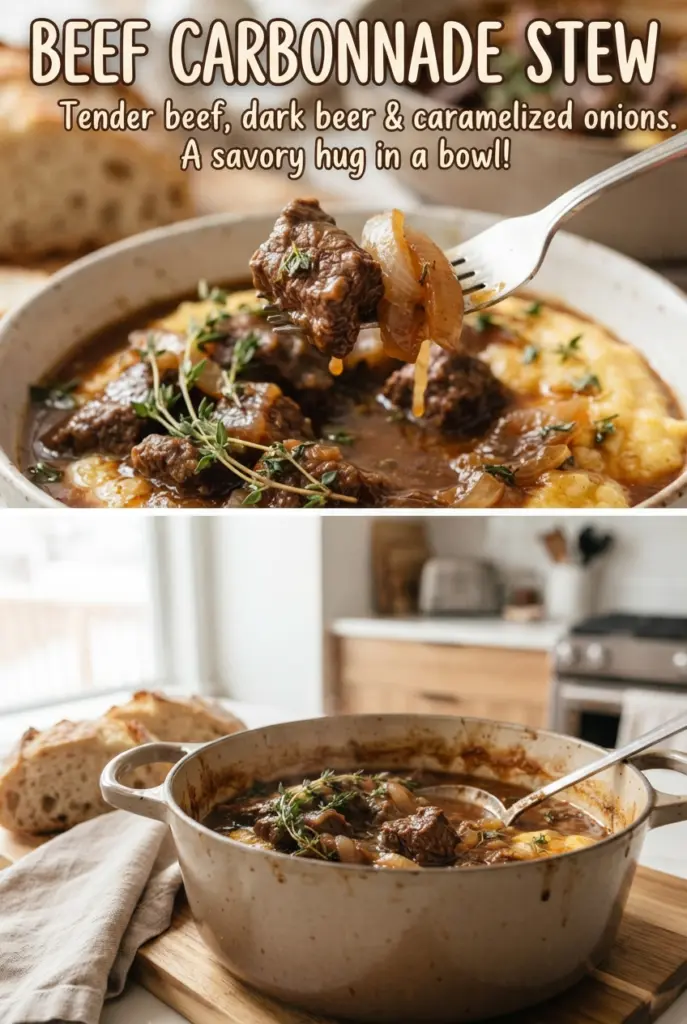
Beef carbonnade stew lands in that perfect place between cozy and deeply savory, with beef that turns fork-tender in a dark beer gravy that tastes like it took all day because, honestly, it did. The onions melt into the sauce instead of sitting in it as separate pieces, and the mustard-topped bread thickens everything into a glossy, spoon-coating stew that clings to the meat.
The key is patience with the onions and a gentle oven braise. If you rush the onions, the stew tastes flat. If you skip scraping the pot after the beer goes in, you leave behind the browned bits that give the sauce its backbone. Belgian brown ale brings malty depth without harsh bitterness, and the little hit of apple cider vinegar keeps the whole pot from tasting heavy.
Below, you’ll find the small timing details that keep the sauce from getting muddy, plus a few smart swaps for when you don’t have Belgian ale on hand. This is the kind of stew that gets even better after a night in the fridge.
The beef came out falling-apart tender and the sauce got thick and shiny from the bread exactly like you said. I served it with fries and my husband kept dunking the bread into the onions.
Save this Belgian beer-braised Beef Carbonnade Stew for the kind of dinner where the onions turn sweet, the gravy turns glossy, and the beef braises until it barely needs a knife.
The Part That Keeps Carbonnade Rich Instead of Flat
Carbonnade looks simple, but the flavor comes from layering a few things that each matter. The beef needs a hard sear in batches so the pot builds brown fond instead of steaming the meat. The onions need enough time to go all the way to deep gold, because undercooked onions taste sharp and leave the stew one-note.
The other detail that makes this dish different is the mustard bread on top. It sounds odd until you see what it does: the bread breaks down as the stew bakes, thickening the liquid without turning it pasty, while the Dijon adds a little bite that keeps the beer gravy from tasting sweet. The result is fuller and smoother than a flour-heavy stew base.
What Each Ingredient Is Actually Doing In This Stew
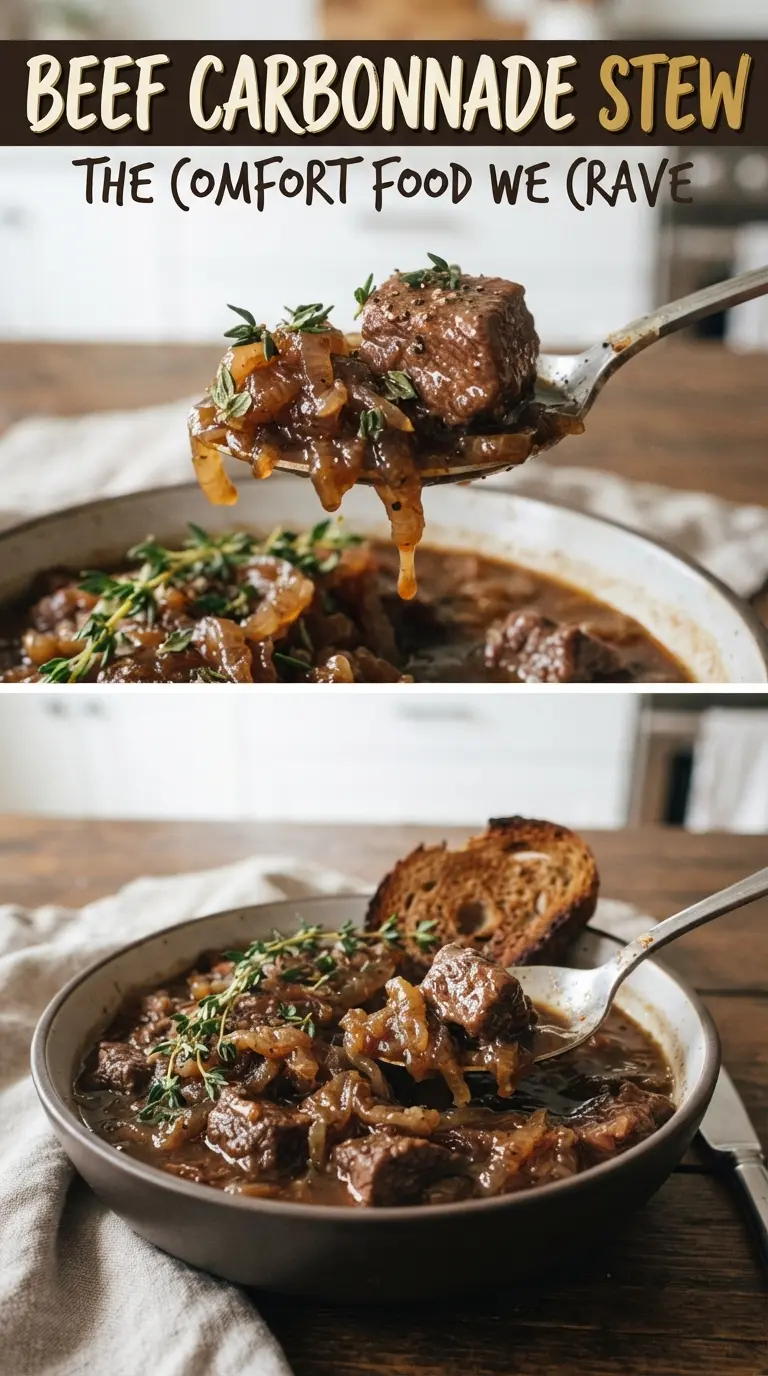
- Beef chuck — This cut has the connective tissue that turns silky during a long braise. Leaner beef gets stringy before it gets tender, so chuck is the right choice here.
- Belgian brown ale — This is the backbone of the sauce. Use a malty beer with some body, not a bitter hop bomb, or the stew can turn sharp and muddy.
- Onions — They’re not a background vegetable here; they become part of the gravy. Slice them thin and cook them until they collapse and turn deep gold, because that sweetness is what balances the ale.
- Dijon mustard on rustic bread — This is the thickener and the acid all in one. The bread melts into the sauce, and the mustard keeps the finished stew from tasting dull.
- Apple cider vinegar — A small amount wakes up the whole pot. Don’t skip it unless your beer is already very sharp, and even then keep some acid in the dish.
Building the Braise So the Sauce Turns Glossy, Not Watery
Searing the Beef in Batches
Heat the butter until it foams, then add the beef in a single layer with space around the pieces. If the pot looks crowded, stop and do another batch; crowding drops the temperature and you lose the browned crust that gives the stew depth. Let each piece sit until it releases naturally and the bottom is a deep brown. That crust is flavor, and it should stay on the meat and in the pot.
Cooking the Onions Until They Collapse
After the beef comes out, add the remaining butter and the onions, then give them time. They should go from pale and stiff to soft, jammy, and golden brown, with the edges picking up color from the pot. Stir in the brown sugar and flour only once the onions are ready, because flour added too early can taste raw and brown sugar added too soon can burn before the onions soften.
Letting the Oven Finish the Work
Pour in the ale, broth, and vinegar while scraping every browned bit from the bottom. Once the bread goes on top, cover the pot and move it to the oven; low, steady heat is what turns chuck tender without drying it out. Stir once during the braise, after the bread has mostly dissolved, so the thickener distributes evenly. If the stew looks loose at the end, give it a few uncovered minutes on the stovetop, but don’t boil it hard or the meat will tighten up.
How to Adapt This for Different Pans, Beers, or Diet Needs
Make It Alcohol-Free Without Losing the Deep Brown Sauce
Use extra beef broth plus 1 to 2 teaspoons of balsamic vinegar or a splash more cider vinegar for brightness. You’ll lose some of the malty bitterness that beer adds, but the onions and long braise still build a rich, savory stew.
Use a Different Beer the Smart Way
A brown ale is ideal, but amber ale or even a mild porter will work. Stay away from aggressively hopped beers, because bitterness gets louder as the stew reduces and can overpower the onions.
Make It Gluten-Free
Swap the flour for a gluten-free all-purpose blend and use certified gluten-free bread, or thicken at the end with a cornstarch slurry instead of the bread. The texture changes a little, but you can still get a rich, spoonable sauce.
Storage and Reheating
- Refrigerator: Keeps well for 4 days. The sauce thickens as it chills, and the flavor gets deeper overnight.
- Freezer: Freezes well for up to 3 months. Cool it completely, portion it into airtight containers, and leave a little headspace for expansion.
- Reheating: Reheat gently on the stovetop over low heat with a splash of broth or water. Don’t boil it hard, or the beef can tighten and the sauce can turn grainy from being reduced twice.
Answers to the Questions Worth Asking
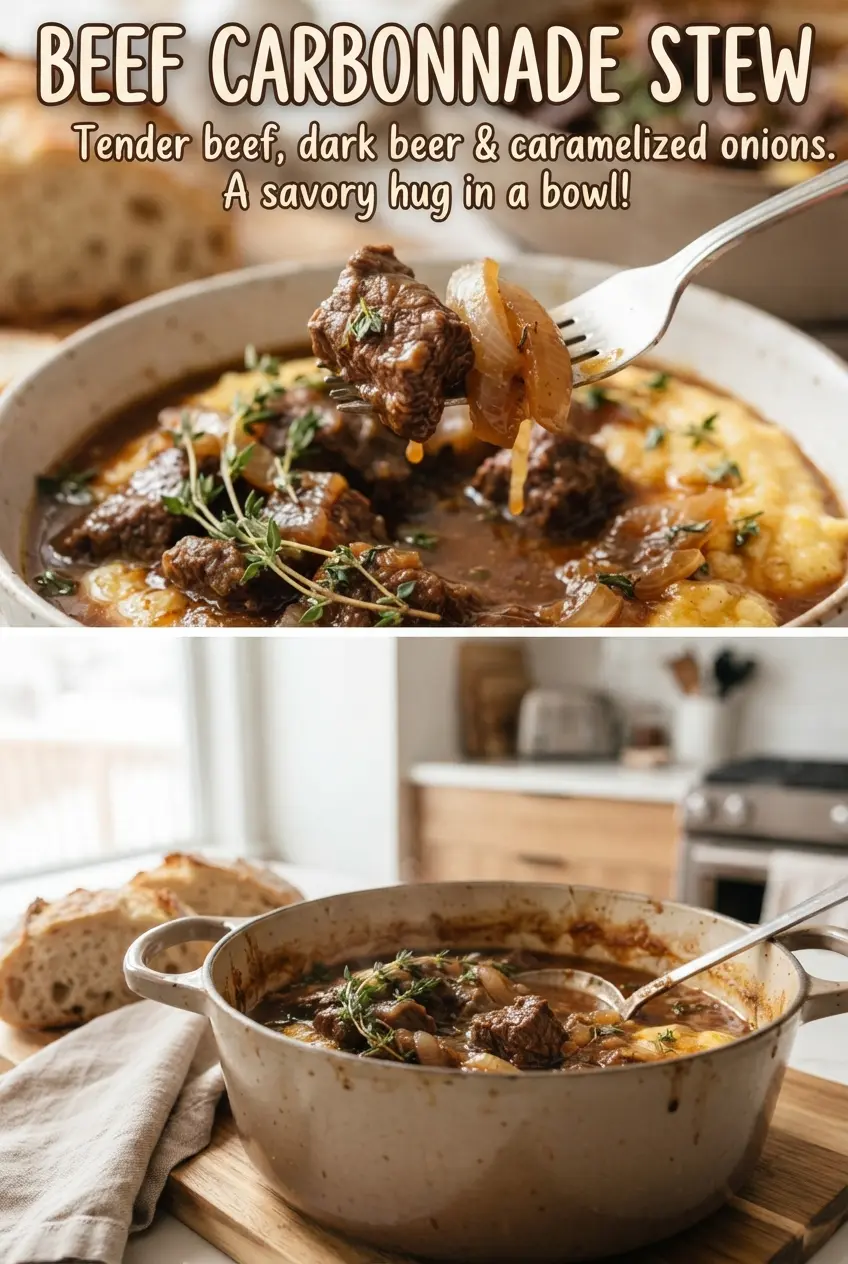
Beef Carbonnade Stew
Ingredients
Equipment
Method
- Preheat the oven to 325F. Season the beef chuck with salt and black pepper.
- In a Dutch oven, melt 2 tablespoons butter and brown the beef in batches. Cook until browned on the outside, then transfer to a plate and repeat as needed.
- Add the remaining 1 tablespoon butter to the Dutch oven and stir in the sliced onions. Cook for 20 minutes until deep golden.
- Stir in the brown sugar and all-purpose flour. Cook for 1 minute until the flour looks slightly toasted.
- Pour in the Belgian brown ale, beef broth, and apple cider vinegar, scraping the browned bits from the bottom. Bring the liquid to a gentle simmer.
- Add the fresh thyme and bay leaves to the pot, then return the browned beef. Make sure the beef is submerged as much as possible.
- Lay the mustard-spread rustic bread on top, mustard side down. Press it lightly so it contacts the braising liquid.
- Cover and bake at 325F for 2 1/2 hours, stirring once when the bread dissolves. Bake until the beef is very tender with a dark, glossy sauce.
- Remove the fresh thyme sprigs and bay leaves before serving. Serve the stew with fries or mashed potatoes.