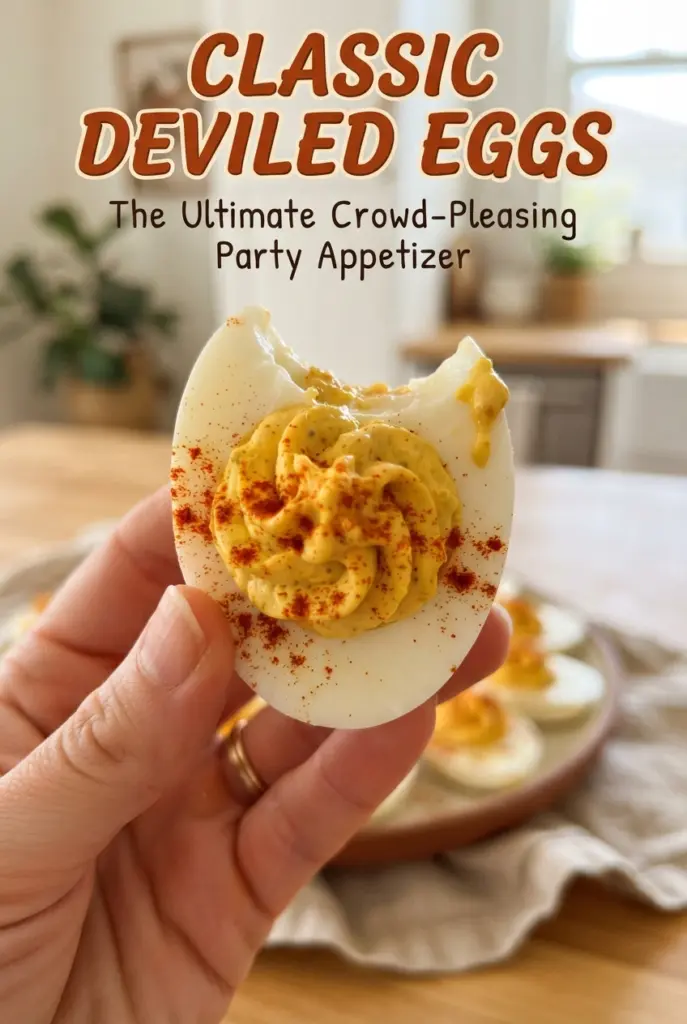
Classic deviled eggs disappear fast because the filling stays smooth, the tang lands right away, and the whites hold a clean, tidy shape under every bite. The best ones taste balanced instead of heavy: creamy enough to mound neatly, sharp enough to keep you reaching for another half, and seasoned just enough that the paprika and chives feel earned instead of decorative.
The trick is in the yolk texture and the ratio of acid to fat. Mash the yolks until they’re fine before anything else goes in, then add the mayonnaise and Dijon gradually so the filling turns silky instead of pasty. A short ice bath stops the eggs from overcooking, which keeps the yolks from turning chalky and helps the whites peel more cleanly.
Below, you’ll find the small details that make a difference, from peeling the eggs without tearing the whites to getting a filling that pipes neatly and holds its shape on the platter.
The yolk filling came out so smooth, and the little splash of vinegar kept it from tasting flat. I piped them with a star tip and they held their shape all afternoon.
Like these smooth, paprika-topped deviled eggs? Save this classic appetizer for parties, potlucks, and holiday trays.
The Secret to Deviled Eggs That Pipe Cleanly Instead of Turning Grainy
Most deviled egg filling turns grainy for one of two reasons: the yolks were under-mashed before the mayo went in, or the mixture got overloaded with wet ingredients too quickly. Start by breaking the yolks down until they look sandy and uniform. That gives the mayonnaise something to coat instead of leaving little lumps behind.
The other thing that matters is temperature. Eggs peel better after an ice bath, but they also mix more cleanly once the yolks aren’t hot enough to loosen the mayonnaise. If the filling looks loose at first, stop adding mayo and let it sit for a minute. It firms up slightly as the yolks absorb the moisture.
What the Mayo, Mustard, and Vinegar Are Doing Here

- Mayonnaise — This is the base that makes the filling creamy and pipeable. Use a good-tasting mayo here, because it’s the dominant flavor. If you need a swap, plain Greek yogurt works in a pinch, but the filling will be tangier and less rich.
- Dijon mustard — Dijon adds sharpness and a little backbone so the filling doesn’t taste flat. Yellow mustard will work if that’s what you have, but the flavor is less rounded and more assertive.
- White vinegar — This is the bright edge that cuts through the richness. Lemon juice can stand in, though it gives the eggs a fresher, slightly different finish.
- Egg yolks — Freshly cooked yolks should be dry and tender, not gray or chalky. Overcooked yolks taste dull and can turn crumbly in the filling, which is why the short rest off the heat matters.
- Paprika and chives — Paprika adds color and a faint smoky note, while chives bring a clean onion bite. Don’t skip the garnish if you want the eggs to taste as polished as they look.
Building the Filling, Filling the Whites, and Getting That Neat Finish
Cooking the Eggs Evenly
Put the eggs in cold water, bring them up to a boil, then cover and move them off the heat for 12 minutes. That gentler finish keeps the yolks from drying out and gives you whites that stay tender instead of rubbery. The ice bath right after cooking stops the carryover heat, which is what saves you from the gray ring around the yolk.
Peeling Without Tearing the Whites
Chill the eggs in the ice bath long enough to cool them all the way through, then crack and peel them under running water if the shells cling. Older eggs usually peel more easily than very fresh ones. If the whites tear, don’t fight it too hard; just place the prettiest halves on top of the platter and use the rougher ones underneath or in the back row.
Making the Filling Silky
Mash the yolks first, then stir in the mayonnaise, Dijon, vinegar, salt, and pepper until the mixture turns smooth and spreadable. If it looks stiff, add mayonnaise by the teaspoon instead of dumping it all in at once. The goal is a filling that can hold a peak from a piping tip but still tastes light when you bite into it.
Piping and Garnishing
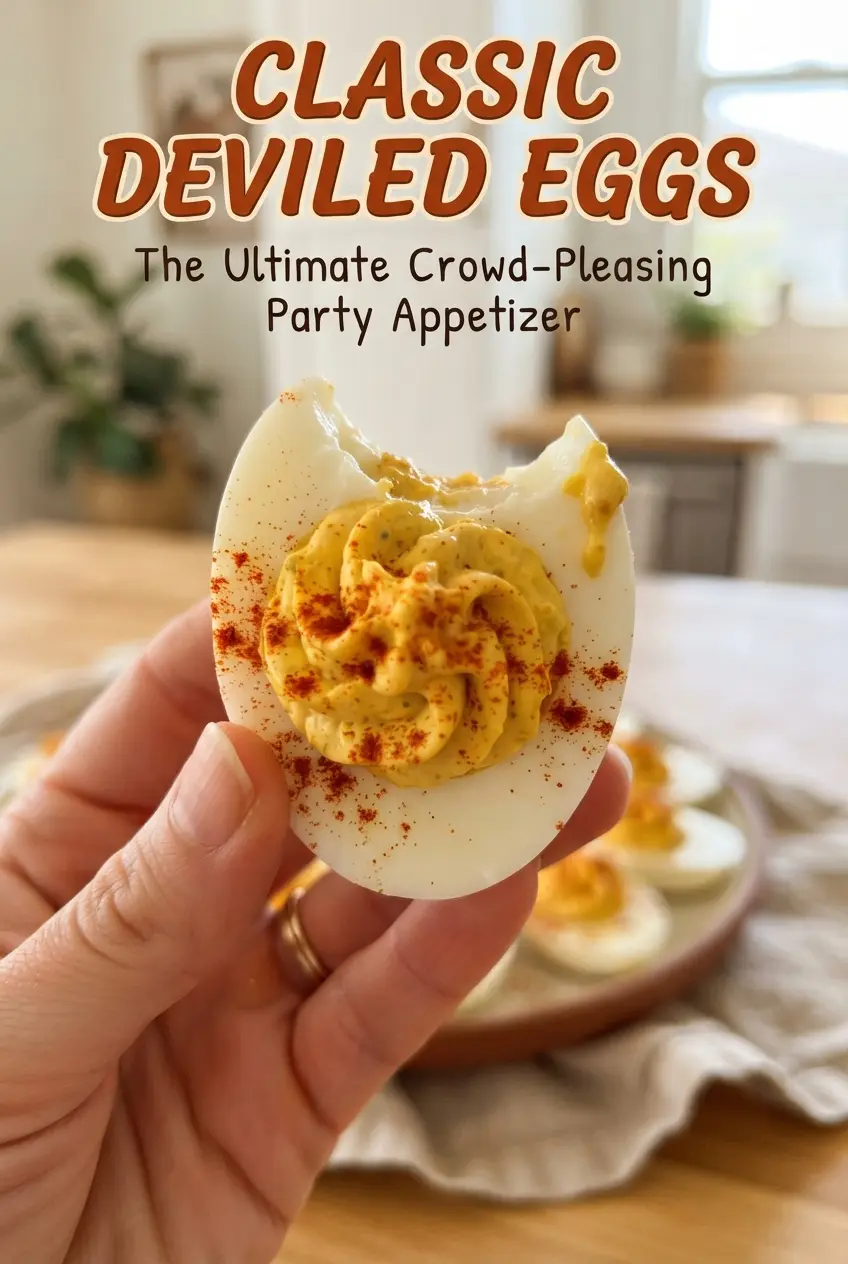
Spoon the filling into a piping bag fitted with a star tip and pipe it into the egg whites in steady swirls. If you don’t have a piping bag, a zip-top bag with the corner snipped works fine, though the edges won’t look as sharply defined. Finish with paprika and a few snipped chives, then chill the tray until serving so the filling stays firm.
Ways to Adjust These Deviled Eggs Without Losing the Classic Character
Dairy-Free and Naturally Gluten-Free
These eggs are already gluten-free, so there’s nothing to change there. For dairy-free eating, the recipe works as written because the filling uses mayonnaise instead of dairy. Just check your mayo if you’re cooking for someone with strict dietary needs, since some brands use different oils or additives.
A Tangier Filling
Add an extra half teaspoon of Dijon or a few drops more vinegar if you want a brighter bite. Push too far and the filling starts tasting sharp instead of balanced, so adjust in tiny amounts and taste as you go.
For a Smoother, More Pipeable Texture
Press the yolks through a fine mesh sieve before mixing if you want an especially silky filling. That extra step is worth it for holiday trays or any time you want the piping ridges to hold their shape cleanly.
Storage and Reheating
- Refrigerator: Store assembled deviled eggs in a covered container for up to 2 days. The whites stay best on day one, and the filling can pick up a little moisture as it sits.
- Freezer: Don’t freeze deviled eggs. The whites turn rubbery and watery after thawing, and the filling loses its smooth texture.
- Reheating: These are meant to be served cold or slightly chilled, not reheated. If they’ve been in the fridge, let them sit out for 10 to 15 minutes before serving so the yolk filling tastes less tight and the flavor opens up.
Answers to the Questions Worth Asking
Classic Deviled Eggs
Ingredients
Equipment
Method
- Place the large eggs in a pot, cover with cold water, and bring to a boil. Cover the pot, remove from heat, and let stand 12 minutes, until set through with no runny centers.
- Chill the eggs in an ice bath for 10 minutes to stop cooking and make peeling easier. Peel and halve lengthwise, keeping the whites intact and the yolks contained.
- Mash the yolks with a fork until fine and crumbly with no large lumps. This helps the filling turn smooth after mixing.
- Stir the mashed yolks with mayonnaise, Dijon mustard, white vinegar, salt, and black pepper until smooth and thick. Mix until the mixture looks uniform and pipeable.
- Pipe the filling into the egg whites with a star tip, filling each well all the way to the edges. Keep the tops even for a clean row presentation.
- Sprinkle with paprika and fresh chives for garnish, then chill until serving. Serve cold for the best texture and flavor.