
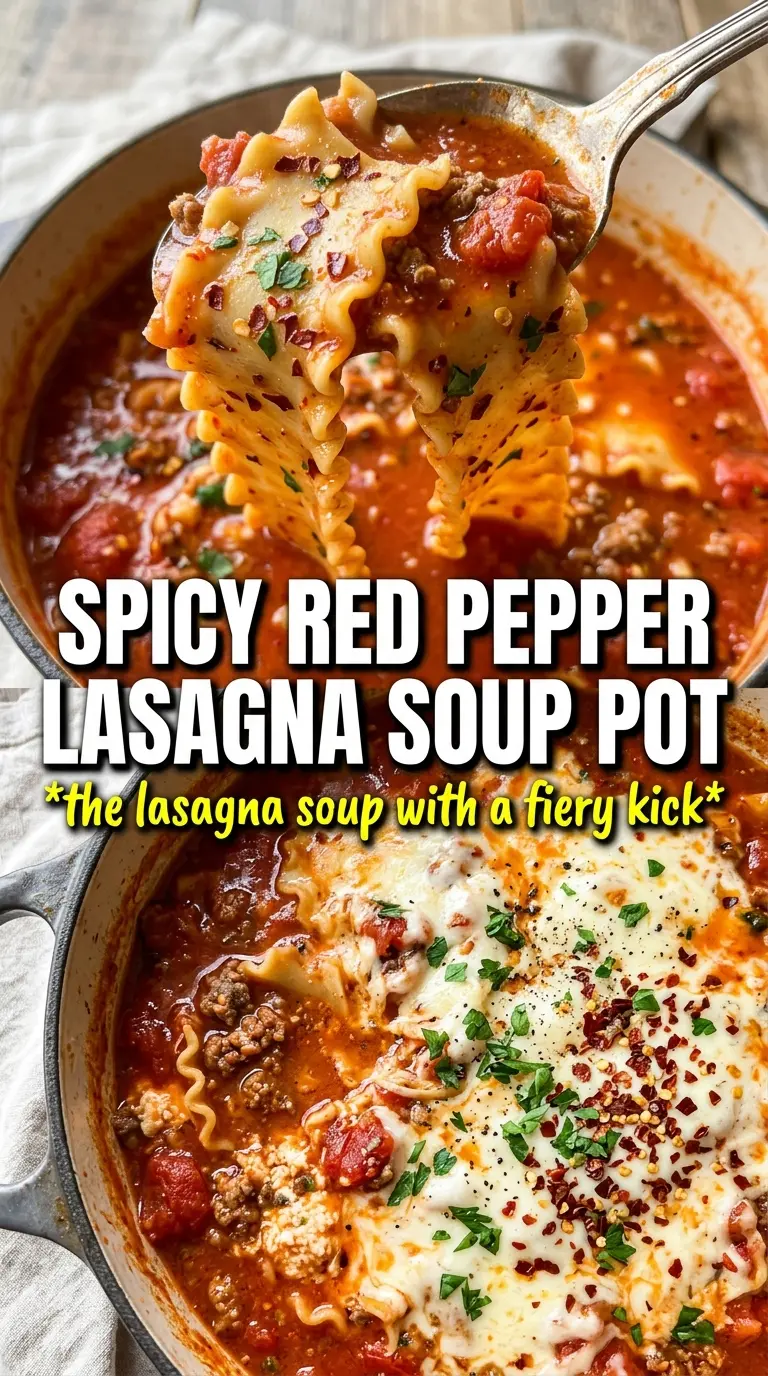
Spicy lasagna soup hits the bowl with everything people love about baked lasagna, just in a faster, spoonable form. The broth turns deep red and a little fiery, the sausage adds richness, and the broken noodles drink in all that tomato flavor without going soft and mushy if you time them right. The cooling ricotta dollop on top matters just as much as the heat — it takes the edge off the jalapeño and cayenne and turns each bite into a full, balanced mouthful.
What makes this version work is building the heat in layers instead of dumping it all in at once. The sausage brings its own spice, the tomato paste gets cooked until it darkens and tastes rounder, and the chili oil at the end gives you a sharper finish than red pepper flakes alone. I also like using both crushed and fire-roasted tomatoes because one gives body and the other adds a little smoky depth that keeps the soup from tasting flat.
Below, I’ve included the small timing details that keep the noodles tender and the broth bold. The ricotta topping is worth the extra bowl, and I’ve added a few swaps for making it a little milder, a little lighter, or a lot easier on a busy night.
The broth got rich and spicy without being thin, and the ricotta on top cooled it down just enough. The noodles stayed tender even after sitting in the pot for a few minutes, which never happens when I make soup like this.
Save this spicy lasagna soup for the nights when you want fiery tomato broth, sausage, and a ricotta topping in one bowl.
The Trick That Keeps the Broth Bold Instead of Watery
Lasagna soup can get dull fast if the pot is crowded with tomatoes and broth before the aromatics have a chance to cook. The tomato paste needs direct heat so it darkens a shade and loses that raw edge, and the sausage should leave behind enough browned bits to season the base. If you rush past that stage, the soup still tastes fine, but it won’t have the deep, savory backbone that makes each spoonful taste finished.
The other place this dish goes wrong is the noodles. Broken lasagna sheets need enough simmering time to turn tender, but they keep soaking up liquid as they sit. Pull the pot off the heat while they still have a little bite, then serve right away so the broth stays brothy instead of turning into pasta stew.
What Each Ingredient Is Actually Doing in This Bowl
- Hot Italian sausage — This does more than add meat. It seasons the whole pot from the start, and the rendered fat carries the spices better than lean sausage would. If you need to swap it, use mild Italian sausage plus extra red pepper flakes, but don’t use plain ground pork unless you’re ready to build the seasoning from scratch.
- Crushed tomatoes and fire-roasted tomatoes — The crushed tomatoes give body, while the fire-roasted tomatoes add a smoky edge that keeps the soup from tasting one-note. If you only have one type, the soup still works, but the fire-roasted can’t be fully replaced by plain diced tomatoes.
- Tomato paste — This is the ingredient that deepens the broth. Cook it with the onion, garlic, and jalapeño until it darkens slightly and smells sweet instead of sharp. That extra minute or two is what keeps the soup from tasting flat.
- Ricotta, mozzarella, parmesan, and basil — This topping is the cooling contrast that makes the heat manageable. Ricotta gives the dollop its creamy softness, mozzarella adds body, parmesan adds salt, and basil keeps it from tasting heavy. If you want it lighter, use ricotta on its own and skip the mozzarella.
- Chili oil — Use it as a finish, not a cooking fat. It sharpens the spice right at the end and gives the soup a glossy look without overpowering the broth.
Building the Soup in the Right Order
Brown the Sausage First
Cook the sausage in a large pot until it has real color on the edges and the pan has browned bits stuck to the bottom. That fond is part of the soup’s flavor, so don’t wash it away. If there’s a lot of grease, drain off the excess, but leave enough to cook the onion. Pale sausage makes a pale broth.
Cook the Aromatics and Paste Together
Add the onion and let it soften for about four minutes before the garlic, jalapeño, and tomato paste go in. The paste should smell sweeter and look brick-red after a couple of minutes. If the garlic starts browning hard, the heat is too high and the base will taste bitter, so lower the burner before the paste goes in.
Toast the Spices in the Pan
Red pepper flakes, smoked paprika, and cayenne need a minute in the hot pot before the liquids go in. That brief toast wakes them up and keeps them from tasting dusty. You’ll know they’re ready when the pot smells sharper and a little smokier. Don’t let the spices sit dry for long enough to scorch.
Simmer the Noodles at the End
Once the tomatoes and broth are in, bring everything to a boil, then drop it back to a steady simmer before adding the broken noodles. They should move through the broth, not sit above it in a dry pile. Stir once or twice so they don’t clump together, then start checking around the ten-minute mark. The best texture is tender with a little bite in the center.
Make It Milder Without Losing the Kick
Use mild Italian sausage, cut the cayenne in half, and start with one jalapeño with the seeds removed. You’ll still get a warm, spicy broth, but the heat lands more in the background instead of taking over the bowl.
Dairy-Free Finish That Still Feels Creamy
Skip the ricotta topping and finish each bowl with a spoonful of dairy-free cashew cream or a drizzle of olive oil. The soup itself stays rich from the sausage and tomatoes, and the topping still gives you that cooling contrast the dish needs.
Gluten-Free Version
Swap the lasagna noodles for a sturdy gluten-free pasta shape that can handle simmering, like mafalda or a short tube pasta. Cook it just until tender, because gluten-free pasta can break down faster than traditional noodles and turn the broth starchy if it sits too long.
Vegetarian Version With the Same Big Body
Use plant-based sausage and vegetable broth, then add a spoonful of tomato paste extra for depth. Without the sausage fat, the broth leans a little leaner, so the tomato paste and chili oil matter even more for giving the soup a full, savory finish.
Storage and Reheating
- Refrigerator: Store for up to 4 days. The noodles will keep soaking up broth, so it thickens as it sits.
- Freezer: Freeze the broth and sausage without the noodles if you can. Pasta turns soft after thawing, so add fresh noodles when reheating for the best texture.
- Reheating: Warm gently over medium-low heat with a splash of broth or water. Don’t boil it hard, or the noodles will split and the ricotta topping will lose its smooth texture.
Answers to the Questions Worth Asking

Spicy Lasagna Soup
Ingredients
Equipment
Method
- Brown hot Italian sausage in a large pot over medium-high heat, then drain the fat.
- Continue browning until the sausage crumbles are cooked through and slightly browned, visible at the edges.
- Sauté onion for 4 minutes in the pot.
- Add garlic, jalapeño, and tomato paste, then cook for 2 minutes until fragrant.
- Stir in red pepper flakes, smoked paprika, and cayenne, then cook for 1 minute to bloom the spices.
- Add crushed tomatoes, diced fire-roasted tomatoes, chicken broth, and Italian seasoning, then bring the mixture to a boil.
- Add broken lasagna noodles and simmer for 10–12 minutes until tender.
- Season with salt and pepper to taste, and stir to distribute evenly.
- Mix ricotta, mozzarella, and parmesan together with fresh basil to form a cool, scoopable topping.
- Serve the soup hot with a drizzle of chili oil and a cooling dollop of the cheese mixture.