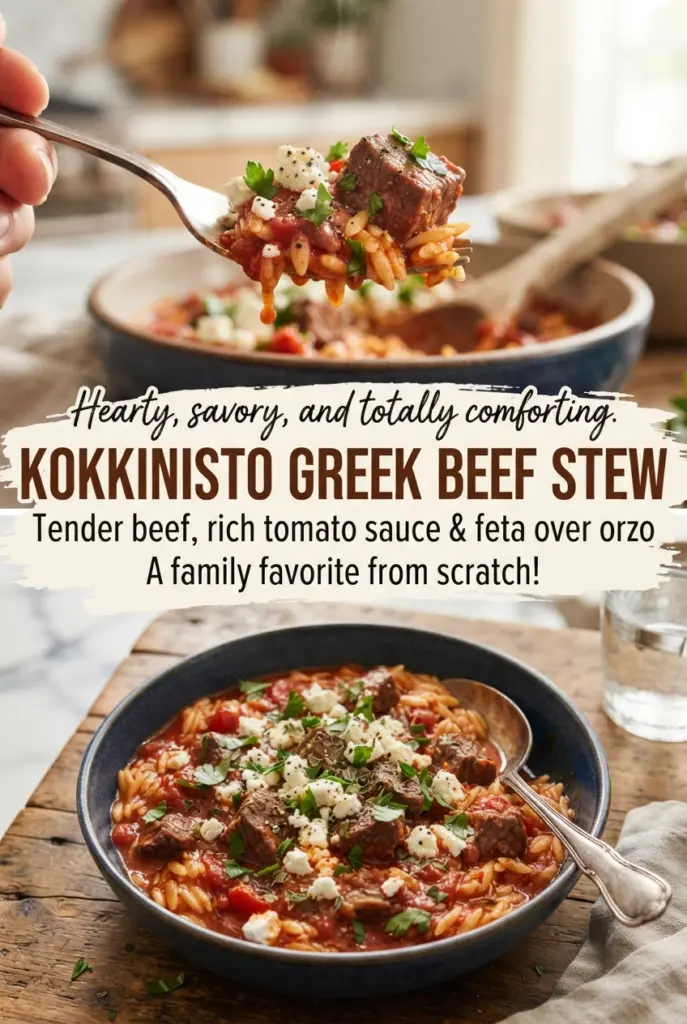
Kokkinisto is the kind of beef stew that earns its place in the regular dinner rotation because the sauce does more than coat the meat — it clings to every bite with a deep tomato richness, warm spice, and a slow-cooked tenderness that feels like it took all day, because in a way it did. The beef turns soft enough to pull apart with a spoon, and the sauce thickens into something glossy and spoonable instead of watery or flat.
What makes this version work is the layering. The beef gets a hard brown first, which builds the savory base. The tomato paste cooks long enough to lose its raw edge, the wine lifts the browned bits from the pan, and the cinnamon, allspice, and bay leaf give the stew its unmistakable Greek character without turning it sweet. A small amount of sugar rounds the tomatoes just enough to keep the sauce balanced.
Below, I’ll walk through the part that matters most: how to keep the sauce rich while the beef turns tender, plus the small finishing details that make a bowl of kokkinisto feel complete.
The beef turned unbelievably tender and the sauce thickened up beautifully while it simmered. Serving it over orzo with feta made it taste like something from a good Greek taverna.
Save this kokkinisto for the nights when you want tender beef, cinnamon-tomato sauce, and an easy orzo finish.
The Browning Stage That Keeps Kokkinisto From Tasting Flat
The biggest mistake with beef stew is rushing past the sear. If the beef goes into the pot in a pale pile, the finished sauce tastes thin no matter how long it simmers. Browning in batches gives you the browned bits on the bottom of the pot that the wine and tomatoes later dissolve into, and those bits carry most of the savory depth in this dish.
Once the onions go in, scrape the pot well and let them soften until they lose their raw sharpness. That is the point where the stew starts tasting round instead of harsh. Tomato paste needs a full minute against the hot onions and oil to darken slightly; if it stays bright red, it can leave the sauce tasting sharp and undercooked.
What Each Ingredient Is Actually Doing In This Stew
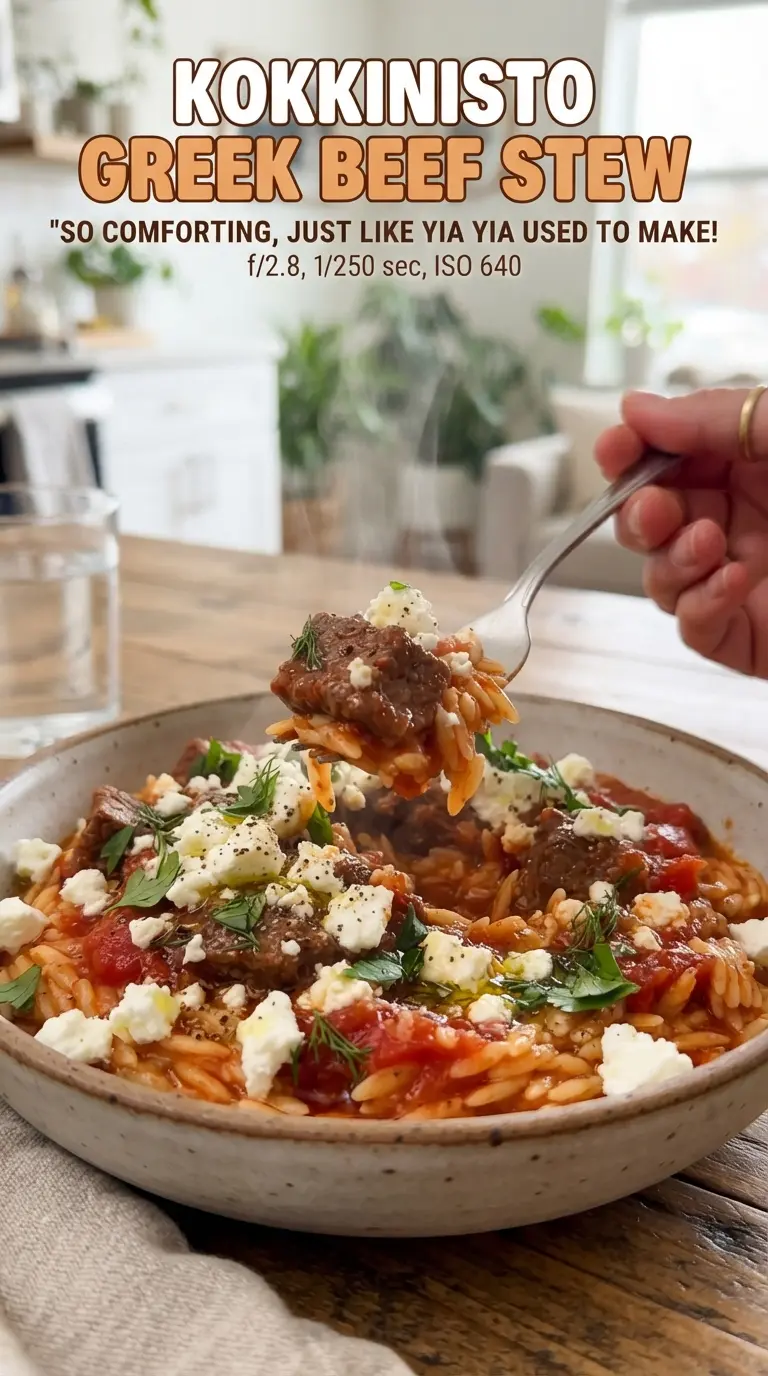
- Beef chuck — This is the cut that turns silky after a long simmer. Leaner beef stays firmer and dry; chuck has enough connective tissue to break down into that spoon-tender texture Kokkinisto is known for.
- Dry red wine — It lifts the browned bits from the pan and adds depth that water alone can’t give. Use a wine you’d actually drink, since the flavor concentrates as it cooks.
- Crushed tomatoes — They give the stew body without needing extra thickener. If yours taste especially acidic, the teaspoon of sugar balances that edge instead of making the dish sweet.
- Cinnamon stick, allspice, and bay leaves — These are the signature spices here. Ground cinnamon can turn muddy; the stick infuses slowly and keeps the sauce clean and fragrant.
- Orzo or potatoes — Orzo catches the sauce in every curve, while potatoes soak it up in a more rustic way. Either one works, but both need enough sauce to stay comforting rather than dry.
How to Get the Sauce Deep, Thick, and Spoonable
Building the Browned Base
Season the beef well before it hits the pan, then brown it in batches in hot olive oil. If you crowd the pot, the meat steams and you lose the dark crust that gives the stew its backbone. Pull the beef out only after each side has a real brown color, not just a gray surface.
Softening the Onions and Toasting the Tomato Paste
The onions should cook until soft and translucent with a little color at the edges. Add the garlic near the end so it stays fragrant instead of bitter, then stir in the tomato paste and let it fry briefly. That short cooking time removes the raw canned taste and deepens the sauce before any liquid goes in.
Letting the Simmer Do the Work
After the wine reduces for a couple of minutes, add the tomatoes, water, spices, sugar, and beef. Keep the heat low enough for a gentle bubble, not a hard boil; rough boiling can toughen the meat before the collagen has time to melt. The stew is ready when the beef breaks apart easily and the sauce looks thick enough to coat a spoon.
Finishing and Serving
Fish out the cinnamon stick, allspice, and bay leaves before serving. Spoon the stew over orzo or potatoes, then finish with feta and parsley. The feta gives the sauce a salty creaminess that cuts through the tomato, and the parsley keeps the bowl from feeling heavy.
Three Ways to Make Kokkinisto Fit What You Have
For a dairy-free bowl
Skip the feta and finish with extra parsley and a drizzle of olive oil. You’ll lose the salty creaminess, but the stew itself stays fully dairy-free and still tastes complete over orzo or potatoes.
For a gluten-free version
Serve it over potatoes instead of orzo. The stew itself doesn’t need flour, so the only change is the base underneath; potatoes keep the meal hearty and let the sauce stay front and center.
For a deeper, more rustic sauce
Swap half the water for beef stock if you want a richer finish. It won’t make the stew taste different in a flashy way, but it does give the sauce a fuller, rounder body, especially if your tomatoes are on the sharp side.
For a make-ahead dinner
Cook the stew a day ahead and reheat it gently before serving. The flavor deepens overnight, and the sauce usually thickens a little more after chilling, which makes this one even better the next day.
Storage and Reheating
- Refrigerator: Store in an airtight container for up to 4 days. The sauce thickens as it chills, so it may look tighter the next day.
- Freezer: It freezes well for up to 3 months. Cool it completely first and leave a little space at the top of the container for expansion.
- Reheating: Warm it gently on the stove over low heat with a splash of water if needed. High heat can tighten the beef and scorch the tomato sauce before the center warms through.
Answers to the Questions Worth Asking
Kokkinisto Greek Beef Stew
Ingredients
Equipment
Method
- Season the beef chuck cubes with salt and black pepper. Heat the olive oil in a Dutch oven and brown the beef in batches so the cubes sear instead of steam.
- Add the diced onions and cook for 6 minutes until soft. Stir in the minced garlic and tomato paste and cook for 1 minute.
- Pour in the dry red wine and simmer for 2 minutes, scraping the bottom to loosen the browned bits. Let the liquid reduce slightly before adding the tomatoes.
- Add the crushed tomatoes, water, cinnamon stick, allspice berries, bay leaves, and sugar, then return the browned beef to the pot. Stir well so the beef is coated in the red sauce.
- Cover and simmer for 1 1/2-2 hours, stirring occasionally, until the beef is very tender and the sauce is thick. Keep the simmer gentle so the sauce stays rich and concentrated.
- Remove the whole spices (cinnamon stick, allspice berries, and bay leaves) before serving. Skim any excess fat if needed for a cleaner sauce texture.
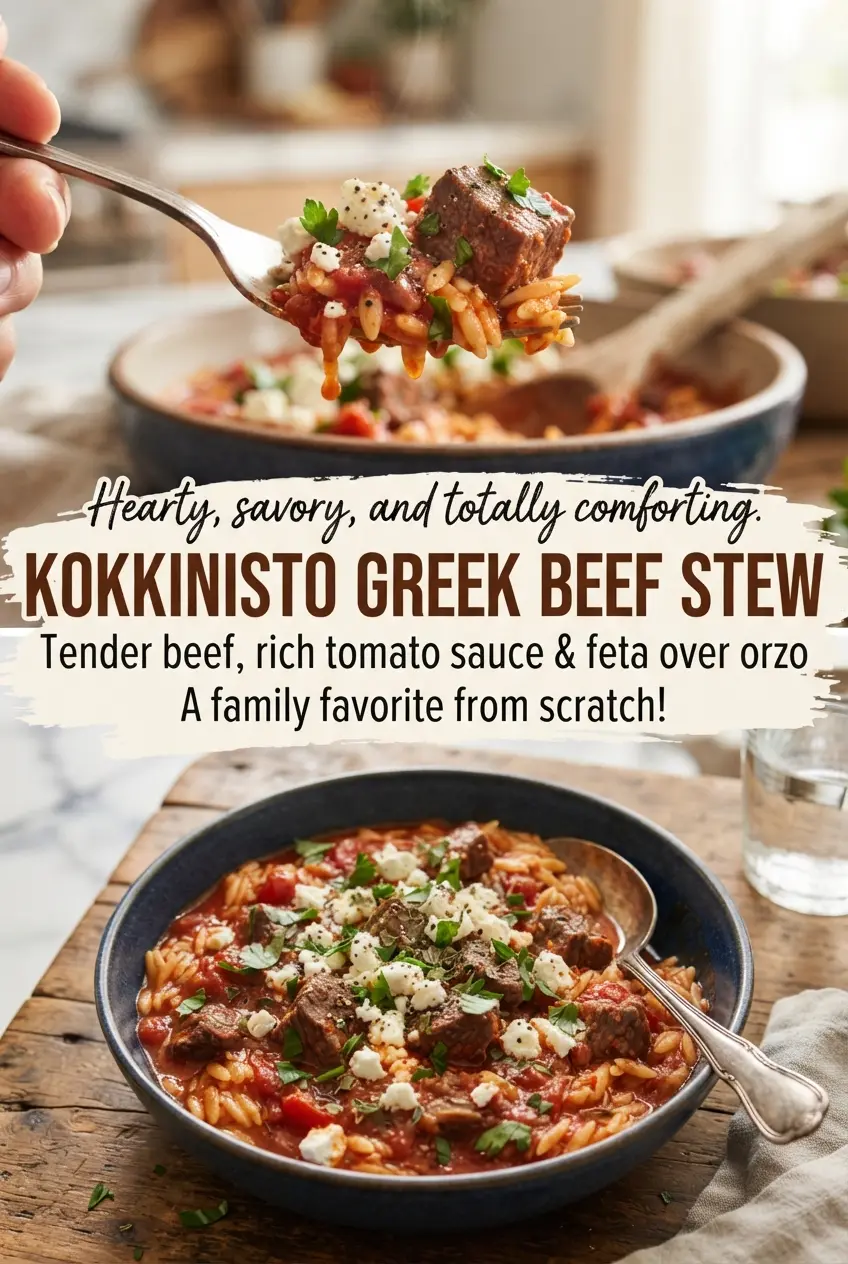
- Serve the kokkinisto over cooked orzo or potatoes. Top each bowl with crumbled feta and parsley for garnish.