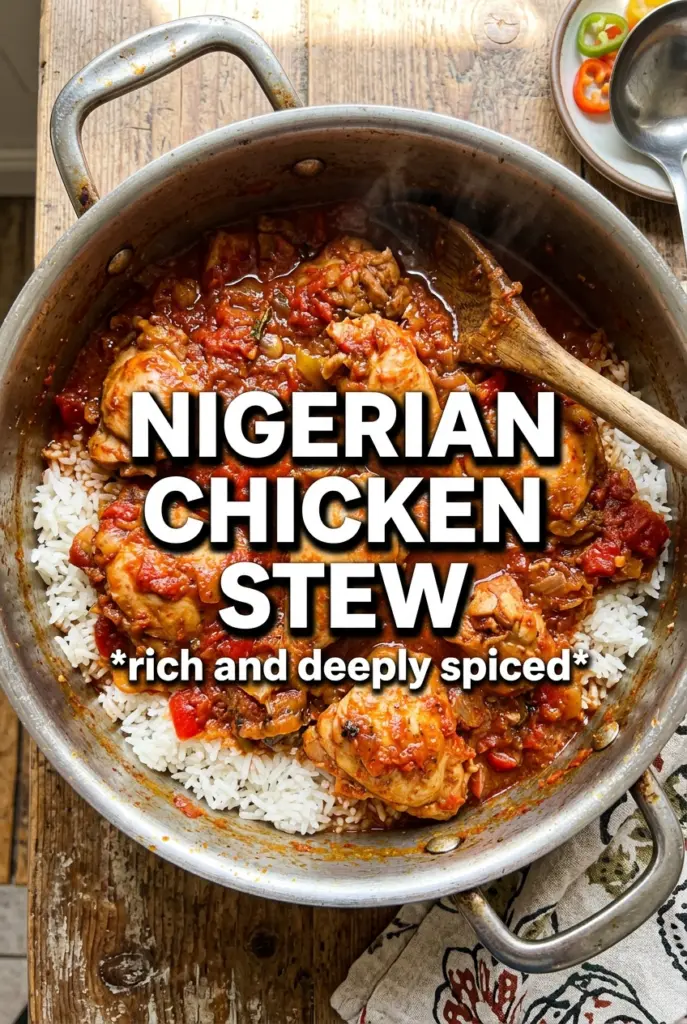
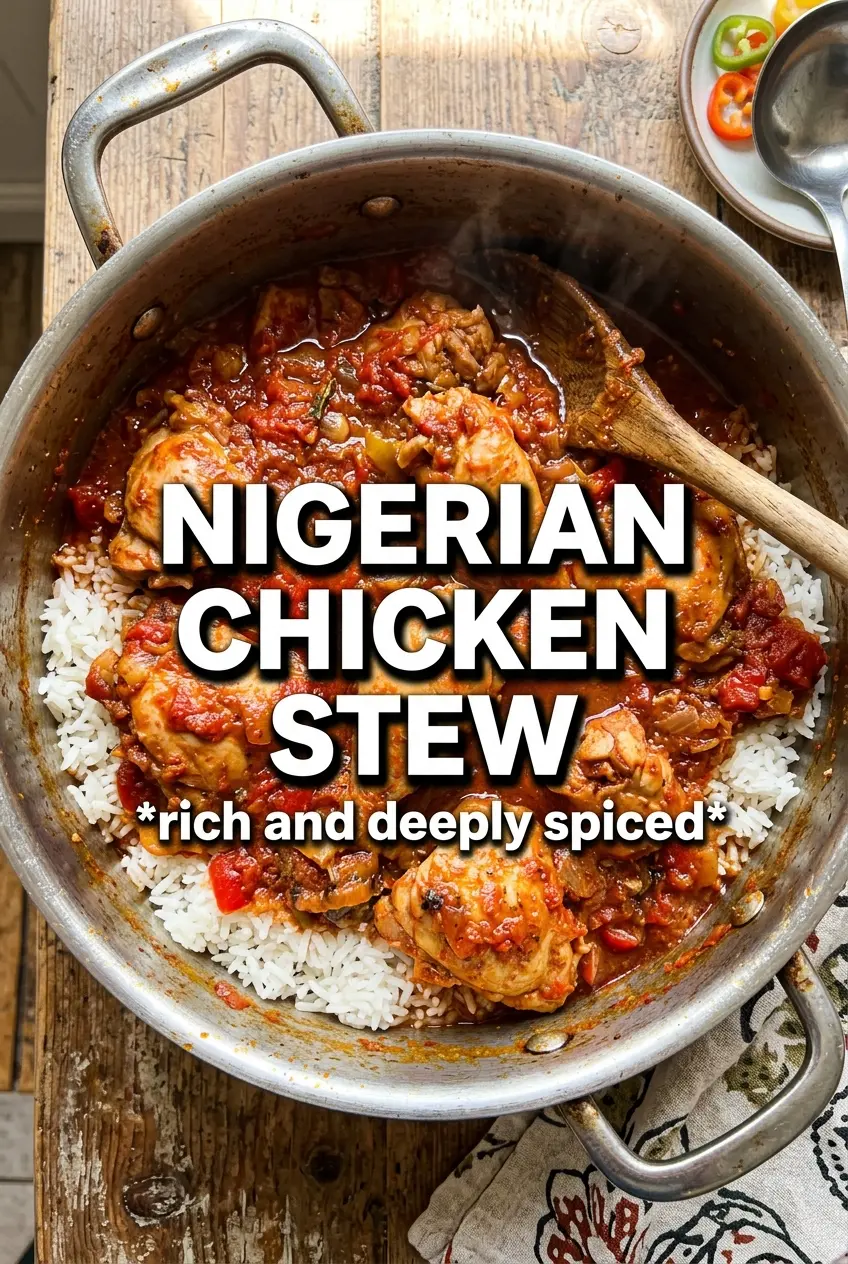
Rich, deep orange-red Nigerian chicken stew needs time on the stove to turn from sharp and watery into something layered, glossy, and worth spooning over rice. The chicken holds onto its seasoning, the pepper base cooks down until the oil rises to the top, and the whole pot settles into that bold, slow-built flavor that makes this dish such a staple.
What matters most here is cooking the blended tomato-pepper mixture long enough. If you stop early, it tastes raw and a little acidic; if you keep going until the color deepens and the oil separates, the stew gets that concentrated, rounded finish people expect. Frying or baking the chicken first also helps the meat keep its shape instead of disappearing into the sauce.
Below you’ll find the timing that keeps the stew from tasting flat, the ingredient swaps that still respect the dish, and a few notes that help if you’re making it ahead for rice later in the week.
I cooked the pepper base until the oil came to the top like you said, and that was the difference. The stew wasn’t watery at all, and the chicken stayed tender after simmering in the sauce.
Love that deep peppery sauce and golden chicken? Save this Nigerian Chicken Stew for the next time you want rice topped with something rich, bold, and full of slow-cooked flavor.
The Reason the Pepper Base Has to Cook Past the Raw Stage
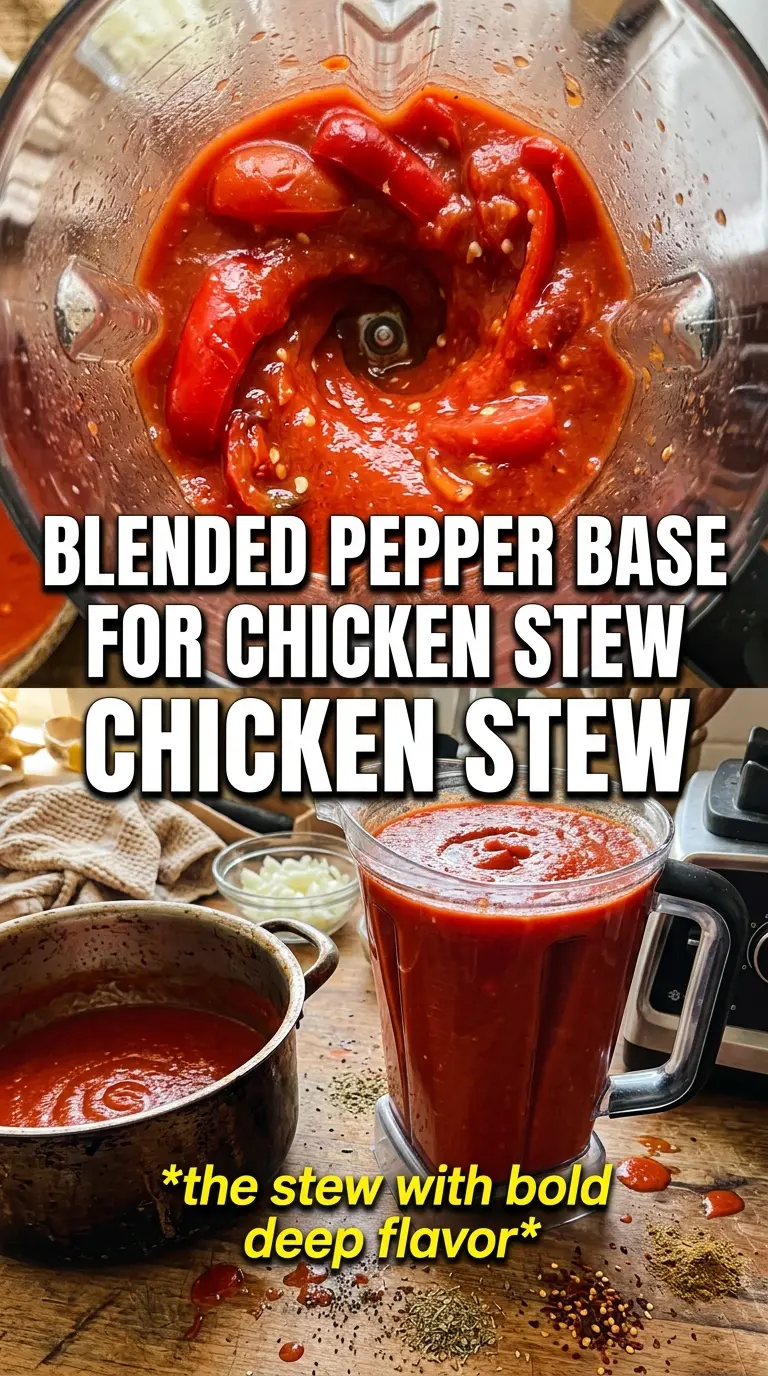
Nigerian chicken stew lives or dies on the pepper sauce. Blended tomatoes, red bell peppers, onion, and hot pepper start out bright and almost thin, but that is not the flavor you want on the plate. The long fry is what removes the sharp edge, deepens the color, and gives you that thick sauce that clings to chicken and rice instead of pooling like soup.
The most common mistake is rushing this stage because the pot smells good before it’s ready. It can smell finished while still tasting raw and acidic. Keep stirring, let the sauce reduce, and watch for the oil to separate and rise to the surface. That shift tells you the tomatoes have cooked down enough to stop tasting like a blended puree and start tasting like stew.
- Chicken pieces — Bone-in pieces give the stew more flavor and stay juicy through the final simmer. Thighs and drumsticks are the easiest cuts to work with, but mixed chicken pieces work fine. If you use boneless chicken, reduce the simmer time or it will dry out.
- Plum tomatoes — These bring body without too much water. If your tomatoes are very sour, the stew will need a little more cooking time to mellow. Canned plum tomatoes are a solid choice here because they blend smoothly and behave predictably.
- Red bell peppers — These are doing a lot of the sweetness work. They soften the tomato sharpness and help the stew get that vivid color. Green bell peppers won’t give the same result and will push the flavor in the wrong direction.
- Scotch bonnet or habanero — This is where the heat comes from, and the pepper should be adjusted to your own table. One pepper will still give you a lively stew; two make it hotter and more traditional in style. If you want less heat, remove the seeds, but don’t skip the pepper entirely or the stew can taste flat.
- Oil — The oil isn’t just for frying the chicken; it helps the sauce fry properly and separate. This is one place where a neutral vegetable oil works better than strongly flavored oils. You need enough fat for the stew to darken and cook down without sticking.
What Each Ingredient Is Actually Doing in This Recipe
- Primary ingredient (the star) — Quality matters most. Choose the best you can find.
- Cooking medium (oil, butter, or broth) — This carries flavors and prevents dryness.
- Seasonings (salt, pepper, spices, herbs) — Layer flavors so nothing overpowers. Build depth gradually.
- Aromatics (garlic, onion, herbs) — Cook with fat to bloom flavors. Become the foundation.
- Supporting ingredients — Complement the main ingredient without overpowering it.
- Sauce or liquid (if applicable) — Brings flavors together. Balance richness with acid.
- Acid (lemon, vinegar, wine, or other) — Brightens and prevents flat-tasting results.
- Final finish (garnish, glaze, or sauce) — Prevents one-dimensional taste and adds visual appeal.
Building the Stew So the Sauce Turns Glossy, Not Watery
Seasoning the Chicken First
Grate the onion into the chicken along with thyme, curry powder, bouillon, salt, and pepper, then let it sit for about 30 minutes. That short marination gives the meat a seasoned base before it ever touches the pot. If the chicken goes in bland, the finished stew tastes like sauce on top rather than a dish with depth all the way through.
Getting the Chicken Golden
Fry the chicken in hot oil or oven-bake it until the outside is golden and the meat is mostly cooked through. You want color, not deep crust, because the chicken will finish in the stew. If you skip this step, the meat can look pale and the sauce loses some of the richness that comes from cooking browned chicken back into it.
Frying Down the Pepper Sauce
Blend the tomatoes, bell peppers, scotch bonnet, onion, and garlic until smooth, then fry the puree in oil over medium-high heat. Stir often at first, then more steadily as it thickens and splutters. The sauce is ready when it looks darker, thicker, and you can see a layer of oil separating on top; if it still looks foamy and loose, it needs more time.
Finishing the Stew
Add the chicken back to the pot and spoon the sauce over every piece. Let it simmer until the chicken is tender and the flavors have settled together, then taste for salt before serving. If the stew seems too tight, add a small splash of water; if it seems thin, keep simmering uncovered until it reaches that rich, spoon-coating texture.
How to Adjust the Heat, the Richness, and the Make-Ahead Plan
Milder Family-Style Stew
Use just one scotch bonnet or habanero, and remove the seeds if you want the heat to stay in the background. You’ll still get the pepper flavor and aroma, but the stew will read more warmly than aggressively hot.
Dairy-Free and Naturally Gluten-Free
This stew already fits both of those needs as written, as long as your bouillon is gluten-free. The texture depends on the cooked pepper base, not flour or cream, so there’s no sacrifice in the finished sauce.
Less Oil, Still Deep Flavor
You can cut the oil slightly, but don’t drop it too far or the pepper sauce won’t fry properly. The oil helps the tomatoes cook down and separate, which is what gives the stew its classic finish instead of a steamed tomato sauce.
Storage and Reheating
- Refrigerator: Store leftovers in a sealed container for up to 4 days. The flavor gets deeper overnight, and the sauce thickens as it sits.
- Freezer: It freezes well for up to 2 months. Cool it completely first, then portion it with some sauce so the chicken doesn’t dry out when reheated.
- Reheating: Warm gently on the stove over low to medium heat until hot throughout. High heat can make the chicken tough and can cause the sauce to scorch at the bottom of the pan.
Questions I Get Asked About This Recipe
Nigerian Chicken Stew
Ingredients
Equipment
Method
- Season the chicken with half the grated onion, thyme, curry powder, bouillon, salt, and pepper. Cover and marinate for 30 minutes.
- Fry or oven-bake the marinated chicken until golden and mostly cooked through. Set aside for later.
- Blend the plum tomatoes, red bell peppers, scotch bonnet, remaining onion, and garlic until smooth. Use immediately or refrigerate briefly while you heat the pot.
- Heat 1/2 cup vegetable oil in a large pot over medium-high heat. Carefully fry the blended pepper sauce for 30-40 minutes, stirring frequently, until oil floats on top and the sauce darkens.
- Add the fried chicken to the pot and coat it in the sauce. Simmer for 15-20 minutes until the chicken is tender and the sauce clings to it.
- Taste and adjust seasoning with salt and pepper. Serve hot over steamed rice with fresh parsley.