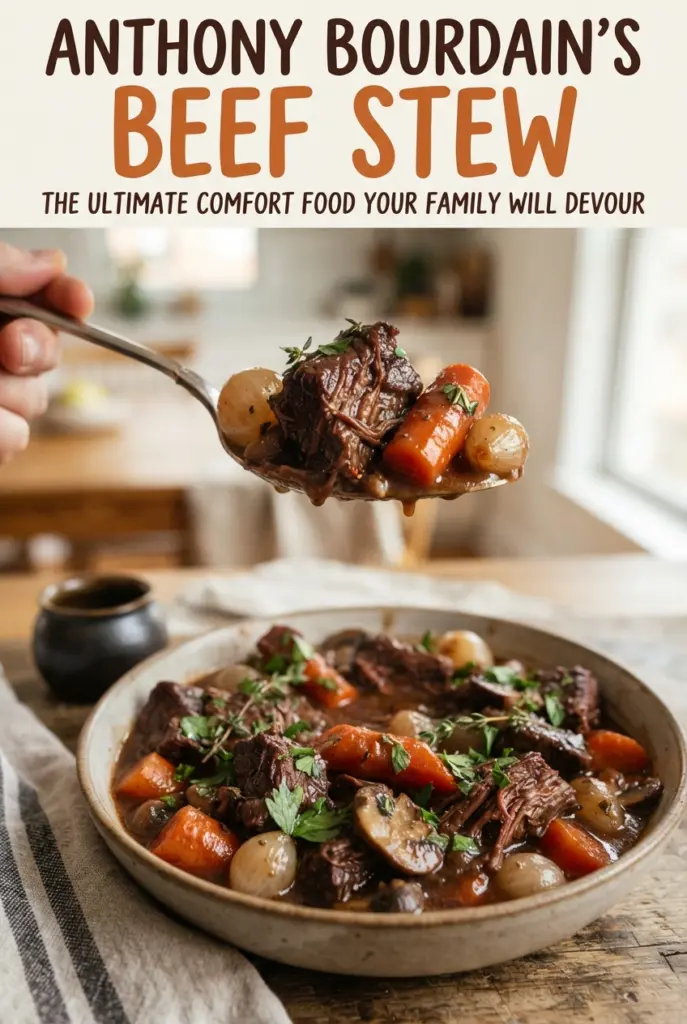
Deeply browned beef, soft onions, and a wine-dark sauce give this beef stew the kind of depth that makes a second bowl inevitable. The meat turns fork-tender without falling apart completely, and the carrots soak up all that savory braising liquid so every spoonful tastes full and rounded. It lands somewhere between rustic French comfort and the kind of stew you remember long after dinner is over.
What makes this version work is patience at the stove in the first half of the cook. The beef needs a hard sear in batches, not a crowded pot, or it will steam and go gray instead of building the brown fond that gives the sauce its backbone. The onions cook in those same drippings until they soften and pick up color, then the flour and wine turn the pot into a proper braise instead of a thin soup.
Below, you’ll find the one detail that keeps the sauce glossy instead of muddy, plus the best way to handle leftovers so the beef stays tender the next day.
The wine-braised sauce turned out silky and rich, and the beef was tender after the full 2 hours without falling apart. My husband kept sneaking bites straight from the pot.
Save this wine-braised beef stew for the night you want deep, glossy sauce and fall-apart chuck with almost no fuss.
The Sear Is the Difference Between Stew and Gray Meat
Beef stew fails most often before it ever starts simmering. If the pot is crowded, the meat releases moisture, the temperature drops, and you lose the browned crust that gives the finished sauce its deep savory edge. Work in batches and wait for each side to go properly dark; pale tan meat won’t give you the same richness later.
The flour goes in after the beef returns to the pot, not before the sear. That lets the flour toast a little in the fat and cling to the meat, which helps thicken the braising liquid without leaving it chalky. Keep the simmer gentle once the liquid is in. A hard boil tightens the beef and turns the sauce dull.
What the Wine, Onions, and Bouquet Garni Are Doing Here
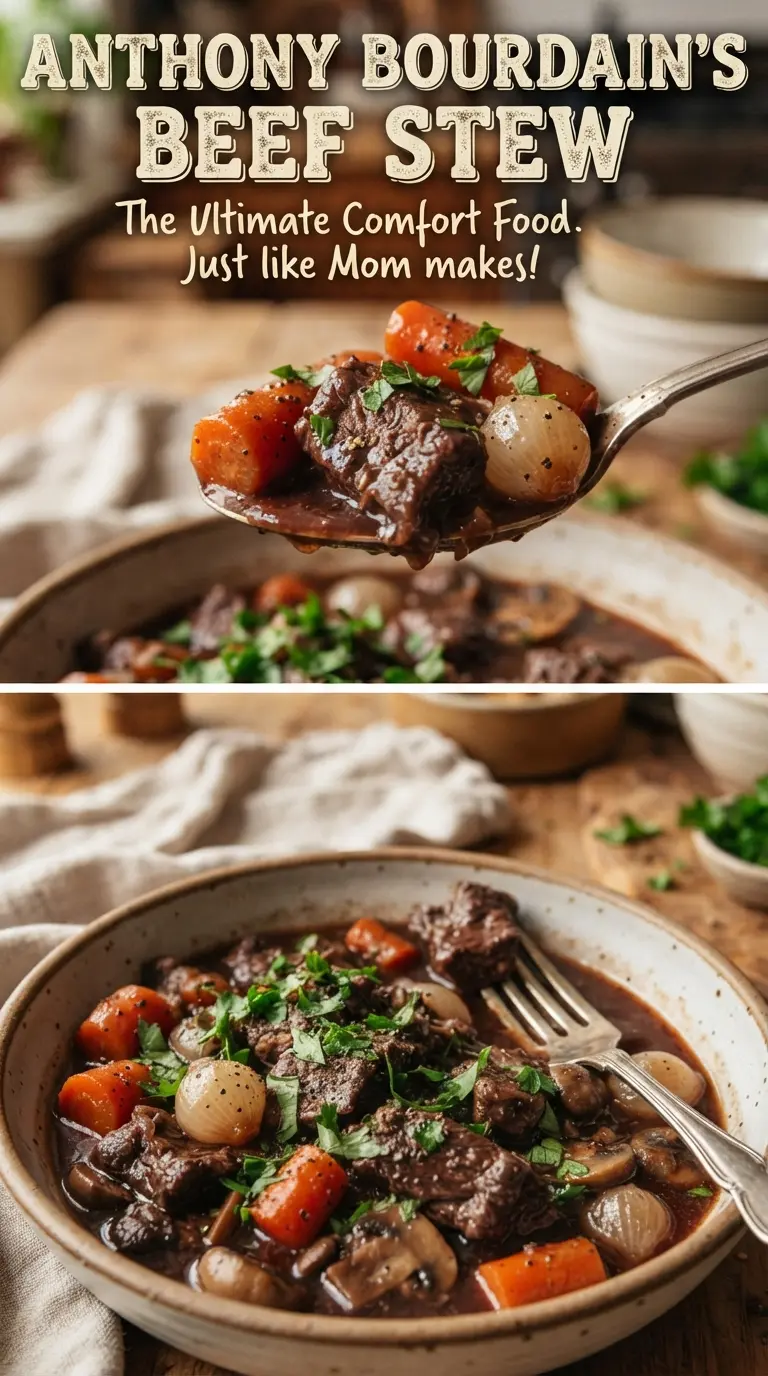
- Beef chuck — This is the right cut because it has enough connective tissue to turn tender in a long braise. Lean stew meat can work in a pinch, but it won’t get the same silky, rich texture.
- Red Burgundy wine — This is where the stew gets its dark, rounded depth. Use a dry red you’d actually drink; an aggressive, tannic wine will dominate the pot.
- Onions — They melt into the sauce and add body as they soften. Slice them thin so they almost dissolve during the long cook instead of staying sharp and separate.
- Bouquet garni — Thyme, parsley stems, and bay leaf add a clean herbal note without turning the stew muddy. Tie them well so you can remove everything in one pull at the end.
- Carrots — Cut them into 1-inch pieces so they hold their shape through the braise. Smaller pieces can disappear before the beef is done.
Building the Braise Without Breaking the Sauce
Brown the Beef in a Hot Pot
Season the chuck before it touches the pan, then sear it in very hot oil until the surfaces are deep brown, not just colored. That crust becomes the base of the sauce later, so don’t rush this part or move the meat around too early. If the pieces stick at first, leave them alone; once they’ve browned, they’ll release more easily.
Cook the Onions in the Same Pot
After the beef comes out, the onions go into the same pot to pick up the browned bits left behind. Cook them until they soften and turn golden, which takes about 10 minutes and gives the stew sweetness without needing sugar. If the pot looks dry, the onions will start to catch, so lower the heat rather than adding liquid too soon.
Turn the Pot Into a Braise
Return the beef, stir in the flour, then pour in the wine and scrape the bottom hard with a wooden spoon. That scraping matters because the browned fond dissolves into the liquid and gives the sauce its color and flavor. Add the carrots, garlic, bouquet garni, and just enough stock or water to barely cover the beef; too much liquid dilutes the stew and keeps it from thickening properly.
Let Time Finish the Job
Simmer partly covered until the beef is tender and the sauce coats a spoon, which usually takes about 2 hours. The heat should be low enough that you only see a lazy bubble now and then. If it boils hard, the beef tightens and the sauce can turn greasy instead of glossy.
Small Changes That Still Keep the Stew in the Same Family
Make it dairy-free and naturally gluten-free
This stew already fits a dairy-free table, and the only gluten to watch is the flour. Swap the all-purpose flour for a gluten-free flour blend or leave it out entirely and reduce the braising liquid a little longer at the end. Without flour, the sauce will be a touch looser but still deeply flavored.
Use a different red if Burgundy is unavailable
A dry pinot noir, merlot, or cabernet sauvignon can stand in for Burgundy. Go with a wine that tastes balanced and not overly oaky, because the reduction will concentrate every edge. The stew will still be rich, but the flavor will shift a little darker with cabernet or softer with pinot noir.
Add mushrooms for a deeper, earthier pot
A handful of sliced cremini mushrooms can go in with the onions or after they soften, depending on how much browning you want. They bring more savoriness and a meatier texture, but they’ll also make the stew taste less purely classic and more woodland-rustic.
Storage and Reheating
- Refrigerator: Keeps for 4 days. The flavor gets deeper overnight, and the sauce will thicken as it chills.
- Freezer: Freezes well for up to 3 months. Cool it completely first and freeze in portions so the beef and vegetables reheat evenly.
- Reheating: Warm it slowly over low heat on the stove with a splash of water or stock if needed. Don’t boil it hard, or the beef can tighten and the sauce can separate.
Answers to the Questions Worth Asking
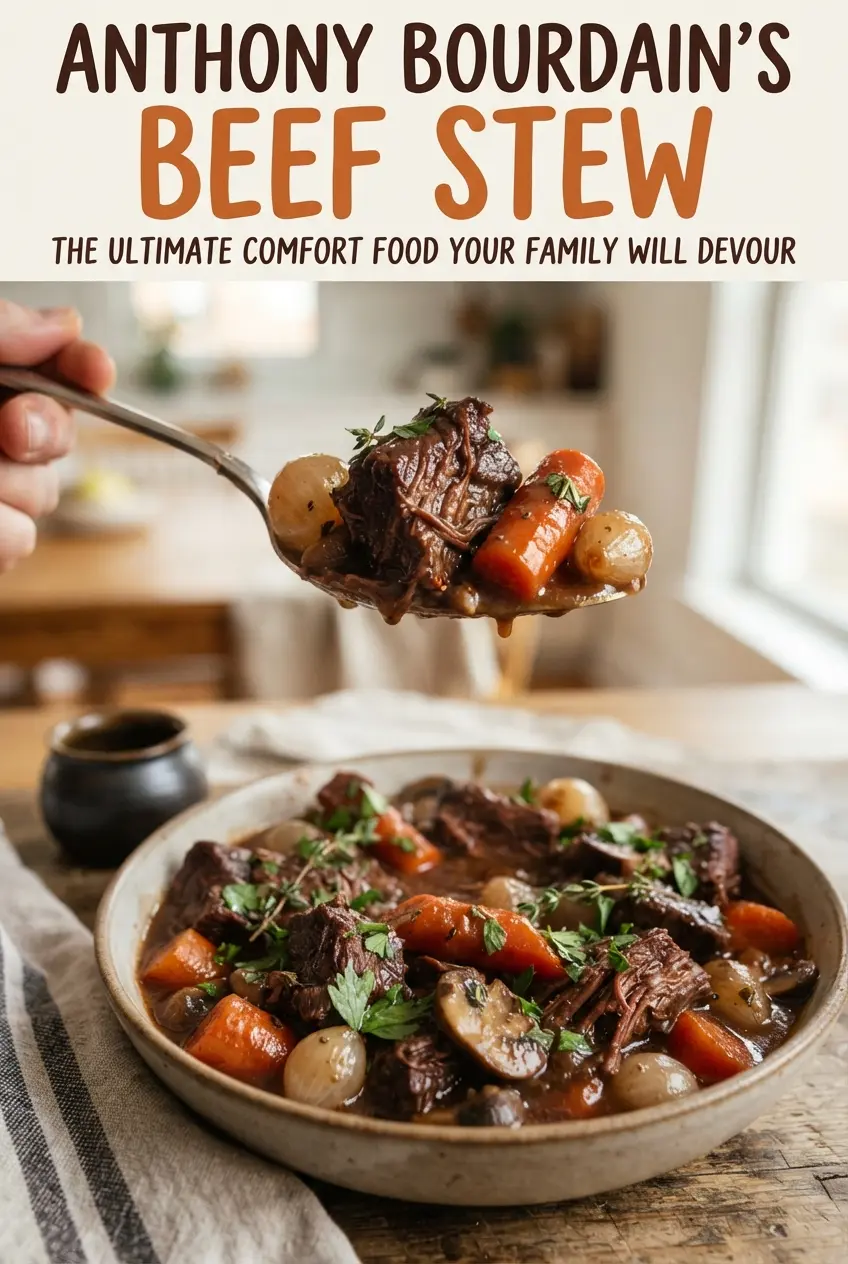
Anthony Bourdain-Style Beef Stew
Ingredients
Equipment
Method
- Season the beef chuck cubes with salt and black pepper. Heat the olive oil in a very hot Dutch oven and sear the beef in batches until deeply browned, then set aside.
- Cook the onions in the same pot over medium heat for 10 minutes, stirring, until soft and golden. Keep the fond for flavor.
- Return the beef to the pot and sprinkle with all-purpose flour. Stir and cook for 3-4 minutes until the beef is browned and the flour smell cooks off.
- Pour in the red Burgundy wine and scrape the bottom to release the browned bits. Add the carrots, garlic, and bouquet garni, then add water or beef stock just to cover the beef.
- Simmer gently, partly covered, at a low bubble for 2 hours until the beef is very tender. Stir occasionally so the sauce stays thick and coats the meat.
- Remove the bouquet garni and finish with chopped fresh parsley. Taste and check the seasoning before serving.