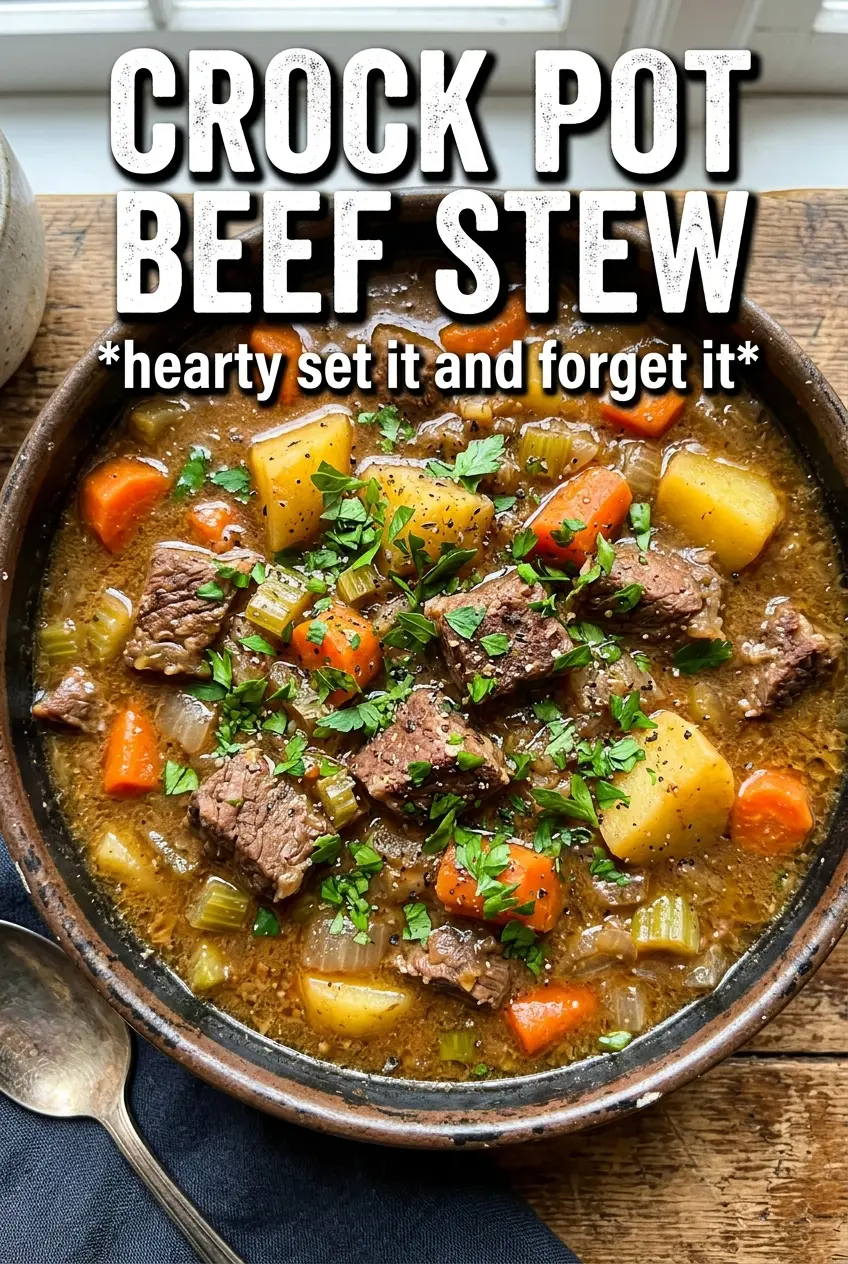
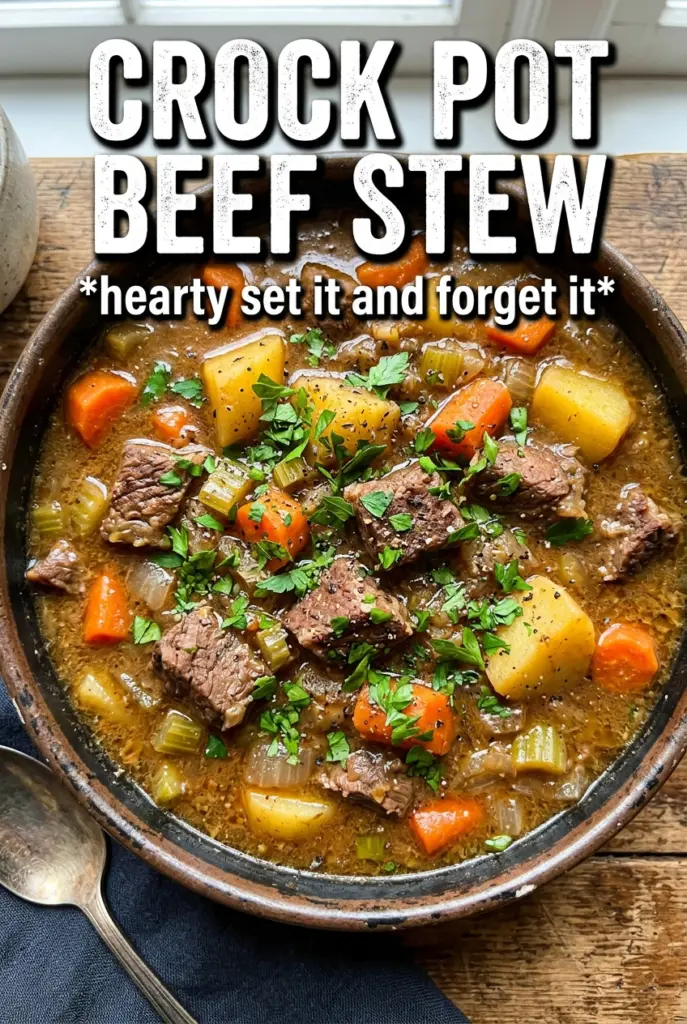
Deep, savory Crock Pot beef stew is the kind of meal that fills the kitchen with the smell of onions, herbs, and slow-cooked beef long before dinner is ready. The broth turns rich and mahogany-colored, the beef goes tender enough to break apart with a spoon, and the vegetables hold onto just enough shape to keep every bowl hearty and satisfying.
What makes this version work is the layering. The vegetables go in first so they sit in the broth and soften without turning to mush, while the beef stays on top long enough to brown in its own juices and flavor the whole pot as it cooks. Red wine adds depth, but extra broth works just fine if that’s what you’ve got. The cornstarch slurry goes in at the end, after the meat is already tender, so the stew thickens without losing that slow-cooked texture.
Below, I’ve included the little things that matter most here: how to keep the vegetables from going soft, how to thicken the broth without making it gummy, and the swaps I actually trust when I’m making this on a weeknight.
The beef turned out fall-apart tender and the broth thickened up beautifully after the cornstarch went in. I used the red wine, and it gave the stew a deep flavor without tasting sharp at all.
Love how the beef stew gets that rich, slow-simmered broth and fork-tender beef? Save it to Pinterest for an easy dinner that tastes like you cooked all day.
The Reason the Beef Stays Tender Instead of Drying Out
The biggest mistake with slow cooker stew is treating the beef like it needs a hard sear to work. It doesn’t. Chuck has enough fat and connective tissue to become tender over time, and the slow cooker does the job best when the meat has room to relax in steady heat. If the beef is cut too small, though, it can dry out and fall apart before the vegetables are ready, so 1.5-inch cubes are the sweet spot.
This stew also avoids the watery problem that ruins a lot of crock pot versions. Tomato paste gives the broth body, Worcestershire adds depth, and the final cornstarch slurry thickens the liquid after the beef has finished cooking. Add the slurry too early and the stew can turn pasty instead of glossy and spoonable.
- Chuck roast — This is the cut that pays off here. Lean stew meat won’t give you the same silky, shreddable texture.
- Tomato paste — It doesn’t make the stew taste like tomato sauce. It deepens the broth and helps it taste cooked all the way through.
- Red wine — Use it if you have it. It adds a rounded, savory note that broth alone can’t fully replace. If you skip it, add more beef broth.
- Bay leaves and dried herbs — Slow heat gives them time to bloom. Fresh herbs can work too, but use them toward the end so they don’t lose all their brightness.
What Each Ingredient Is Actually Doing in This Stew
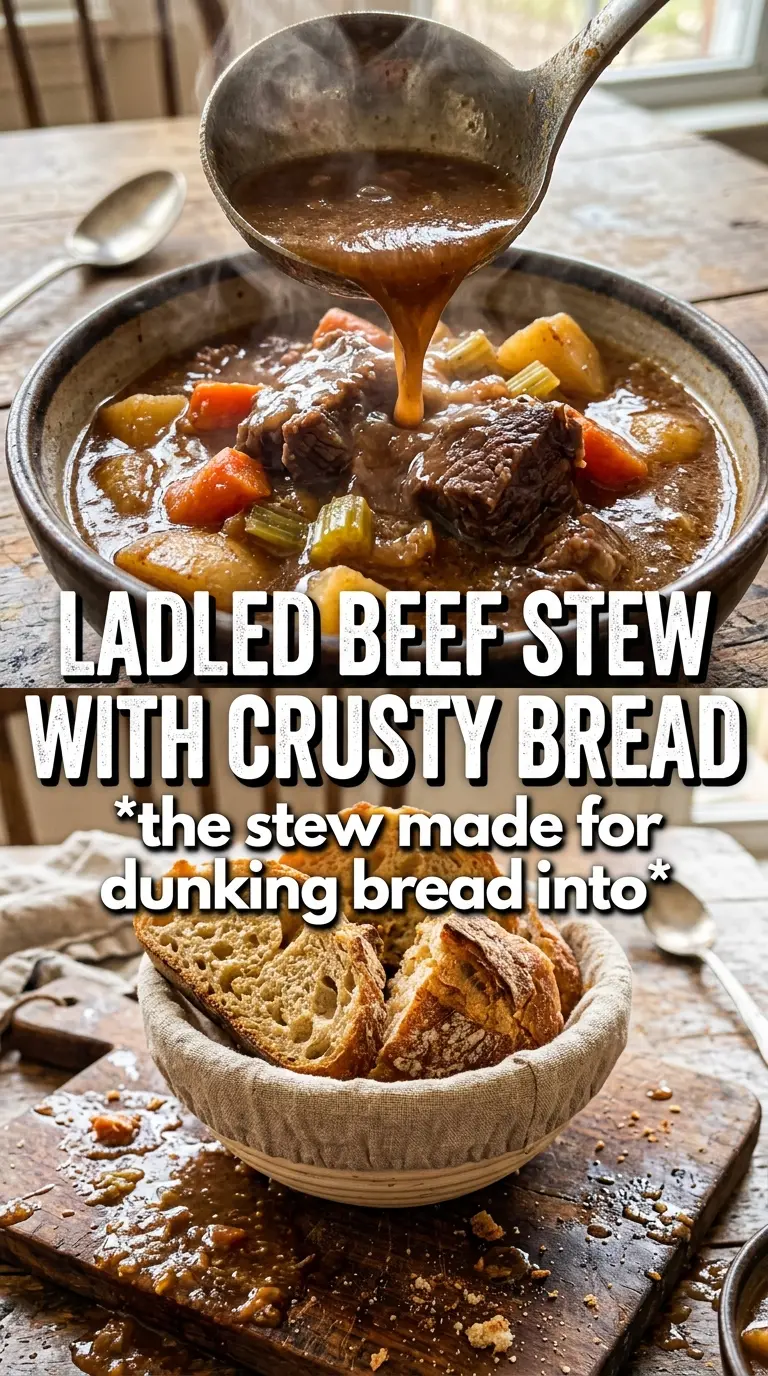
- Beef chuck — This is the backbone of the stew. It has enough marbling to stay juicy through a long cook, and that connective tissue melts into the broth. If you swap in a leaner cut, the texture gets drier and less rich.
- Baby potatoes — These hold their shape better than peeled russets and soak up the broth without disappearing. Halving them lets the centers turn creamy while the edges stay intact.
- Carrots, celery, and onion — They build the base of the stew and help flavor the broth from the bottom up. Cutting them thick matters; thin slices can vanish by the time the beef is done.
- Beef broth and red wine — Together they create a deeper, more layered broth than broth alone. If you don’t want wine, use extra beef broth and add an extra splash of Worcestershire for more savoriness.
- Tomato paste and diced tomatoes — The paste gives concentration, while the diced tomatoes add a little acidity and body. That balance keeps the stew from tasting flat after hours of cooking.
- Worcestershire sauce — This is the shortcut to a fuller, meatier flavor. It’s one of those ingredients that disappears into the background but changes everything in the bowl.
How to Build the Stew So the Broth Turns Rich, Not Thin
Layer the vegetables first
Start with the potatoes, carrots, celery, and onion on the bottom of the slow cooker. They need the longest contact with the heat, and that position lets them soften in the broth instead of steaming on top of the meat. If you pile everything together in no order, the vegetables on top stay too firm while the ones underneath collapse.
Season the beef before it goes in
Salt and pepper on the beef before it hits the pot gives the meat a better head start. You won’t get a deep crust in the slow cooker, but you will get better seasoning all the way through the stew. If the stew tastes flat at the end, it’s usually because the beef never got seasoned enough at the beginning.
Let the slow cooker do the long work
Cook on Low for 8 to 10 hours for the best texture. High will get dinner on the table faster, but low heat gives the chuck time to break down without tightening up. The beef is ready when it pulls apart easily with a fork and the potatoes are tender at the center, not chalky.
Thicken only after the beef is tender
Remove the bay leaves, then stir in the cornstarch slurry and cook on High for another 20 to 30 minutes. The stew should go from loose to lightly glossy and coat a spoon without turning into paste. If it still looks thin after that, give it a few more minutes instead of adding more starch right away.
How to Adapt This for Different Kitchens and Different Schedules
Make it gluten-free without losing body
This stew is naturally close to gluten-free as written, as long as your beef broth and Worcestershire sauce are certified gluten-free. Cornstarch is the right thickener here because it gives the broth gloss without any floury taste.
Skip the wine and keep the depth
Use an extra cup of beef broth in place of the wine. The stew will be a little less rounded, so the Worcestershire and tomato paste matter even more, but the final bowl still tastes deep and savory.
Add mushrooms or peas at the end
A handful of sliced mushrooms can go in with the vegetables for a deeper, earthier stew. Frozen peas should wait until the last 10 minutes so they stay bright instead of turning dull and soft.
Storage and Reheating
- Refrigerator: Store covered for up to 4 days. The broth thickens as it chills, and the vegetables soften a bit more overnight.
- Freezer: It freezes well for up to 3 months. Cool it completely first, then portion it into containers so the potatoes don’t break apart from repeated thawing.
- Reheating: Reheat gently on the stove over medium-low or in the microwave in short bursts, stirring between rounds. Add a splash of broth or water if the stew looks too thick; boiling it hard can turn the beef stringy.