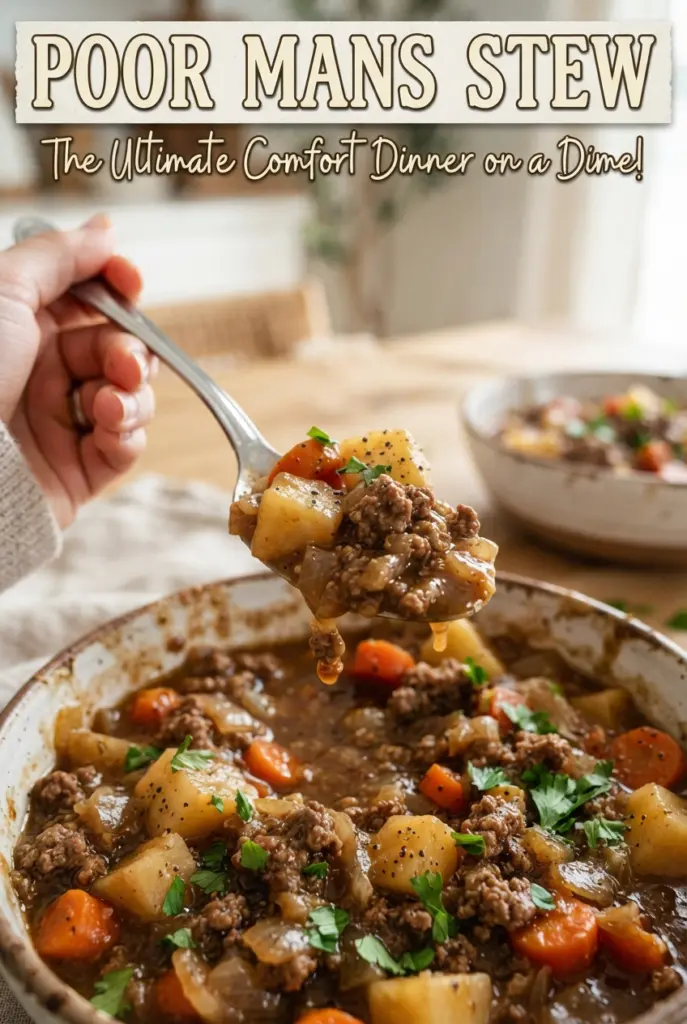
Poor Man’s Stew lands in the bowl the way a good budget dinner should: thick enough to coat a spoon, hearty enough to stand on its own, and full of familiar flavors that taste like they’ve been cooking all afternoon even though the pot comes together fast. The potatoes soften into the broth, the beef gives the whole thing backbone, and the tomato base brings everything together without turning the stew heavy or muddy.
What makes this version work is the order. Browning the beef with the onion first builds a savory base, and adding the garlic after draining keeps it from burning and turning bitter. The tomato soup isn’t there to make this taste like canned soup; it adds body and a little sweetness that rounds out the broth and helps the stew feel fuller than the ingredient list looks.
Below, I’ll show you the one timing detail that keeps the potatoes tender without falling apart, plus a few smart swaps if you need to stretch what’s in the pantry or make it fit what you already have on hand.
The potatoes stayed tender without turning mushy, and the broth got thick and savory after the tomato soup went in. I added a little extra black pepper at the end and it tasted like something I’d spent all day on.
Save Poor Man’s Stew for the nights when you want a thick, beefy one-pot dinner with potatoes, carrots, and a tomato-rich broth.
The Trick to Keeping the Potatoes Tender, Not Mushy
This stew lives or dies by when the potatoes go in and how hard the pot simmers. A rolling boil will beat the edges of the potatoes apart before the centers are tender, so once the stew comes up to a boil, drop it to a gentle simmer and keep the lid on. That slower heat gives the broth time to thicken around the vegetables instead of turning the whole pot cloudy and soft.
The other thing people miss is that the stew should look a little loose before the final five minutes. The potatoes and carrots absorb liquid as they cook, and the frozen vegetables release a bit of moisture at the end, so if the pot looks perfect at the 20-minute mark it usually ends up too thick by the time it hits the table.
What Each Ingredient Is Actually Doing in This Recipe

- Primary ingredient (the star) — Quality matters most. Choose the best you can find.
- Cooking medium (oil, butter, or broth) — This carries flavors and prevents dryness.
- Seasonings (salt, pepper, spices, herbs) — Layer flavors so nothing overpowers. Build depth gradually.
- Aromatics (garlic, onion, herbs) — Cook with fat to bloom flavors. Become the foundation.
- Supporting ingredients — Complement the main ingredient without overpowering it.
- Sauce or liquid (if applicable) — Brings flavors together. Balance richness with acid.
- Acid (lemon, vinegar, wine, or other) — Brightens and prevents flat-tasting results.
- Final finish (garnish, glaze, or sauce) — Prevents one-dimensional taste and adds visual appeal.
What the Tomato Soup Is Doing in This Stew
- Ground beef — Use a beef with enough fat to brown well, then drain off the excess. That quick browning step gives you the savory base the broth alone can’t build.
- Onion and garlic — The onion cooks with the beef so it softens into the background, while the garlic goes in after draining. Garlic added too early can scorch in the fat left in the pot.
- Potatoes — Starchy potatoes help thicken the stew naturally as they simmer. Cut them into even cubes so they finish at the same time.
- Tomato soup — This is the ingredient that gives the stew body. It adds thickness and a gentle sweetness that smooths out the broth; swapping it for plain tomato sauce makes the stew thinner and sharper.
- Frozen mixed vegetables — Stir these in at the end so they stay bright and don’t fall apart. Fresh peas, corn, or green beans can work too, but add them based on how long they need to cook.
Building the Stew in the Right Order
Browning the Beef First
Cook the beef and onion together until the meat loses its pink color and the onions look softened and glossy, about 8 minutes. You want some browned bits stuck to the bottom of the pot; that’s where a lot of the flavor starts. If the pot looks crowded and watery, keep cooking until the moisture evaporates and the beef starts to sizzle again.
Adding the Garlic Without Burning It
Drain off the excess fat, then stir in the garlic for just about 30 seconds. You’re looking for the smell to shift from raw and sharp to fragrant. If garlic goes in too early with the beef, it can go bitter by the time the vegetables finish cooking, and bitter garlic stands out in a simple stew like this.
Simmering Until the Potatoes Give
Add the potatoes, carrots, tomatoes, soup, broth, Worcestershire, thyme, salt, and pepper, then bring everything to a boil before lowering the heat. Keep the pot covered and simmer until a fork slides into the potatoes with only a little resistance. If the broth is boiling hard, the potatoes can break before the carrots soften, so keep it at a lazy bubble.
Finishing With the Frozen Vegetables
Stir in the frozen mixed vegetables for the last 5 minutes. That keeps their color from fading and stops the peas from turning shriveled. Taste at the end and add salt or pepper only after the stew has settled for a minute, because the broth concentrates as it simmers and needs that final adjustment.
Three Practical Ways to Adjust This Stew
Swap the Beef for Ground Turkey
Ground turkey works if you want a lighter stew, but it needs a little help in the flavor department. Brown it well and don’t skip the Worcestershire sauce, since turkey has less built-in richness than beef and can taste flat if you rush the base.
Make It Gluten-Free
This stew is naturally close to gluten-free, but check the tomato soup, Worcestershire sauce, and broth labels. Those three ingredients are the only places hidden gluten usually sneaks in, and once you’ve got gluten-free versions of them, the stew cooks the same way.
Add More Vegetables Without Diluting the Flavor
Extra celery, peas, green beans, or corn can go in without throwing off the stew, but keep the liquid where it is unless you add a lot more bulk. If you load the pot with vegetables and add too much broth, the stew tastes thin instead of hearty, so let the base stay concentrated.
Storage and Reheating
- Refrigerator: Store in an airtight container for up to 4 days. The broth thickens as it sits, and the potatoes soften a bit more each day.
- Freezer: Freezes well for up to 3 months, though the potatoes will be slightly softer after thawing. Cool it completely first and leave a little room at the top of the container.
- Reheating: Warm it gently on the stove over medium-low heat with a splash of broth or water if needed. A hard boil can break the potatoes apart and make the texture grainy.
Answers to the Questions Worth Asking
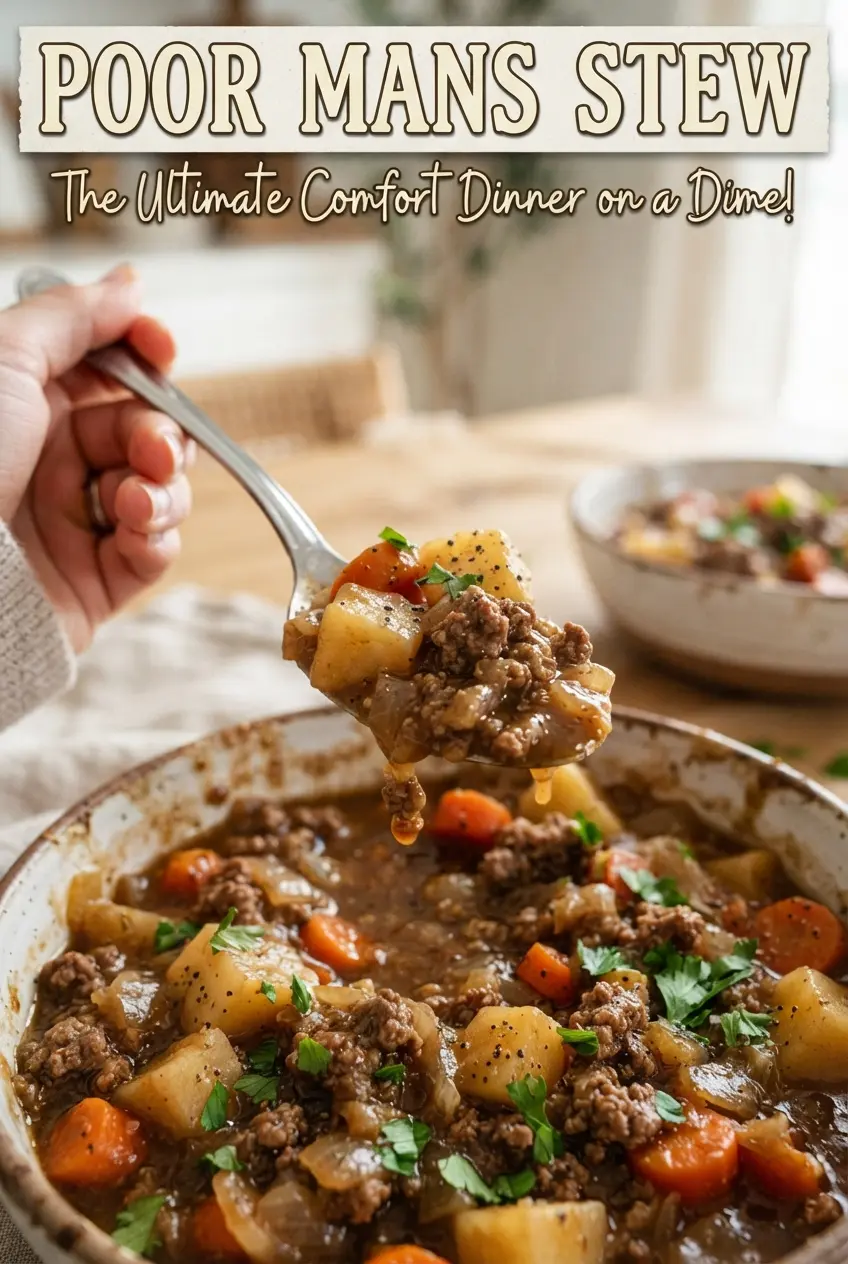
Poor Man's Stew
Ingredients
Equipment
Method
- In a large pot, brown the ground beef and onion over medium-high heat for 8 minutes, stirring occasionally until the beef is cooked through and the onion softens and turns golden.
- Drain excess fat, then add the garlic and cook for 30 seconds until fragrant, keeping it from browning.
- Add the potatoes, carrots, diced tomatoes, tomato soup, beef broth, Worcestershire sauce, dried thyme, salt, and black pepper to the pot and stir to combine.
- Bring the mixture to a boil over high heat, scraping the bottom so nothing sticks.
- Reduce the heat to low, cover, and simmer for 20-25 minutes until the potatoes are tender, stirring once midway.
- Stir in the frozen mixed vegetables and simmer, covered, for 5 minutes until heated through.
- Taste and adjust seasoning, then serve hot.