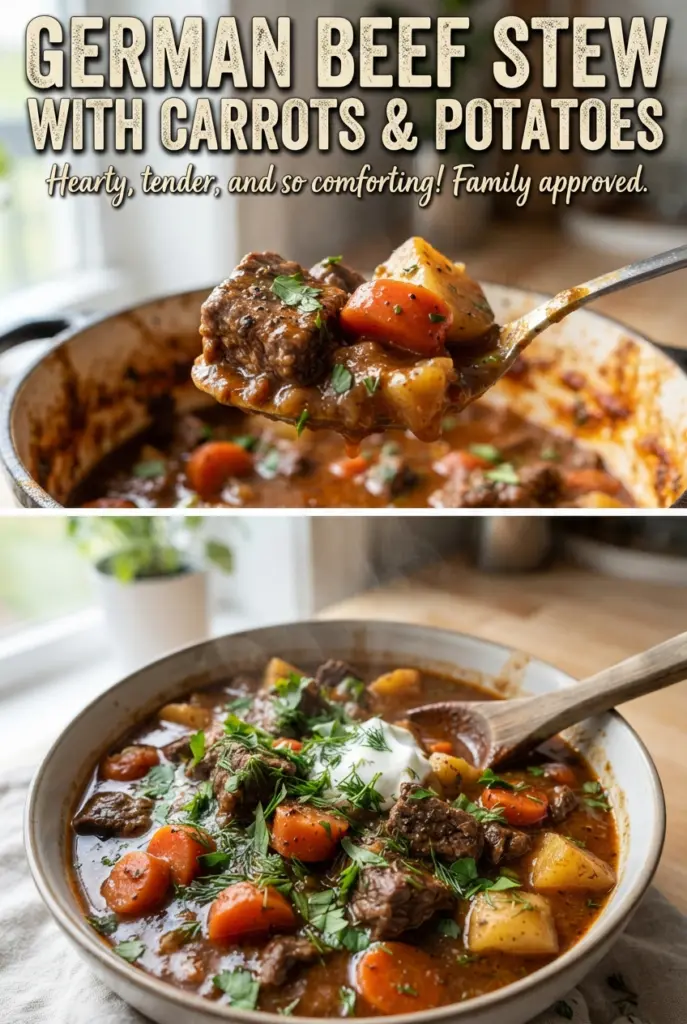
Deep, savory German beef stew earns its place in the regular rotation because it builds flavor in layers and finishes with meat that turns fork-tender in a dark, glossy broth. The beer doesn’t just add depth; it gives the stew a rounded bitterness that keeps the richness from feeling heavy, while the potatoes and carrots soak up every bit of that braise.
The trick is taking time with the browning and the onions. Flour on the beef helps the stew thicken as it simmers, but only if the meat is browned in batches instead of crowded into the pot. The onions need to go far enough to turn golden before the paprika and caraway go in, because that quick bloom in fat is what keeps the spices from tasting raw.
Below, you’ll find the small details that make this stew steady and satisfying, plus the best way to handle leftovers so the broth stays rich and the vegetables don’t collapse.
The beef got meltingly tender and the broth thickened up just right after adding the potatoes. My husband kept going back for more of the carrots and asked if I could make it again next weekend.
Save this German beef stew for a slow-simmered dinner with dark beer, tender chuck, and potatoes that soak up every bit of the broth.
The Reason This Stew Needs a Proper Brown Before the Simmer
Beef chuck is the right cut here because it has enough connective tissue to turn silky over a long simmer. If you rush that first browning step, the stew still tastes fine, but it misses the deep base note that makes each spoonful taste like it cooked all afternoon. The flour coating helps with body, but it also needs a dry, hot pot to brown instead of turning pasty.
The onions matter just as much. Cook them until they’re golden and sweet before the paprika goes in, or the spice can taste dusty instead of round. Once the beer hits the pot, scrape hard at the bottom. Those browned bits are where the finished broth gets its backbone.
What Each Ingredient Is Actually Doing in the Pot
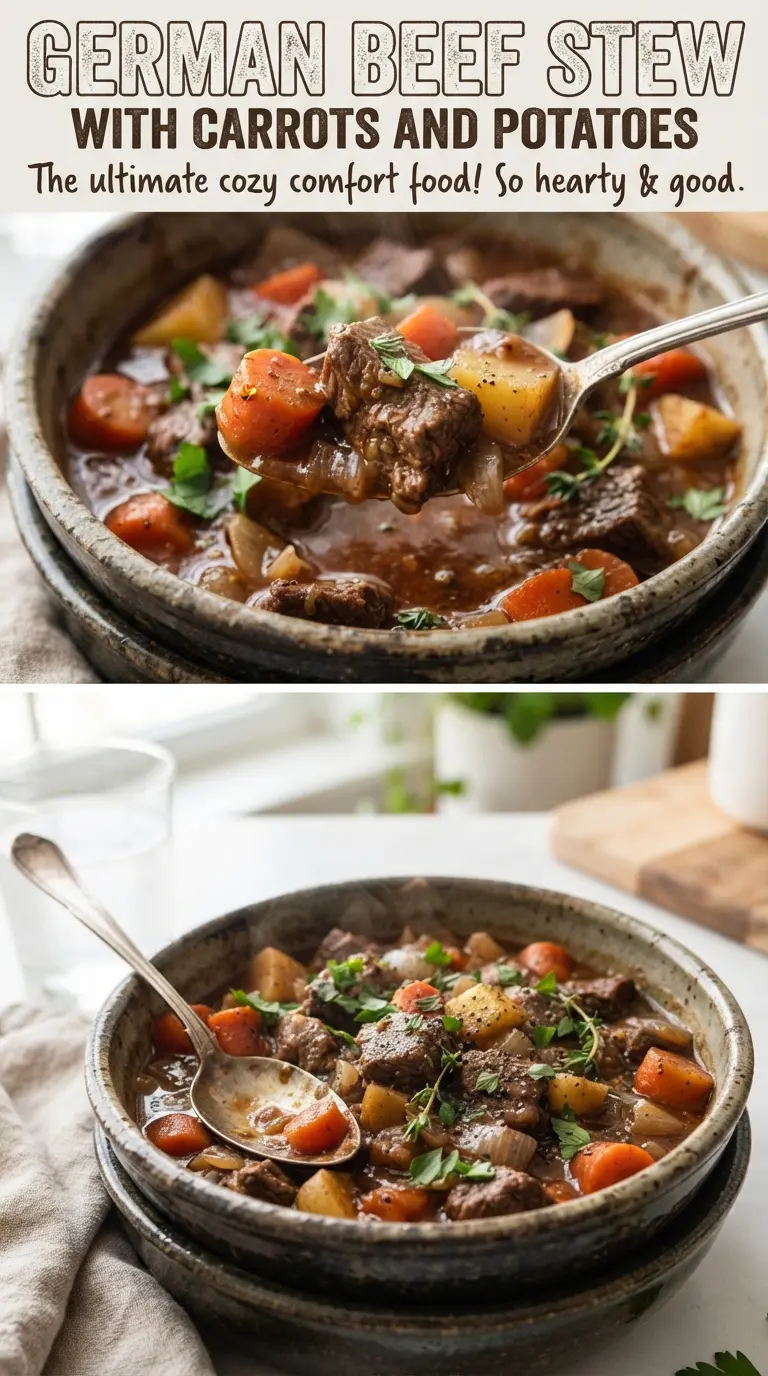
- Beef chuck — This is the cut that softens instead of drying out during a long simmer. If you swap in a leaner stew meat, it can work, but the texture won’t be as plush.
- German dark beer — This gives the broth its malty depth and slight bitterness. A dark lager or dunkel works best; if you use a very bitter stout, the stew can lean sharp instead of balanced.
- Tomato paste, paprika, and caraway — These three build the flavor base before the liquid goes in. Tomato paste adds body, paprika gives warmth and color, and caraway brings that unmistakable German note; let them sizzle briefly in the fat so they bloom instead of tasting flat.
- Potatoes and carrots — Add them later so they hold their shape. If they go in at the start, they’ll fade into the stew and turn mushy before the beef is done.
- Dijon mustard and red wine vinegar — These keep the stew from tasting heavy. You won’t taste them as separate flavors; they just sharpen the broth and make the beer taste cleaner.
How to Layer the Pot and Let the Stew Do the Rest
Browning the Beef Without Crowding the Pan
Brown the floured beef in batches over medium-high heat until each piece has a deep brown crust on at least two sides. If you pile it in, the meat steams and the flour coating turns gummy instead of crisping into those little browned edges that enrich the broth. Pull each batch out as it’s ready; the pot should have dark bits stuck to the bottom, not a greasy puddle.
Building the Onion Base
Once the beef is out, cook the onions in the same pot until they’re soft and golden, scraping up what you can as they release moisture. The goal is sweet and browned, not limp and pale. Garlic, tomato paste, paprika, and caraway go in for just a minute because they only need enough heat to wake up; if the paprika darkens too much, it can turn bitter.
Turning the Beer Into the Braising Liquid
Pour in the beer and scrape the bottom thoroughly, then add broth, mustard, vinegar, and bay leaves. This is the moment the stew becomes one unified flavor instead of separate parts. Bring it to a gentle simmer, not a hard boil; boiling can make the beef seize up before it softens.
Finishing With the Vegetables
Let the beef simmer until it’s close to tender before adding the potatoes and carrots. They need enough time to cook through, but not so much that they disintegrate into the broth. The stew is done when the beef yields easily with a fork, the potatoes are tender at the center, and the broth looks slightly thickened from the flour and starch.
How to Adapt This German Beef Stew Without Losing the Plot
Use a different beer without making the stew harsh
A dark lager, dunkel, or schwarzbier keeps the broth smooth and malty. If you use a stout or porter, the flavor gets deeper but also more roasted, which some people love; just avoid heavily hopped beer because the bitterness can dominate the stew.
Make it gluten-free without losing body
Skip the all-purpose flour and brown the beef without it, then stir in a slurry of cornstarch and cold water near the end if you want the broth thicker. You’ll lose a little of the old-school roux-like depth, but the stew still comes out rich if you simmer it long enough.
Make it ahead for an even better result
This stew tastes even better the next day because the beer, paprika, and beef have time to settle together. Cook it fully, chill it, and reheat it gently; if the broth seems thick after chilling, loosen it with a splash of broth or water rather than boiling it hard.
Storage and Reheating
- Refrigerator: Keeps 4 days in a sealed container. The broth thickens as it sits, which is normal.
- Freezer: Freezes well for up to 3 months. Cool it completely first, and freeze in portions for easier reheating.
- Reheating: Rewarm gently on the stove over low heat with a splash of broth or water if needed. Don’t boil it hard, or the potatoes can break apart and the beef can tighten up.
Answers to the Questions Worth Asking
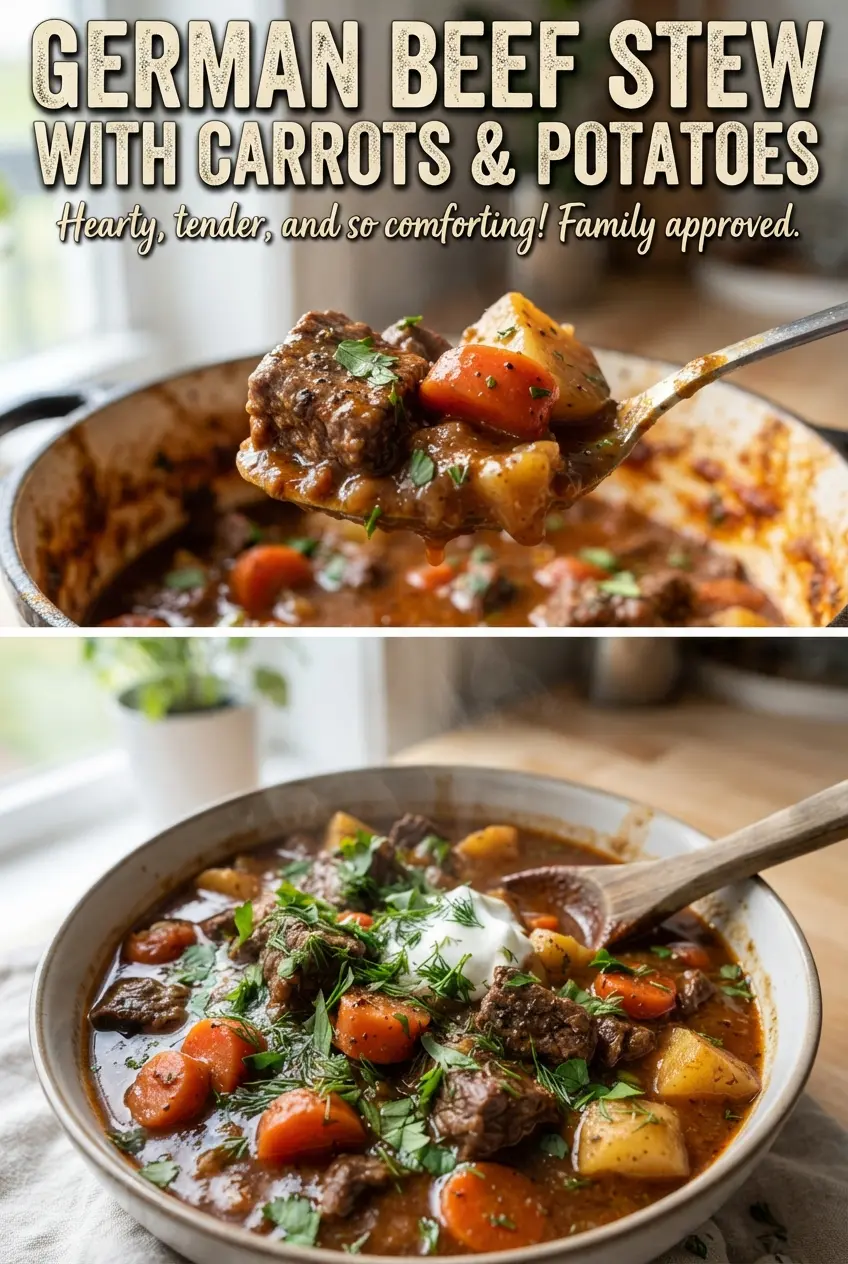
German Beef Stew with Carrots and Potatoes
Ingredients
Equipment
Method
- Season the beef with salt and black pepper, then toss with all-purpose flour until evenly coated. Heat 3 tablespoons butter or oil in a Dutch oven over medium-high until shimmering.
- Brown the beef in batches for 6-8 minutes, turning so the cubes develop deep color. Move browned beef to a plate and repeat until all beef is browned.
- Reduce heat to medium and cook sliced onions for 8-10 minutes until golden. Add minced garlic, tomato paste, sweet paprika, and caraway seeds and cook for 1 minute, stirring constantly.
- Pour in the German dark beer and scrape the pot to loosen browned bits. Stir in beef broth, Dijon mustard, red wine vinegar, and bay leaves.
- Return the browned beef to the pot, cover, and simmer at 185-205°F for 1 1/2 hours. Check occasionally to keep a gentle simmer and prevent boiling over.
- Add cubed potatoes and thick-sliced carrots, then stir to submerge in the braising liquid. Simmer uncovered at 185-205°F for 45-60 minutes until the vegetables are tender.
- Remove bay leaves and top the stew with chopped fresh parsley before serving. Let stand 5 minutes so the gravy clings to the meat and vegetables.