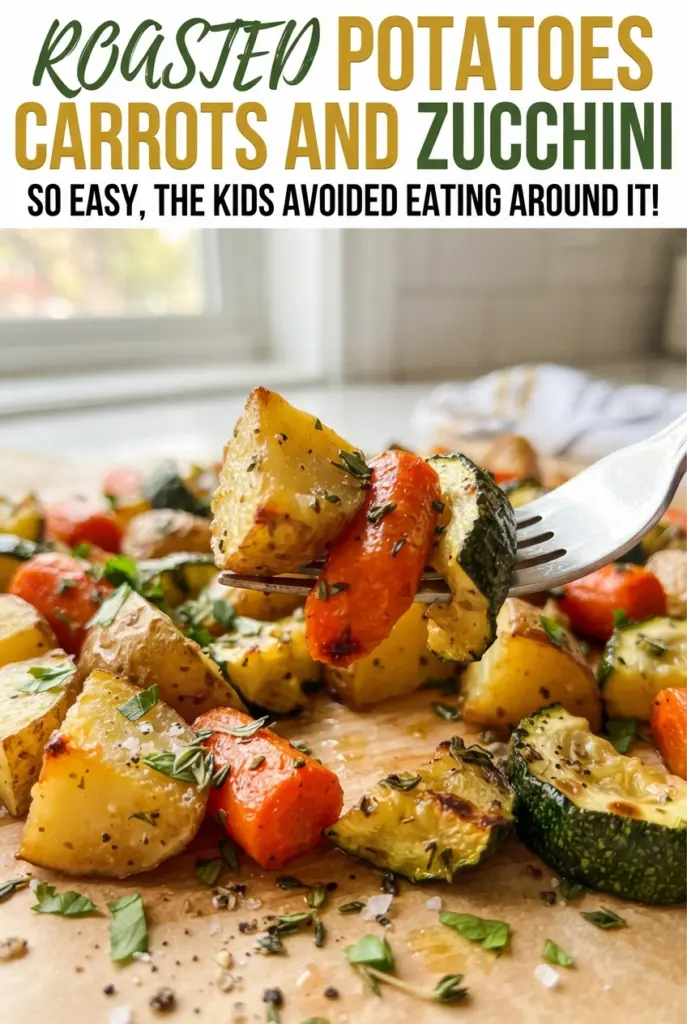
Roasted potatoes, carrots, and zucchini come out at their best when each vegetable keeps its own texture: potatoes with crisp edges, carrots with sweet browned spots, and zucchini that turns tender without collapsing into a watery heap. This sheet pan side earns its place because it does the one thing mixed roasted vegetables often fail to do — it gives the denser vegetables a head start, then adds the zucchini only when there’s enough heat left to brown it instead of steam it.
The trick is separating the timing by density. Potatoes and carrots need the full roast to soften in the middle and pick up color on the edges. Zucchini only needs a short finish, and it roasts better when it’s cut into larger chunks so it can hold its shape. A hot oven and enough oil matter here, too, because dry vegetables on a crowded pan will steam before they ever crisp.
Below you’ll find the small details that make this side dish work every time, plus a few smart swaps and storage notes for the nights when you want to serve it alongside almost anything.
The potatoes got those crisp edges, the carrots turned sweet, and the zucchini stayed firm instead of going soft. I liked that the Parmesan at the end melted just enough to cling to everything.
Save these roasted potatoes, carrots, and zucchini for a crisp-edged sheet pan side with Parmesan and herbs.
The Reason Mixed Roasted Vegetables Go Soft Instead of Crisp
The biggest mistake with mixed vegetables is treating them like they all roast at the same speed. Potatoes need time to drive off moisture and build a crust. Carrots need enough heat to caramelize their edges. Zucchini is the problem child here; if it goes in too early, it gives off water and turns the whole pan soft.
That’s why this recipe splits the roast into two stages. The potatoes and carrots get a head start on the hot sheet pan, which gives them a chance to brown before the zucchini arrives. A crowded pan works against you because the vegetables sit on top of each other and trap steam, so give them room in a single layer.
- Potatoes — Baby potatoes hold their shape well and crisp up beautifully when they’re quartered. If you use larger potatoes, cut them into 1-inch pieces so they roast at the same pace as the carrots.
- Carrots — The 1/2-inch coins are thick enough to stay firm while still catching deep color on the edges. Thinner slices will soften too fast.
- Zucchini — Cut it into 1-inch chunks, not thin rounds. Bigger pieces survive the final roast better and keep their texture.
What Each Ingredient Is Actually Doing in This Recipe
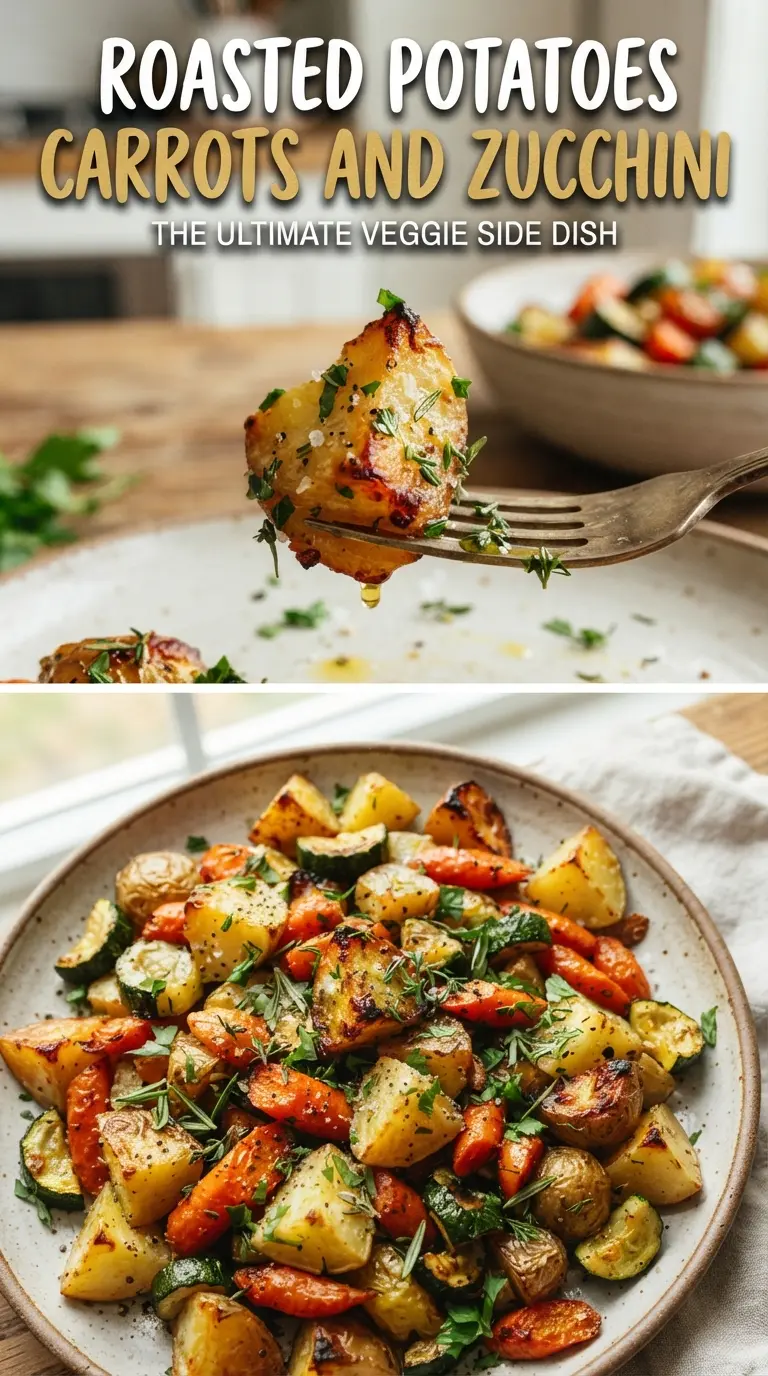
- Primary ingredient (the star) — Quality matters most. Choose the best you can find.
- Cooking medium (oil, butter, or broth) — This carries flavors and prevents dryness.
- Seasonings (salt, pepper, spices, herbs) — Layer flavors so nothing overpowers. Build depth gradually.
- Aromatics (garlic, onion, herbs) — Cook with fat to bloom flavors. Become the foundation.
- Supporting ingredients — Complement the main ingredient without overpowering it.
- Sauce or liquid (if applicable) — Brings flavors together. Balance richness with acid.
- Acid (lemon, vinegar, wine, or other) — Brightens and prevents flat-tasting results.
- Final finish (garnish, glaze, or sauce) — Prevents one-dimensional taste and adds visual appeal.
What the Garlic, Oil, and Parmesan Are Doing Here
- Olive oil — This is what carries the seasoning and helps the edges brown. The split oil amount matters because the zucchini needs a fresh coating when it goes in later.
- Garlic — Minced garlic adds a sharp savory note, but it can burn if it’s buried under too much heat. Toss it well with the potatoes and carrots so it clings to the oil instead of sitting on top of the pan.
- Italian seasoning — The dried herbs season the vegetables evenly and hold up in the oven. Fresh herbs would scorch here, so dried is the right choice for the roast itself.
- Parmesan — Add it at the end so it melts onto the hot vegetables without turning hard or bitter. If you need a dairy-free finish, skip it and finish with extra parsley and a pinch of flaky salt.
How to Roast Them in Two Phases for the Best Texture
Getting the Potatoes and Carrots Started
Heat the oven to 425F before the vegetables go in. A hot oven is what gives you browning instead of just softened vegetables. Toss the potatoes and carrots directly on the sheet pan with most of the oil, garlic, seasoning, salt, and pepper, then spread everything into a single layer. After 20 minutes, the potatoes should be starting to crisp at the edges and the carrots should look slightly browned where they touch the pan.
Adding the Zucchini at the Right Moment
Mix the zucchini with the remaining oil before adding it to the pan. That thin coat helps it roast instead of drying out on the surface. Stir it into the pan so it gets some direct contact with the hot metal, but don’t leave the vegetables piled up in the center. If the zucchini looks pale and watery at the end, it went in too early or the pan was too crowded.
Finishing with Cheese and Herbs
Roast for about 15 minutes more, until the potatoes are crisp enough to release from the pan and the zucchini is tender with browned edges. Sprinkle on the Parmesan while the vegetables are still hot so it melts slightly and sticks. Add the parsley last for freshness and color. If the cheese goes on too early, it can dry out or brown too hard before the vegetables finish roasting.
Three Ways to Adjust the Pan Without Losing the Roast
Make It Dairy-Free
Skip the Parmesan and finish with extra parsley, a little lemon zest, or a pinch of flaky salt. You lose the salty, nutty finish, but the vegetables still roast with plenty of flavor from the garlic and herbs.
Swap in Different Root Vegetables
You can replace part of the carrots with parsnips or sweet potatoes, but cut them to the same size as the potatoes so the roast stays even. Sweet potatoes brown faster and soften sooner, so they’re best if you keep the pieces slightly larger.
Add More Protein Without Changing the Method
Toss in cooked chickpeas for the last 10 minutes if you want more substance. They pick up the seasoning and crisp at the edges, which makes the whole pan feel more like a full meal without changing the roasting schedule.
Storage and Reheating
- Refrigerator: Store leftovers in an airtight container for up to 4 days. The zucchini softens a bit, but the flavor stays good.
- Freezer: The potatoes and carrots freeze better than the zucchini. If you plan to freeze it, expect the zucchini to lose structure and use the vegetables for a soup or hash later.
- Reheating: Reheat on a sheet pan in a 400F oven until hot and the edges start to crisp again. The microwave will steam the vegetables and flatten the texture, so avoid it if you want that roasted finish back.
Answers to the Questions Worth Asking
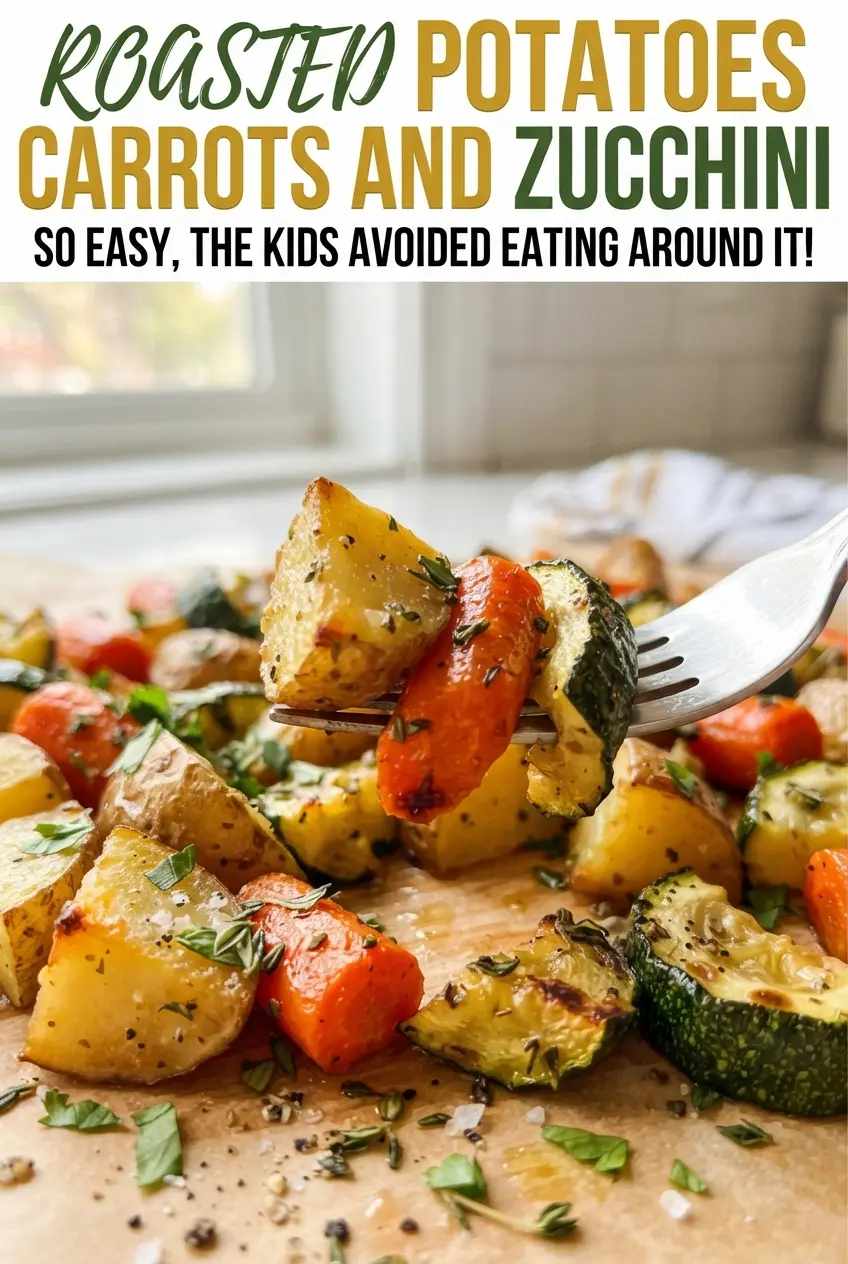
Roasted Potatoes Carrots and Zucchini
Ingredients
Equipment
Method
- Preheat the oven to 425F so it’s fully hot before roasting. Use a sheet pan inside the oven or take it out only once to prevent sticking.
- Toss potatoes and carrots with 3 tablespoons olive oil, garlic, Italian seasoning, salt, and pepper on a sheet pan. Spread them in a single layer so the potatoes can brown on the edges (no overcrowding).
- Roast for 20 minutes. Look for lightly golden surfaces starting on the potato cubes.
- Toss zucchini with the remaining oil, then add it to the pan and stir. Try to keep the zucchini in the spaces around the potatoes rather than piling everything together.
- Roast for 15 minutes more until potatoes are crispy and zucchini is tender. You should see deeper browning on the potato edges and browned spots on the zucchini.
- Sprinkle with Parmesan and parsley, then serve right away. The cheese should melt slightly from the hot vegetables while the herbs stay bright.