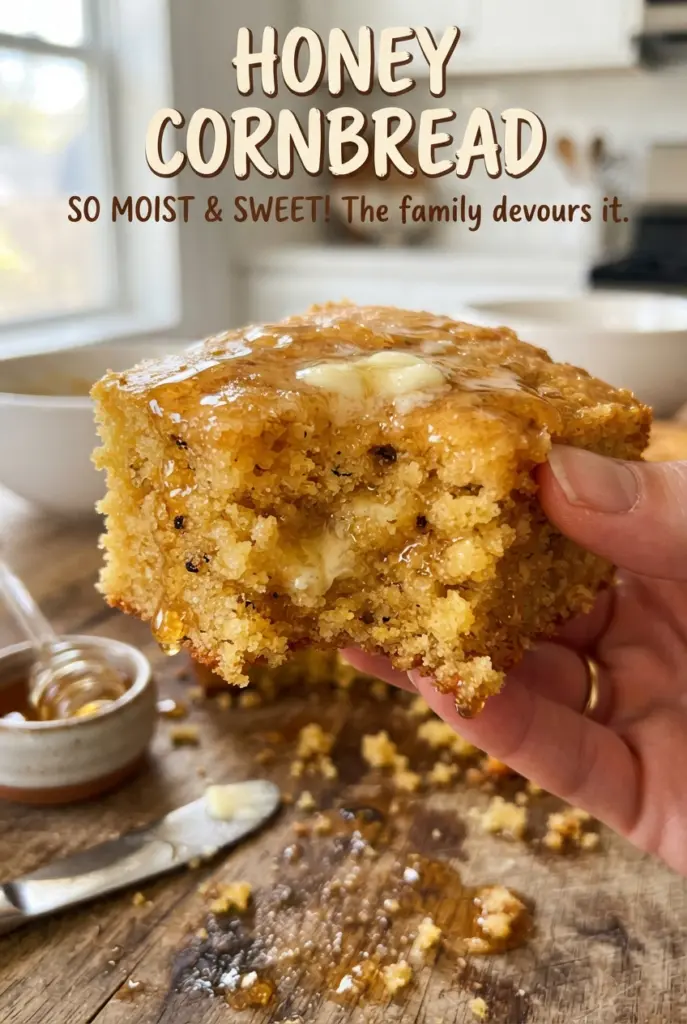
Honey cornbread comes out with a tender crumb, crisp-edged squares, and just enough sweetness to make the honey butter on top feel right at home. The best version stays soft in the middle, slices cleanly once it cools for a few minutes, and still holds onto that old-fashioned cornbread character instead of turning cakey.
The trick is balancing the batter so it’s mixed only until the dry streaks disappear. Overmixing wakes up the flour and tightens the crumb, which is how cornbread turns tough. Honey brings moisture and a gentle floral sweetness, while the melted butter keeps the texture rich without making it heavy. Baking at 400°F gives the top a little structure fast, so the center can rise without drying out before the edges are set.
Below, I’ll show you the small details that make this cornbread worth repeating, plus the one topping step that turns a good pan into the kind people hover around while it’s still warm.
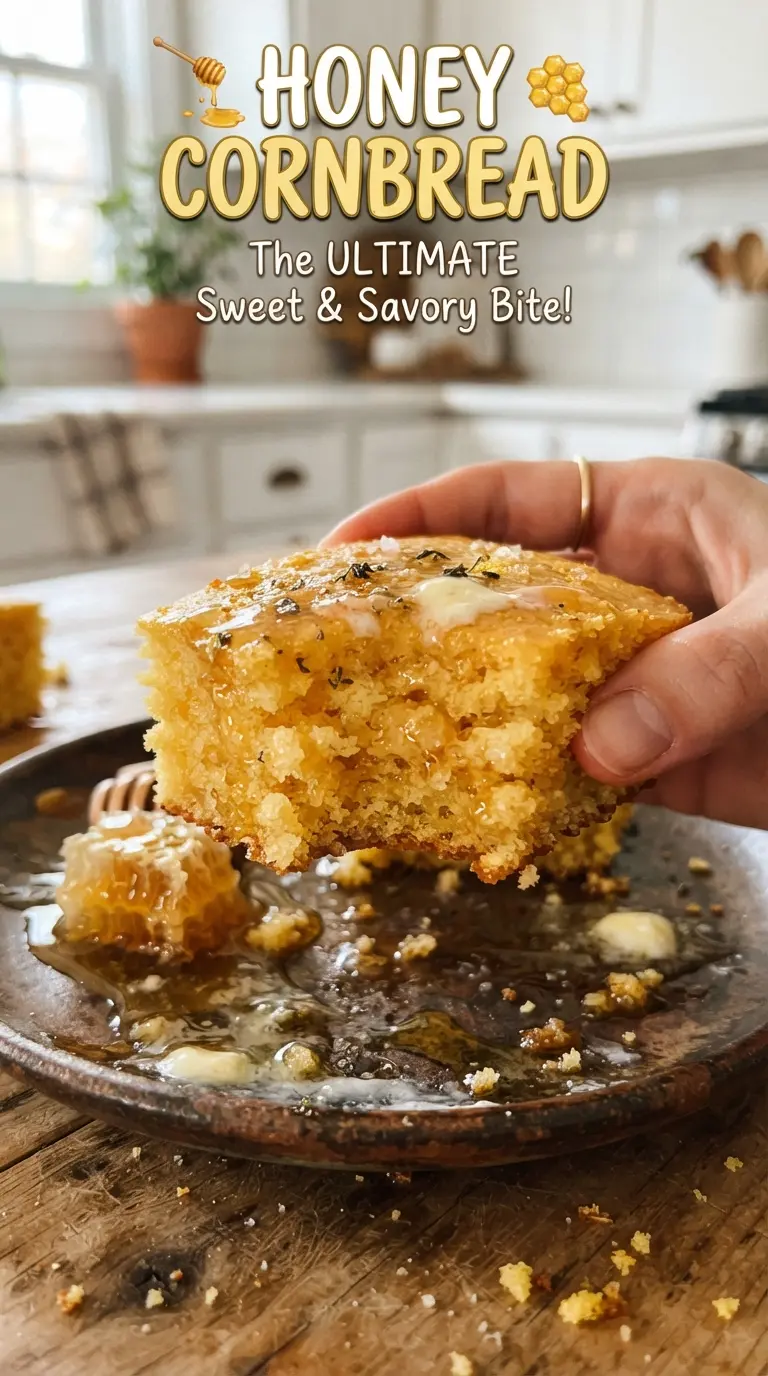
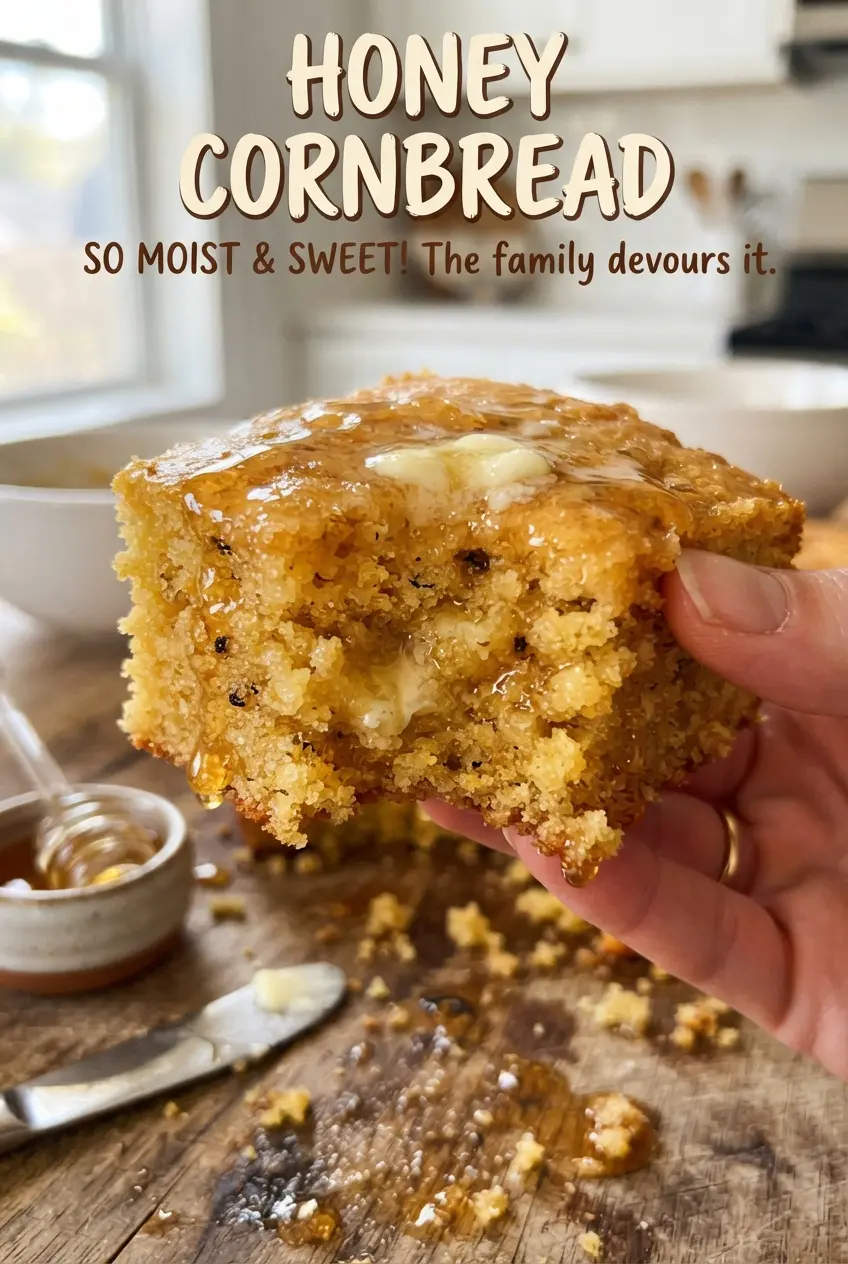
The honey butter on top soaked into the warm cornbread just enough to make the edges glossy without getting soggy. I baked it for 23 minutes and the crumb stayed soft instead of dry and crumbly.
Save this honey cornbread for the kind of side dish that bakes up golden, gets brushed with honey butter, and disappears while it’s still warm.
The Small Mistake That Makes Cornbread Dry
Cornbread dries out fast when the batter gets overworked or the pan waits too long to go into the oven. Once the flour hits liquid, gluten starts forming right away. Stir until the dry spots disappear, then stop. A few small lumps are better than a smooth, overmixed batter that bakes up tight and bready.
The other mistake is underbaking by guesswork. The top should be deeply golden and the center should spring back lightly when touched. A toothpick should come out clean or with just a few moist crumbs. If it comes out with wet batter, the middle hasn’t set yet, and cutting too soon will make the slices collapse instead of hold their shape.
What the Honey, Milk, and Butter Are Each Doing Here
- Yellow cornmeal — This gives the cornbread its grainy, old-fashioned texture and the color people expect. Fine-ground cornmeal makes a softer crumb, while a medium grind gives you a little more bite. If you only have coarse cornmeal, the cornbread will be more rustic and need the full bake time.
- All-purpose flour — Flour holds the loaf together so it slices cleanly. Cornmeal alone makes a crumbly pan of bread. If you swap in part whole wheat flour, the cornbread gets denser and a little nuttier, which works if you’re after a heartier side.
- Honey — Honey adds sweetness, yes, but it also keeps the crumb moist for longer than plain sugar alone. Use a mild honey if you want the cornbread flavor to stay classic. A darker honey will bring a stronger floral note and a deeper color on top.
- Butter — Melted butter goes into the batter for richness, then soft butter mixed with honey is brushed on at the end for that glossy, warm finish. Don’t skip the topping if you want the best version of this recipe. That last brush melts into the crust and gives each square a sweet, buttery top.
- Whole milk — Whole milk keeps the batter tender and gives a fuller flavor than low-fat milk. If that’s what you have, low-fat milk will work, but the crumb will be a little less rich. Buttermilk also works if you want a tangier cornbread, though it shifts the flavor away from the honey-forward version.
Mix Fast, Bake Hot, Brush Warm
Building the Batter
Whisk the dry ingredients first so the baking powder and sugar are evenly distributed through the cornmeal and flour. In a separate bowl, whisk the milk, eggs, honey, and melted butter until the honey loosens into the liquid instead of sitting in streaks. When you combine the two, use a spoon or spatula and stop as soon as the flour disappears. The batter should look thick but pourable, not silky.
Getting the Oven Doing the Work
Scrape the batter into a greased 8×8-inch pan and get it into the 400°F oven right away. That heat helps the baking powder lift the cornbread before the edges dry out. If your oven runs hot, check a minute or two early so the top doesn’t go from golden to overbrowned. You’re looking for a firm top with a little spring in the center, not a dry crust all the way through.
Finishing With Honey Butter
Stir together the honey and soft butter while the cornbread bakes so it’s ready the moment the pan comes out. Brush it over the top while the bread is still warm enough to melt it in. That’s what gives the surface its sheen and a little extra sweetness without making the crumb sticky. Let the pan sit for about 10 minutes before slicing so the pieces hold together instead of crumbling apart.
Three Ways to Make This Cornbread Fit the Table
Dairy-Free Version
Use a neutral dairy-free milk and replace the butter with melted plant-based butter. The crumb stays soft, though you’ll lose a little of the round, buttery finish on top. For the best texture, use a plant-based butter that behaves like real butter when melted, not a thin oil spread.
Less Sweet, More Savory
Cut the sugar in half and reduce the honey in the batter slightly if you want cornbread that leans more toward a side for chili, beans, or greens. It will still stay moist, but the top will be less glossy and the flavor more breadlike than dessert-like.
Gluten-Free Swap
Use a cup-for-cup gluten-free flour blend in place of the all-purpose flour. The cornbread will be a little more delicate, so let it cool before cutting. If your blend already contains xanthan gum, don’t add extra or the texture can turn gummy.
Muffin Tin Portioning
Divide the batter into a greased muffin tin and start checking around 15 to 18 minutes. The edges brown faster this way, which gives you more crust per bite. This is the move when you want grab-and-go portions or need something that reheats faster than a full pan.
Storage and Reheating
- Refrigerator: Keep covered for up to 4 days. The crumb firms up a little in the fridge, but the honey helps it stay moist.
- Freezer: Freeze individual squares wrapped tightly for up to 2 months. Thaw at room temperature before reheating so the center doesn’t dry out.
- Reheating: Warm slices in a 300°F oven, covered loosely with foil, until heated through. The mistake people make is blasting cornbread in the microwave too long, which turns the edges rubbery and pulls moisture out of the crumb.
Questions I Get Asked About This Recipe
Honey Cornbread
Ingredients
Equipment
Method
- Preheat the oven to 400F and grease an 8x8-inch baking pan so the batter releases easily after baking.
- Whisk yellow cornmeal, all-purpose flour, baking powder, salt, and sugar until evenly combined with no visible lumps.
- Whisk whole milk, large eggs, honey, and melted butter, then stir into the dry ingredients just until combined—keep the batter slightly thick and avoid overmixing.
- Pour the batter into the greased pan and spread it level, then bake for 20-25 minutes at 400F until golden and a toothpick comes out clean.
- Mix honey and soft butter, then brush over the warm cornbread before slicing so it melts and spreads over the top.