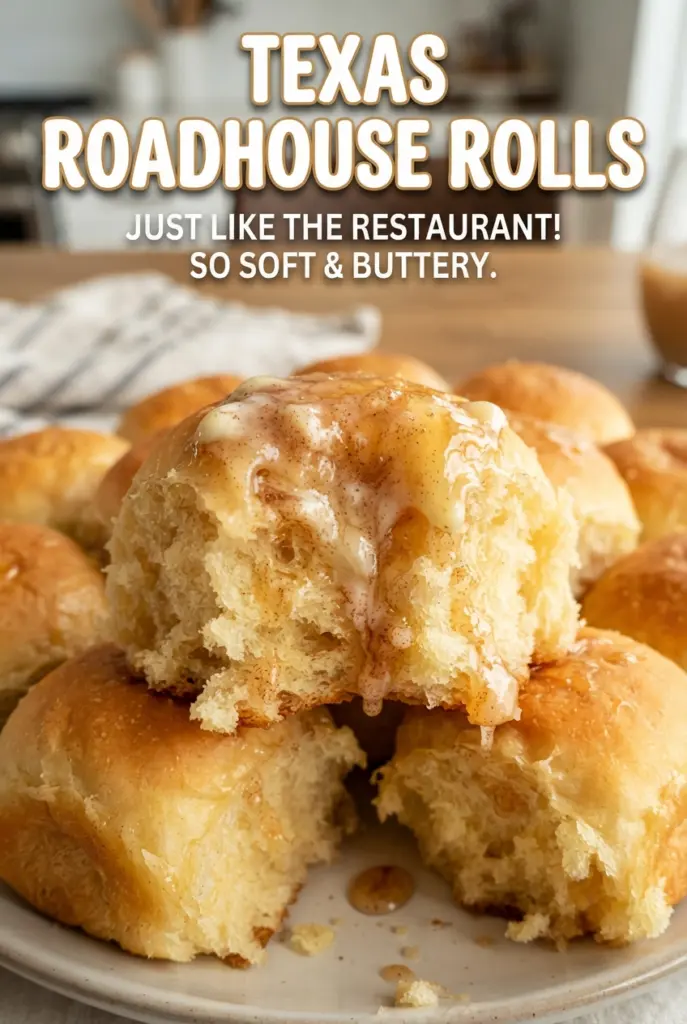
Texas Roadhouse rolls bake up unbelievably soft, with a tender crumb, a light sweetness, and that pull-apart texture that makes people reach for a second one before they’ve finished the first. The tops turn gently golden while the inside stays fluffy and almost cloudlike, which is exactly what you want when the real payoff is a swipe of cinnamon honey butter melting into the warm center.
What makes these work is the balance: enough sugar to echo the restaurant version, but not so much that the dough turns heavy, and enough butter to keep the crumb rich without making it greasy. Warm milk helps the yeast wake up quickly, and the first rise gives the dough structure before you cut it into squares. The final brush of butter right after baking is the detail that makes the rolls taste finished instead of just baked.
Below, I’ll walk through the little choices that keep the dough soft, how to get that square shape without overhandling it, and the one butter trick that makes the topping taste like the real thing.
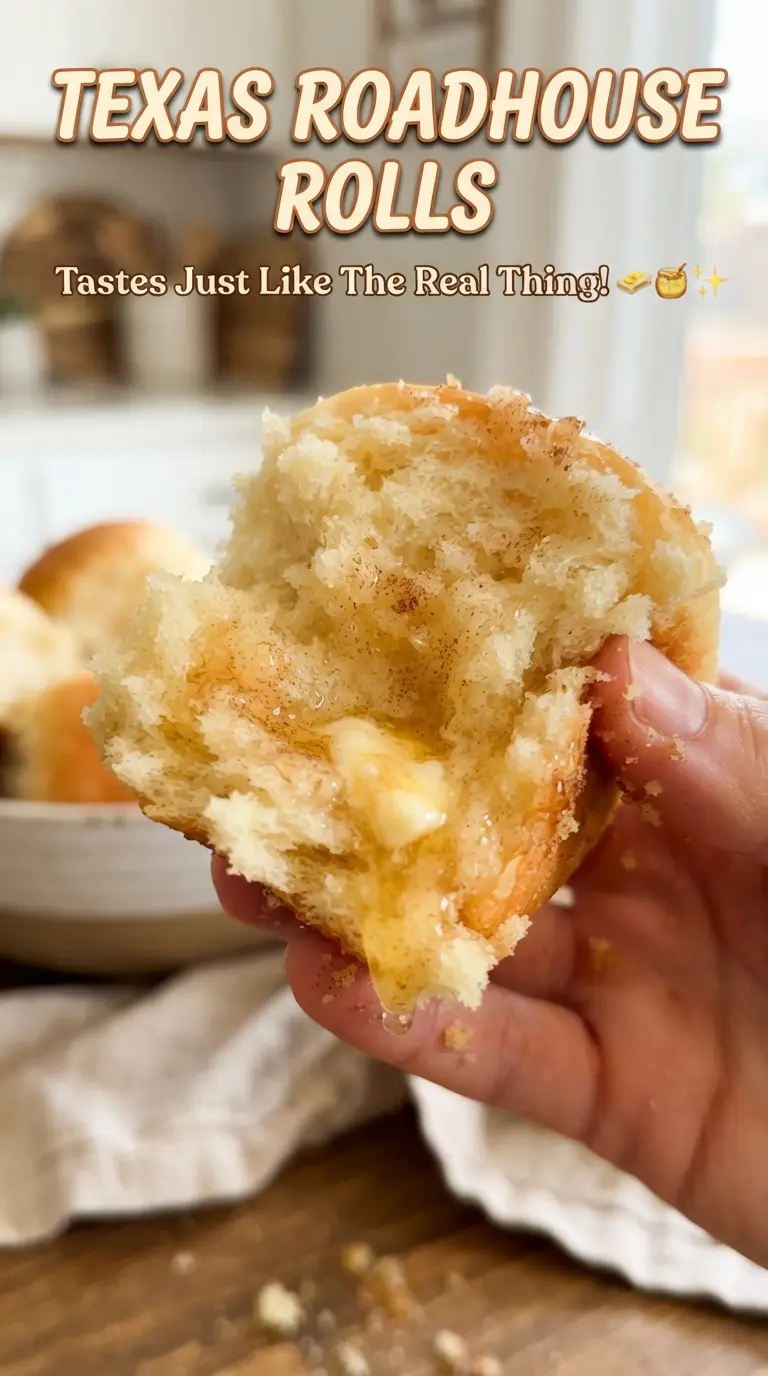
The dough rose beautifully and the rolls came out pillowy, not dense. I brushed them with butter as soon as they left the oven, and the cinnamon honey butter soaked right into the split tops.
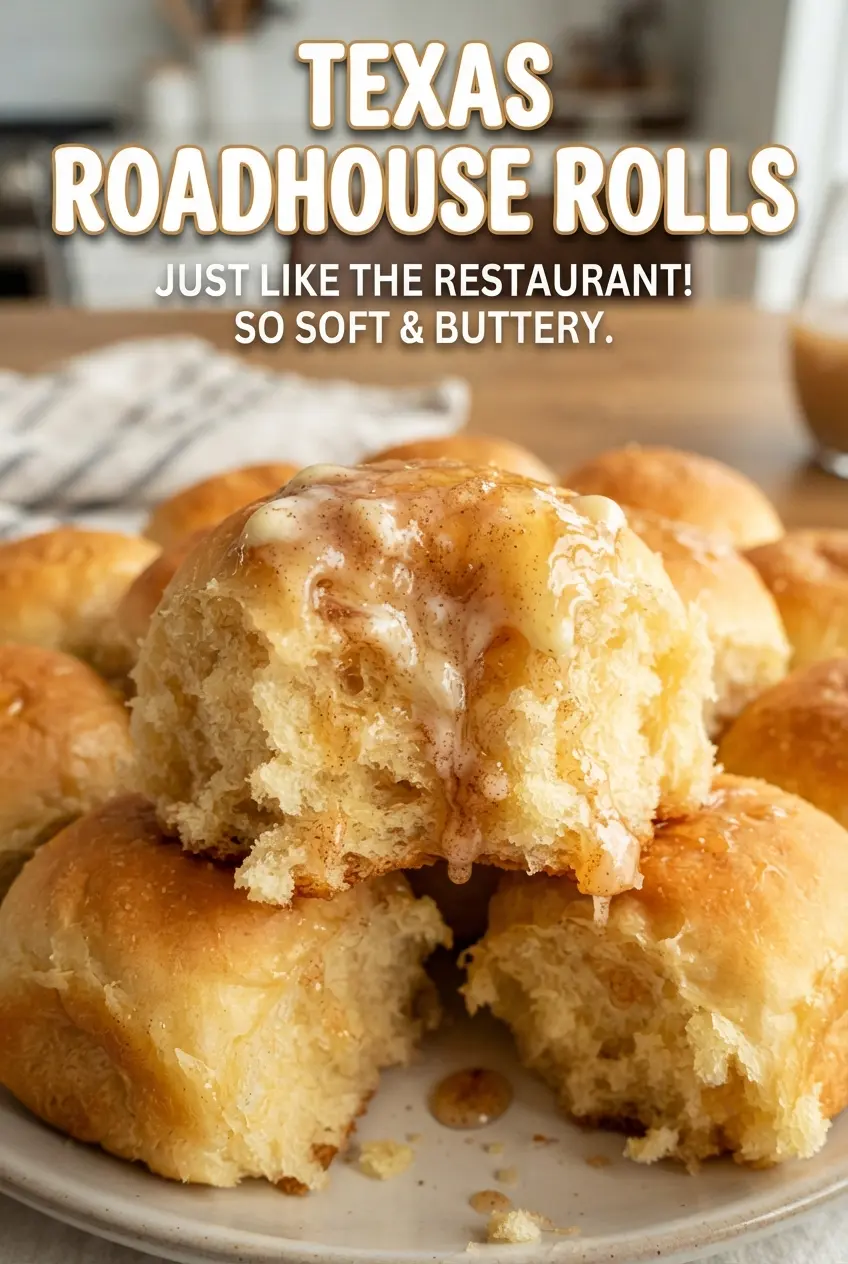
Save these Texas Roadhouse rolls for the nights when you want soft, square dinner rolls with that fluffy crumb and cinnamon honey butter.
The Step Most Roll Recipes Rush: The Second Rise
These rolls get their signature softness from patience, not from extra flour or aggressive kneading. After you cut the dough into squares, the second rise gives the gluten time to relax and the yeast time to fill each piece with air. If you bake them too early, they’ll still taste fine, but they’ll be tighter and less feathery in the middle.
The shape matters too. Cutting squares instead of rolling perfect balls keeps the edges slightly craggy, which is part of the Texas Roadhouse look. Don’t press the cut pieces down when you move them to the sheet pan. Let them puff where they land.
What the Dough, Butter, and Honey Are Each Doing Here
- Whole milk — Warm milk gives the dough a softer, richer crumb than water alone. Keep it around 110°F; hotter than that and you can slow or kill the yeast. If you only have 2% milk, it still works.
- Active dry yeast — This is what gives the rolls their lift and airy center. If the mixture doesn’t look foamy after five minutes, start over with fresh yeast; weak yeast is the fastest way to dense rolls.
- Butter — Melted butter goes into the dough for tenderness, while softened butter in the topping gives that whipped, spreadable finish. Don’t swap in margarine here if you want the same flavor and texture.
- Honey and cinnamon — These turn the topping into the signature cinnamon honey butter. The honey keeps it silky, and the cinnamon gives it that familiar restaurant finish without taking over.
Building the Dough So It Stays Soft, Not Heavy
Waking Up the Yeast
Stir the warm milk, water, yeast, and a spoonful of sugar together, then wait for the surface to turn foamy. That foam tells you the yeast is alive and ready to work. If nothing happens after five to ten minutes, the yeast is the problem, not the dough. Starting with a weak bloom almost always leads to rolls that bake up flat.
Kneading to the Right Finish
Once the flour goes in, knead until the dough turns smooth, elastic, and just a little tacky. It should clear the sides of the bowl but still feel soft when you touch it. If you keep adding flour until it feels dry, the rolls will bake up bready instead of tender. A slightly sticky dough makes the fluffiest result.
Cutting and Proofing the Squares
Roll the dough to a half-inch thickness, fold it, and cut clean squares with a sharp knife or bench scraper. The fold helps create layers, but only if you keep the dough from getting smashed. After that, the second rise should make the squares look puffy and almost touching. If they still look compact when they go into the oven, give them more time.
Baking and Buttering at the End
Bake until the tops are pale gold with a deeper golden edge underneath. The rolls should sound light when tapped, not hollow and dry-looking. Brush them with melted butter the second they come out of the oven. Waiting even a few minutes means the butter won’t soak in the same way.
Three Ways to Adapt These Rolls Without Losing the Soft Crumb
Make them dairy-free
Use unsweetened non-dairy milk and a plant-based butter with decent fat content. The rolls will still rise and stay soft, but the flavor will be a little less rich and the cinnamon honey butter won’t taste quite as rounded. For the best texture, choose a milk that isn’t too thin.
Use instant yeast instead of active dry
Swap in the same amount of instant yeast and mix it straight into the flour. You can usually shave a few minutes off the rise, though the dough should still double before shaping. The flavor stays the same, and the process gets a little simpler.
Turn them into pull-apart pan rolls
Instead of spacing the squares apart, nestle them into a buttered baking dish so they rise into each other. The rolls come out softer on the sides and a little more like a tear-and-share pan of bread. Bake a few minutes longer if the center looks pale while the edges are already browned.
Storage and Reheating
- Refrigerator: Store in an airtight container for up to 4 days. They’ll soften a bit as they sit, but they still reheat well.
- Freezer: These freeze well. Wrap tightly and freeze for up to 2 months, then thaw at room temperature before reheating.
- Reheating: Warm them in a 300°F oven for 5 to 8 minutes, covered loosely with foil if you want to keep the tops soft. The biggest mistake is microwaving too long, which makes the crumb rubbery instead of pillowy.
Answers to the Questions Worth Asking
Texas Roadhouse Rolls
Ingredients
Equipment
Method
- Combine whole milk warmed to 110F, warm water, active dry yeast, and 1 tablespoon sugar, then let stand 5 minutes until foamy (a creamy foam layer should form).
- Add the remaining sugar, large egg, melted butter, salt, and all-purpose flour, then mix until a shaggy dough forms.
- Knead the dough for 8 minutes until soft and smooth, with the surface looking elastic and cohesive (no dry flour pockets).
- Cover and let rise for 1 hour until doubled in size (it should look noticeably larger and airy).
- Roll the dough into a 1/2-inch thick rectangle, fold in half, and cut into 2-inch squares with clean edges.
- Place squares on a parchment-lined sheet, cover, and let rise for 1 hour until puffy with visible lift between the pieces.
- Preheat oven to 350F, then bake for 12-15 minutes until golden (edges and tops should turn a warm brown).
- Brush the hot rolls with the remaining melted butter so they look glossy and melt-in tender.
- Whip softened butter, powdered sugar, honey, and ground cinnamon until fluffy, stopping when the mixture turns pale and airy.
- Serve the warm rolls with the cinnamon honey butter so it melts into the fluffy centers as you split them open.