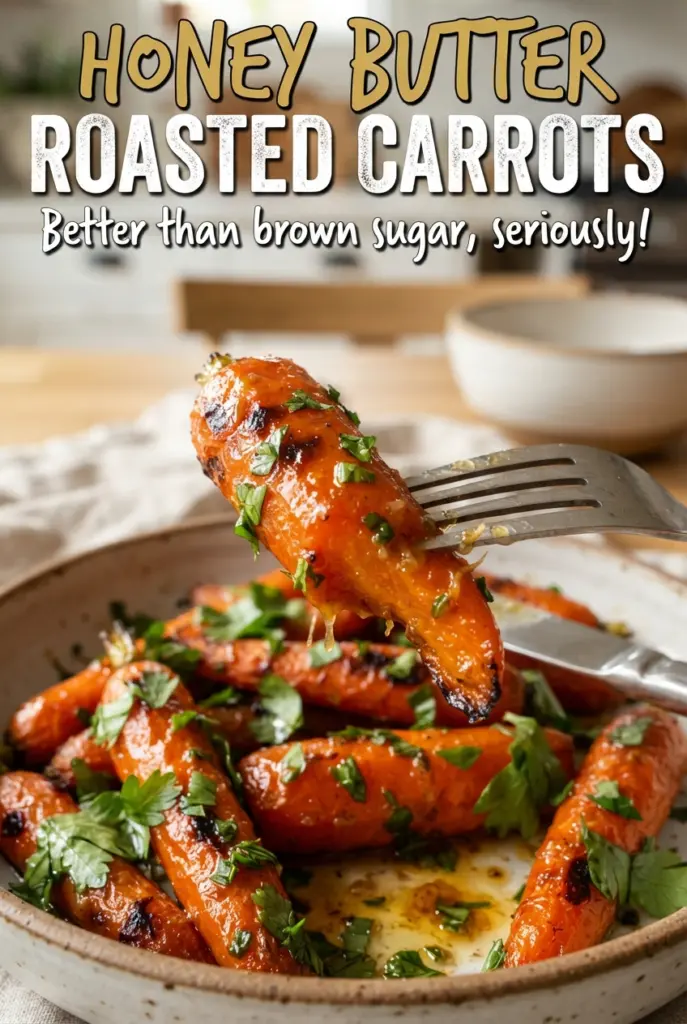
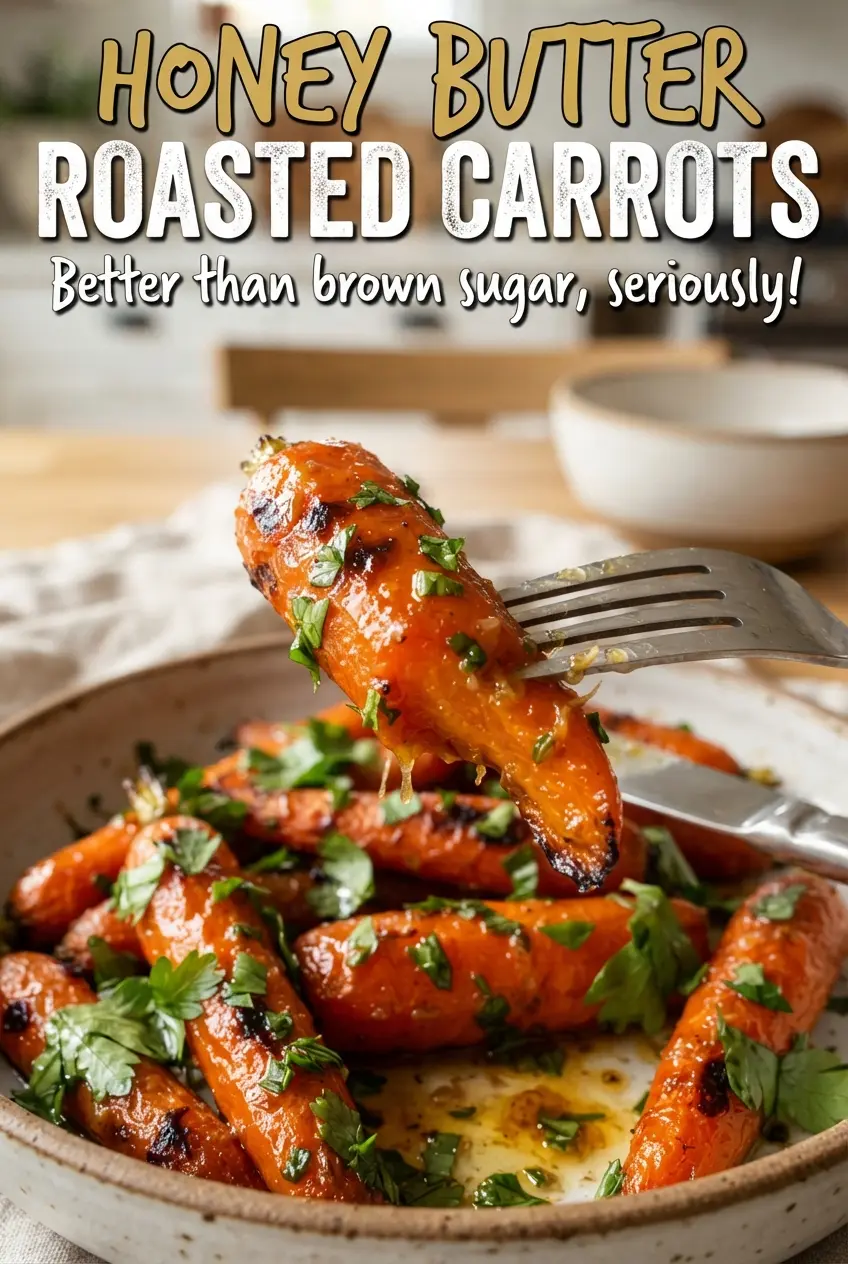
Honey butter roasted carrots come out glossy at the edges, tender all the way through, and caramelized enough to taste like a side dish that got a little extra attention. The honey brings shine and sweetness, the butter carries the garlic and thyme, and the hot oven turns the carrots from simple and earthy into something with real depth. They land on the plate with that mix of soft centers and lightly sticky edges that makes people keep picking at the serving dish.
This version works because the carrots get coated twice. The first toss seasons and starts the caramelization, while the second brush at the end gives you a fresh layer of glaze without burning the honey in the oven. A little olive oil keeps the butter from tasting heavy and helps the carrots roast instead of steaming, which matters more than people think when the pan is crowded. Rainbow carrots look especially nice here, but regular carrots roast up just as well.
Below, you’ll find the small details that make these carrots turn out evenly browned instead of soft and pale, plus a few easy swaps if you need to work with what’s in the kitchen.
The glaze thickened on the pan and the carrots came out tender with those caramelized edges, and the thyme at the end made them taste much fancier than the effort I put in.
Save these honey butter roasted carrots for the nights when you want a glossy side dish with caramelized edges and almost no cleanup.
The Trick to Carrots That Brown Instead of Going Soft
The difference between roasted carrots that taste concentrated and carrots that taste steamed comes down to spacing and glaze timing. If the pan is crowded, the carrots release moisture and soften before they ever get the chance to caramelize. A hot oven and a single layer give the edges room to color, which is where the best flavor lives.
The honey goes on in two stages for a reason. Honey can scorch if it sits under high heat for the full roast, especially on thinner carrot pieces, so the first coating helps build flavor and the second coating gives the finished glaze its shine. If your carrots are browning too fast on one side, they’re probably touching the pan or cut unevenly; rotate the pan once halfway through and keep the pieces similar in size.
What the Butter, Honey, and Thyme Are Actually Doing
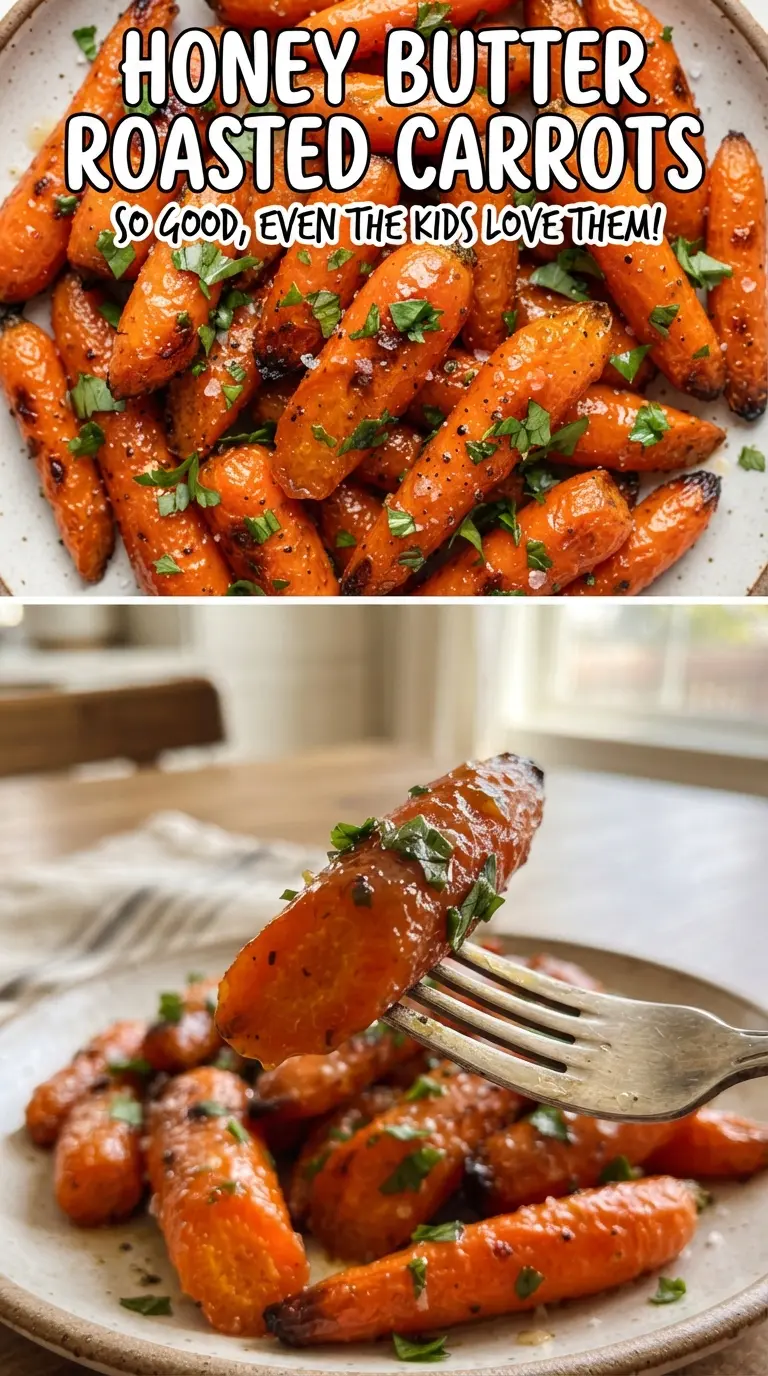
- Carrots — Rainbow carrots give you a prettier platter, but the bigger win is choosing carrots that are roughly the same thickness so they roast at the same pace. If you only have thick carrots, split them lengthwise so the centers cook through before the edges dry out.
- Butter — Butter carries the garlic and gives the glaze that round, rich finish. Melted butter works best here because it coats evenly; browned butter adds a deeper nutty note, but it also makes it harder to judge the color of the glaze in the bowl.
- Honey — Honey is what makes the carrots lacquered and sticky at the edges. Maple syrup can stand in, but it tastes a little woodier and less floral, and it won’t finish with quite the same shine.
- Olive oil — The olive oil keeps the butter from becoming too heavy and helps the carrots roast cleanly instead of catching in spots. You can use another neutral oil, but olive oil adds a subtle savory note that fits the garlic and thyme well.
- Fresh thyme — Fresh thyme lifts the sweetness and keeps the glaze from tasting flat. Dried thyme works in a pinch, but use less and add it with the glaze so it can bloom in the warm butter.
- Flaky sea salt — This is the finish that makes the carrots taste complete. The crunch and the last little hit of salt wake up the honey after roasting and keep the dish from leaning candy-sweet.
How to Build the Glaze So It Cooks, Not Burns
Mixing the Glaze
Whisk the melted butter, honey, olive oil, garlic, salt, and pepper until the mixture looks fully combined and slightly thickened. The garlic should be suspended through the glaze, not sinking to the bottom in little clumps. If the butter is too hot when you mix everything, the honey loosens and the glaze can separate; warm is fine, scorching hot is not.
Coating and Spreading the Carrots
Toss the carrots with half the glaze until every piece has a thin coating, then spread them out with a little space between them. That gap matters because carrots packed tightly on a sheet pan steam each other. Any extra glaze that pools in the bowl can go on after roasting, which is part of what gives the finished carrots that glossy look.
Roasting to Tender and Caramelized
Roast at 400F until the carrots are tender and the edges are deeply golden, usually 25 to 30 minutes depending on thickness. The best cue is a paring knife sliding in with just a little resistance and the undersides showing brown patches where they touched the pan. If they look colored on top but still feel firm in the middle, give them a few more minutes instead of cranking the heat higher.
Finishing With the Second Brush
Brush on the remaining glaze as soon as the carrots come out of the oven while they’re still hot enough to absorb it. Then scatter over the thyme and flaky salt so they stick to the glaze instead of falling to the platter. This last step is what makes the dish taste finished instead of just roasted.
How to Adapt These Carrots for Different Tables
Dairy-Free Version
Swap the butter for vegan butter with a similar fat content or use more olive oil if that’s what you have. The glaze will be a little less rich and more straightforwardly sweet, but the carrots will still caramelize well because the honey and oven heat are doing most of the work.
Maple Roasted Carrots
Use maple syrup instead of honey for a deeper, less floral sweetness. The carrots will taste a little earthier and the glaze will be slightly thinner, so watch the pan toward the end of roasting and pull them once the edges are browned, not after the syrup starts darkening hard.
Extra-Savory Finish
Add a pinch of smoked paprika or a little crushed red pepper to the glaze if you want the sweetness pulled back. That tiny bit of heat keeps the carrots from tasting one-note and plays well with the thyme.
Storage and Reheating
- Refrigerator: Store leftovers in an airtight container for up to 4 days. The glaze will thicken as it chills, and the carrots will soften a little more.
- Freezer: They freeze, but the texture turns softer after thawing, so I wouldn’t freeze them unless you’re okay with a looser bite. Freeze in a single layer first if you want to keep them from clumping together.
- Reheating: Warm them in a 375F oven until hot, or reheat gently in a skillet over medium-low with a small splash of water. The mistake to avoid is blasting them in the microwave, which makes the glaze separate and the carrots go limp.
Answers to the Questions Worth Asking
Honey Butter Roasted Carrots
Ingredients
Equipment
Method
- Preheat oven to 400°F and line a sheet pan with parchment for easy cleanup and even roasting.
- Whisk melted butter, honey, olive oil, garlic, salt, and black pepper until smooth and glossy.
- Toss carrots in half the honey butter, then spread them in a single layer so they roast rather than steam.
- Roast for 25-30 minutes, turning once if needed, until the carrots are tender and caramelized at the edges.
- Brush the carrots with the remaining honey butter to re-coat while they’re hot and shiny.
- Finish with fresh thyme leaves and flaky sea salt for bright herbal aroma and crisp salty contrast.


