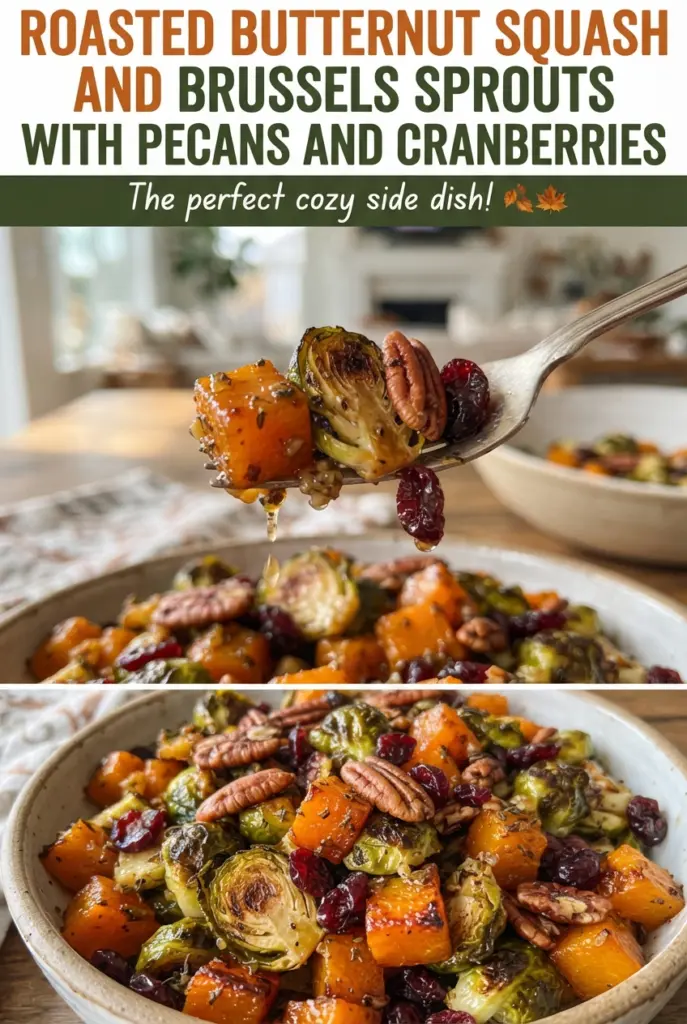
Roasted butternut squash and Brussels sprouts make the kind of side dish that disappears fast because the vegetables hit three things at once: crisp edges, tender centers, and that sweet-savory balance that keeps you going back for another forkful. The squash turns creamy and caramelized, the Brussels sprouts pick up browned edges, and the cranberries and pecans keep every bite interesting instead of soft all the way through.
The trick here is simple but important: roast the vegetables hot enough to brown them before they turn mushy. A crowded pan will steam them, which means pale sprouts and squash that never quite gets that sticky, roasted finish. The maple balsamic goes on after roasting so it clings to the vegetables instead of burning in the oven.
Below, I’ve included the small details that make this side work every time, plus a few smart ways to adapt it when you need to change the nuts, swap the fruit, or make it fit a different table.
The squash got those caramelized edges I always want, and the maple balsamic tied everything together without making the Brussels sprouts soggy. I made it for Sunday dinner and there wasn’t a spoonful left.
Save this roasted butternut squash and Brussels sprouts for a side dish with caramelized edges, maple balsamic gloss, and a little crunch in every bite.
The Reason These Vegetables Brown Instead of Steam
The biggest mistake with roasted squash and Brussels sprouts is crowding them. When the pan is packed too tightly, the vegetables release steam and soften before the oven can do its job. Spread everything out in a single layer so the hot air can reach the cut surfaces. That’s what gives you the browned edges and the deeper flavor that makes this side dish worth repeating.
Cut size matters too. The squash should be in evenly sized cubes so it cooks at the same rate as the halved Brussels sprouts. If the squash pieces are much smaller, they’ll collapse before the sprouts are tender. If they’re too large, you’ll end up with soft sprouts and underdone squash on the same pan.
What Each Ingredient Is Actually Doing Here
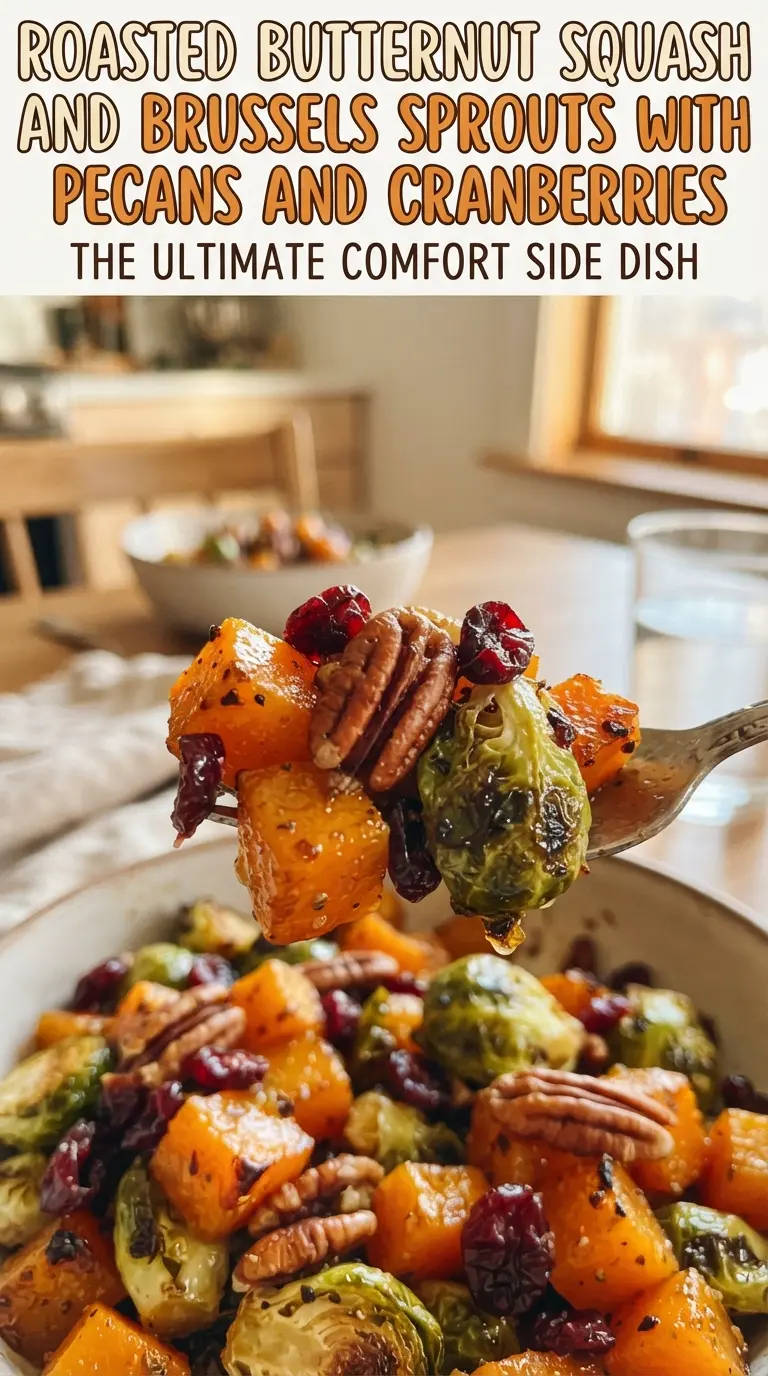
- Butternut squash — This brings sweetness and a creamy interior once roasted. Fresh squash matters here because pre-cut squash often dries out at the edges and doesn’t caramelize as evenly. Cut the cubes into similar sizes so they finish together.
- Brussels sprouts — Halving them exposes the cut side to the pan, which is where the browning happens. If yours are small, keep the halves intact; if they’re large, trim away any loose outer leaves so they don’t burn before the centers are tender.
- Maple syrup and balsamic vinegar — This is the glaze that pulls the whole dish together. Add it after roasting so the maple doesn’t scorch in the oven and the vinegar stays bright instead of sharp and cooked down. If you only have honey, use it, but the flavor will be less deep and less woodsy.
- Pecans and cranberries — The pecans bring crunch and a toasted nuttiness, while the cranberries add chew and a tart pop. Add both at the end so they keep their texture. If the pecans go in too early, they lose their snap.
Roasting the Vegetables, Then Finishing Them the Right Way
Getting the Pan Hot Enough
Preheat the oven to 425F before the vegetables go anywhere near it. That high heat is what starts browning quickly, especially on the cut sides of the Brussels sprouts and the edges of the squash. Toss the vegetables with oil, salt, and pepper until everything looks lightly coated, not slick. If there’s a puddle of oil on the pan, it’s too much and the vegetables will roast unevenly.
Roasting Until Tender and Caramelized
Roast for 25 to 30 minutes, tossing once halfway through. You’re looking for deep golden edges on the squash and Brussels sprouts that are tender enough to pierce with a fork but not collapsing. If the pan looks dry or the vegetables are browning too fast on one side, rotate it once while you toss. The goal is color first, softness second.
Adding the Maple Balsamic at the End
Whisk the maple syrup and balsamic vinegar together, then toss it with the hot vegetables right after they come out of the oven. The heat helps the glaze spread and cling without making the sprouts soggy. Add the cranberries and toasted pecans at the same time so they stay bright and crunchy. If you wait too long, the vegetables lose enough heat that the glaze won’t coat as well.
How to Change This Side Dish Without Losing the Good Part
Make it dairy-free and naturally vegetarian
It already is both, which makes it an easy side for mixed tables. The texture and flavor come from roasting, not from cream or cheese, so you don’t need to adjust anything for that kind of menu.
Swap the pecans for walnuts or pepitas
Walnuts give a similar richness but a softer bite, while pepitas keep the crunch and make the dish nut-free if needed. Toast whatever you use first so it tastes deliberate instead of raw and flat.
Use dried cherries instead of cranberries
Dried cherries lean a little sweeter and a little deeper in flavor. They work well if you want the fruit to read less tart, but the dish loses a little of the sharp contrast that cranberries bring.
Turn it into a warm grain bowl base
Pile the roasted vegetables over farro, quinoa, or wild rice and add the glaze on top. The grains soak up the maple balsamic and turn this from a side dish into a lunch that eats like a full meal.
Storage and Reheating
- Refrigerator: Store leftovers in an airtight container for up to 4 days. The vegetables soften a bit, but the flavor stays good.
- Freezer: It freezes, but the texture of the squash and Brussels sprouts gets softer after thawing. Freeze only if you plan to use it in a hash, grain bowl, or soup later.
- Reheating: Reheat on a sheet pan in a 400F oven until hot and the edges wake back up, about 8 to 10 minutes. The microwave will warm it, but it also wipes out the roasted texture you worked for.
Answers to the Questions Worth Asking
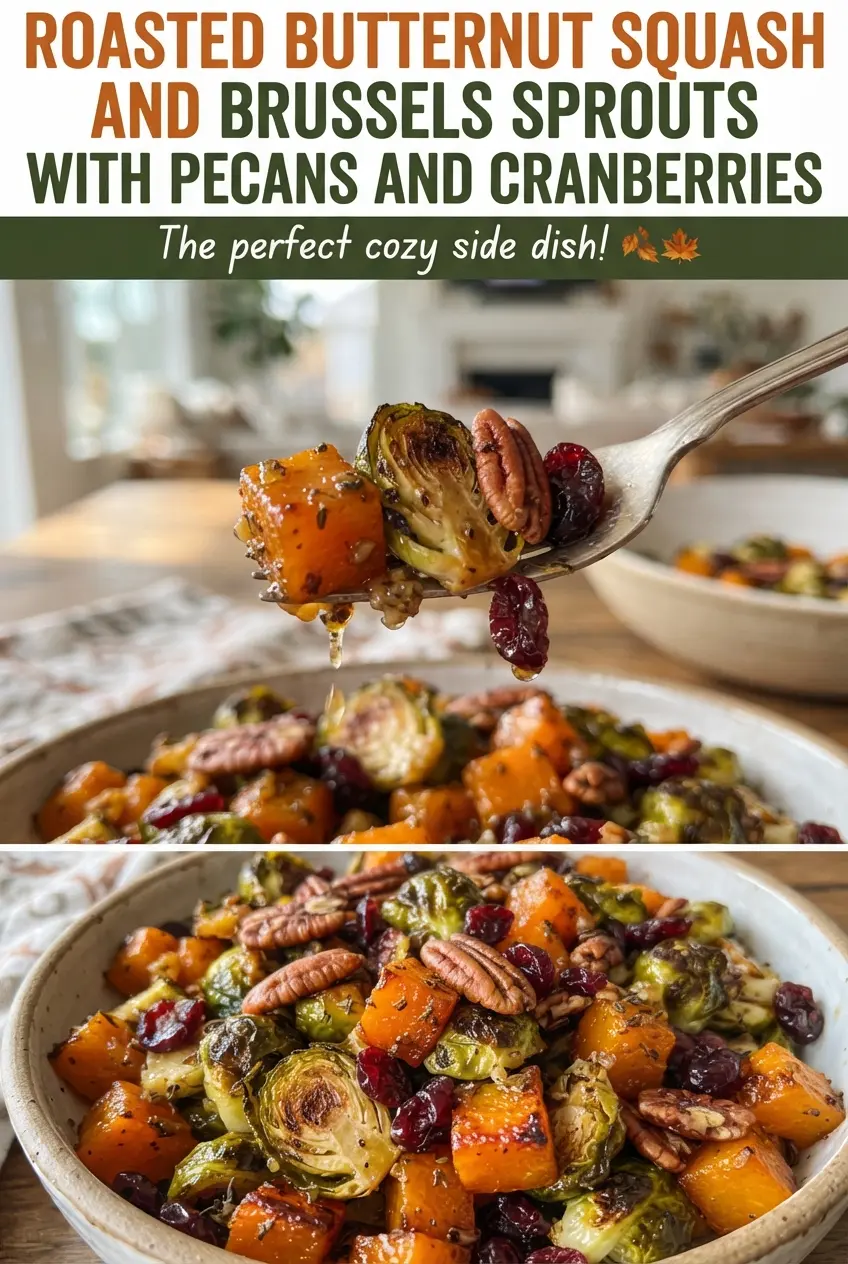
Roasted Butternut Squash and Brussels Sprouts with Pecans and Cranberries
Ingredients
Equipment
Method
- Preheat oven to 425°F so it’s hot enough to caramelize the vegetables quickly. Let the oven fully come up to temperature before roasting.
- Toss butternut squash and Brussels sprouts with olive oil, salt, and black pepper on a large sheet pan until evenly coated. Spread them into a single layer for better browning.
- Roast for 25-30 minutes, tossing halfway, until the squash is tender and the Brussels sprouts are caramelized. Keep an eye for deep golden edges, especially on the cut sides.
- Whisk maple syrup and balsamic vinegar together until smooth. The glaze should look glossy and pourable.
- Toss the roasted vegetables with the maple balsamic, dried cranberries, and pecans — serve warm. Mix gently so the pecans stay crunchy and everything is coated evenly.