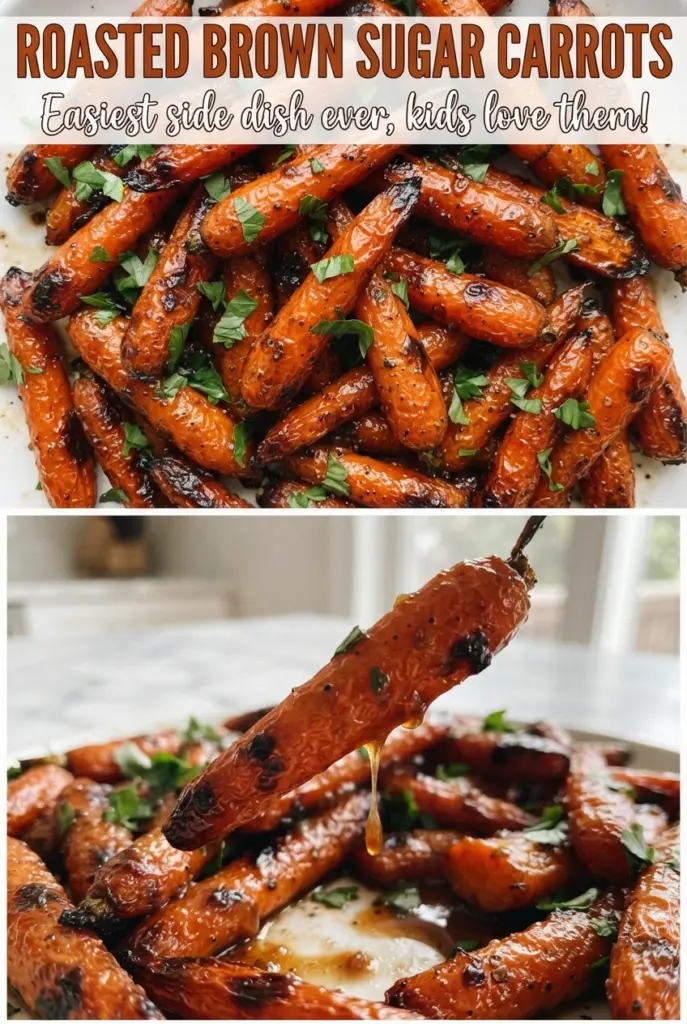
Roasted brown sugar carrots come out glossy, tender, and edged with sticky caramelized bits that make them feel a little more special than the usual side dish. The carrots keep their shape, but the heat softens them until they’re sweet through the center with just enough bite left at the ends. That brown sugar-butter glaze clings to every piece, and when the pan goes a little dark around the edges, the flavor gets deeper instead of just sweeter.
This version works because the carrots roast hot and fast enough to caramelize before they turn mushy. Cutting them on the bias gives more surface area for browning, and tossing them once halfway through keeps the glaze from scorching in one spot. A little cinnamon rounds out the sweetness without making the dish taste like dessert, and the parsley at the end keeps the whole pan from leaning too heavy.
Below, I’ve included the small details that matter most here: how to keep the carrots in a single layer so they roast instead of steam, what to look for when the glaze turns right, and a few easy variations if you want to shift the flavor a little.
The carrots came out tender with those caramelized edges I never seem to get right, and the glaze thickened up in the pan just like you said. My husband kept stealing them before they even hit the table.
Save these brown sugar roasted carrots for the side dish that brings caramelized edges, buttery glaze, and just enough cinnamon warmth.
The Part That Keeps These Carrots Caramelized Instead of Watery
The biggest mistake with roasted carrots is crowding the pan. When they sit on top of each other, they steam before they brown, and you end up with soft carrots and a thin sugary puddle instead of a glaze. Spread them out in a single layer and use a sheet pan with enough space for the heat to move around each piece.
The other thing that matters is the roast temperature. Four hundred degrees gives the sugar enough heat to caramelize while the carrots soften at the same pace. Pull them when the edges are bronzed and sticky and the thickest pieces give easily with a fork, but still hold their shape.
- Bias-cut carrots — The angled cut gives more surface area, which means more browning and more spots for the glaze to cling to. Straight rounds work in a pinch, but they won’t caramelize as evenly.
- Brown sugar — This is what makes the glaze sticky and deep. White sugar won’t bring the same molasses note, and honey behaves differently in the oven, so this isn’t a great place to improvise.
- Butter — Butter carries the sugar and helps the edges turn glossy instead of dry. If you need a dairy-free swap, use olive oil, but the finish will be a little less rich.
- Cinnamon — Just a small amount softens the sweetness without making the dish taste spiced. Leave it out if you want a cleaner carrot flavor, or add a pinch more if you like a warmer finish.
What Each Ingredient Is Doing in the Pan
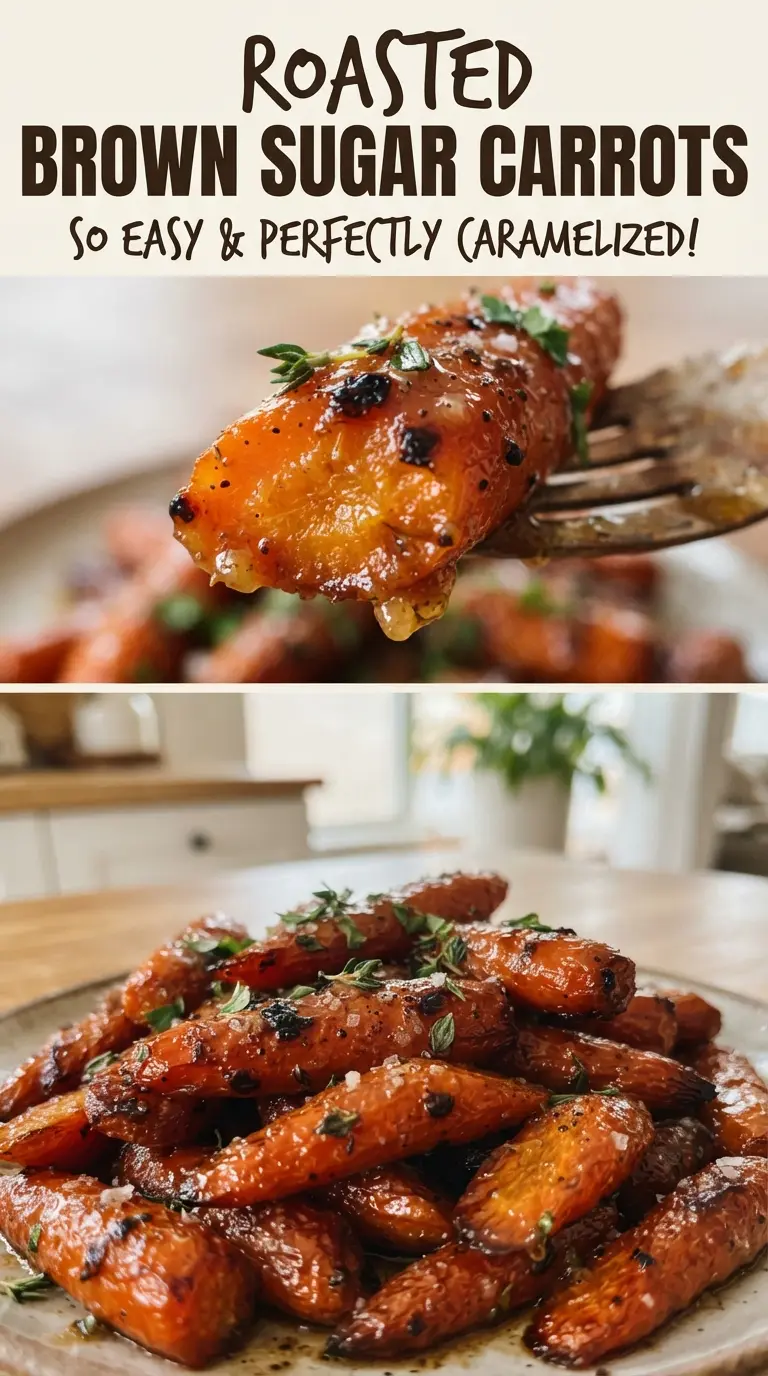
- Carrots — Use firm, fresh carrots if you can. Older carrots can roast up woody in the center, while fresh ones turn sweet and tender without losing their shape.
- Melted butter — Tossing with melted butter coats the carrots evenly, which helps the sugar dissolve and cling. Cold butter won’t distribute the same way, so melt it first.
- Brown sugar — Packed brown sugar gives the carrots their lacquered finish. Light or dark brown sugar both work; dark brown sugar brings a deeper molasses flavor.
- Parsley — The parsley is more than a garnish. It cuts through the sweetness and makes the dish taste finished instead of one-note.
How to Roast Them So the Glaze Stays Sticky
Coating the Carrots Evenly
Toss the carrots with the butter, sugar, salt, pepper, and cinnamon until every piece looks lightly coated. The sugar should cling in a thin layer, not sit in clumps at the bottom of the bowl. If the bowl looks dry, keep tossing until the carrots pick up the melted butter from the bottom. Uneven coating is what gives you burnt spots next to pale, bland pieces.
Roasting Until They Brown, Not Burn
Spread the carrots out on the foil-lined pan and roast them for about 25 to 30 minutes. Halfway through, toss them so the glaze redistributes and the underside gets a chance to caramelize. Watch for the pan juices to bubble and thicken around the carrots; that’s your cue that the sugar is turning into a glaze. If the edges are darkening too fast before the centers are tender, the pan is too crowded or the oven runs hot.
Finishing in the Pan Juices
When the carrots come out, toss them right in the hot pan juices before adding the parsley. That last toss coats them in the reduced glaze and gives the finished dish its shine. If the pan looks dry, the carrots were likely spread too thin or roasted a little too long; next time, pull them as soon as they’re fork-tender and still glossy.
Three Ways to Adjust the Sweetness, Richness, or Diet
Dairy-Free Carrots
Swap the butter for olive oil or melted vegan butter. Olive oil gives a cleaner, less rich finish, while vegan butter keeps the same roundness you get from the original version. Either way, keep the coating light so the sugar can still caramelize instead of sliding off.
Less Sweet, More Savory
Cut the brown sugar back to 1/4 cup and add an extra pinch of salt plus a little black pepper. You’ll still get a glossy roast, but the carrots will taste more like a savory side dish and less like a candied one. This works well next to roasted chicken or pork.
Using Baby Carrots
Baby carrots work when that’s what you have, but they tend to roast softer and release more moisture. Pat them dry before tossing, and give them a few extra minutes if needed. The flavor is still good, but the caramelized edges won’t be as pronounced as with whole carrots cut on the bias.
Storage and Reheating
- Refrigerator: Store leftovers in an airtight container for up to 4 days. The glaze will thicken as it chills.
- Freezer: They’ll freeze, but the texture softens after thawing, so I only do it if I need to. Freeze in a single layer first if you want to keep them from sticking together.
- Reheating: Warm them in a 350F oven until hot, or in a skillet over medium-low heat. The mistake to avoid is the microwave on high, which turns the glaze loose and makes the carrots go limp.
Questions I Get Asked About This Recipe
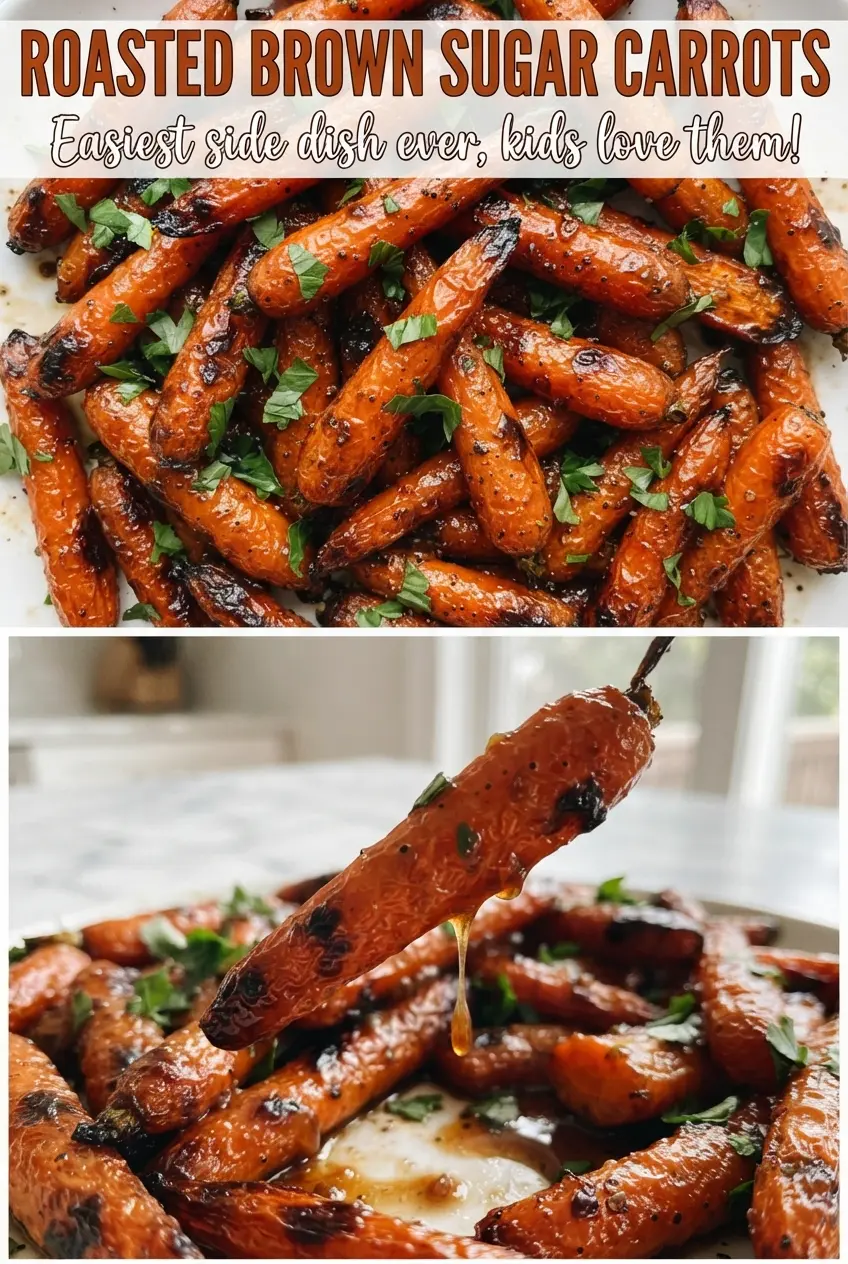
Roasted Brown Sugar Carrots
Ingredients
Equipment
Method
- Preheat the oven to 400F and line a sheet pan with foil (this helps with cleanup and encourages caramelization).
- Toss the carrots with melted butter, brown sugar, salt, black pepper, and ground cinnamon until evenly coated.
- Spread the carrots on the sheet pan in a single layer so they roast instead of steam.
- Roast for 25-30 minutes, tossing halfway, until the carrots are tender and caramelized with darker, charred tips.
- Toss the roasted carrots in the pan juices, then garnish with chopped fresh parsley and serve.