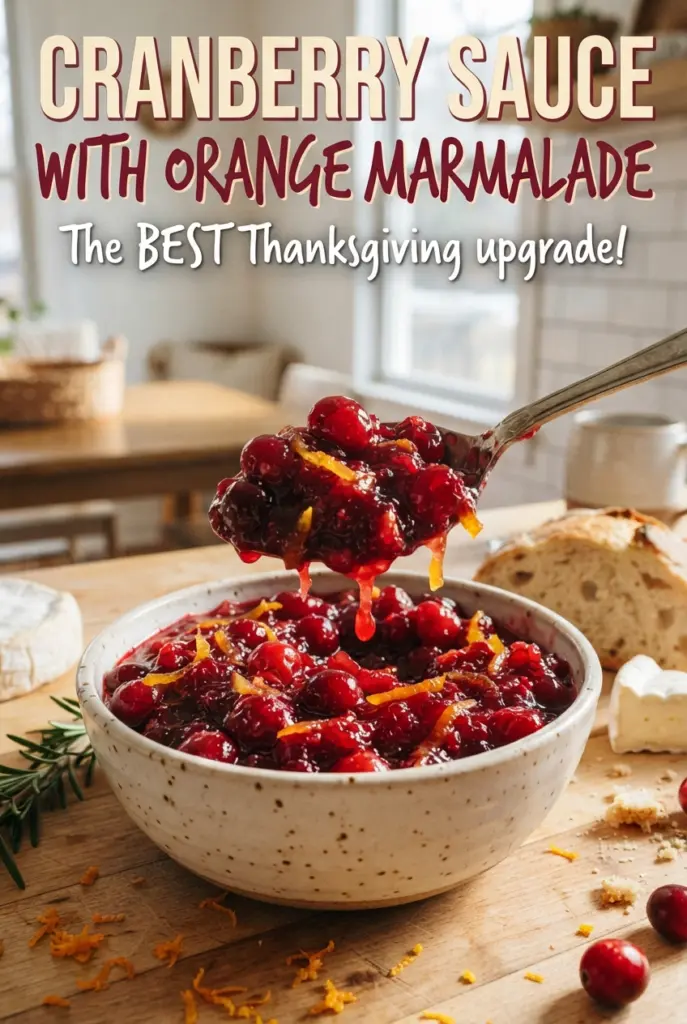
Glossy cranberry sauce with orange marmalade is the kind of side dish that wakes up the whole plate. It’s bright, tart, and just sweet enough to round out roasted meats, holiday sides, or even a simple weeknight pork chop. The marmalade gives the sauce a deeper citrus note than plain orange juice ever could, and the little ribbons of peel bring a soft bitterness that keeps every spoonful interesting.
The trick here is balance. Cranberries bring plenty of sharp acidity, so the sugar and marmalade need to work together instead of competing with each other. A short simmer is enough to burst the berries and thicken the mixture without cooking away the fresh citrus flavor. A splash of lemon juice sharpens everything at the end, and that final chill is what gives the sauce its proper spoonable texture.
Below, I’ll walk through the small details that keep cranberry sauce from turning watery or overly stiff, plus a few smart ways to tweak it if you want it less sweet or a little more citrus-forward.
The sauce thickened beautifully once it cooled, and the marmalade kept it from tasting flat. I loved the little bits of orange peel with the cranberries.
Save this cranberry sauce with orange marmalade for a glossy, make-ahead side that brings tart cranberry and bright citrus together.
The Reason Cranberry Sauce Turns Thin, and How This One Stays Glossy
Fresh cranberries need enough time to burst and release their natural pectin, which is what gives the sauce body. If you pull the pan too soon, you’ll end up with a loose, soupy mixture that never quite sets after chilling. If you cook it too long, the sauce can turn sticky and dull instead of glossy.
This version avoids that by adding the marmalade after the berries have already broken down. Marmalade brings sugar, citrus oil, and peel, but it doesn’t need to simmer for long. That short finish keeps the orange flavor bright and prevents the peel from turning chewy.
- Let the berries fully burst. You want most of the cranberries to pop open in the simmer, not stay half-raw, because the released juices thicken the sauce naturally.
- Finish with the marmalade at the end. Adding it too early can mute the orange flavor and overcook the peel.
- Chill before judging the texture. Cranberry sauce thickens a lot as it cools, so it will look looser in the pan than it does on the table.
What the Marmalade Is Doing That Orange Juice Can’t
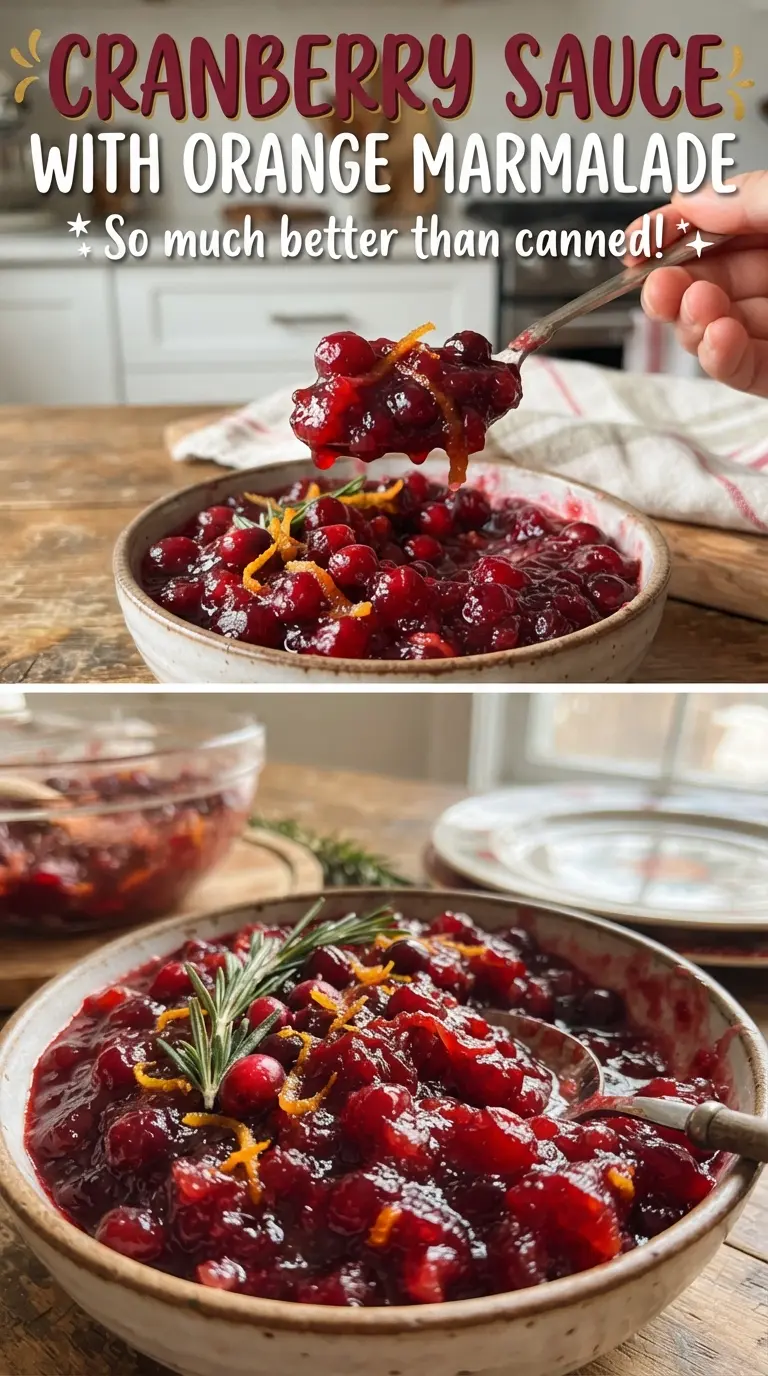
- Fresh cranberries — These are the backbone of the recipe. Frozen cranberries work too; add them straight from the freezer and expect the simmer to take a minute or two longer.
- Orange marmalade — This does more than sweeten. It adds concentrated orange flavor, peel, and a little bitterness, which gives the sauce more depth than plain sugar and citrus juice.
- Lemon juice — A small amount keeps the sauce from tasting heavy. If your marmalade is very sweet, an extra teaspoon can help sharpen the finish.
- Sugar — You need it to balance the cranberries’ tartness, but the sauce should still taste bright, not candy-sweet. If you like a sharper sauce, drop it by a couple tablespoons.
Getting the Cranberries to Burst Without Overcooking the Citrus
Starting the Syrup
Bring the sugar and water to a boil first so the berries land in a hot, evenly sweetened base. That helps them cook consistently instead of sitting in a watery pan while the liquid slowly heats up. As soon as the cranberries go in, the boil will calm down, then return to a steady simmer. Don’t rush this with high heat the whole time or the sugars can scorch before the berries soften.
Cooking Until the Berries Pop
Simmer for about 10 minutes, stirring now and then, until most of the cranberries have burst open and the liquid looks slightly thickened. A few whole berries are fine, but if almost none have broken, the sauce will stay thin. You’re looking for bubbling that feels active but not violent. If the mixture starts sticking on the bottom, lower the heat immediately.
Finishing With Marmalade and Chill Time
Stir in the marmalade, lemon juice, and salt, then simmer just 2 to 3 minutes more. The sauce should turn shiny and feel a little more cohesive, not reduce into a paste. Pull it from the heat and let it cool before chilling, because cranberry sauce sets as it loses heat. If it seems too loose at first, that’s normal; the refrigerator is where it finds its final texture.
How to Adjust This Cranberry Sauce for Different Tables
Less Sweet, More Tart
Reduce the sugar by 2 to 3 tablespoons and keep the lemon juice. The sauce will taste brighter and more cranberry-forward, but it will also be a little sharper, so this version works best next to rich mains and buttery sides.
Frozen Cranberries
Use frozen cranberries straight from the bag. Don’t thaw them first or they’ll release too much water before they start breaking down, which makes the sauce take longer to thicken.
Dairy-Free, Gluten-Free, and Vegan
This recipe already fits all three categories as written, as long as your marmalade is made without any unusual additives. It’s an easy side to bring when you need something everyone at the table can eat.
Chunkier Texture
Cook it a minute or two less and stir less often. More berries will stay intact, which gives you a sauce that leans toward spoonable relish instead of a smooth, jammy finish.
Storage and Reheating
- Refrigerator: Store in an airtight container for up to 1 week. It thickens as it chills, so don’t worry if it looks loose while warm.
- Freezer: Freezes well for up to 2 months. Thaw overnight in the refrigerator and stir before serving.
- Reheating: Cranberry sauce is usually best served cold or at room temperature. If you want it warm, heat it gently over low heat with a splash of water; high heat can make it sticky and dull the citrus flavor.
Answers to the Questions Worth Asking
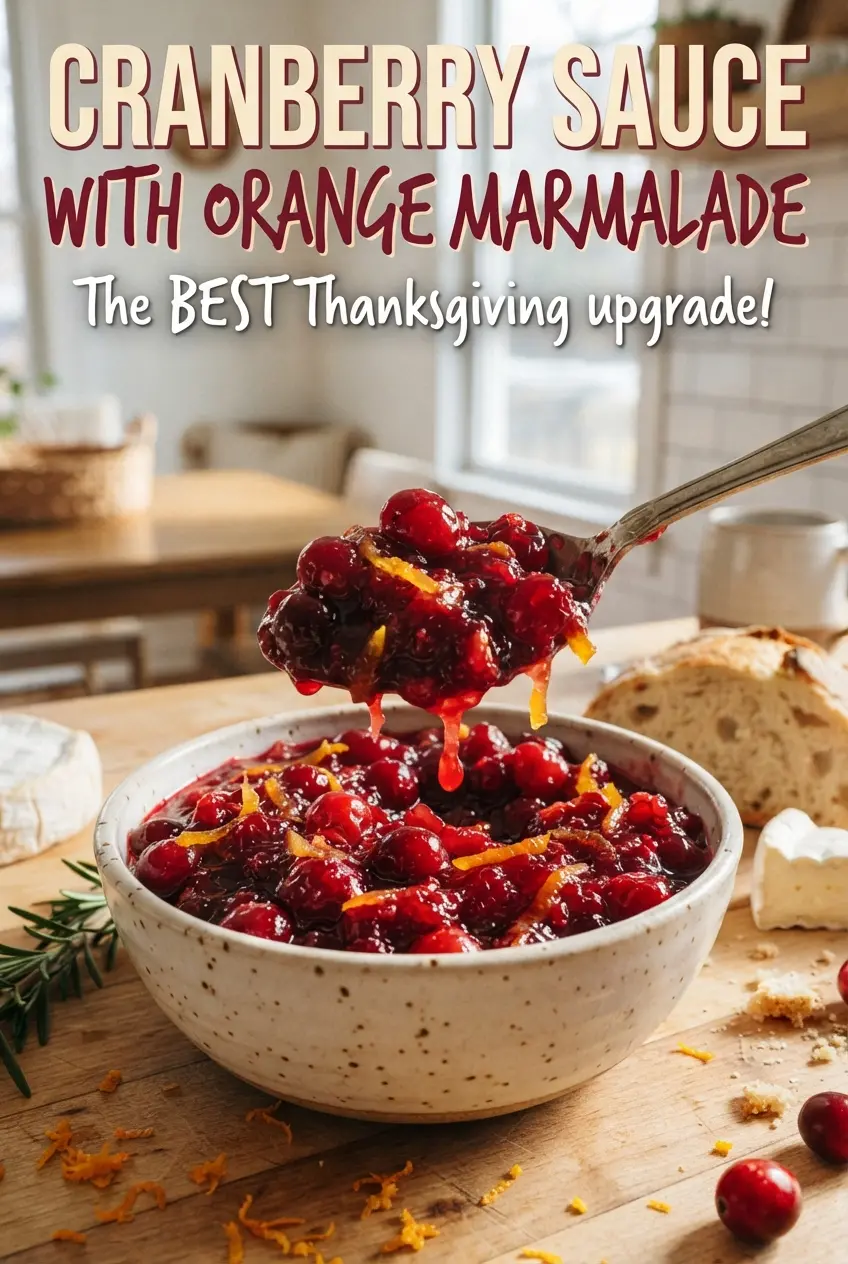
Cranberry Sauce with Orange Marmalade
Ingredients
Equipment
Method
- Bring sugar and water to a boil in a saucepan. Keep it at a steady boil with active bubbling for about 1 minute so the sugar dissolves.
- Add cranberries to the boiling mixture and simmer for 10 minutes until the berries burst. Watch for skins splitting and thickening syrup as the sauce forms.
- Stir in orange marmalade, lemon juice, and salt until fully combined. The sauce should turn a warm golden tone with visible specks of cranberry.
- Simmer for 2-3 minutes until glossy. Look for a smoother, shiny surface that coats the spoon.
- Cool the cranberry sauce completely, then chill before serving. The sauce will thicken as it cools, becoming sliceable-spreadable.