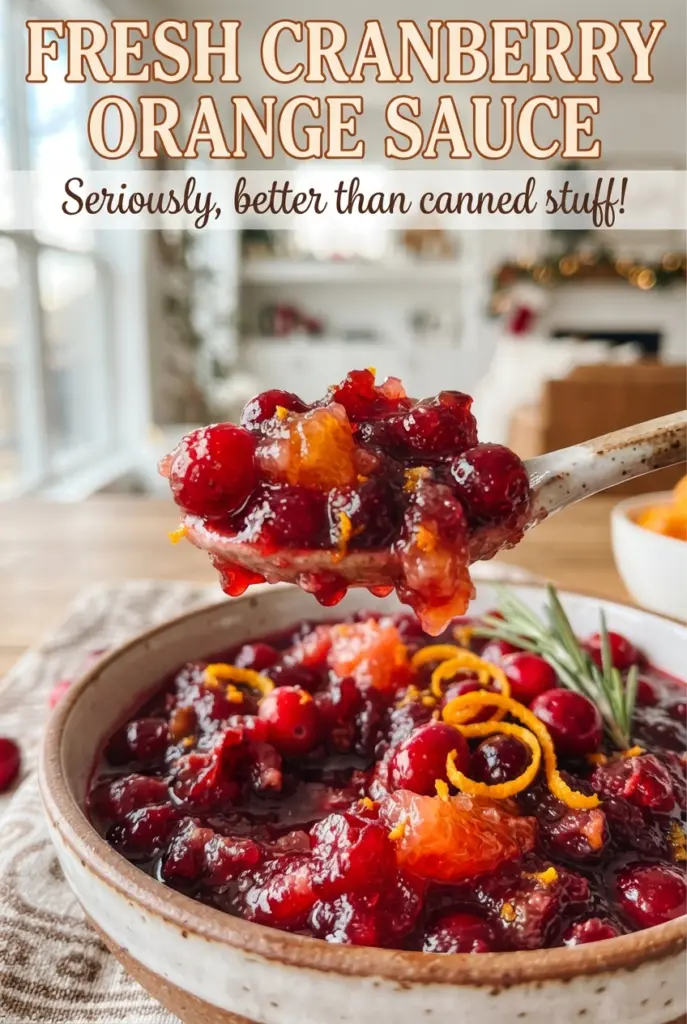
Bright cranberry sauce with fresh orange turns sharp berries into something glossy, tangy, and spoonable with just enough sweetness to keep you going back for another bite. The fresh orange juice lifts the cranberries instead of flattening them, and the orange segments at the end add little pockets of juicy texture that make this version feel a step fresher than the usual stovetop sauce.
The trick is to let the sugar dissolve in the orange juice before the cranberries go in. That gives the berries a smooth start and helps the sauce thicken evenly instead of tasting grainy or overly tart. I also like stirring in the zest off the heat, because the orange oils stay brighter that way, and folding in the segmented orange after the pan cools a little keeps the pieces from breaking apart.
Below, I’ve included the timing cues that matter most, the one step that keeps the sauce from getting dull, and a few simple variations if you want to adjust the sweetness or make it ahead for a holiday table.
The sauce thickened up beautifully and the orange segments stayed intact instead of turning mushy. I made it the night before, and it tasted even better chilled the next day.
Save this fresh cranberry orange sauce for the table when you want tart berries, bright citrus, and juicy orange segments in one quick stovetop side.
The Reason Cranberry Sauce Gets Flat, and How Orange Fixes It
Cranberry sauce can go dull fast when it leans on sugar alone. The berries need acid, fragrance, and enough liquid to cook down into a glossy sauce instead of a jammy paste, and fresh orange juice gives all three at once. It softens the sharp edges of the cranberries without burying them, which is why this version tastes bright even after it chills.
The other thing that matters is the order. If the zest goes in too early, much of its aroma cooks off. If the orange segments go in while the pan is still boiling, they break apart and cloud the sauce. Let the cranberries burst first, then finish with the fresh citrus so each part keeps its own texture.
What Each Ingredient Is Actually Doing in This Sauce
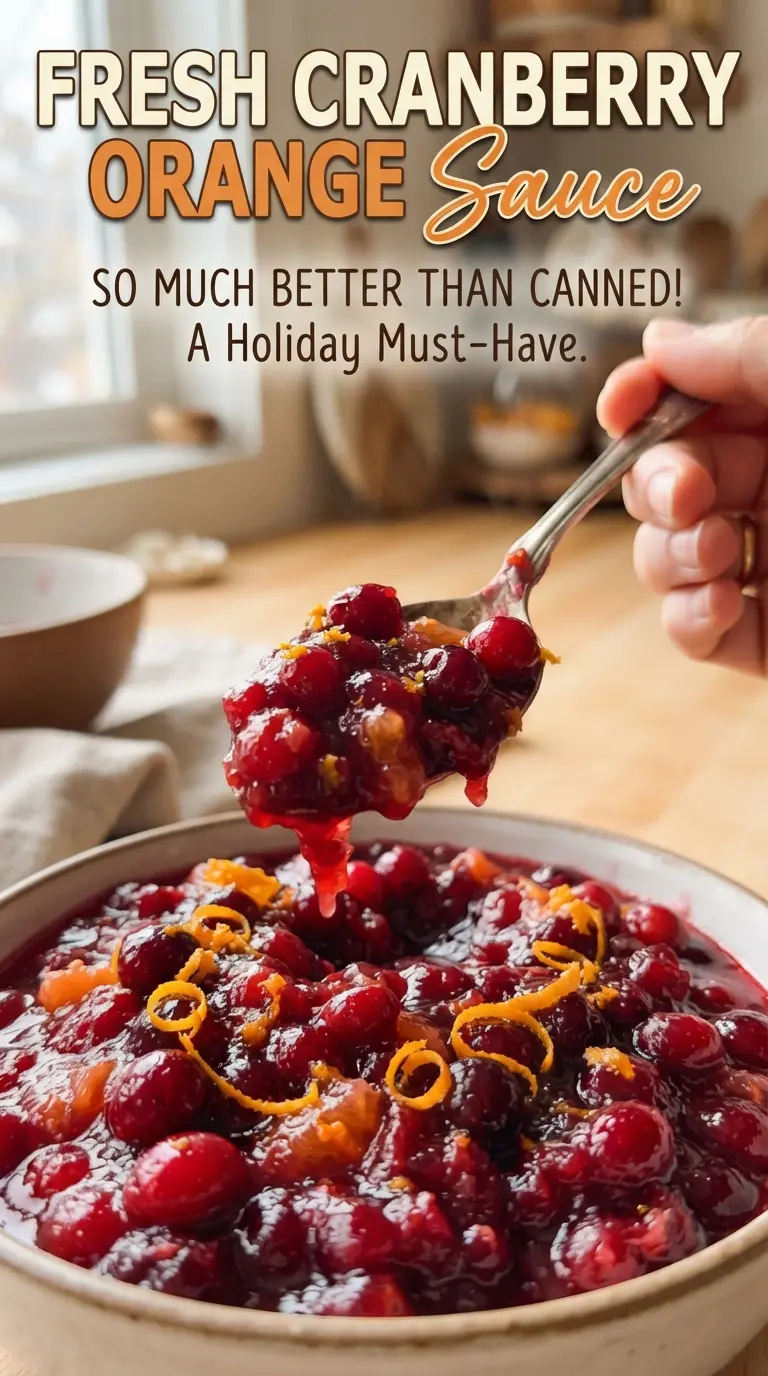
- Fresh cranberries — These are the backbone of the sauce. Frozen cranberries work too, and you don’t need to thaw them first; they’ll just take a minute or two longer to burst.
- Fresh orange juice — Bottled juice is fine in a pinch, but fresh juice tastes cleaner and keeps the sauce lively. It’s the main reason this version doesn’t taste one-note.
- Sugar — This balances the cranberries’ sharpness and helps the sauce thicken as it simmers. Cutting it too far makes the sauce taste harsh instead of bright.
- Orange zest — Zest carries the strongest orange aroma, so add it after cooking to keep that fresh citrus smell intact.
- Orange segments — These add soft bites of fruit and a little extra juice. Fold them in gently once the sauce cools slightly so they keep their shape.
- Pinch of salt — Just enough salt wakes up the citrus and keeps the sweetness from tasting flat.
Cooking the Berries So They Burst Without Turning Muddled
Start with a quick boil, not a long simmer
Bring the orange juice and sugar to a full boil first so the sugar dissolves completely before the cranberries go in. If the sugar stays grainy at the start, the sauce can cook unevenly and taste sandy at the end. Once the berries are in, the liquid should drop back to a lively simmer, not a hard boil, or the outside of the berries breaks down before the centers soften.
Watch for the pop, then give it ten minutes
The cranberries will start to split with a sharp little pop as they heat. That’s what you want. Keep simmering until most of them have burst and the liquid looks thicker and slightly syrupy, with only a few berries still holding their shape. If you stop too early, the sauce will taste thin and tart; if you cook it down too far, it turns paste-like once chilled.
Finish off the heat for the brightest orange flavor
Take the pan off the burner before stirring in the zest. The residual heat is enough to pull out the oils without cooking them away. Let the sauce cool for a few minutes, then fold in the orange segments very gently so they stay whole. The sauce will loosen a touch while warm and thicken again in the fridge.
How to Adjust This for Different Tables and Timing
Less Sweet, More Tart
Drop the sugar a few tablespoons if you like a sharper sauce, but don’t remove it completely. Cranberries need enough sweetness to read as sauce instead of straight-up pucker, and the fruit will taste harsher after it chills.
Frozen Cranberries Work Fine
Use frozen cranberries straight from the bag and add a minute or two to the simmer time. They release a little extra liquid at first, so just keep cooking until the sauce thickens back up.
Make-Ahead for Holidays
This sauce gets better after a night in the fridge because the citrus settles in and the texture firms up. If you’re serving it with a big meal, make it a day or two ahead and bring it out cold or at cool room temperature.
Storage and Reheating
- Refrigerator: Store in a covered container for up to 1 week. It will thicken as it chills.
- Freezer: It freezes well for up to 2 months. Thaw overnight in the refrigerator and stir before serving.
- Reheating: Cranberry sauce is usually best served chilled or at room temperature. If you want it warm, use low heat and stir gently; high heat can make it loose and dull the orange flavor.
Answers to the Questions Worth Asking
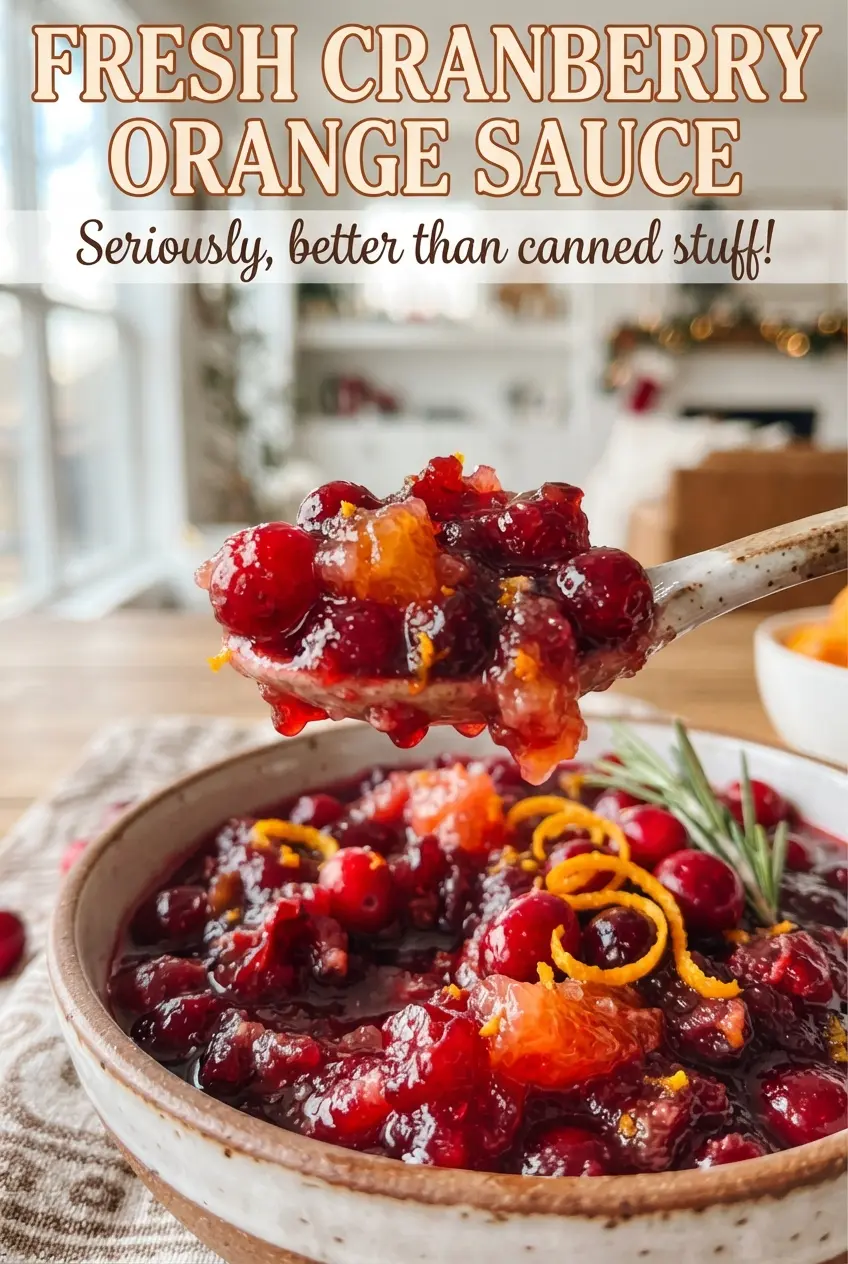
Fresh Cranberry Orange Sauce
Ingredients
Equipment
Method
- Bring sugar and fresh orange juice to a boil in a saucepan over medium-high heat, stirring until the sugar dissolves. Watch for a steady simmering bubble across the surface (about 2 minutes).
- Add fresh cranberries and salt, then reduce to a gentle simmer and cook for 10 minutes until most berries burst. Look for thickening and split skins releasing juices through the sauce.
- Remove from heat and stir in orange zest until evenly dispersed. The sauce should look glossy with specks of zest throughout.
- Cool slightly for 5 minutes, then gently fold in the peeled and segmented orange. Stop as soon as segments are coated to avoid breaking them.
- Chill until serving for at least 30 minutes. The sauce should thicken to a spoonable, jelly-like consistency.