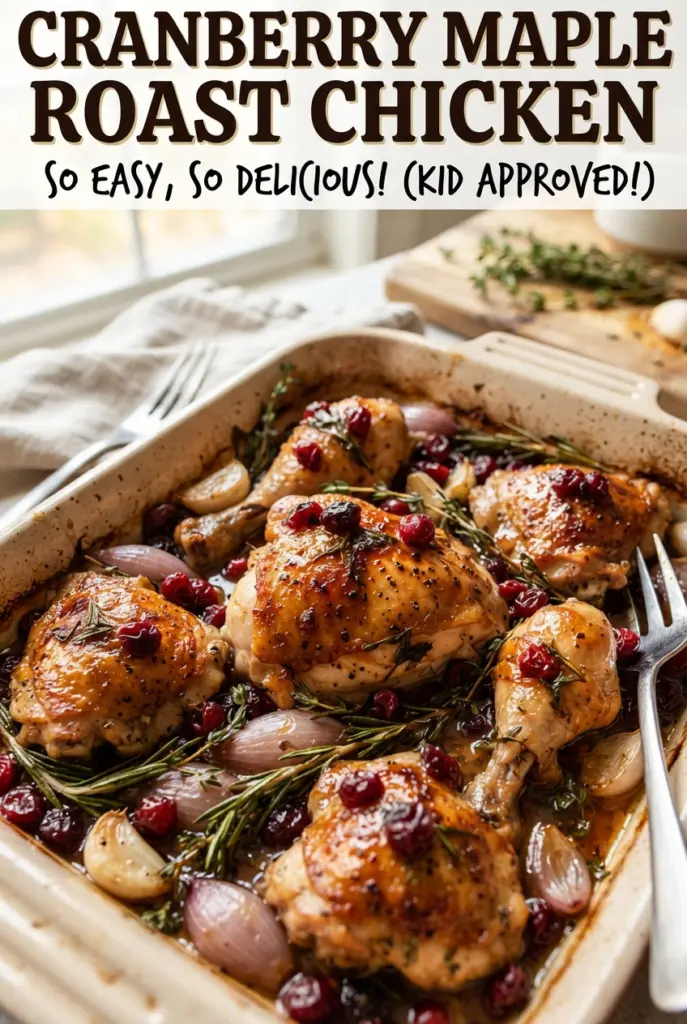
Cranberry maple roast chicken lands on the table with crisp, bronzed skin, juicy meat, and a pan sauce that tastes like the best parts of a holiday roast without the fuss. The maple glaze turns sticky and glossy in the oven, while the cranberries burst and melt into the drippings so every spoonful has sweet-tart depth instead of just sweetness.
The trick is timing. The chicken roasts mostly on its own first, which gives the skin time to dry and color before the glaze goes on. Then the maple-Dijon mixture gets brushed over near the end, so it caramelizes instead of burning, and the cranberries go into the pan just late enough to soften and pop without turning to jam.
Below, I’ve laid out the little details that matter most: how to season under the skin for better flavor, why the orange and garlic belong inside the cavity, and what to watch for so the glaze stays lacquered and the meat stays tender.
The skin came out deeply browned and the cranberries burst into the drippings just like you said. That maple-Dijon glaze was glossy instead of burnt, and the chicken stayed incredibly juicy after the rest.
Save this cranberry maple roast chicken for a roast dinner with lacquered skin, tart cranberries, and an easy pan sauce.
The Trick to Keeping the Glaze Glossy Instead of Burning
Maple syrup is what gives the chicken its shine, but it also burns faster than plain pan juices. That’s why the first roast happens before any glaze touches the bird. By the time the maple-Dijon mixture goes on, the skin has already started rendering and browning, so the glaze can cling to a hot surface and caramelize instead of just soaking in and disappearing.
The other thing that keeps this dish from turning bitter is the cranberries going in late. They need enough oven time to burst and soften, but not so much that they collapse before the chicken is ready. The broth in the pan loosens everything into a spoonable sauce, and those juices pick up the mustard, maple, orange, and rosemary as they reduce.
What the Orange, Rosemary, and Dijon Are Doing Here
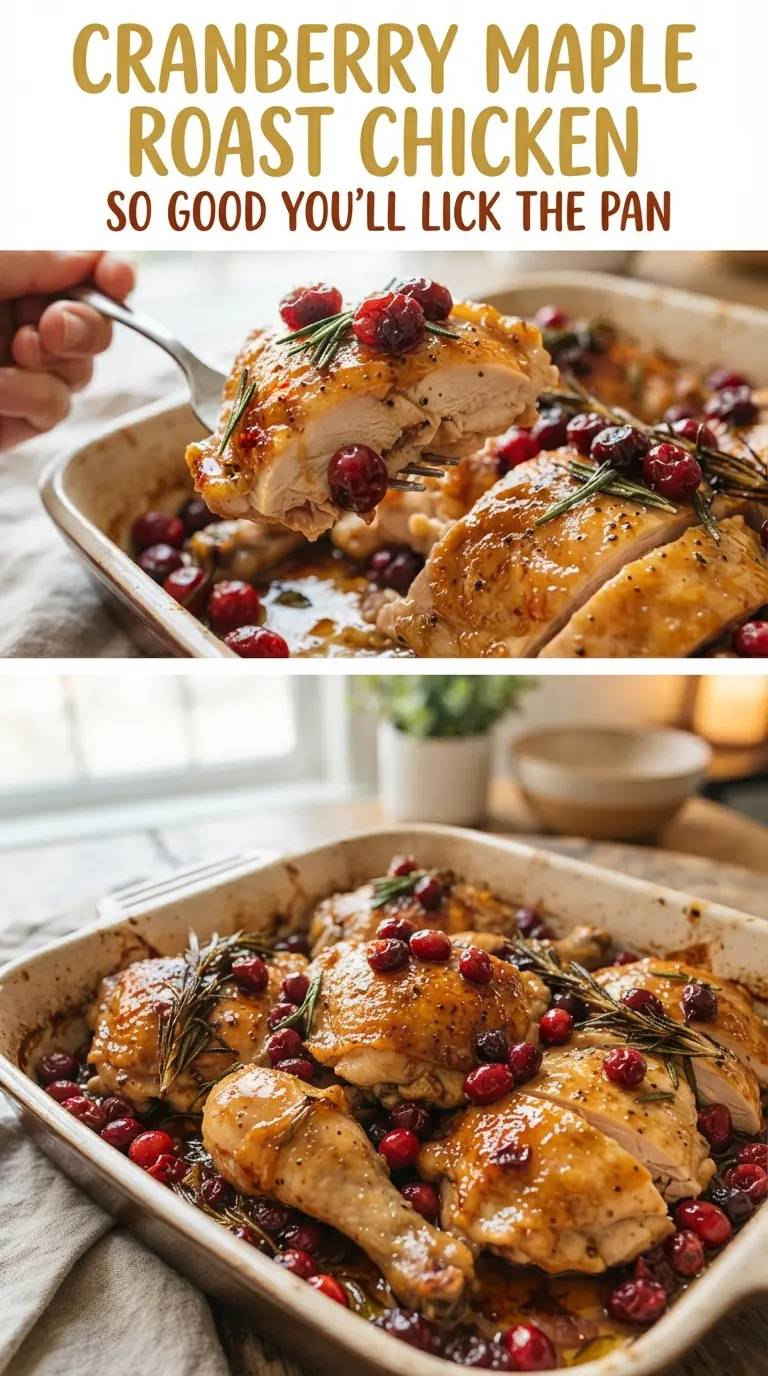
- Whole chicken — A 5-pound bird roasts evenly in about the stated time and gives you both breast and thigh meat with enough drippings for a proper pan sauce. A smaller chicken will cook faster, so start checking early; a much larger one will need more time and may brown before it’s cooked through.
- Butter and rosemary — The butter carries the rosemary into the skin and helps the surface brown evenly. Softened butter matters here because you can spread it under the skin without tearing it; melted butter won’t stay put the same way.
- Orange and garlic — These perfume the cavity from the inside and keep the finished chicken from tasting one-note. If you skip them, the roast is still good, but you lose the background aroma that makes the pan sauce taste rounded instead of sharp.
- Cranberries, maple syrup, and Dijon — This is the glaze and the sauce in one. Fresh cranberries give you tart bursts that balance the syrup, and Dijon keeps the glaze from tasting flat while helping it emulsify slightly with the pan juices.
- Chicken broth — This keeps the cranberries from scorching and gives you enough liquid to spoon over the carved chicken. Water works in a pinch, but broth gives the sauce body and a savory edge that plain water can’t match.
The Roast, the Glaze, and the Pan Sauce
Seasoning Under the Skin
Pat the chicken dry first, then season inside and out with salt and pepper. Work the softened rosemary butter under the skin over the breast and across the top of the bird, pressing gently so it spreads instead of clumping. If the skin tears a little, don’t panic; just keep going, because the butter will still baste the meat as it roasts. Dry skin is what helps you get that first layer of color before the glaze goes on.
Roasting Before the Glaze
Set the chicken in the pan with the onion around it and roast at 425°F for 50 minutes. You’re looking for skin that’s turning deep gold and fat that’s beginning to collect in the pan. If the chicken is already dark fast, your oven runs hot; tent only the most exposed parts loosely with foil, but don’t cover the whole bird or you’ll steam the skin instead of crisping it.
Brushing on the Maple-Dijon Finish
Whisk the maple syrup and Dijon together, then brush on half once the chicken has had that first roast. Add the cranberries and broth to the pan at the same time so they can start softening in the hot drippings. Finish with the remaining glaze in the last stretch of cooking, brushing it on again if you want a deeper lacquer. The chicken is done when the thigh reaches 165°F and the skin looks shiny, not wet.
Resting Before You Carve
Let the chicken rest for 15 minutes before cutting in. That pause keeps the juices from running straight onto the cutting board, and it gives the cranberry pan sauce time to settle into something spoonable. Carve the chicken, then spoon the cranberries, onions, and glossy drippings over the top while everything is still warm.
How to Adjust This Roast Without Losing the Balance
Dairy-Free Version
Swap the butter for a good olive oil or a plant-based butter that stays solid when cold. You’ll lose a little of the classic roasted richness, but the rosemary still perfumes the skin and the maple-cranberry glaze still carries the dish.
Using Chicken Pieces Instead of a Whole Bird
Bone-in, skin-on thighs and breasts work well if you want faster cooking. Start the thighs first, add the breasts later, and glaze toward the end so the sugar doesn’t overbrown before the thicker pieces are done. The pan sauce still works, but you’ll need to watch doneness by cut instead of relying on one roast time.
Lower-Sugar Balance
Cut the maple syrup slightly and lean on extra Dijon and the cranberries for brightness. The glaze won’t be quite as lacquered, but it will taste less sweet and a little more savory, which works well if you’re serving this with richer sides.
Storage and Reheating
- Refrigerator: Store leftovers in an airtight container for up to 4 days. The glaze will thicken as it chills, and the skin won’t stay crisp, but the flavor holds up well.
- Freezer: The carved chicken and pan sauce freeze well for up to 2 months. Freeze in portions with some sauce so the meat doesn’t dry out when reheated.
- Reheating: Reheat covered in a 325°F oven with a spoonful of the pan juices or broth until warmed through. The common mistake is blasting it in the microwave, which makes the breast meat stringy and the glaze sticky in the wrong way.
Answers to the Questions Worth Asking
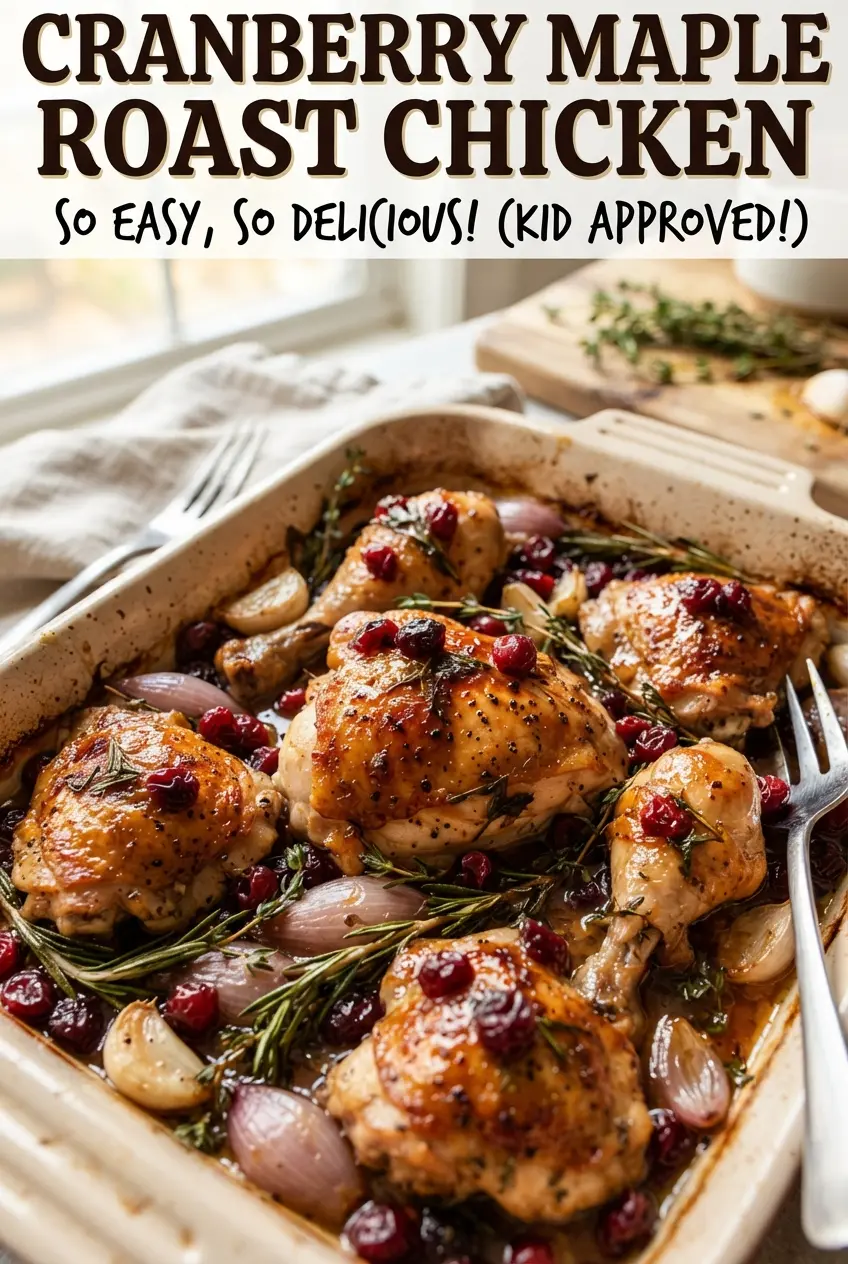
Cranberry Maple Roast Chicken
Ingredients
Equipment
Method
- Preheat the oven to 425F. Pat the chicken dry so the skin roasts crisp and golden.
- Season the chicken inside and out with salt and black pepper. Rub the softened butter mixed with chopped rosemary under and over the skin.
- Stuff the cavity with orange halves and halved garlic. Place the chicken in a roasting pan with the onion wedges around it.
- Roast for 50 minutes. Look for early browning on the skin while the juices begin to collect in the pan.
- Whisk maple syrup and Dijon mustard, then brush half over the chicken. Add the fresh cranberries and chicken broth to the roasting pan.
- Roast 25-30 minutes more, brushing with the remaining glaze halfway through if needed. Cook until the thigh reaches 165F, with the cranberries beginning to burst and the skin turning lacquered.
- Rest the chicken for 15 minutes. Carve and spoon the cranberry pan sauce over the top for a glossy finish.